Newsletters




Indonesia is preparing budget cuts for some government programs as its first line of defense against high global oil prices, Finance Minister Purbaya Yudhi Sadewa said Monday, playing down fears of an imminent plan to overshoot the country's legal fiscal deficit ceiling.
Indonesian officials, including President Prabowo Subianto, have in recent days discussed the possibility of resorting to emergency measures to raise the legal fiscal deficit limit of 3% of gross domestic product (GDP) if the Middle East conflict continues and oil prices stay high. Purbaya told journalists on Monday that there are currently no plans to issue an emergency order to increase the ceiling.
Senior Economic Minister Airlangga Hartarto was more direct: "So as long as the war (in Iran) hasn't lasted for five months, we're still looking at budget cuts, and we're still operating under that 3% deficit limit," he told reporters. Another option under discussion is imposing windfall taxes if the prices of some commodities rise amid the global crisis.
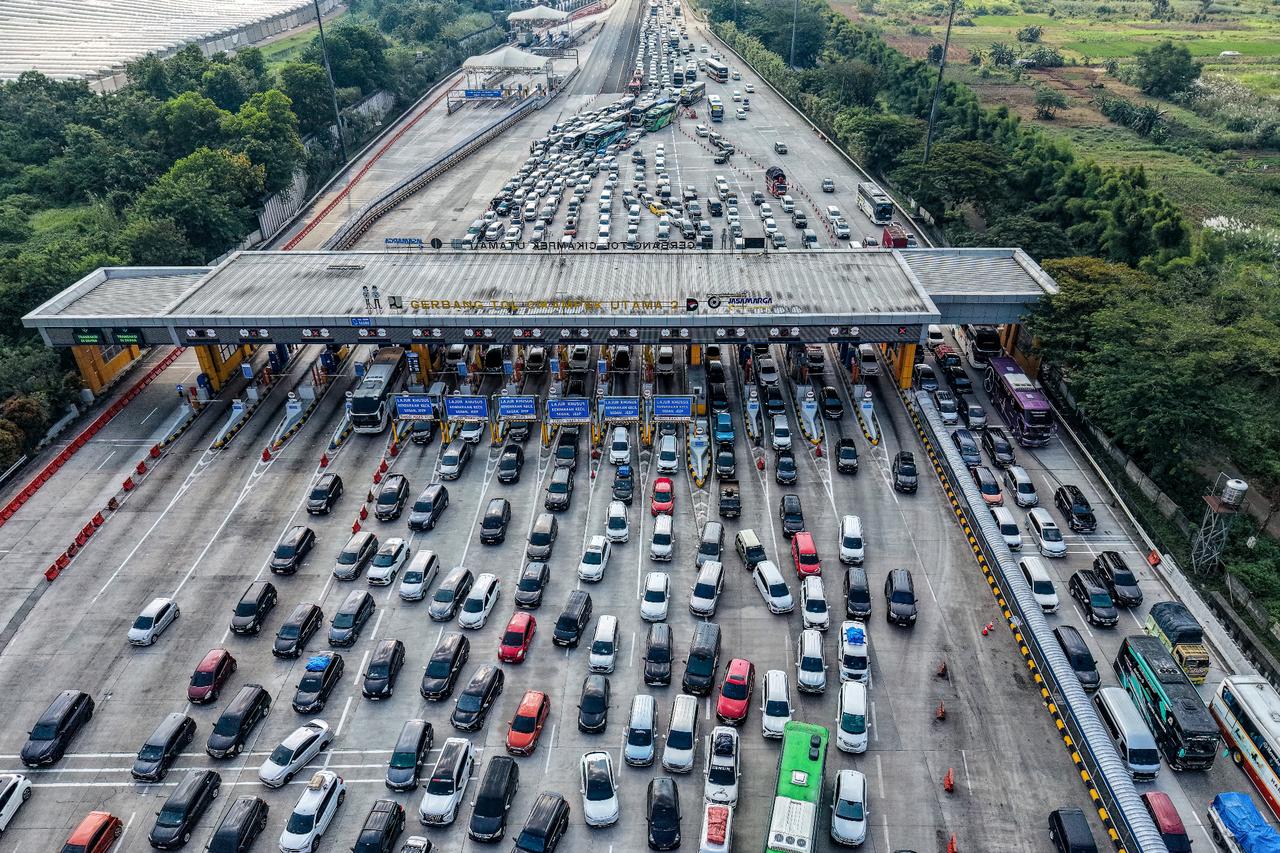
This fiscal pressure coincides with one of the world’s largest annual migrations. Over 140 million people, nearly half of Indonesia’s population, are expected to travel by road, air, and sea for Ramadan Bayram, or Eid al-Fitr. The transportation ministry projects 143.9 million travelers, slightly fewer than last year’s 146 million, a decline economists link to a slowing economy.
The annual mudik, or homecoming, typically brings millions from major cities to smaller towns and villages across Indonesia. Higher airfares this year are driving more people to travel by road, increasing fuel demand at a challenging time. Last week, Prabowo asked his cabinet to consider fuel-efficiency measures such as work-from-home policies, but no concrete actions have been announced.
Indonesia consumes about 1.5 million barrels of oil daily and imports roughly half of its oil needs, with a quarter passing through the Strait of Hormuz. Energy Minister Bahlil Lahadalia reassured the public that fuel reserves stood at about 25 days at the start of the conflict, which aligns closely with the end of the holiday travel period. "The availability of fuel, LPG, and electricity in Indonesia is all under control," he said. However, this reserve is much lower than Thailand’s 95-day supply and the Philippines’ 60-day reserve.
Others are less sanguine. "We haven't seen a fuel shortage yet, but I think the government should start tightening regulations, especially during this Eid homecoming period, so we do not go overboard," said Budijanto Ardiansjah, secretary general of the Association of the Indonesian Tours and Travel Agencies.
Bank Permata chief economist Josua Pardede said Indonesia "looks reasonably ready for a short holiday shock, but not fully prepared for a prolonged energy squeeze," adding that regional peers have moved faster on visible demand-saving measures.
Higher oil prices add to existing budget pressures for Prabowo, who has prioritized costly welfare programs since taking office in late 2024. Jakarta heavily subsidizes fuel prices, a politically sensitive policy highlighted by widespread protests in 2022 after the government last reduced subsidies following the oil price shock from Russia’s invasion of Ukraine.
"Keeping subsidies protects consumption but strains the budget, while cutting subsidies protects the budget but weakens purchasing power and likely slows consumer spending," Pardede said.
Indonesia is the world’s largest producer of palm oil and nickel, which provides some commodity export revenue, but as a net oil importer, the country remains highly vulnerable to a sustained increase in crude prices.


 Set as preferred source
 Set as preferred source



 5 min read