Newsletters


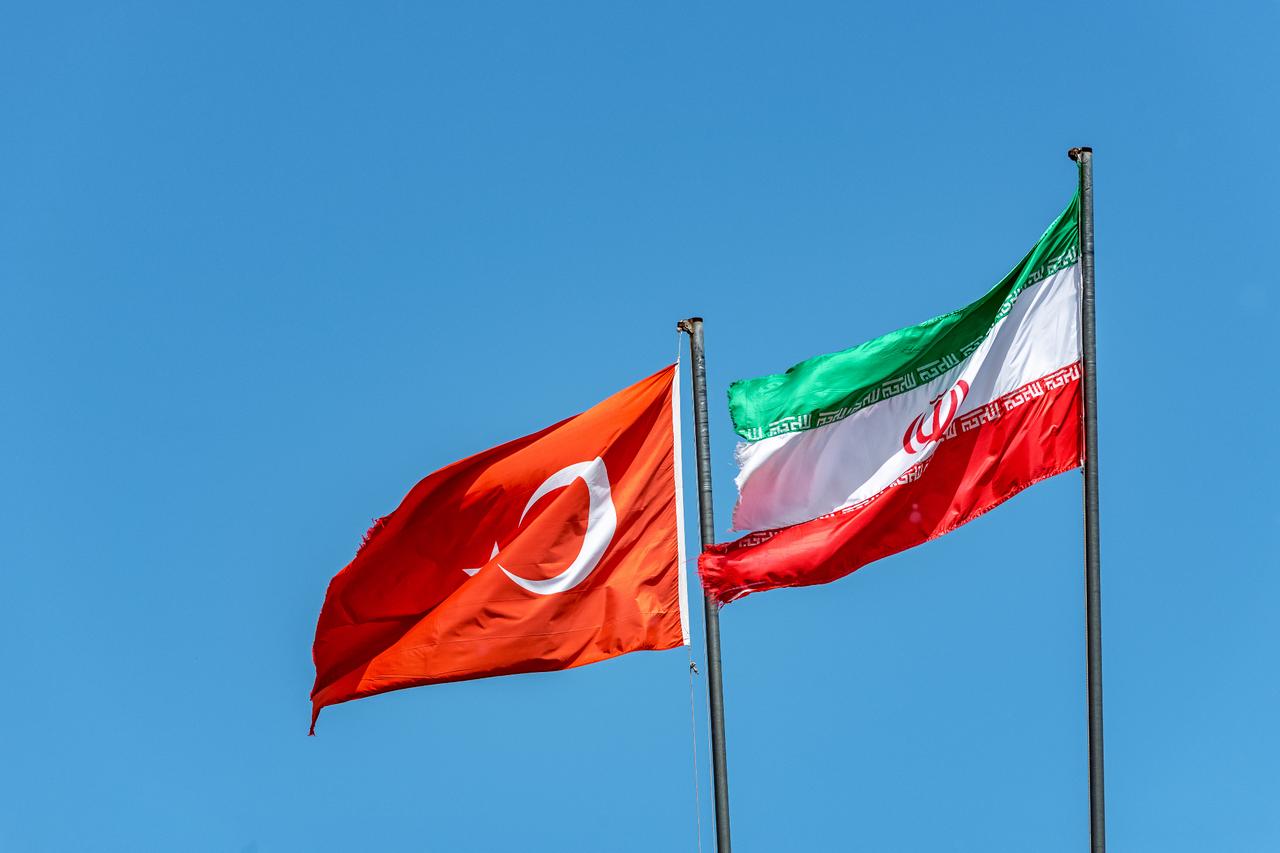


U.S. President Donald Trump’s announcement this week of 25% additional tariffs on Iran’s trading partners has raised concerns in Türkiye, one of Iran’s leading trade partners, particularly given Türkiye's reliance on natural gas imports.
Although Trump said the measure will take effect immediately, the White House has not yet detailed how it will be implemented, leaving its potential impact unclear.
However, reports in both international and local media suggest the move is more likely to weigh on Iran’s top trading partner, China, rather than disrupt regional trade flows or harm U.S. partners such as Türkiye and the United Arab Emirates.
Data from the Observatory of Economic Complexity (OEC) shows that Iran recorded $13.2 billion in exports and $29.1 billion in imports in 2023, bringing total trade to $42.3 billion. China was Iran’s largest export destination at $4.59 billion, followed by Türkiye and India, while China also led imports with $10 billion, ahead of the United Arab Emirates and Türkiye.
Turkish trade figures show that bilateral trade between Türkiye and Iran stood at $11.47 billion before 2018, before falling to around $5 billion following the reimposition of U.S. sanctions. In the first 11 months of 2025, Türkiye’s exports to Iran totaled $2.74 billion and imports reached $2.25 billion, bringing total bilateral trade to $4.99 billion.
Türkiye’s main exports to Iran include machinery and equipment, plastics and chemical products, agricultural goods and metal ores, while imports are led by metal products and agricultural goods. Beyond goods trade, Iran accounted for 13.49% of Türkiye’s natural gas supplies in 2024, delivering around 7 billion cubic meters via pipeline. In November alone, Iranian gas made up 17.64% of total imports, equivalent to 853 million cubic meters. On the oil side, Türkiye has gradually reduced purchases from Iran to zero in line with U.S. sanctions.
In June, during the 12-day Israel–Iran clashes, Energy and Natural Resources Minister Alparslan Bayraktar said Türkiye receives a notable share of its natural gas from Iran but has the capacity to replace these supplies, citing diversified sources and expanded LNG infrastructure.
The two countries also share a 560-kilometer land border, which serves as a major corridor for overland trade and transit between Europe and Asia, with more than 250,000 trucks crossing through three border gates in 2025, according to Turkish customs data.
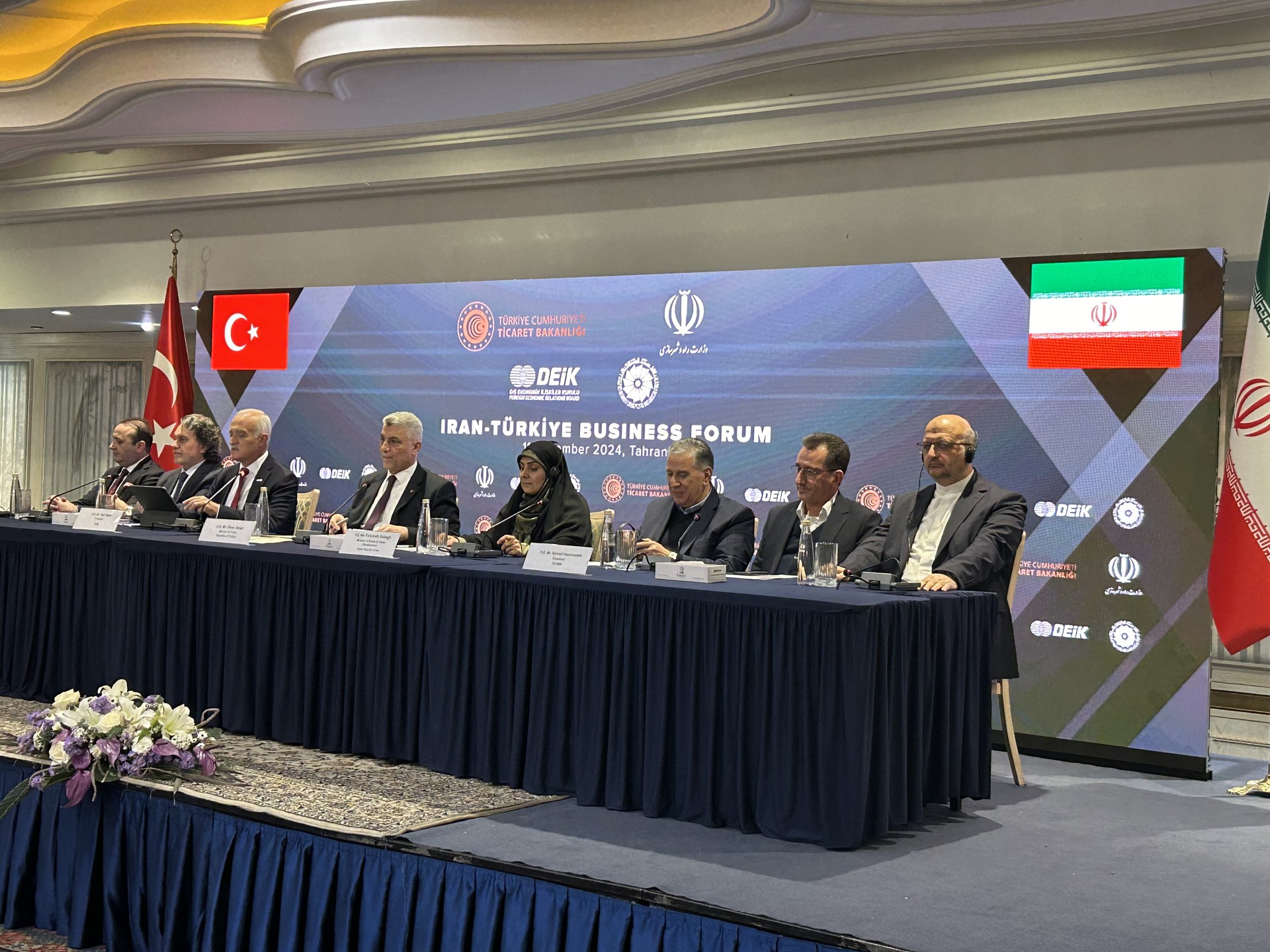
In December 2024, during his visit to Tehran, Türkiye’s Trade Minister Omer Bolat reiterated the target of reaching $30 billion in bilateral trade, adding that Turkish investors have more than $2 billion in investments in Iran.

The prospect of a 25% additional U.S. tariff on countries trading with Iran means Turkish exporters could face higher costs on goods sold to the United States, potentially weakening their price competitiveness.
Trade data for the first 11 months of 2025 shows Türkiye–U.S. trade exceeding $30 billion, with exports of around $14.8 billion and imports close to $16 billion, placing the United States among Türkiye’s largest export markets after the European Union. Turkish products are already subject to a 15% blanket tariff, introduced in August, increasing sensitivity to any further duties.
Speaking to DW Turkish, Prof. Dr. Hakki Hakan Yilmaz, Director of the Economic Policy Research Foundation of Türkiye (TEPAV), said Trump’s 25% tariff decision carries the potential to affect the Turkish economy directly for a second time after the 2018 sanctions period, adding the move could place pressure on Türkiye through both reduced trade volumes and rising costs.
Assessing the potential financial impact, Bozkurt Aran, Director of TEPAV’s Trade Studies Center, told Turkish news outlet Cumhuriyet that the cost could approach $4 billion, while also noting that Trump may show flexibility toward Türkiye by granting a tariff exemption, as both sides pursue a $100 billion trade target.
On the energy front, the flow of Iranian gas to Türkiye cannot be halted abruptly, Dr. Muhdan Saglam, Director of TEPAV’s Energy and Climate Change Studies Center, said, citing the size of Iran’s share in Türkiye’s energy supply, which further complicates Ankara’s position. Saglam noted that the bilateral gas contract between the two countries expires in July and could be renewed at a lower volume if U.S. pressure intensifies.
 Breaking News, Direct to You.
 Follow Türkiye Today on WhatsApp
for real-time updates and key insights from Türkiye and beyond.
Follow Türkiye Today on WhatsApp
for real-time updates and key insights from Türkiye and beyond.
Nevertheless, as details of the measure have not yet been released, many analysts say Türkiye could be exempted, arguing that the main target is China.
China is Iran’s largest trading partner and the main buyer of its crude oil, accounting for around 80% of Iran’s oil exports, according to Kpler data, which U.S. Energy Information Administration values at $43 billion annually.
If enforced, the new duty could push effective tariffs on Chinese goods entering the United States above 70%, compared with around 57.5% before Washington and Beijing agreed to soften tensions in October.
The United States and China, the world’s two largest trading partners, have been locked in a trade rift since Donald Trump took office in January 2025, with tensions reaching a peak in April when he announced tariffs of up to 34% on Chinese goods. A rapid series of retaliatory measures followed, pushing U.S. tariffs on Chinese imports to 145% and China’s duties on American goods to 125%, triggering a full-scale trade showdown.
Both sides agreed in May to a temporary pause on further tariff hikes during negotiations, and in October President Xi Jinping and Trump reached a one-year truce that reduced tariffs on Chinese goods to 47% and eased restrictions on rare-earth exports.
Chinese analysts, however, have questioned the practicality of enforcement, arguing that similar measures announced in the past were applied unevenly and that the scope and monitoring of such tariffs remain unclear.
China would respond firmly to any additional tariffs, signaling that Beijing is prepared to retaliate if Washington moves ahead with new trade penalties, Wu Xinbo, dean of the Institute of International Studies at Fudan University, told Reuters. Wu said China would not remain passive in the face of further pressure and warned that escalating tariffs could trigger countermeasures, deepening trade tensions between the two countries.
Xu Tianchen, a Beijing-based analyst at the Economist Intelligence Unit, said the enforceability of Trump’s tariff threats remains uncertain, pointing to patchy implementation of similar measures in the past. Xu noted that last year’s tariff threats targeting Russian oil trade were applied unevenly, with gaps in monitoring and enforcement, adding that this record raises doubts over how strictly new penalties targeting Iran-linked trade would be carried out in practice.


 Set as preferred source
 Set as preferred source


 1 min read
 1 min read