Newsletters




Reusable rockets are becoming one of the new focal points of the global space race as rising demand for space missions makes more frequent launches necessary and pushes countries to seek lower costs, reduced rocket debris and faster launch cycles.
As the number and variety of space missions grow, traditional launch methods face several limits, including high costs, slow rocket production, low launch tempo, capacity bottlenecks in multi-satellite missions, environmental effects from rocket debris and accessibility problems.
Reusable rocket technology has emerged as a response to those challenges by allowing key rocket components to return to Earth and be used again in later missions.
The Falcon 9 rocket developed by U.S. businessperson Elon Musk's company SpaceX made it possible for a first-stage rocket to return to Earth in a controlled way and be reused.
The first successful vertical landing in 2015 was regarded as a turning point that transformed an economic model in space transportation that had remained largely unchanged for decades.
The repeated reuse of the same boosters later allowed rocket production costs to be spread across multiple launch missions.
That change led to significant declines in unit launch costs for both commercial satellite operators and public institutions.
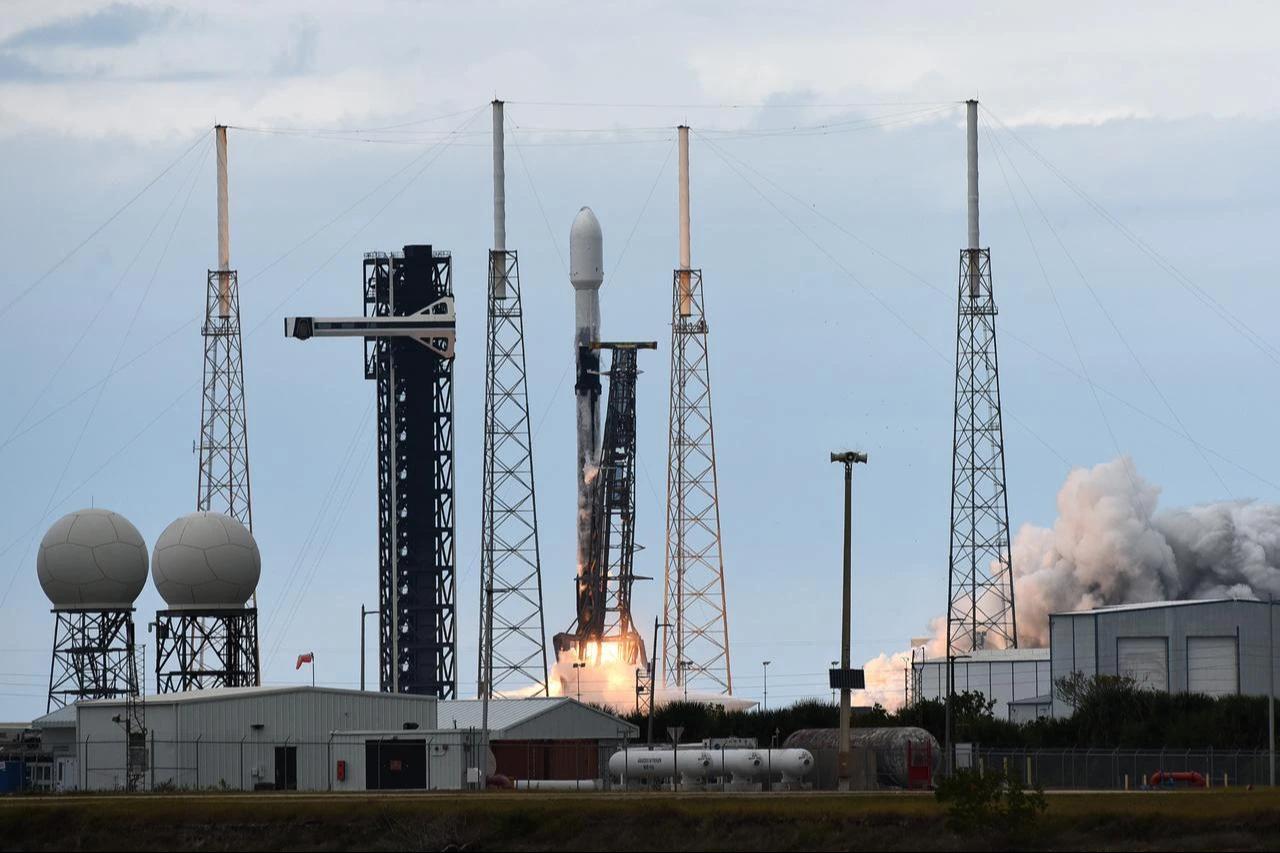

A launch with traditional single-use rockets can cost up to $160 million. With Falcon 9, the reusable first stage has reduced the cost of a launch to about $67 million.
The cost of carrying cargo to orbit was about $10,000 per kilogram in the 1981-2011 period. With SpaceX's reusable Falcon 9 rocket, that figure has fallen to about $2,500 per kilogram.
NASA data show that reusable Falcon 9 rockets provided more than $500 million in savings in Crew Dragon missions.
The drop in costs has also contributed to increases in global rocket launch missions and the number of satellites sent into orbit in recent years.
According to data compiled by Anadolu from the Satellite Industry Association’s 2025 report, 325 launches were carried out worldwide in 2025, including 296 commercial launches.
A total of 4,434 satellites were placed into orbit in 2025, a 65% increase from the previous year. The number of active satellites in orbit reached 14,266.
The ability to prepare the first stage for another launch in about 21 days has helped increase launch frequency and raise the number of satellites carried into space.
Global launch data show that SpaceX carried out 22% of all launches in 2020. By the end of 2025, that share had risen to 50%.
In the global launch race, China carried out 39 of 114 launches in 2020, while the U.S. carried out 37.
In 2022, the U.S. surpassed China in the number of global launches, helped by the advantage provided by SpaceX's reusable rocket technology.
That year, China carried out 64 of 186 launches, while the U.S. carried out 78. The U.S. share of rocket launches stood at 42% in 2022, while China's share was 34%.
By 2025, the U.S. share of total launches had risen to 55%, while China's share had fallen to 28%.
To avoid falling behind the U.S. advantage in reusable rocket technologies, China accelerated investments in similar systems.
Private companies in China began vertical landing tests for reusable rockets in 2016. Several private and state companies continued work in the field, with partial successes in some trials, but the desired results were not achieved.
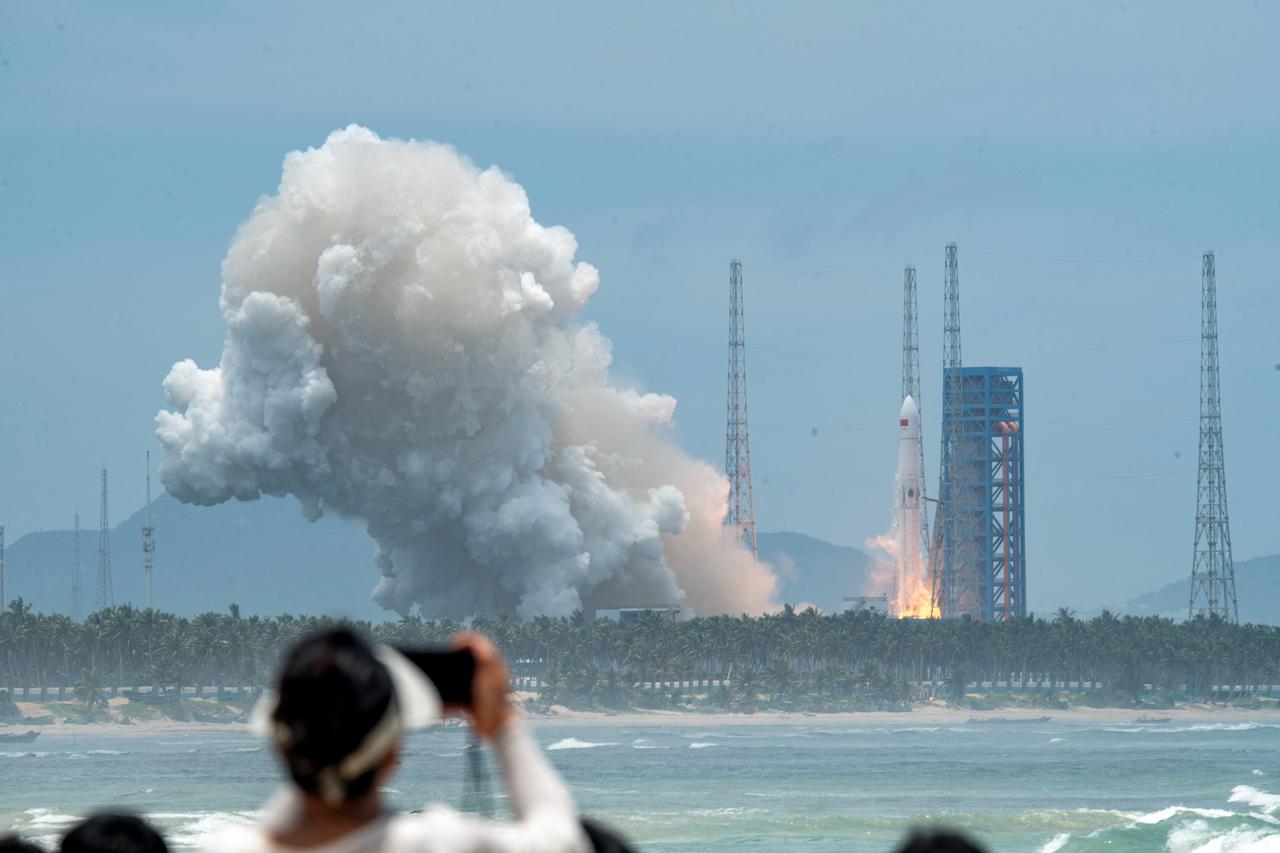
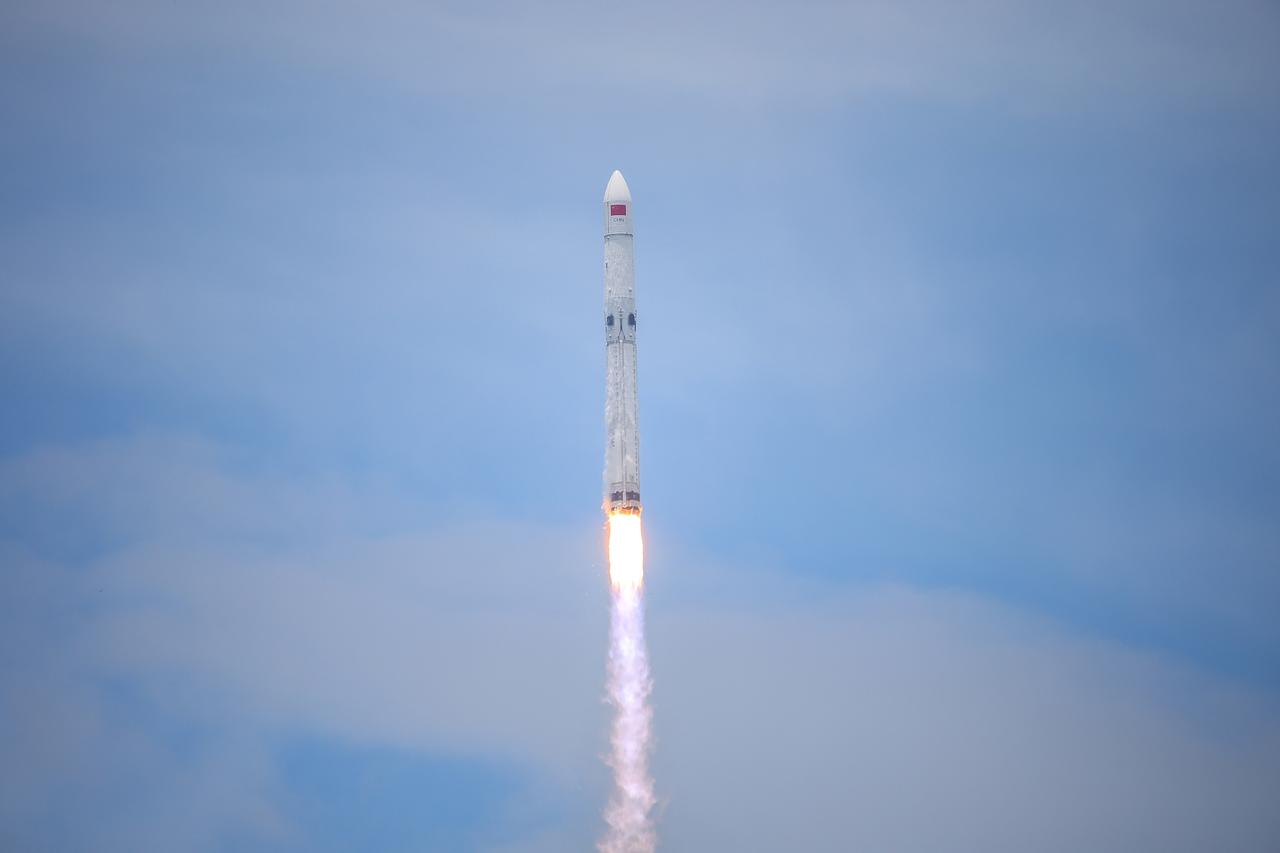
China carried out its first successful vertical landing and recovery attempt approaching Falcon 9's recovery capability on July 10 with the Long March 10B rocket.
The Long March 10B, operated by the China Aerospace Science and Technology Corporation, or CASC, was launched from the Wenchang launch site in China's southern Hainan province.
Unlike SpaceX's approach of using landing legs, the first stage of the Long March 10B returned vertically to Earth after launch and was successfully caught by a cable-net system on a floating platform deployed in the South China Sea.
The development was recorded as China's first successful controlled rocket recovery.
Adding landing legs to a rocket, as in Falcon 9, brings additional weight and can reduce the payload capacity the rocket can carry.
The hooked net system used for Long March 10B makes it possible to reduce that weight. This can support fuel efficiency and open the way for higher satellite carrying capacity.
Alongside the leading work in the U.S. and China, several companies are carrying out intensive work on reusable rockets.
After the U.S. and China, countries working on reusable rocket technologies are also approaching the test phase, while Europe and India are accelerating their projects.
India aims to carry out its first vertical landing trials in 2027 under the ADMIRE program.
The European Space Agency plans to conduct the first vertical takeoff and landing test of its reusable rocket demonstrator THEMIS this year.
The first flight of CALLISTO, an approximately 13-meter-long reusable technology demonstrator jointly developed by Japan, France and Germany, is also expected to take place in 2026 from French Guiana.


 Set as preferred source
 Set as preferred source


 1 min read

 1 min read