

 Newsletters


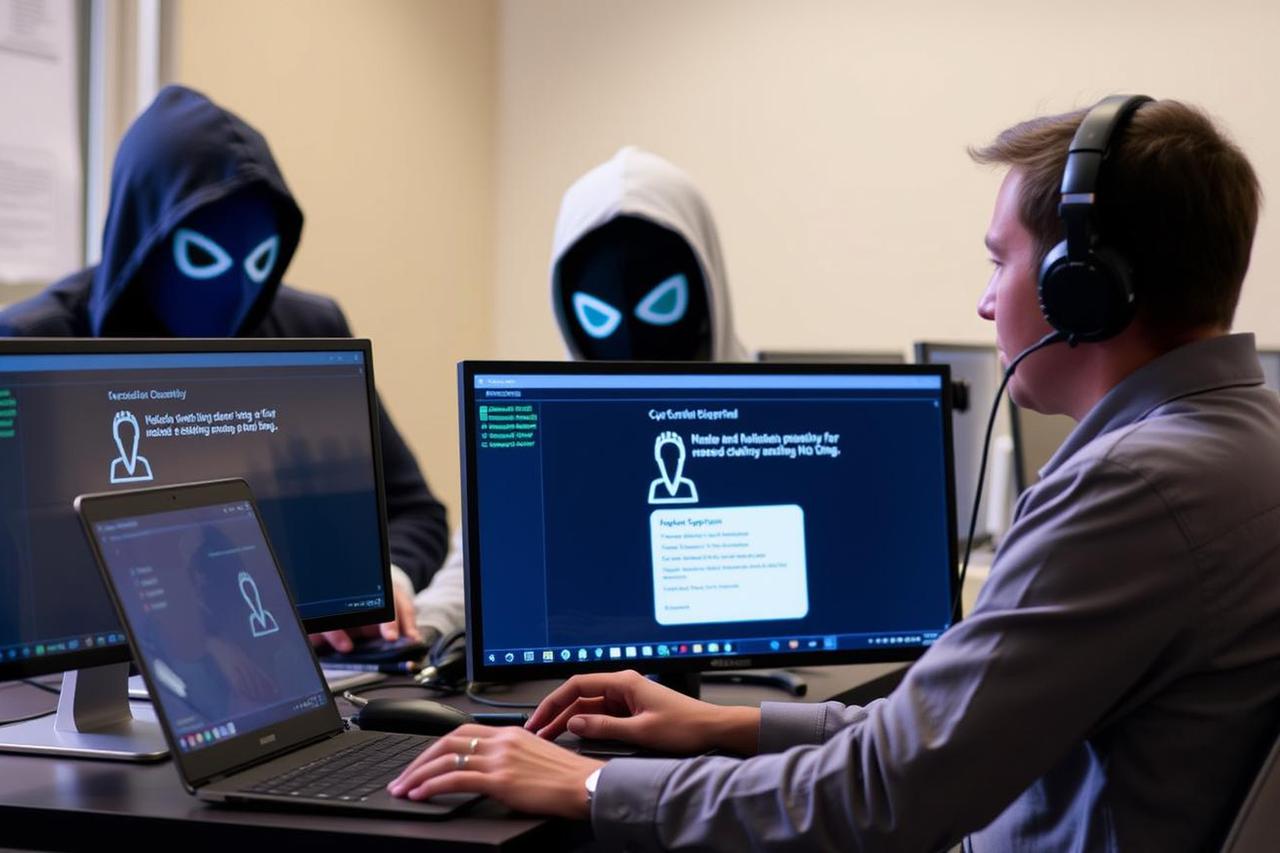


Liz Benz remains convinced that the distressed voice on the phone belonged to her 16-year-old son, as the cadence, tone, and pronunciation were identical to his. In reality, it was an AI-generated clone, making the American mother one of many victims caught in a rising tide of impersonation scams.
The rapid advancement of artificial intelligence has blurred the line between truth and fabrication, providing cybercriminals with highly realistic voice-cloning software designed to exploit people by mimicking their relatives.
Buffalo-based Benz was jolted from her couch by a call from an unknown number. On the line was someone sounding like her son Fred, crying for help.
She was told Fred's friend had been shot and killed, and her son, who was out at a local football game, was being held hostage.
The 46-year-old insurance broker and mother of six was instructed to deliver cash to a nearby Walmart to pay off the man holding him.
Eventually, a selfie from Fred smiling at the game returned her to reality: the call, she realized, was an elaborate scam.
"Nothing could have prepared me to hear my son's voice, and nothing could have convinced me that this was a scam until I saw my son with my own eyes," Benz told AFP, her voice trembling. "It was a good 20 minutes of terror."


U.S. authorities and consumer advocates are increasingly warning of scams built around impersonating family members.
The FBI said in April that Americans lost over $893 million last year to AI-enabled hoaxes, including voice cloning scams.
A CNN article explains how this scam works. Scammers can create an AI replica of someone’s voice using a short recording of their speech, often pulled from social media or an earlier scam call that was surreptitiously recorded.
Social media can also provide a trove of information about family members and close friends who could be targeted.
In some cases, the AI voice may be more than just a single recording. Sophisticated attackers could use text-to-speech tools or “voice skinning,” which manipulate a scammer’s voice so they sound like the person they’re imitating in real time.
Those techniques facilitate back-and-forth conversations between the target and the AI clone voice, potentially making the scam more convincing,
"It used to be somewhat hard to make these things. Now anyone can do it in seconds," said Brian Long, chief executive of Adaptive Security, a company offering trainings on AI fraud protection.
"One guy in a room with a keyboard can make an infinite number of attackers," Long told AFP, adding that AI tools can build entire scripts off of snippets of audio captured from social media or voicemail recordings.
Benz's story highlights a familiar script: an emotionally charged call purportedly from a loved one in trouble, arrested, in a car accident or caught up in a crime, who needs money.
Then scammers typically pile on pressure, adding voices claiming to be attorneys, courtroom clerks or bank tellers, a cast of fictitious characters in a chaotic, urgent-sounding call.
Many family-emergency scams do not even require a perfect voice clone.
"A distressed voice saying 'mom, help me' or 'dad, I've been in an accident' may only need to sound believable for a few seconds," Amit Gupta, the vice president of product management at cybersecurity firm Pindrop, told AFP.
"The objective is not perfect voice replication. The objective is creating enough emotional uncertainty and urgency that the victim acts before verifying."
Since taking her story public, Benz said she has received a flood of messages from other victims, many of whom opt to stay anonymous because of the shame attached.
Elderly people are particularly vulnerable, with experts warning of rising cases of "grandparent scams."
The FBI said Americans over 60 reported more than $7.7 billion in losses last year, a significant jump over 2024.
"These are professionals, and when they get people on the phone, they are dealing with amateurs," said Philadelphia attorney Gary Schildhorn, who faced a similar attack in 2020. Like Benz, he has since partnered with Adaptive Security to raise public awareness about the threat.
In 2023, Schildhorn testified before the U.S. Senate about his experience with a scam call in which a voice impersonating his son Brett claimed he needed to post bail after a drunk-driving arrest.
The call sent Schildhorn, now 73, rushing to his bank. "When I get to the bank, my phone rings. It's my son," he told AFP. "He's going, 'You've been scammed,'" Schildhorn said.
"I go, 'Brett, I will go to my grave swearing that it was your voice, it was your cadence, it was words you would use. There was no accent. It was you on the phone.'"


 Set as preferred source
 Set as preferred source


 1 min read



 1 min read



