Newsletters


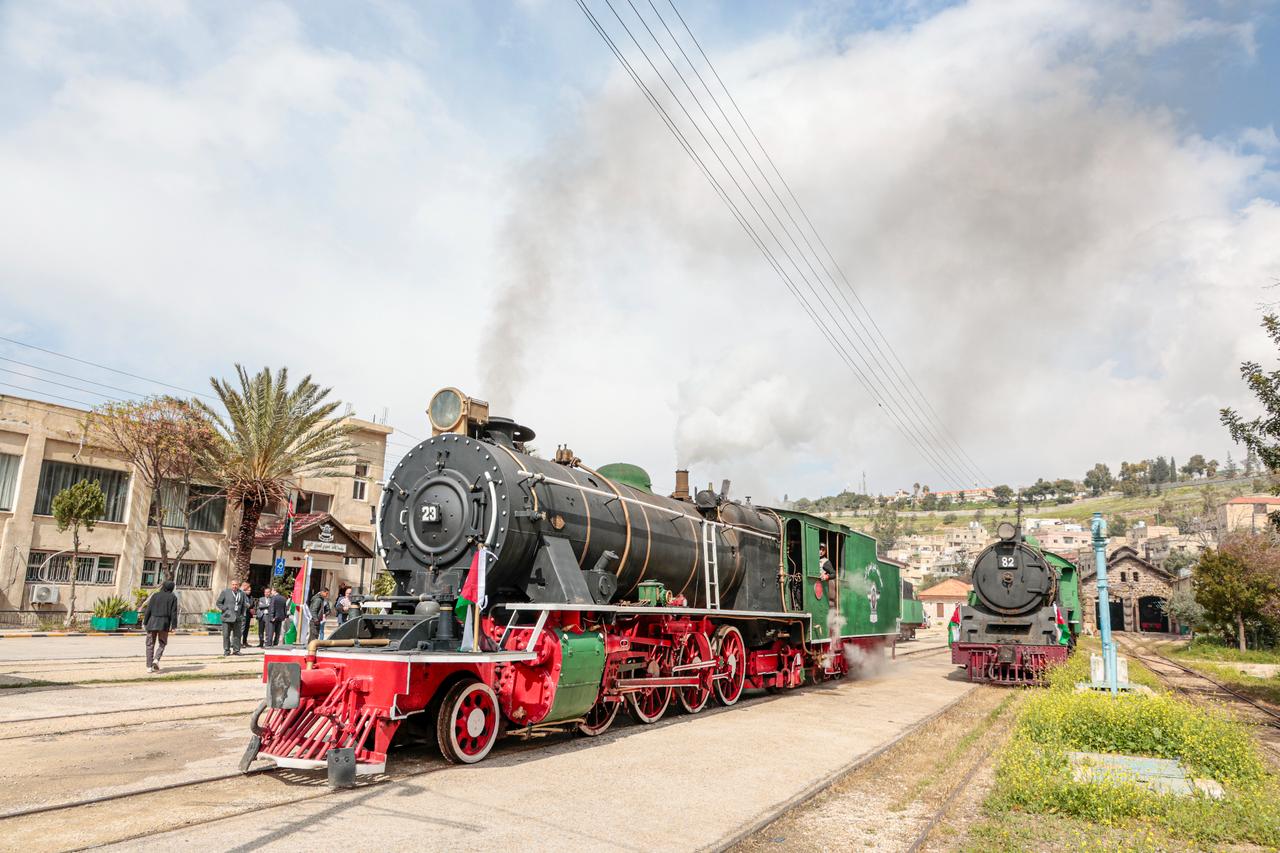


Türkiye, Syria, and Jordan have agreed to modernize and reconnect their railway networks to revitalize the historic Hejaz railway, setting out a plan that could eventually establish a continuous transport corridor stretching from southern Europe to the Persian Gulf, according to Transport Minister Abdulkadir Uraloglu.
Referring to a trilateral memorandum signed last week in Jordan, Uraloglu said the project is expected to take four to five years to complete once construction begins, positioning it as a key step toward establishing a north–south corridor linking Europe with Saudi Arabia.
The initial phase centers on restoring and upgrading the Türkiye–Syria–Jordan axis as the backbone of the broader corridor. From there, the route is expected to extend southward, ultimately linking to Saudi Arabia’s rail system and reaching Riyadh, Uraloglu told Bloomberg.
He recalled President Recep Tayyip Erdogan’s February visit to Saudi Arabia, adding that the kingdom is "highly willing" to participate and that no major obstacles stand in the way, while noting that both countries plan to first strengthen road transport before moving to rail connectivity.
He stressed that inactive rail infrastructure remains a critical weakness in the region, arguing that a modern, high-capacity, and uninterrupted rail system would reduce pressure on road transport while significantly increasing trade volumes.
Türkiye, historically positioned along major trade routes, is seeking to reinforce its role as a transit hub in modern supply chains, Uraloglu highlighted, adding that discussions on how to finance the project are ongoing.


On April 9, Türkiye, Syria, and Jordan signed a memorandum establishing a comprehensive transport cooperation framework covering road, rail, maritime, air, and multimodal systems.
During the signing ceremony, Minister Uraloglu described the initiative as "a strong declaration of will for the welfare of our people and regional development," pointing to the legacy of the Hejaz railway.
"I believe it would be meaningful to revive the legacy of the Hejaz railway in line with today’s conditions," he said. "We intend to turn our region into a basin of prosperity."
The Hejaz Railway was a major Ottoman infrastructure project built in the early 20th century to connect the heart of the empire with the holy cities of Islam. Construction began in 1900 under Abdulhamid II, and the line officially reached Medina in 1908.
The railway stretched roughly 1,300 kilometers (about 800 miles) from Damascus to Medina, passing through present-day Jordan and parts of Saudi Arabia. Large sections of the railway were destroyed during World War I, and after the war, the network was never fully restored to its original continuous route.
The renewed focus on alternative corridors comes as regional instability following the Iran conflict exposes vulnerabilities in existing trade routes, particularly with the effective closure of the Strait of Hormuz, increasing demand for safer and more resilient logistics networks.


 Set as preferred source
 Set as preferred source


 1 min read
 1 min read