Newsletters


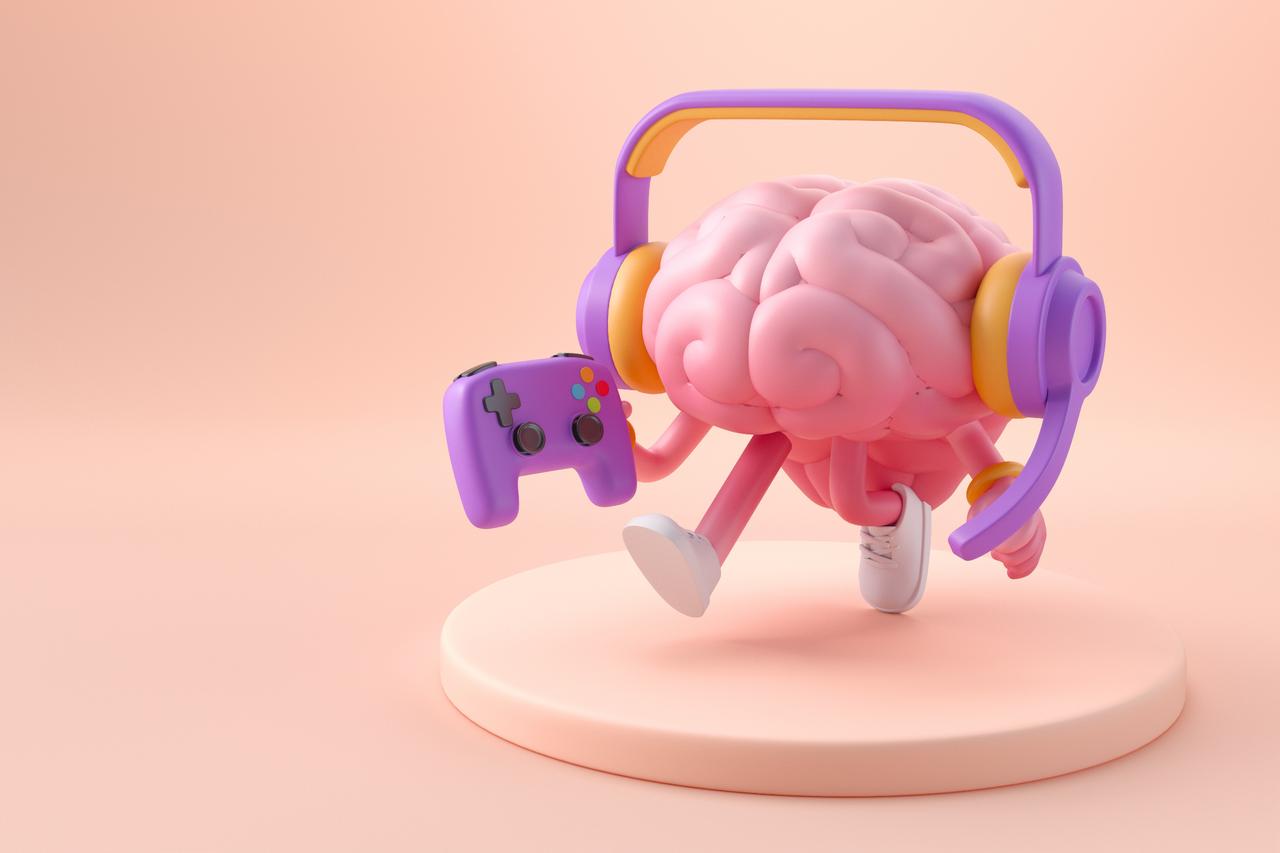


A Melbourne startup says it has built the world's first biological computer that can run code, using living human brain cells instead of silicon chips.
The company demonstrated the system's capabilities by having it play the 1993 first-person shooter 'Doom.' Cortical Labs had already gained attention in 2022 for connecting about 800,000 brain cells to a computer and teaching them to play 'Pong.' Now, the company says its new CL1 system is a big step forward.
While 'Pong' was a simple input-output game, 'Doom' requires spatial reasoning, environmental exploration, and real-time decision-making.
"Pong was much simpler. There was a direct relationship: the ball went up, the paddle went up. It was a direct input-output relationship," the Cortical Labs research team said in a video published on YouTube. "Doom is chaos. It's 3D. It has enemies. It needs to explore its environment, and it's hard."
To address this challenge, the company developed a method to translate the game's digital environment into electrical signals that neurons could interpret. By converting the game's video feed into patterns of electrical stimulation, developers transmitted information directly to the biological cells. The neurons' responses were then used to control in-game actions.
"If the neurons fire in a specific pattern, the Doom guy shoots," the team explained. "If they fire in another pattern, he moves right, and so on."
According to the company, the CL1 machine enables developers to interact with living cells through an application programming interface (API) using standard Python commands. The firm describes this as solving a core "interface problem" between biology and software.
The biological system is not yet capable of competing with human players. The team acknowledged its current limitations.
"Is it an e-sports champion? Absolutely not," they said. "But they show evidence that they can seek out enemies, shoot, and spin. And while they die a lot, they are learning."
The assertion that living cells can be trained to interact with complex digital environments contributes to a broader scientific discussion about the nature of intelligence and the limitations of conventional computing. Cortical Labs argues that biological systems possess adaptability that silicon-based computers lack, specifically the ability to generalize knowledge across different contexts.
"We've made huge strides with silicon computing, but it's still rigid and inflexible," said Brett Kagan, chief scientific officer at Cortical Labs, referencing the company's earlier "Pong" research published in Neuron. "That's not the case with biology."
The selection of "Doom" as a benchmark was not solely scientific. Since id Software released its source code in 1997, the game has become a longstanding internet challenge, serving as a test of creative engineering on unconventional platforms. Enthusiasts have run the game on devices such as pregnancy tests, ATMs, calculators, and tractors.
In a recent example, Lauren Ramlan, a biotechnology PhD student at MIT, documented running "Doom" on a display constructed from E. coli cells. This setup used bacterial cells as pixels, each capable of lighting up or dimming to render the game's visuals.
The game operated at approximately one frame every nine hours, and Ramlan estimated it would take about 599 years to complete. In comparison, Cortical Labs' neuron-based system is significantly faster.
"There's still much to do, but we've solved the interface problem," said the Cortical Labs team. "We can now interact with these cells in real time and train them to do things—even play Doom."
The company has not yet published peer-reviewed research on the CL1 system's "Doom" capabilities. Independent experts have previously noted that neuron-based computing systems show promise as research tools, but current learning remains rudimentary compared to conventional machine learning.


 Set as preferred source
 Set as preferred source



 2 min read