Newsletters


Archaeologists in the ancient city of Laodicea recently discovered a massive 2-meter-tall white marble statue of Athena during the ongoing excavation and restoration work.
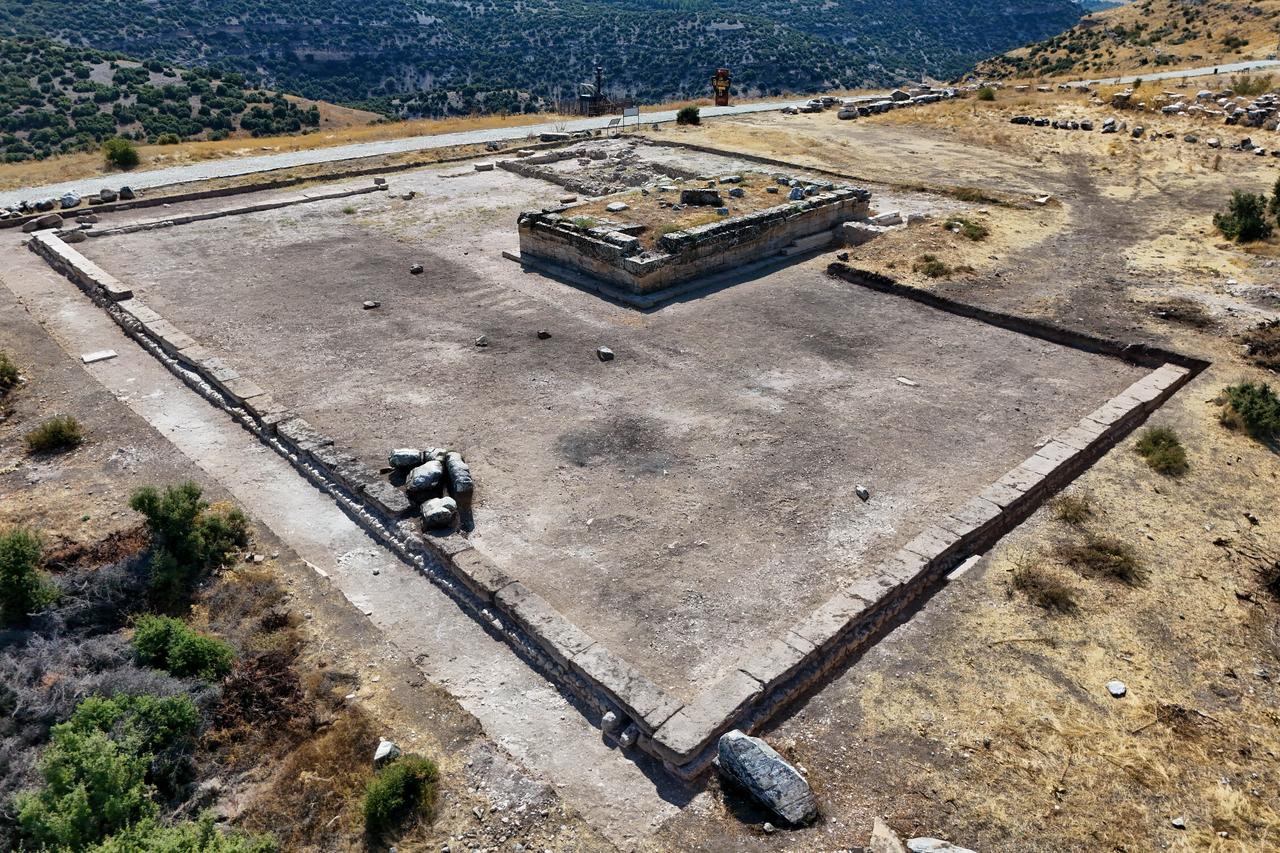
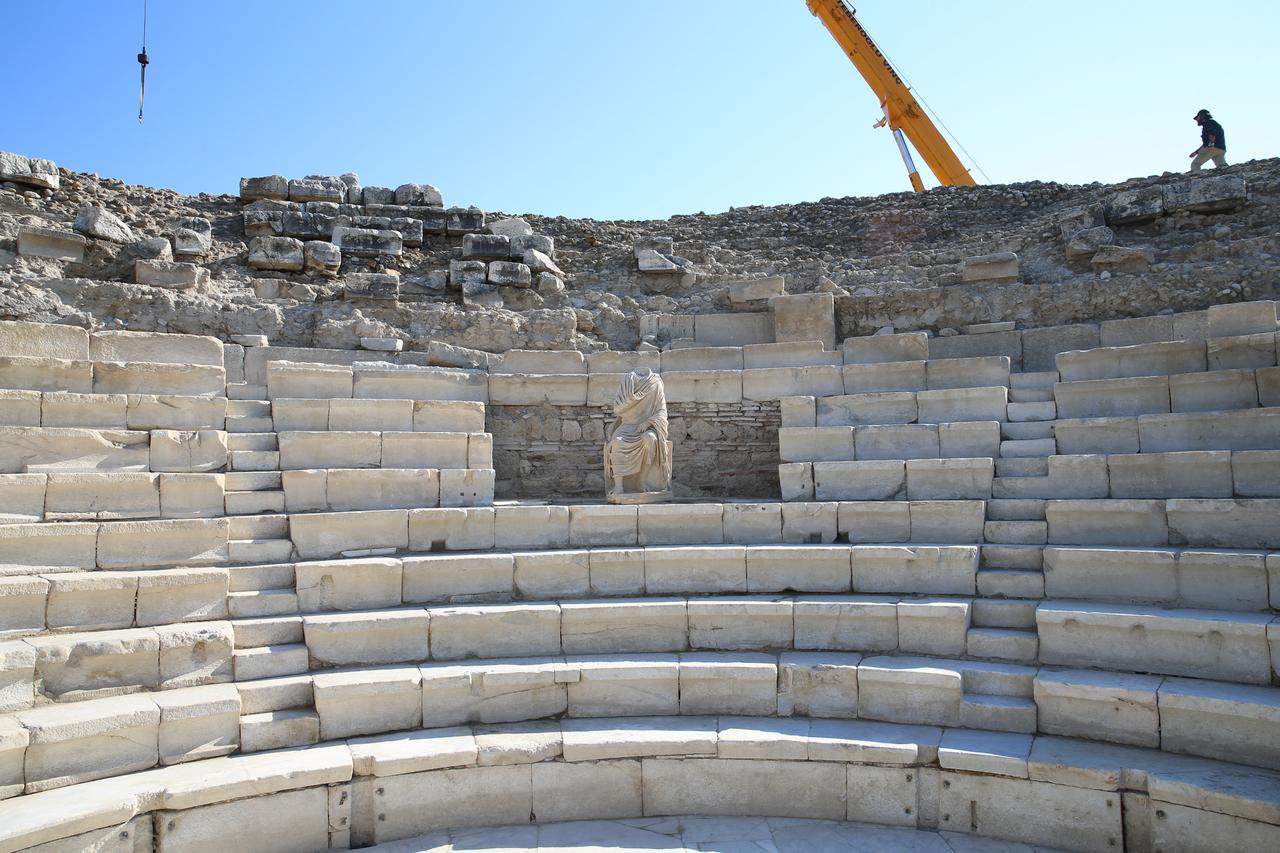
The find occurred at the West Theater, a site that continues to provide the archaeology world with significant data from the Roman period.
Culture and Tourism Minister Mehmet Nuri Ersoy announced the discovery through his social media account, emphasizing the historical weight of the artifact within the context of the "Heritage for the Future" project.
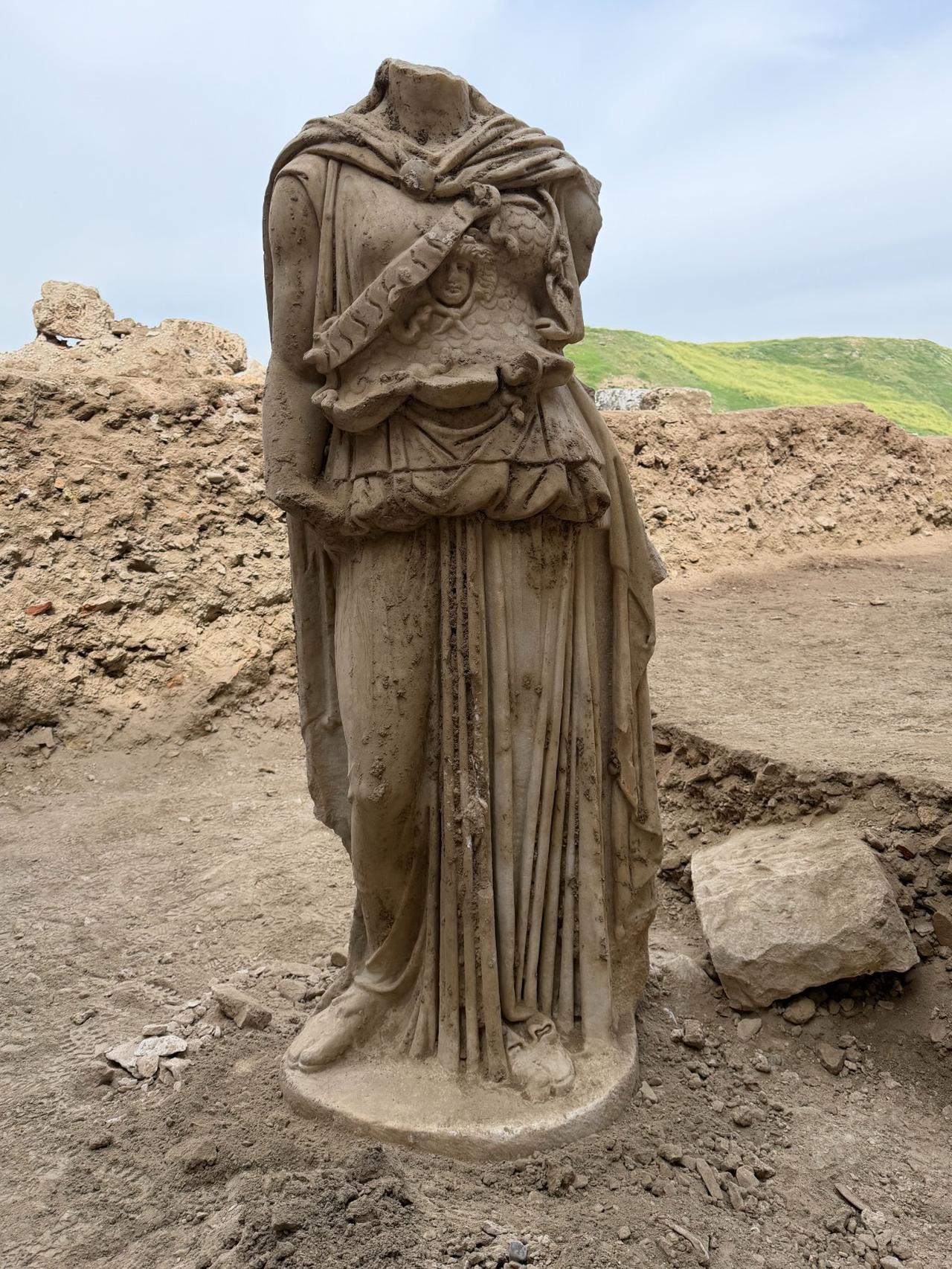

The marble figure measures approximately 2 meters in length and demonstrates the high artistic quality of its era.
Archaeologists discovered the statue lying face down within rubble fill near the outer wall of the stage building, specifically in the area known as the postskene. While the head of the goddess remains missing, the white marble body remains in striking condition.
"In the stage building, we have brought to light the Athena statue, about 2 meters long, made of white marble," Ersoy stated.
The Minister noted that this structure served as a hub for cultural expression in antiquity. This latest discovery reinforces the vision of preserving Türkiye's unique heritage for future generations.
Stylistic analysis places the creation of the statue during the reign of Emperor Augustus, which lasted from 27 B.C. to 14 A.D.
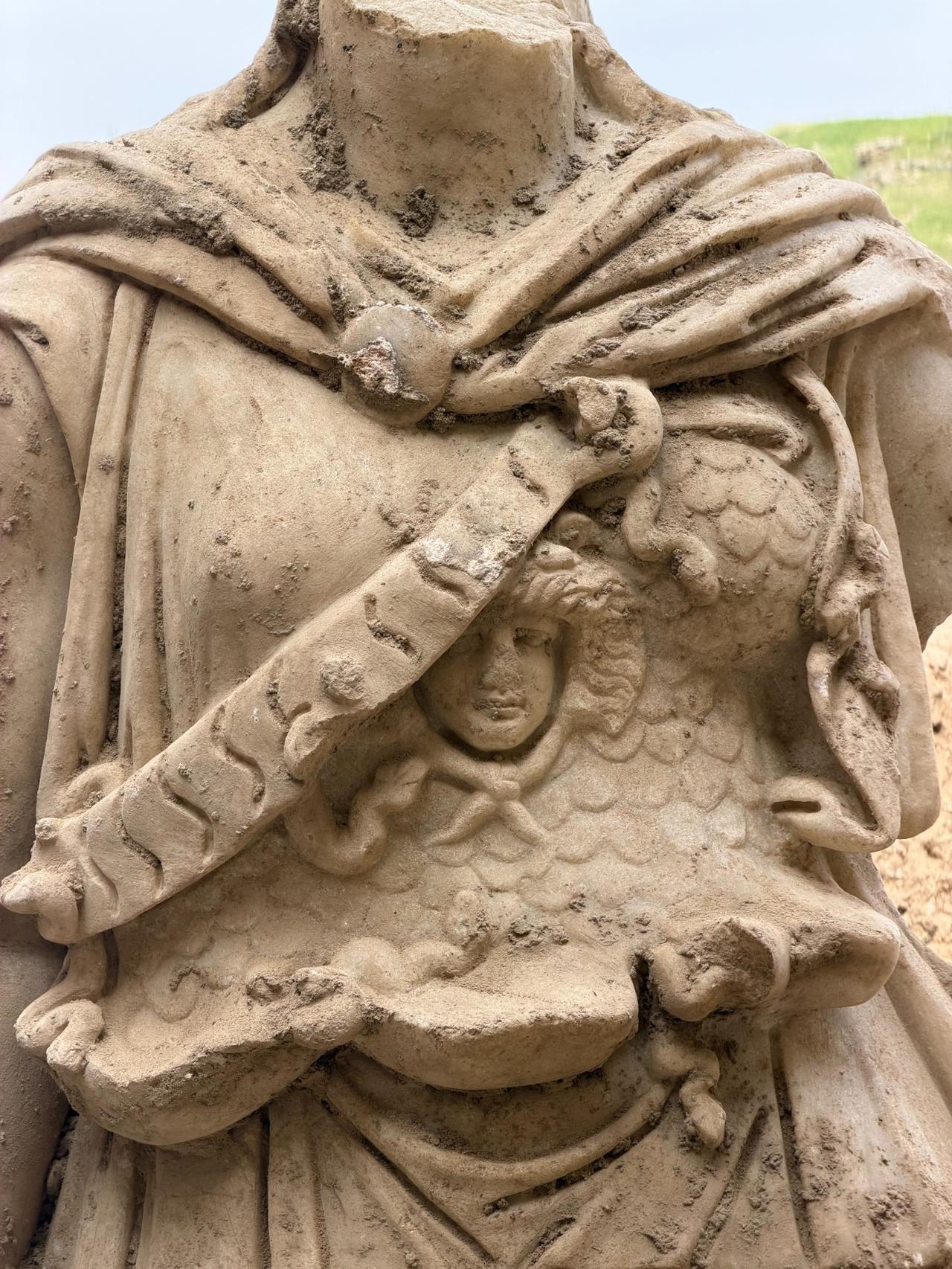
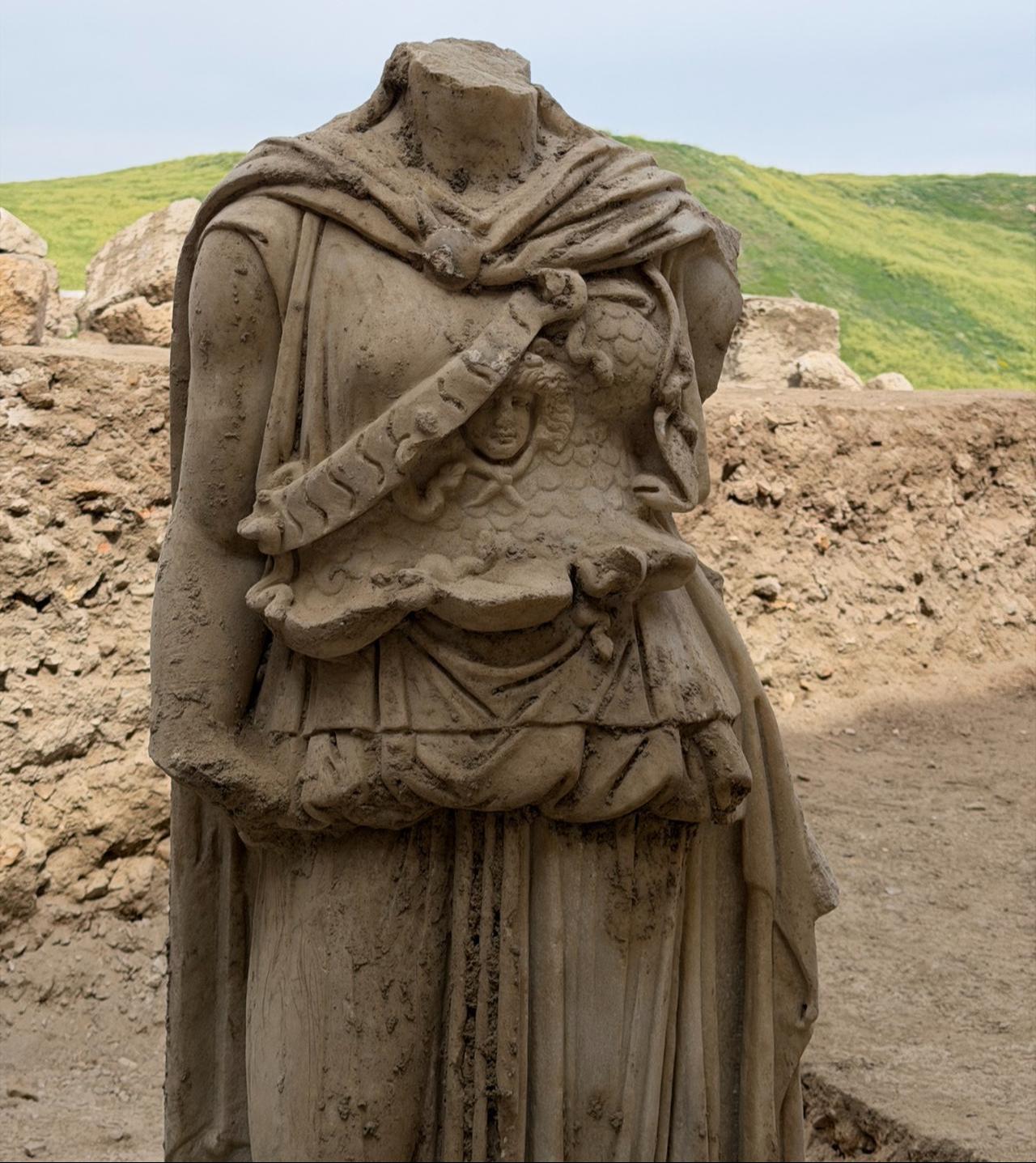
It reflects the first classical style of that period, characterized by naturalistic fabric folds and masterful marble work. The goddess stands on a circular base wearing a finely woven, sleeveless peplos and a cloak wrapped around her neck. This cloak, or hylamis, represents a unique typology that increases the scientific value of the find.
An aegis adorns her chest, featuring the head of Medusa and a series of detailed snakes. Because the sculptor intended for the statue to stand between architectural columns, they left the back of the piece in a rough, unfinished state.
This technique allowed the artist to focus all their skill on the front-facing details that the ancient audience would see.
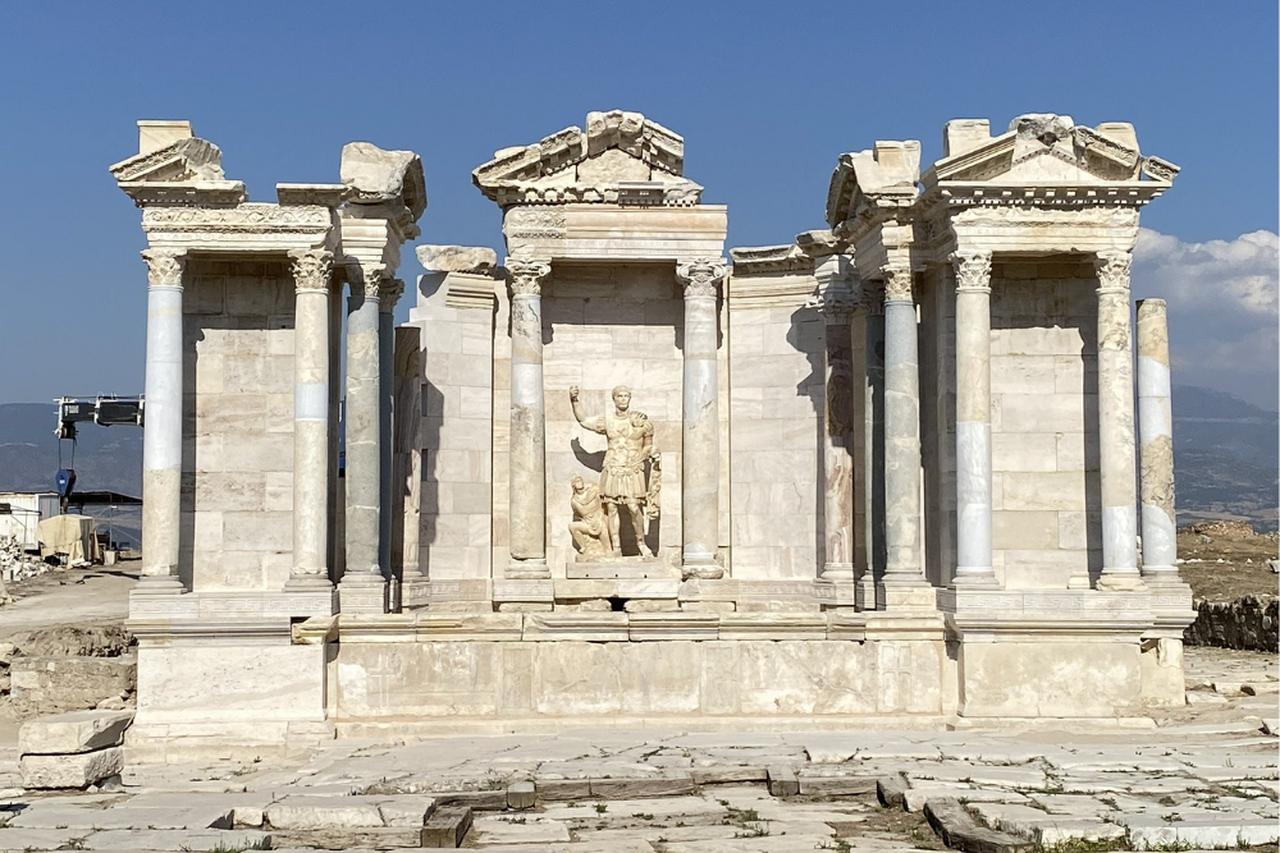
The stage building of the West Theater dates back to the 2nd century B.C. and featured an impressive three-story layout.
Each level boasted 16 columns, and the spaces between them served as a gallery for the gods. These statues often depicted scenes from the epics of Homer, such as the journey of Odysseus.
Previous excavations in 2024 and 2025 revealed figures representing the sea monster Skylla and the cave of the giant Polyphemos.
In the city of Laodicea, Athena held a significance that went beyond her traditional warrior identity. Inscriptions found at the site document her role as a patron of weaving, which was the primary industry of the ancient city.
Citizens organized regular festivals in her honor to celebrate this connection to their local economy. Restoration efforts at the West Theater have continued without interruption since the beginning of 2026.


 Set as preferred source
 Set as preferred source


 1 min read

 1 min read