Newsletters


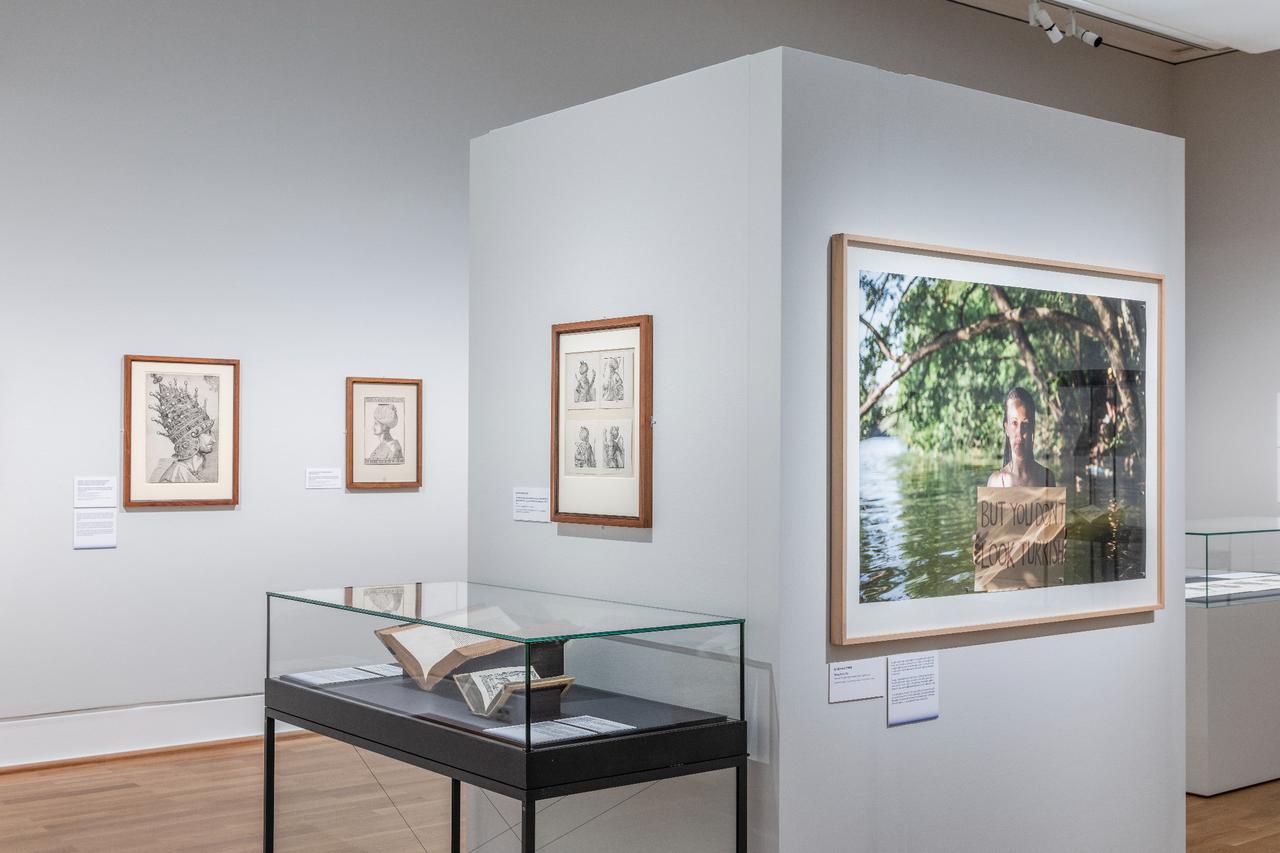


Istanbul, following its conquest in 1453, witnessed a diplomatic and cultural boom in contact with the Western Christian world.
The important military developments, such as the Battle of Mohacs in 1526 and the First Siege of Vienna in 1529, awakened a sense of curiosity among artists, mixed with admiration and fear, toward the Ottoman Empire.
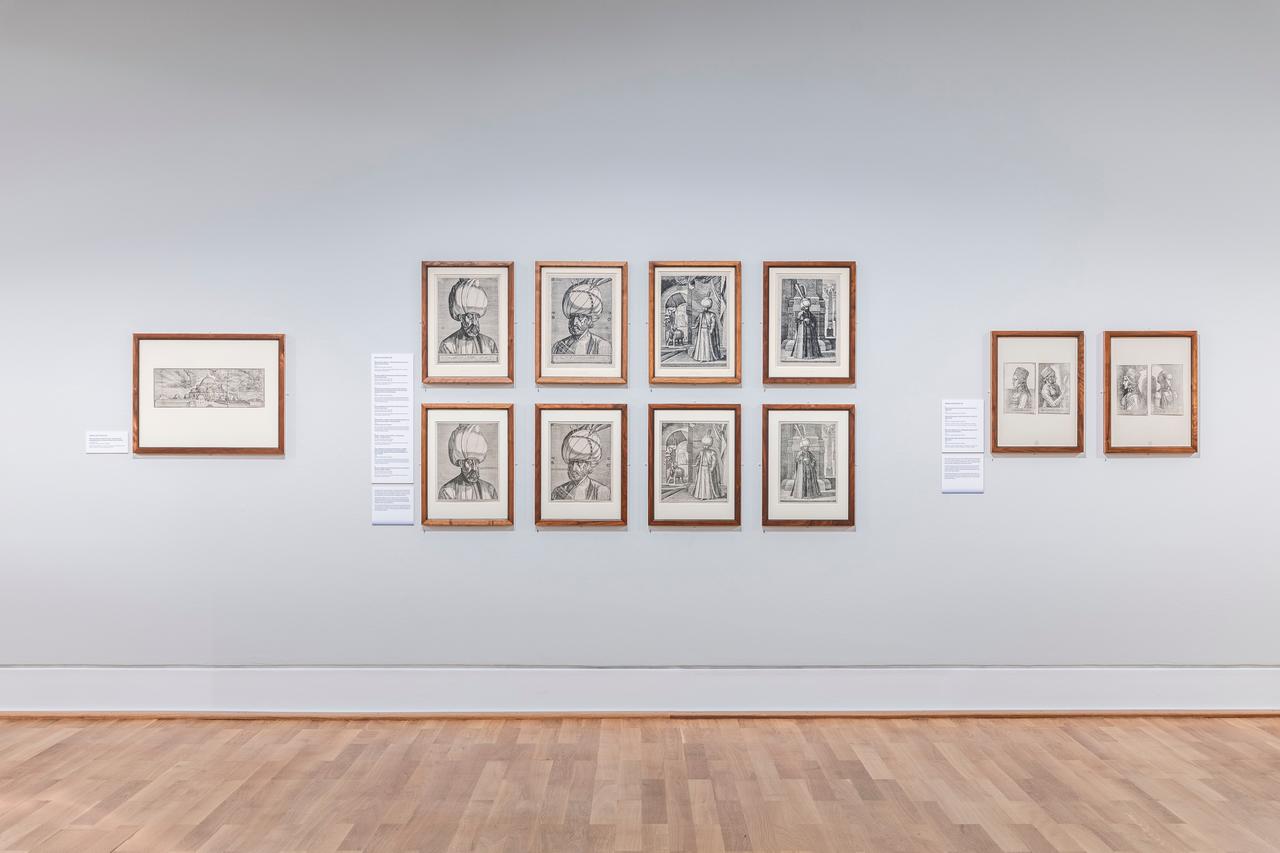
World-famous artists, from Albrecht Durer to Melchior Lorck, directed their gaze on the new unknown neighbors in Istanbul and portrayed the sultans, the daily life and even the city's sprawling Islamic architecture in their works.
These encounters with 'the Other' reflect not only the political Zeitgeist of the era in the art form but also urge the visitors to ask thought-provoking questions on the boundaries between reality and fiction.
The "Bosporus Beats" exhibition in the German capital bridges the Bosphorus and Europe through drawings, prints and books focusing on the early modern period in history.
We talked to the exhibition's curator, Dr. Mailena Mallach, at the Kupferstichkabinett (Cabinet of Prints and Drawings) in Berlin.
What was the starting point for 'Bosporus Beats,' and what idea guided the selection of works?
The theme of perspective opens and runs throughout the exhibition. This is exemplified by the depictions of Istanbul by Antoine Ignace Melling (1763–1831).
Antoine, a German-French artist and court architect, lived for many years in the metropolis on the 'Bosporus' and worked for Sultan Selim III and his half-sister Hatice Sultan.
His images of the city were published as copperplate engravings in Paris.
The published engravings are preceded by a topographical map of Istanbul; on this, Melling plotted his vantage points and the specific radius of his field of vision for each view.
By doing so, he lent credibility to the engravings, which are rich in detail yet imaginatively rendered.
Today, these works raise questions about the relationship between perspective and reality.
The famous Turkish author Orhan Pamuk described Melling’s copperplate engravings as the most beautiful depictions of his hometown because they blend interior and exterior perspectives.
How did you decide which objects, prints, or images to include?
The selection stems from a thorough examination of the entire collection; the aim is to showcase the rich holdings of the Kupferstichkabinett, which comprise some 700,000 works on paper.
This exhibition seeks to explore the collection from multiple perspectives to draw insights relevant to the present day, including from the standpoint of museum theory.
Were there any works that changed your thinking about the exhibition while you were curating it?
An exhibition evolves over time, for example, through conversations with the participating artists, with colleagues from various disciplines, and but above all with the audience—in this case, particularly with many school students.
Everyone brings new perspectives to the table, which have also changed my own view; I now see some connections differently than I did at the beginning. This is an interesting, valuable process that is then reflected in my exhibition tours.
What kinds of visual or historical narratives did you want to foreground, and which ones did you deliberately avoid?
It was important for me to foster an open approach. Narratives and stereotypes often seem entrenched, but the museum offers a space where these narratives can be questioned, where we can respond flexibly and take new ideas on board.
I presented works from the museum openly in the exhibition and thereby invited people to join in the discussion—for example, regarding the question of where the titles originate. This question, for instance, was also addressed in the workshops with the TAM Museum.

What do these images reveal about how Istanbul was imagined by artists and audiences in the early modern period?
In the works of Pieter Coecke van Aelst, for example, we see that Istanbul was already perceived as a megacity as early as the 16th century.
In addition, the artist depicts the coexistence of different eras from the Byzantine times to the Ottoman Empire that have left their mark on the city.
Antoine Ignace Melling is a central figure in the exhibition. Since he lived in Istanbul for 18 years, how does his 'insider’s eye' fundamentally differ from that of artists like Albrecht Durer, who never visited the city?
Nearly 300 years separate the two artists and their works, so their biographies cannot be compared. But even in Melling’s time, it was remarkable for an artist to become, as it were, a resident of the city and to adopt the perspective of an Istanbulite.
His views of the city and its interiors offer a remarkable glimpse into everyday life around 1800.
Melchior Lorck’s 16th-century woodcuts are incredibly detailed. What do these works tell us about the scientific or documentary curiosity of the time versus the purely artistic, like 'The Harem' by Melling?
Artists like Lorck, who came to Istanbul as part of a diplomatic embassy, likely had specific tasks: his depictions were intended to document life in a foreign country, and they were probably linked to political agendas.
Melling, on the other hand, 250 years later, saw himself more as an independent artist who followed his own unbiased vision, creatively combining what he saw to shape his own narratives.
Why do you think Pollaiuolo's 'El Gran Turco' takes so much attention from the audience?
This is a particularly early copper engraving dating to around 1470, of which only two impressions exist in the world. The other copy is located in Istanbul but cannot be seen in a permanent exhibition because the paper is so fragile.
So, if you want to see the original, you’ll have to be in Berlin during the three months of this exhibition. After that, it will be safely stored in our depots and can be seen only upon request.
Is there one particular work or room you hope visitors linger in?
I’ve noticed that some visitors tend to spend a particularly long time in the exhibition overall and seem to enjoy discussing what they see in small groups.
It’s probably less important how much time you spend in front of one artwork—which varies depending on the visitor’s perspective and interests—and more important to take the opportunity to discuss the exhibition’s content with others when possible.
How do you think the exhibition complicates familiar European views of Istanbul?
These contemporary artworks draw attention to a specific question regarding identity: namely, that an outside perspective cannot be neutral. It always has an impact; it affects people as well.
You recently collaborated with authors Ozan Zakariya Keskinkilic and Yade Yasemin Onder to write 'miniatures' (short texts) for the works. How does adding a literary layer change the visitors' visual experience of the prints?
It was very important to me that this exhibition demonstrated that a purely art-historical perspective on the art representing the Ottoman Empire cannot be sufficient on its own.
Literary texts are better suited to expressing confusion and emotion. The two authors are excellent voices for this purpose, because they are masters of language and do not shy away from honest and critical commentary.
In general, the literary texts represent the diversity of approaches and levels of meaning that can be taken.


 Set as preferred source
 Set as preferred source


 3 min read