Newsletters


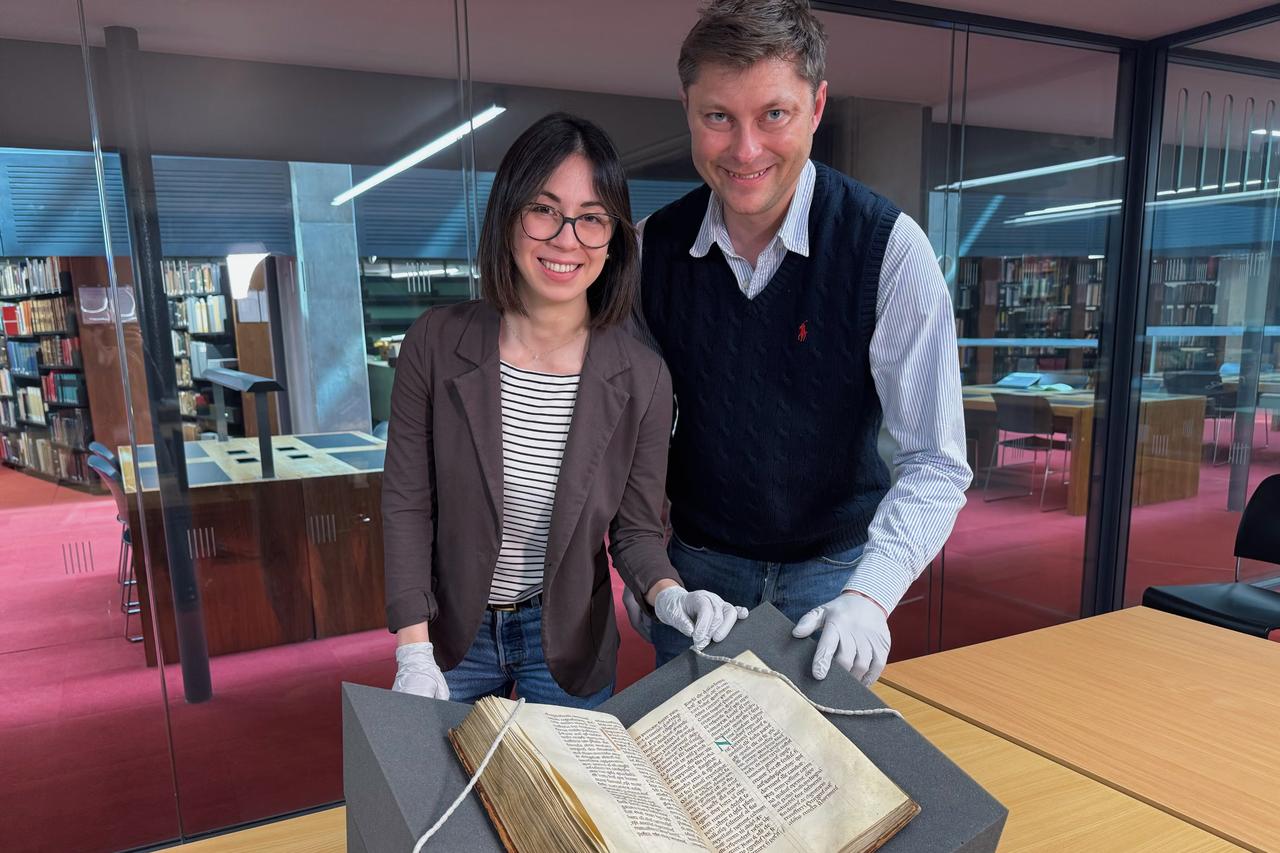


A long-overlooked manuscript in Rome has revealed a rare version of the earliest known poem in Old English.
The discovery, made by researchers from Trinity College Dublin, centers on “Caedmon’s Hymn,” a nine-line composition dating back to the seventh century.
The find is not just another archival recovery. It offers a direct glimpse into a moment when English was still emerging as a written language, competing with Latin for intellectual and cultural legitimacy.
In this case, the Old English text does not sit quietly in the margins but appears within the main body of a Latin manuscript, suggesting that early readers saw value in preserving vernacular expression alongside dominant scholarly traditions.
That detail alone shifts how historians understand the early transmission of English literature. Rather than a gradual replacement of Latin, the evidence points to a more layered coexistence, where readers and scribes actively negotiated which language belonged at the center of a text.
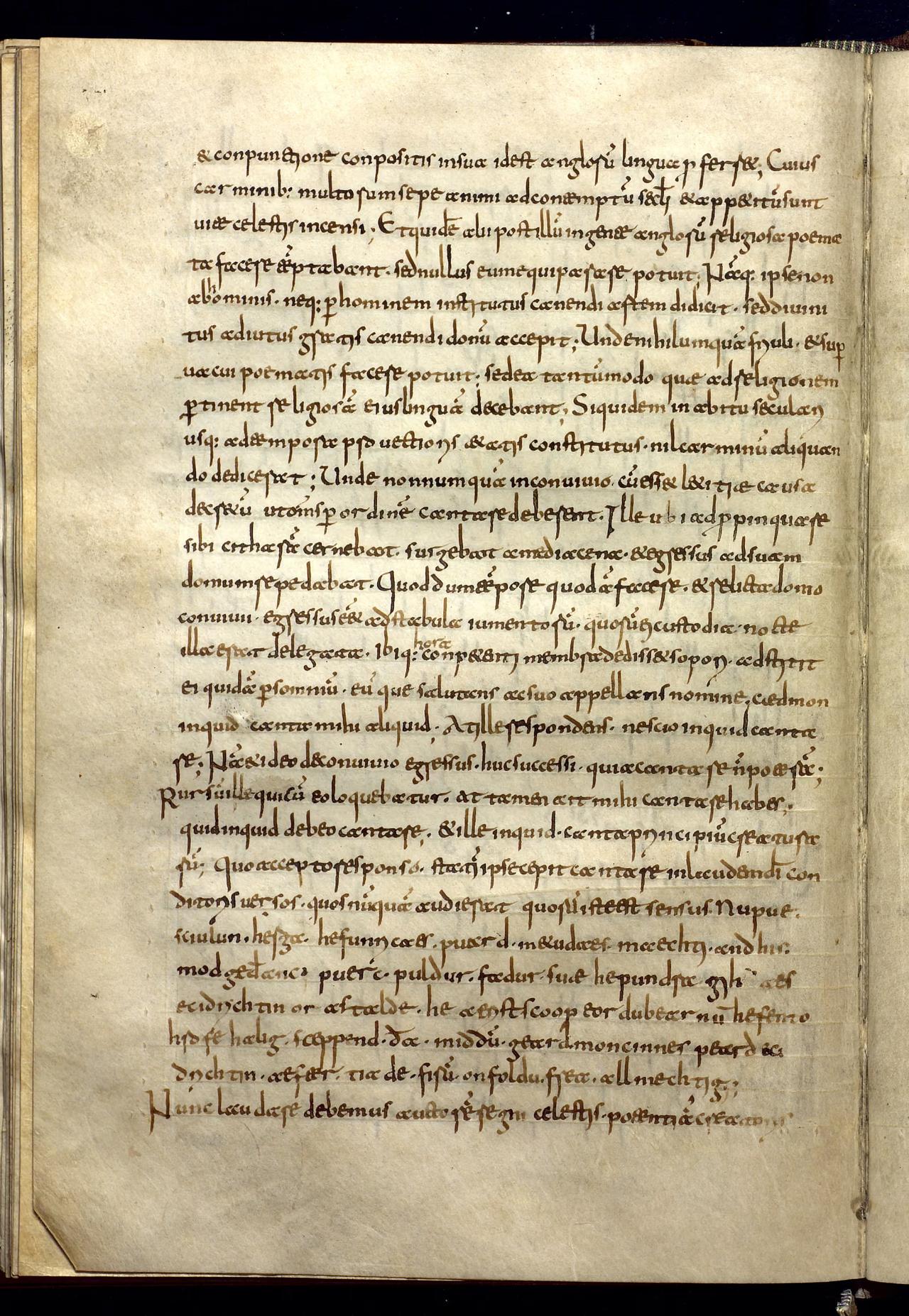

The manuscript was identified at the National Central Library of Rome after being digitized as part of a broader archival project.
Elisabetta Magnanti and Mark Faulkner, both specialists in medieval literature, recognized its significance when reviewing the digital images.
“When we saw it, we looked at each other, and I said, ‘No one knows about this’,” Magnanti said, describing the moment of discovery.
After checking catalogues and finding no reference to the poem, the team confirmed that the manuscript had not previously been identified as containing “Caedmon’s Hymn.”
The text itself dates from the early ninth century, between 800 and 830, and is now considered the third oldest surviving version of the poem.
Earlier copies held in Cambridge and Saint Petersburg include Old English only as annotations, whereas this version embeds it directly into the Latin narrative.
The poem’s origins are rooted in a story recorded by Bede, an eighth-century monk whose “Ecclesiastical History of the English People” remains a foundational account of early England.
According to Bede, Caedmon was an illiterate cowherd working at Whitby Abbey who, after a divine visitation, was suddenly able to compose a hymn praising the creation of the world.
Although Bede included a Latin translation of the poem, he omitted the original Old English version. Within roughly a century, however, a monk in northern Italy reinserted the vernacular text into the Latin manuscript.
Researchers say this decision reflects how early audiences valued English poetry, even within a scholarly tradition that privileged Latin.
Faulkner noted that the integration of Old English into the main text suggests readers would have noticed its absence. The placement signals that the poem was not treated as supplementary material but as an essential part of the narrative.

Beyond its literary importance, the manuscript captures a transitional phase in the development of written English.
Each word in the poem is followed by a full stop, a feature that points to early experimentation with spacing and punctuation.
At the time, conventions for separating words were still evolving, and the text reflects a system that had not yet stabilized. These technical details offer insight into how scribes adapted writing practices as English moved toward more standardized forms.
Researchers estimate that only around three million words of Old English survive today, with most dating from later centuries. “Caedmon’s Hymn” stands out as an unusually early example, connecting modern readers to the earliest stages of the language.
The manuscript’s survival is as complex as its contents.
Produced at the Abbey of Nonantola in northern Italy, it was later transferred to Rome during the Napoleonic Wars for safekeeping. It was subsequently stolen, passed through private collections, and eventually acquired by the National Central Library.
Because of this fragmented history, scholars had considered the manuscript lost since at least 1975. Its rediscovery became possible only after the library digitized its holdings and made them accessible for remote study.
Magnanti pointed to this process as central to the breakthrough, saying the digitization effort allowed researchers to identify the significance of a text that had effectively remained hidden in plain sight for decades.
The manuscript now sits within a growing body of digitized material that is reshaping access to early texts, revealing how much of literary history still depends on what archives choose to preserve, catalogue and share.


 Set as preferred source
 Set as preferred source


 3 min read