Newsletters


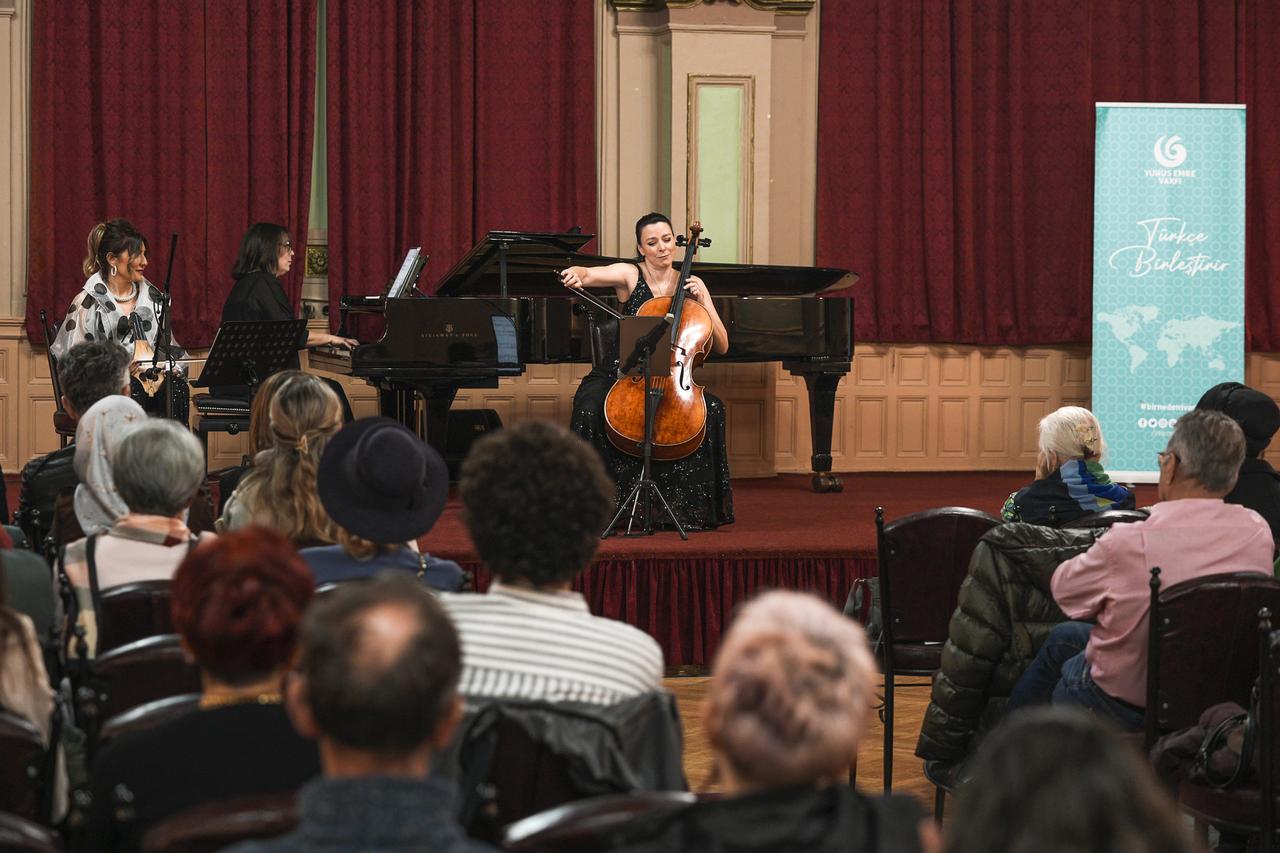


In the capital of Bosnia and Herzegovina, the ensemble Trio Alla Turca took to the stage in Sarajevo, bringing together musical traditions from East and West in a concert that drew strong interest from local audiences and representatives of Türkiye.
Hosted by the Yunus Emre Institute (YEE), the performance unfolded at the Sarajevo Army Hall Concert Hall as part of the International Sarajevo Winter Festival, offering listeners a carefully curated program that blended Turkish music, Western classical traditions, Eastern musical forms, and selections from Turkish folk music in an unconventional interpretive style.
Sarajevo, long regarded as a crossroads of civilizations, served as the setting for the concert, which was hosted by the Yunus Emre Institute, a public cultural institution established by Türkiye to promote Turkish language, culture, and arts abroad, similar in mission to organizations such as the British Council in the United Kingdom or the Goethe-Institut in Germany.
The concert took place at the Sarajevo Army Hall Concert Hall, a venue that regularly stages cultural programs and musical performances in the Bosnian capital. As part of the International Sarajevo Winter Festival, an established cultural event that brings together artists from various disciplines during the winter season, the performance formed part of a broader artistic calendar that spans music, theater, visual arts, and other forms of creative expression.
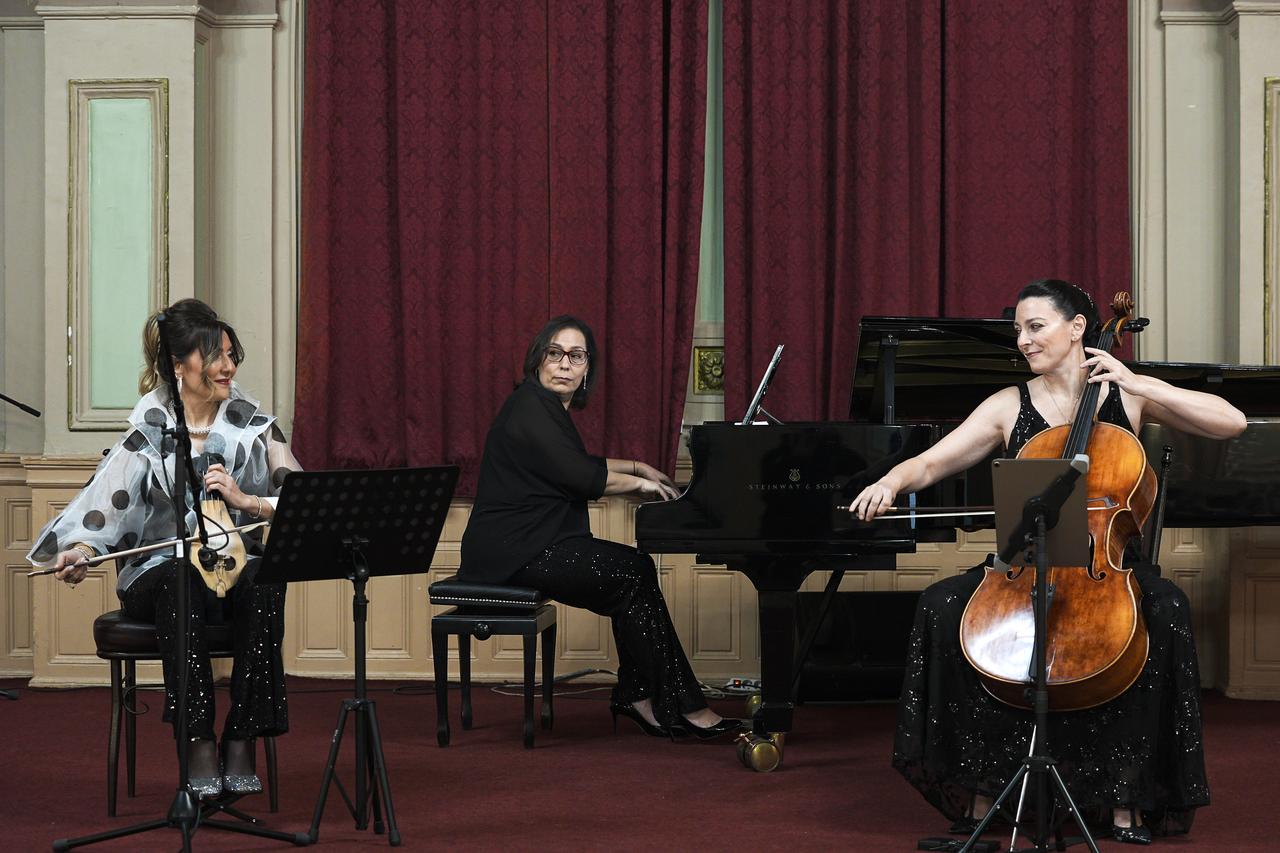

The ensemble performed under the name Trio Alla Turca, a title that signals a reference to Turkish musical heritage while also evoking the phrase “alla turca,” historically used in European classical music to describe compositions inspired by Ottoman or Turkish themes. The name itself subtly reflects the group’s artistic direction, which centers on bringing together musical idioms that might otherwise remain separate.
Representing the trio were three accomplished musicians. Professor Hatice Dogan Sevinc performed on the classical kemenche, an instrument central to Ottoman and Turkish classical music traditions. For readers unfamiliar with the instrument, the classical kemenche is a bowed string instrument, typically held vertically and played with a bow, producing a distinctive, expressive tone that is often associated with the refined repertoire of Ottoman court music.
Dilbag Tokay took on the cello, known internationally as the violoncello. The cello is a foundational instrument in Western classical music, valued for its wide range and its ability to carry both melodic and harmonic lines. By pairing the cello with the kemenche, the ensemble effectively placed Eastern and Western string traditions side by side, allowing the timbral qualities of each instrument to complement and respond to one another.
Completing the trio, Emine Serdaroglu performed on the piano. The piano, widely regarded as a central instrument in Western classical music, also serves as a versatile bridge in cross-cultural projects due to its harmonic depth and dynamic range. In this setting, it provided both structural support and interpretive nuance, helping to tie together the varied elements of the program.
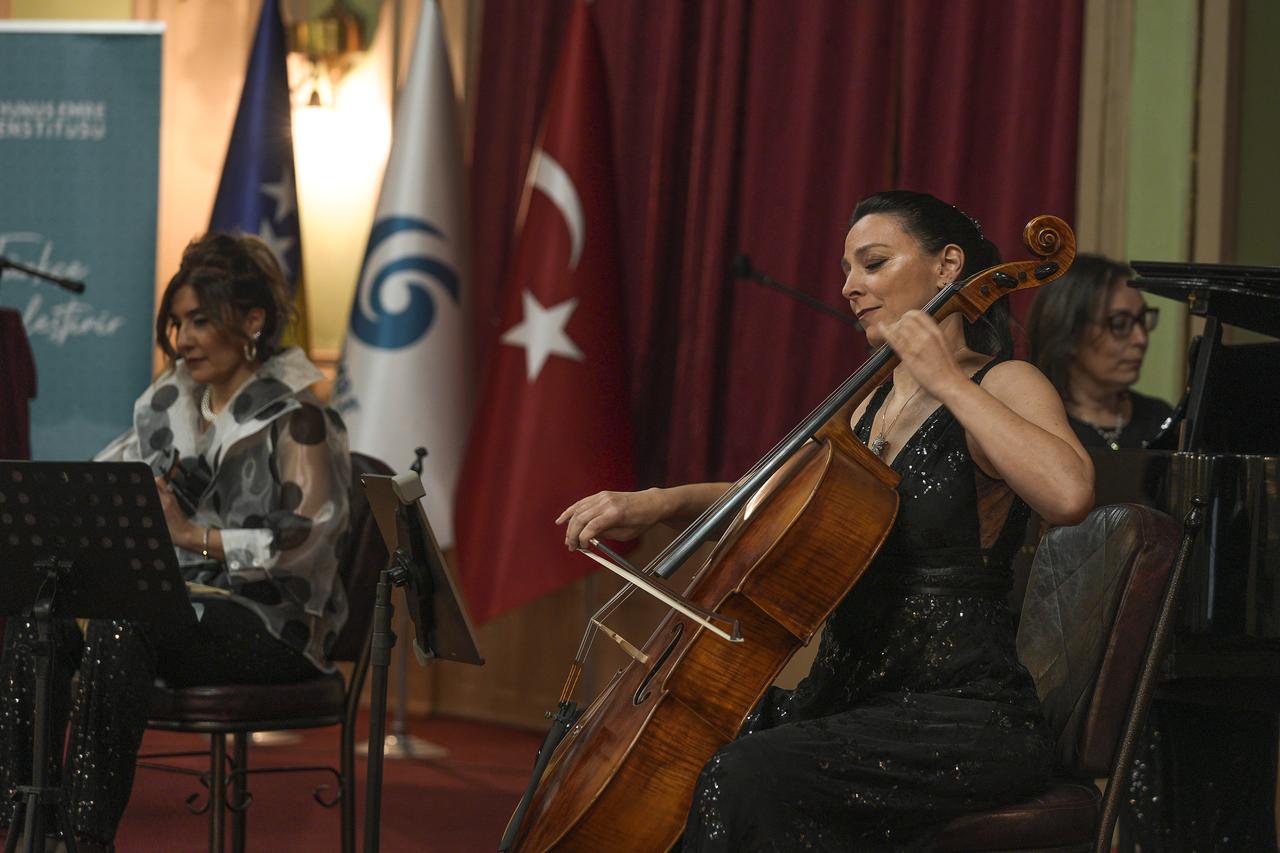
One of the defining themes of the concert was the meeting of Eastern and Western musical traditions on the same stage. In a city such as Sarajevo, which has historically embodied a blend of Ottoman, Austro-Hungarian, and Balkan influences, this thematic focus carried symbolic weight.
The concert effectively brought together instruments and repertoires that originated in different cultural spheres, yet allowed them to interact in real time.
By setting out to merge traditions rather than to contrast them sharply, the trio emphasized continuity over division. The concert drew significant interest from Sarajevo’s art lovers.


 Set as preferred source
 Set as preferred source


 3 min read