Newsletters


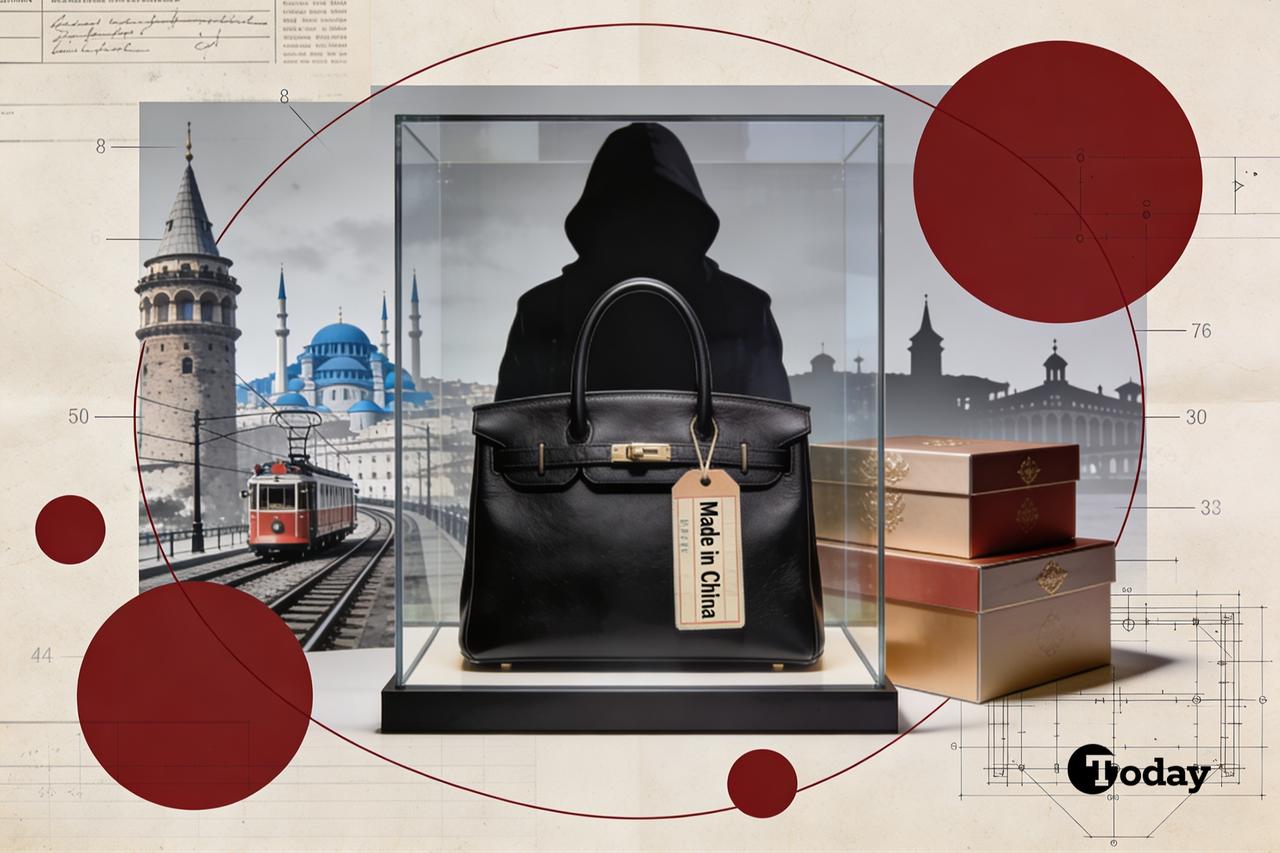


Rain slid across the tram tracks of Sultanahmet while tourists hurried toward the Blue Mosque beneath umbrellas. Some of them carried bespoke luxury handbags in a variety of colors and materials.
Inside a narrow leather shop between carpet stores and currency exchanges, one of the shopkeepers, identified by the pseudonym Mehmet, placed three orange Hermes Birkin bags side by side under fluorescent light.
In this story, most shopkeepers step into the record under pseudonyms to protect their identities.
“At first glance, they look identical,” he said. “Tap them and hear the sound carefully.”
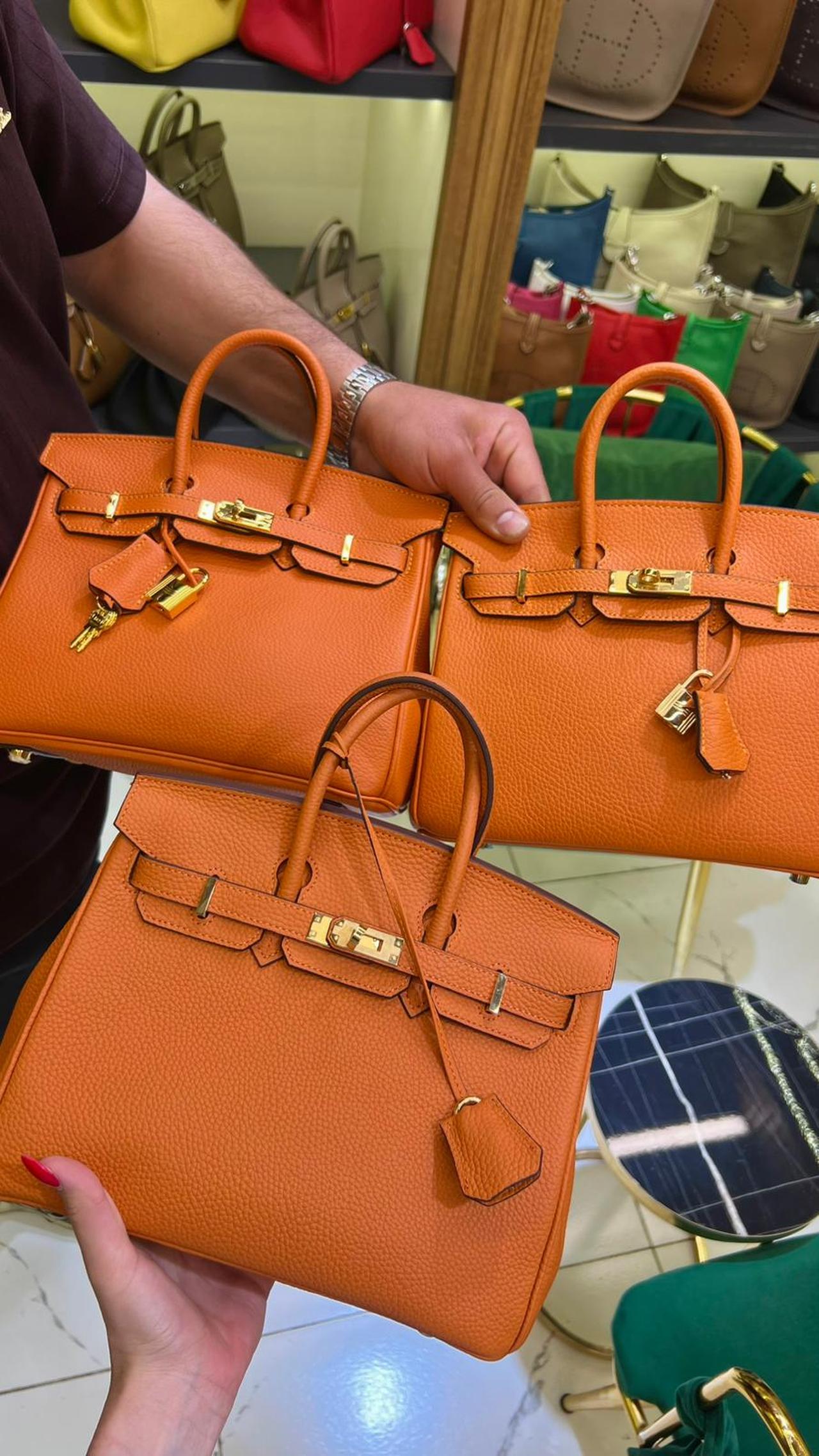

The first produced a hollow plastic sound. The second felt softer and heavier. The third carried a muted density that almost resembled the original.
Behind him stood what appeared to be an ordinary cream-colored wall.
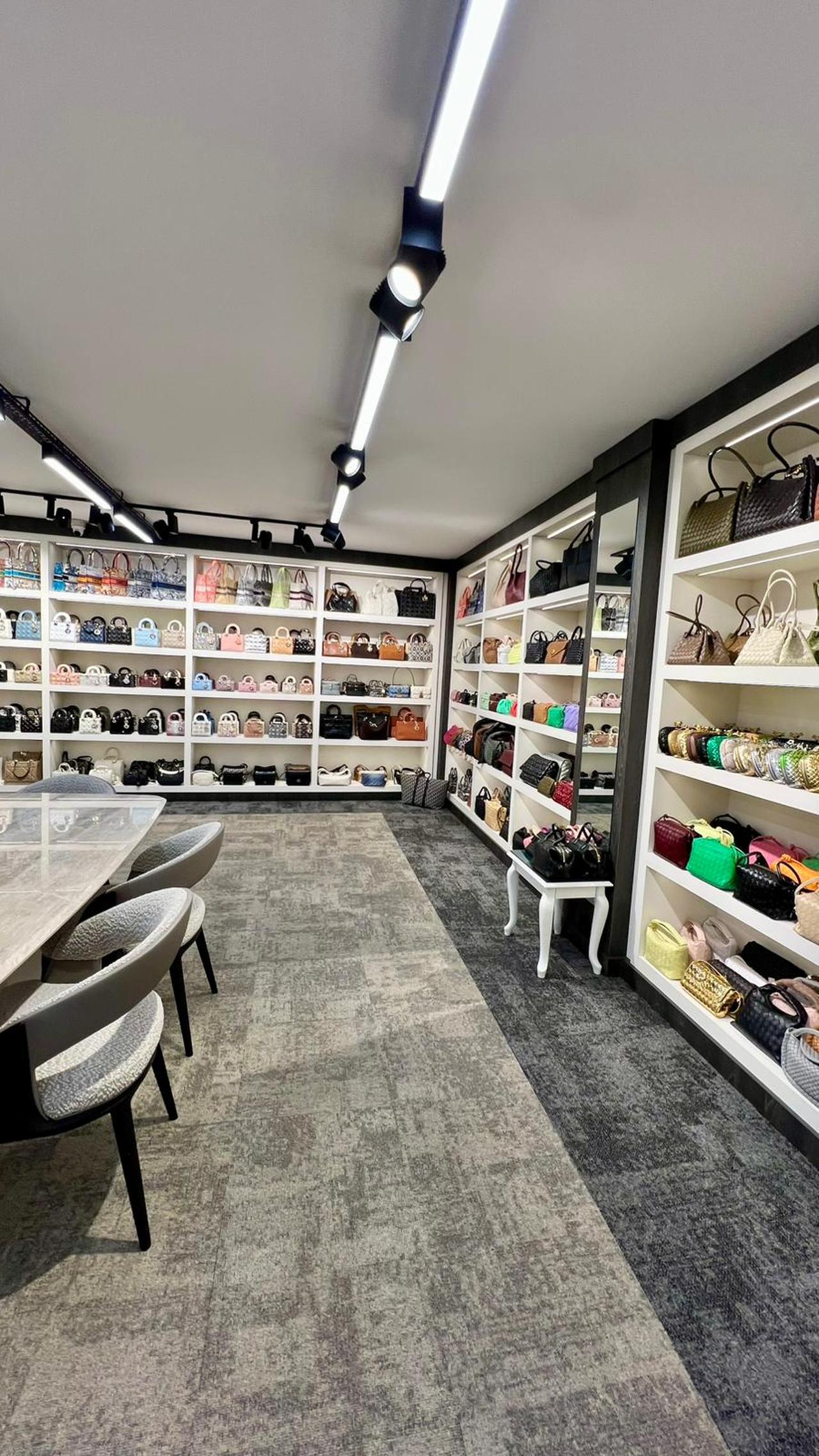
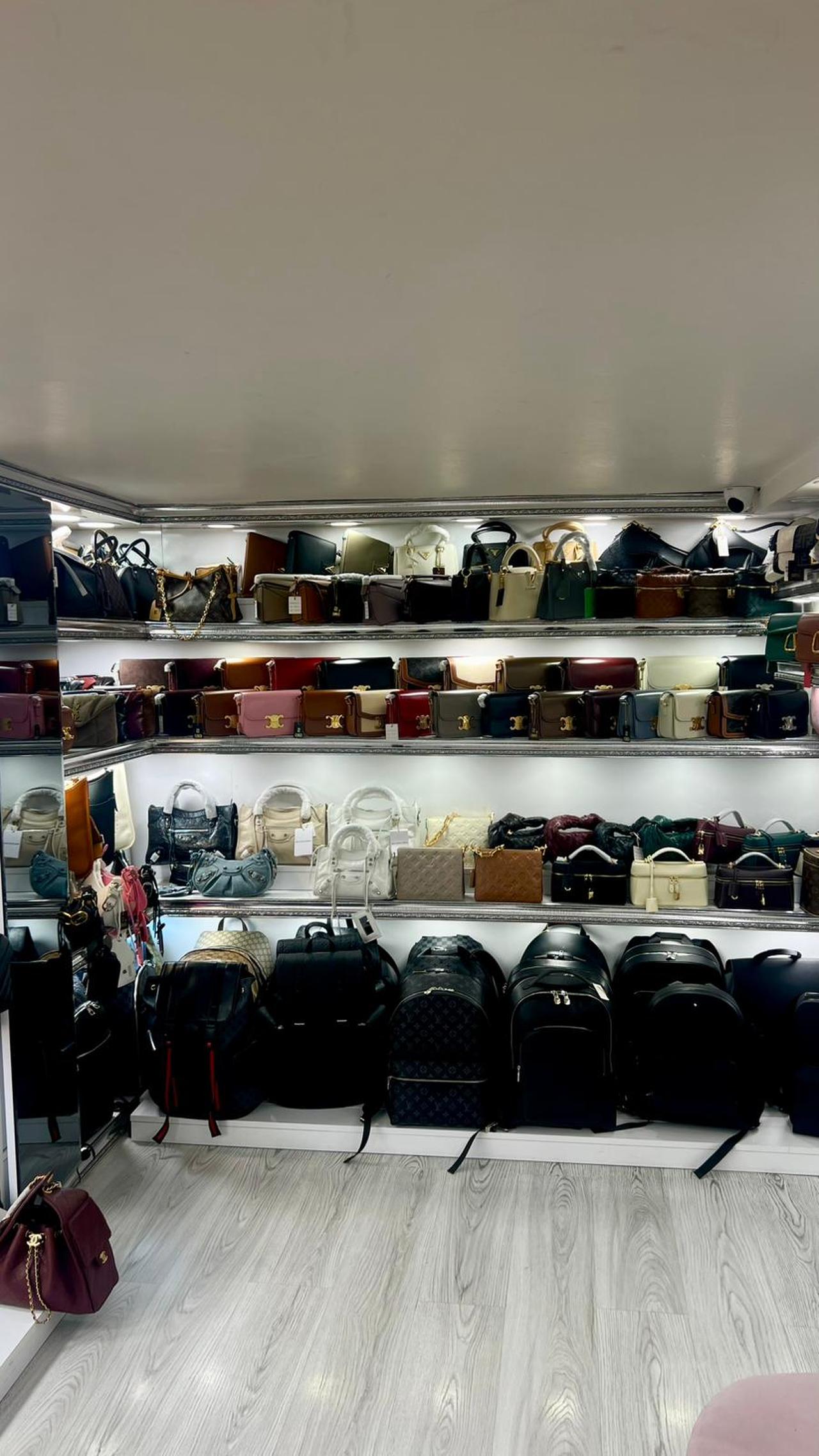
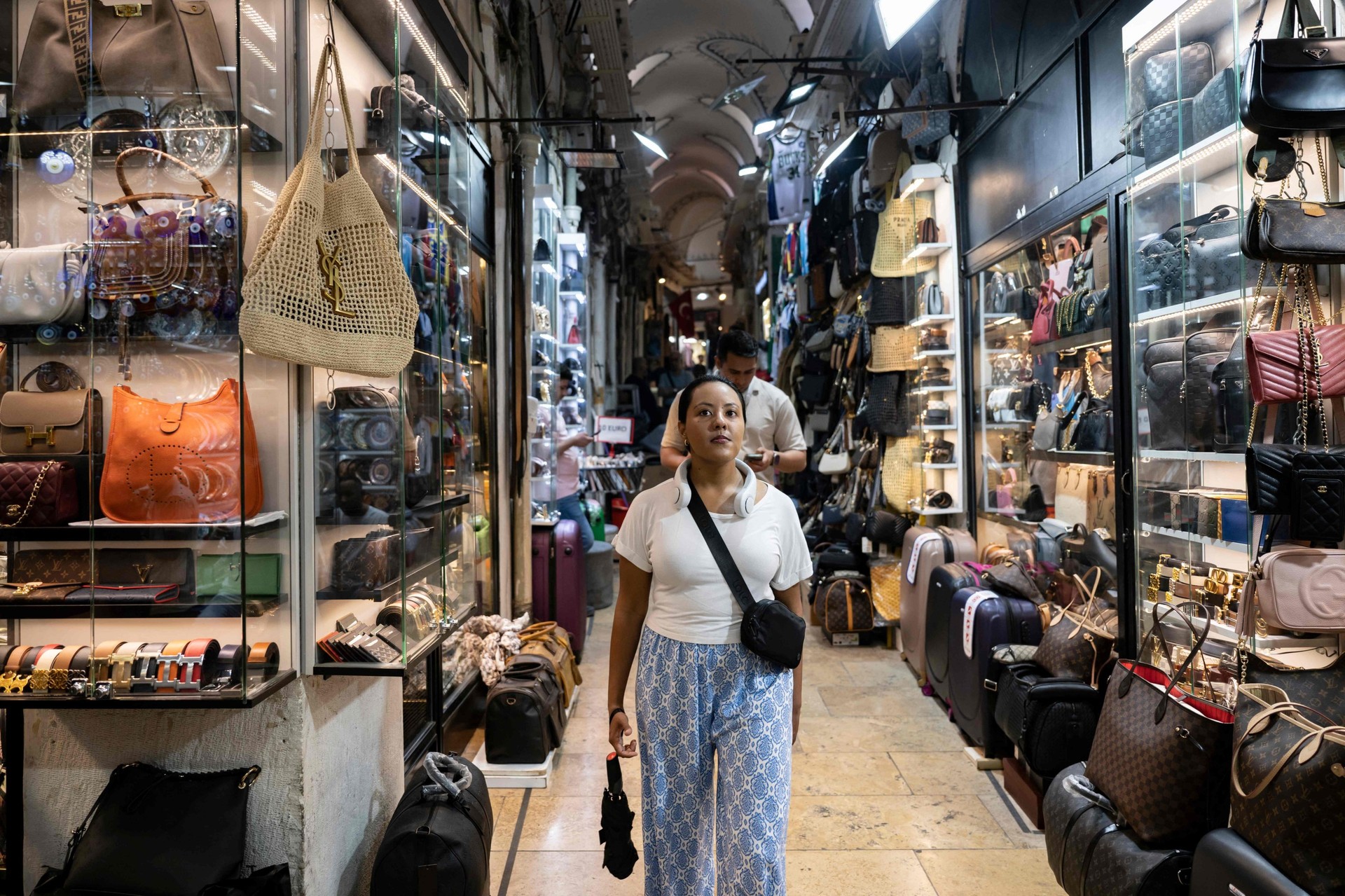
A moment later, he pushed it open. The wall concealed another room lined with Chanel, Louis Vuitton, and Hermes bags arranged in identical rows.
“The first copy hides here,” he whispered.
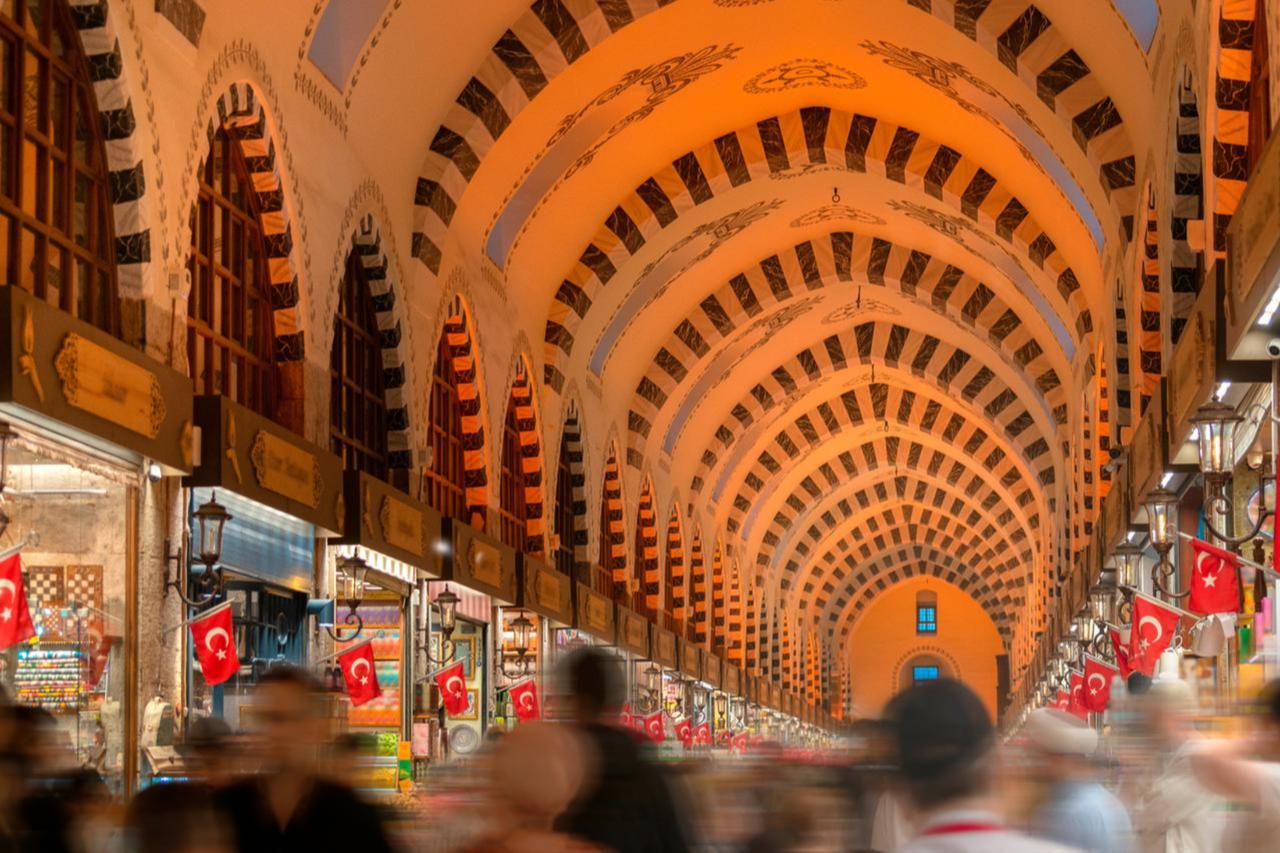
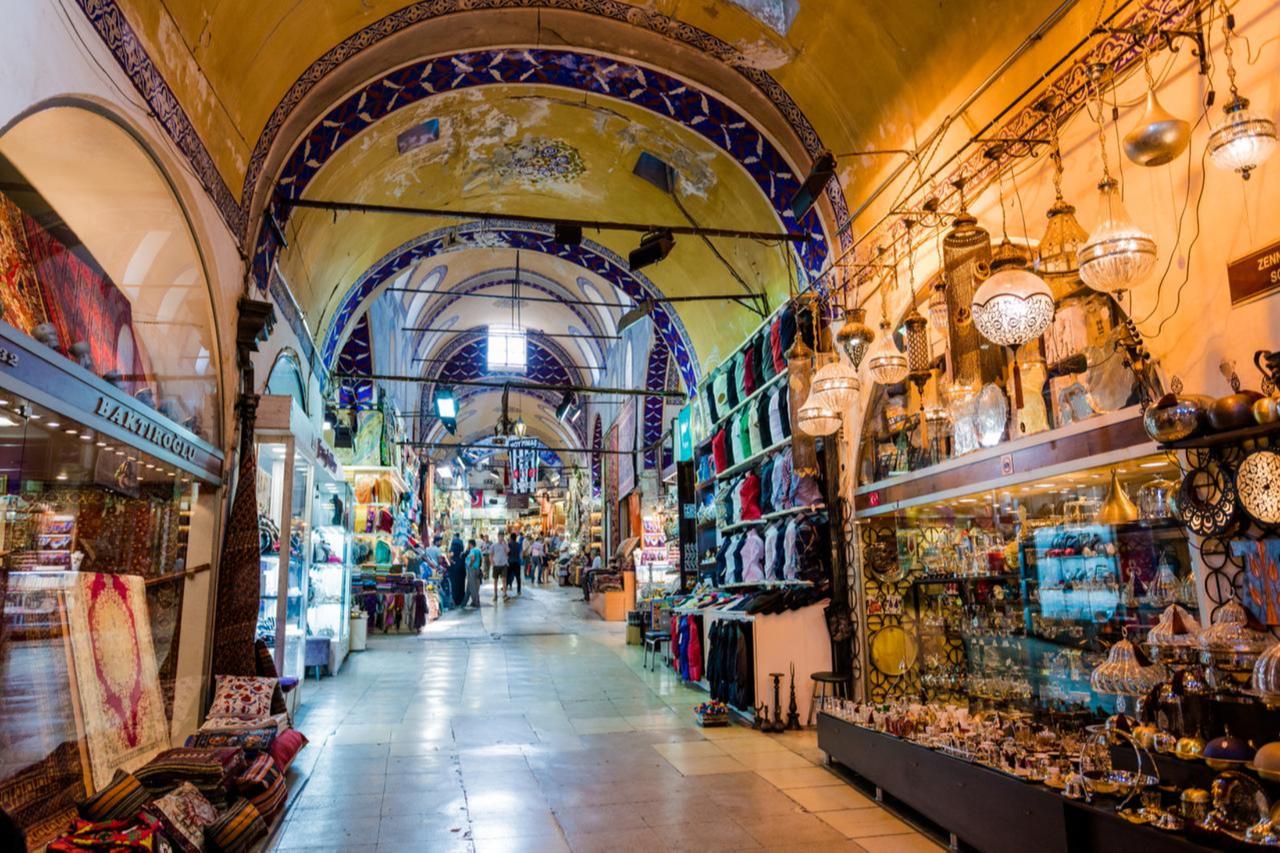
For decades, Istanbul’s Grand Bazaar has been associated with counterfeit luxury goods.
Today, the trade stretches far beyond its historic alleys into apartments in Karakoy, hidden showrooms, WhatsApp groups and private villa deliveries arranged for celebrities, influencers and wealthy clients.
According to an Organisation for Economic Co-operation and Development (OECD) and European Union Intellectual Property Office report, Türkiye accounted for roughly 22% of counterfeit goods seized at European Union borders between 2020 and 2021, making it the world’s second-largest source after China.
Just outside the bazaar, Furkan showed a small showroom hidden behind a second-floor door.
“Everyone buys fake bags, shoes, or watches,” he said. “Even the rich.”
His store rents for around $5,000 a month. Inside the Grand Bazaar, rents can exceed $20,000. The same bag sold inside for $1,000 may come from the same factory as one sold outside for half the price.
Furkan insisted his products were “first copy,” the industry term for replicas considered nearly indistinguishable from authentic luxury bags.
Yet loose stitching appeared near some handles, while the hardware lacked the dense metallic weight Mehmet later demonstrated.
“Every seller says first copy,” Mehmet later said dismissively. “But if the price drops too fast, you already know.”
Furkan described footballers from Galatasaray and Besiktas arriving quietly, wearing hats and sunglasses, before entering selected stores on prearranged visits.
“They buy one original and 10 replicas,” he said. “People already believe they are rich.”
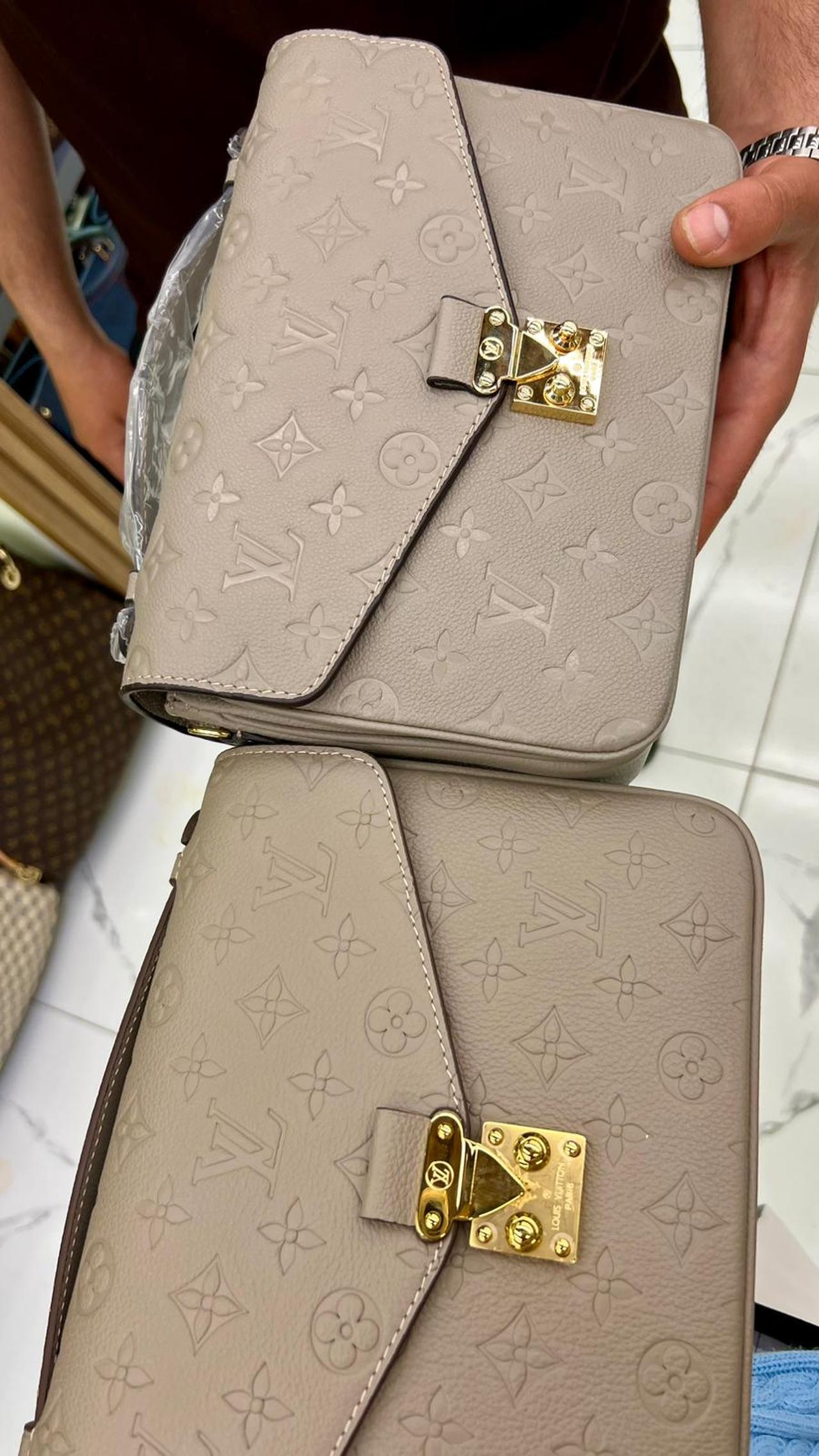
Back in Sultanahmet, Mehmet examined the bags like forensic evidence.
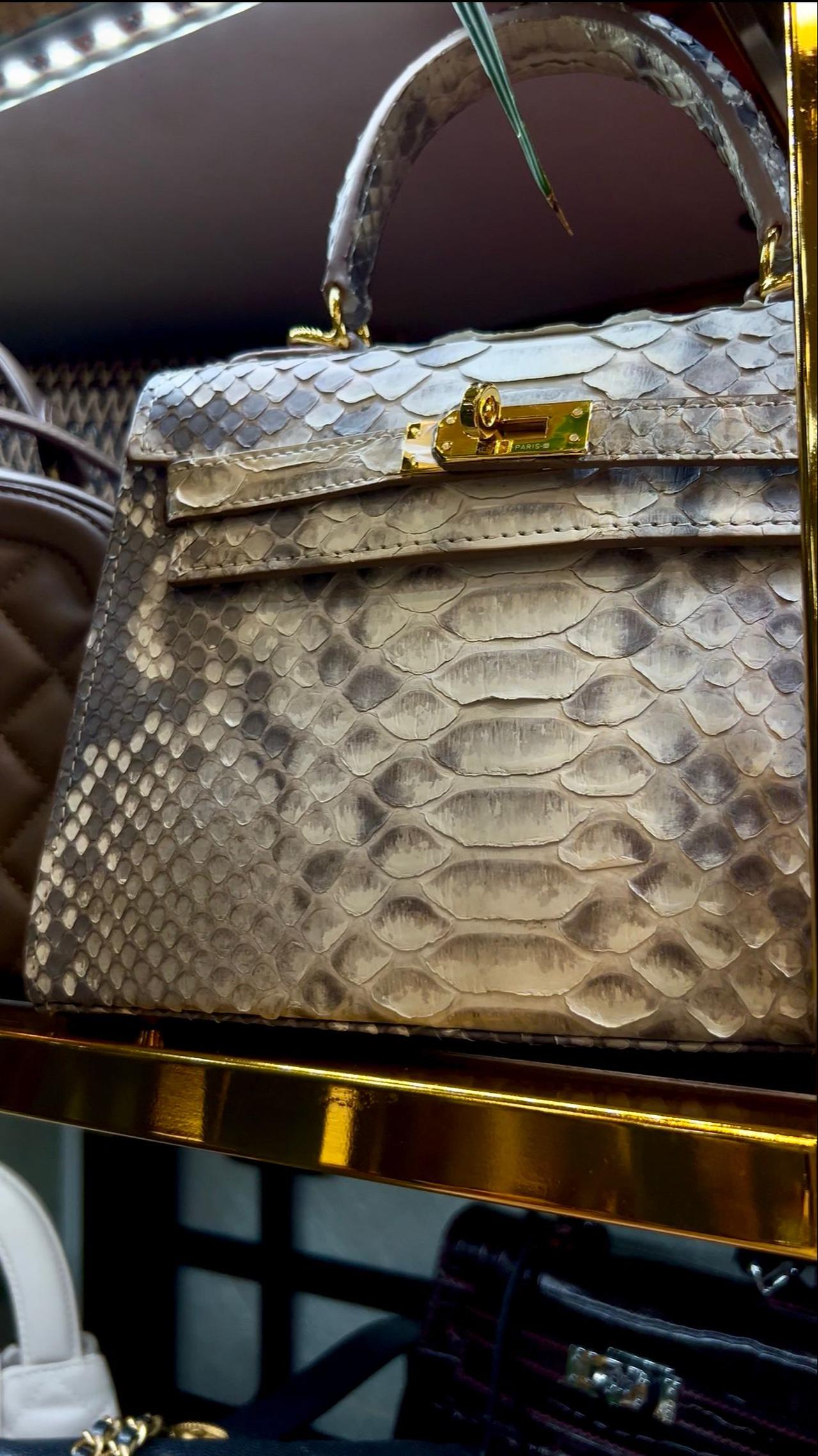
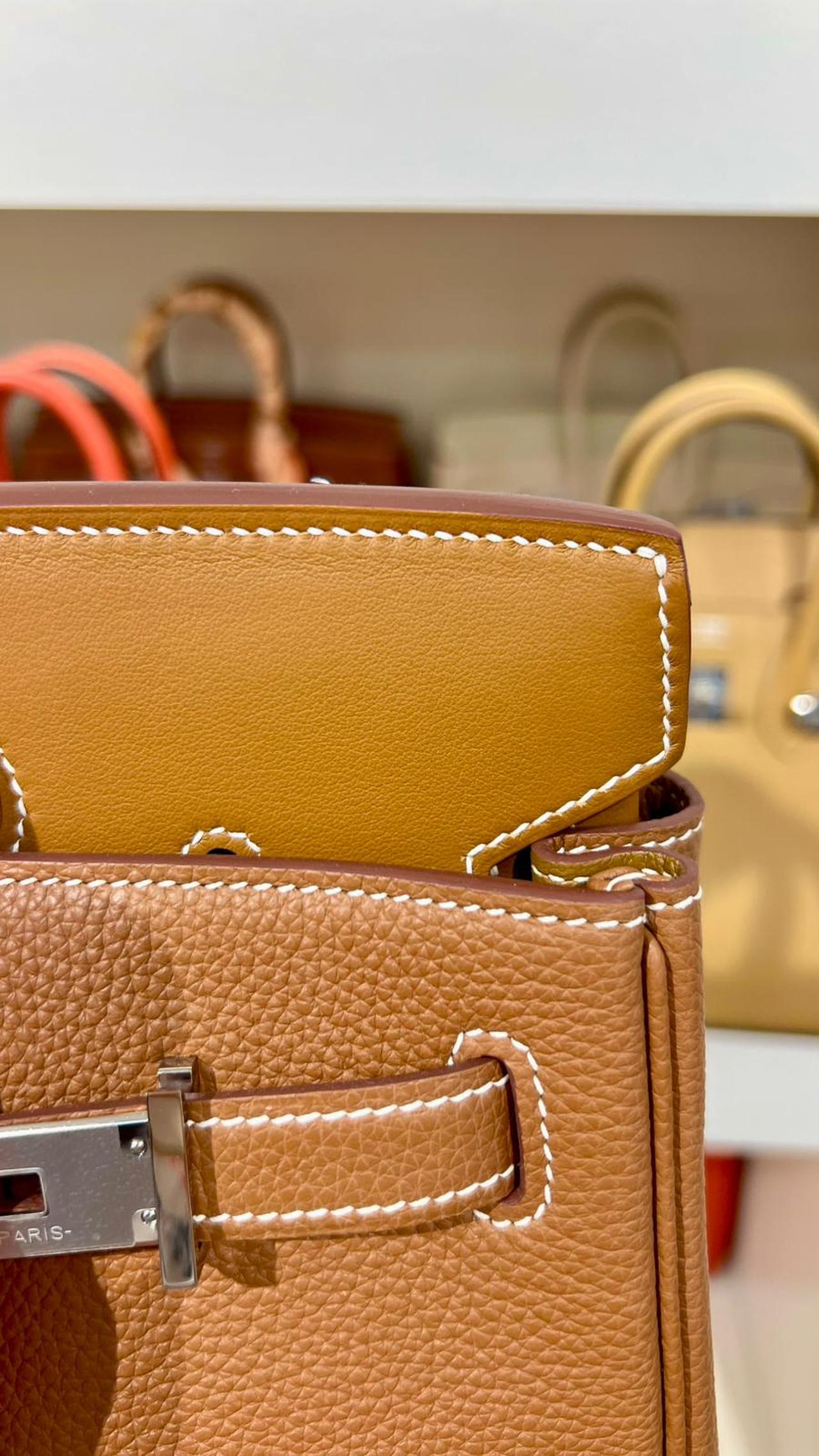
The authentic Birkin generally carries around 11 stitches per inch, each angled precisely by hand.
The highest-grade replica came close with 10 evenly spaced stitches, while the cheaper version widened near the folded corners.
The spacing between the Hermes logo and upper stitching measured only a few millimeters. On lower-quality bags, the stamp drifted slightly upward.
Authentic hardware moved with a dense silence. Cheaper versions rattled faintly when shaken.
Mehmet rubbed the edge of the paint near the handle. The authentic texture felt hardened and waxy. One replica felt rubbery. Another had already begun cracking where the handle bent repeatedly.
Then came the smell.
“Smell tells everything,” he said.
The authentic leather carried a dry, earthy scent. The synthetic version smelled faintly chemical, like heated plastic trapped inside a car during summer.
Even the serial numbers exposed the hierarchy. High-grade replicas carried deeply pressed heat-stamped codes. Cheaper versions appeared flatter and blurred.
The most expensive replicas, sellers claimed, often age differently, too. Genuine hardware oxidizes gradually over the years, while cheaper plated metals lose color first around corners repeatedly touched by skin oils.
Mehmet opened a video on his phone showing police officers carrying boxes filled with handbags out of Grand Bazaar stores.
“These stores are illegal,” he said. “Any day, the police can come.”
A year ago, police raided his shop and confiscated nearly one-third of his collection.
“More than $10,000 disappeared in one day,” he said. “Thankfully, they didn’t know about the bags behind the door.”
Turkish authorities have repeatedly targeted counterfeit luxury networks operating in Istanbul.
In one major operation, investigators raided more than 130 locations connected to counterfeit manufacturing and distribution systems.
Reports examining counterfeit operations inside the Grand Bazaar describe hidden showrooms located away from official storefronts, concealed entrances without visible numbering, and systems designed to complicate police raids.
An Istanbul-based intellectual property attorney familiar with counterfeit enforcement said luxury brands, police units, customs authorities, and private legal teams all play roles in identifying sellers.
“Some lawyers even purchase bags themselves to obtain receipts before filing lawsuits or supporting police operations,” he explained.
Several sellers described becoming visibly nervous once conversations became too detailed.
“The first thing they ask is your job,” Mehmet said. “They are afraid you might be a lawyer.”
The scale of Istanbul’s replica economy has at times extended far beyond hidden showrooms and small shopkeepers.
In one widely reported investigation, Istanbul authorities monitored a counterfeit luxury network for eight months before raiding 137 locations connected to replica production and distribution systems.
According to Turkish media reports, 74 people were detained during the operation, while investigators seized millions of Turkish lira in cash and promissory notes.
The investigation allegedly uncovered links between counterfeit luxury sellers and members of Istanbul’s high society, with reported phone conversations involving clients praising the quality of fake Chanel and Louis Vuitton bags.
Turkish media reports also alleged that the network maintained international smuggling connections that eventually drew Interpol involvement.
Across the Galata Bridge in Karakoy, another seller named Akin operated from a hidden two-floor showroom inside an ordinary apartment building.
Customers arrived only through word of mouth.
“People care about quality more than price,” Akin said. “Especially rich people.”
Some replica bags there sold for nearly $10,000.
Akin claimed many luxury houses depend heavily on Chinese production.
“Everything is made in China,” he said. “Europe only finishes the story.”
Luxury brands reject such claims.
Hermès insists its artisans train for years in French workshops before producing Birkin bags by hand. Louis Vuitton states its leather goods are manufactured in workshops across France, Spain, Italy and the United States.
Yet global luxury supply chains remain opaque.
Experts interviewed by CNN on luxury manufacturing chains confirmed that components and preassembled sections are often produced in China before final completion elsewhere.
Inside the Grand Bazaar, Murat insisted Chinese factories now outperform everyone else.
“China can make the quality and quantity,” he continued.
“Seventy percent of bags in my store are from China, making 10 bags in Türkiye not enough to fill one store, but no seller would tell you the truth."
But Mehmet dismissed many Chinese products as mass-produced plastic.
“Türkiye makes the best handmade quality,” he insisted. “China makes quantity.”
The investigation eventually led to Guangzhou, China, where a seller using the pseudonym Lin communicated through WhatsApp and WeChat after Turkish shopkeepers shared his contact information privately.
“Europe sells stories," he said in a voice note. “China sells production.”
He sent factory videos showing rows of handbags while workers wrapped gold hardware before shipment to Türkiye, Europe and Gulf countries.
According to Lin, a high-grade Birkin replica costs roughly $1,400 to produce. Around $450 goes toward leather alone. Stitching and materials add another $200.
Labor costs around $600. Packaging costs only $8 before shipping; showroom markups and tourist pricing inflate the final number.
The same replica may eventually sell in Istanbul for $5,000 to $10,000. An authentic Birkin can retail above $40,000 before entering the second-hand market, where rare versions sometimes exceed $100,000.
A Russian influencer contacted during reporting described the unspoken agreement sustaining the replica economy.
“You cannot tell from a picture if the bag is fake or not,” she said. “People already assume influencers can afford these bags. If I don’t carry luxury bags, even replicas, I feel insecure. Fake bags in a fake life. We all keep the secret.”
Instagram transformed luxury from private possession into public performance.
Followers cannot smell leather through a screen or inspect stitching details. They see only the image.
Outside, the evening call to prayer drifted across Sultanahmet as Mehmet closed the hidden door behind rows of carefully arranged replicas.
Beyond the rain-covered tram tracks of the old city, Istanbul continued selling its oldest illusion of all.


 Set as preferred source
 Set as preferred source


 1 min read
 1 min read