Newsletters


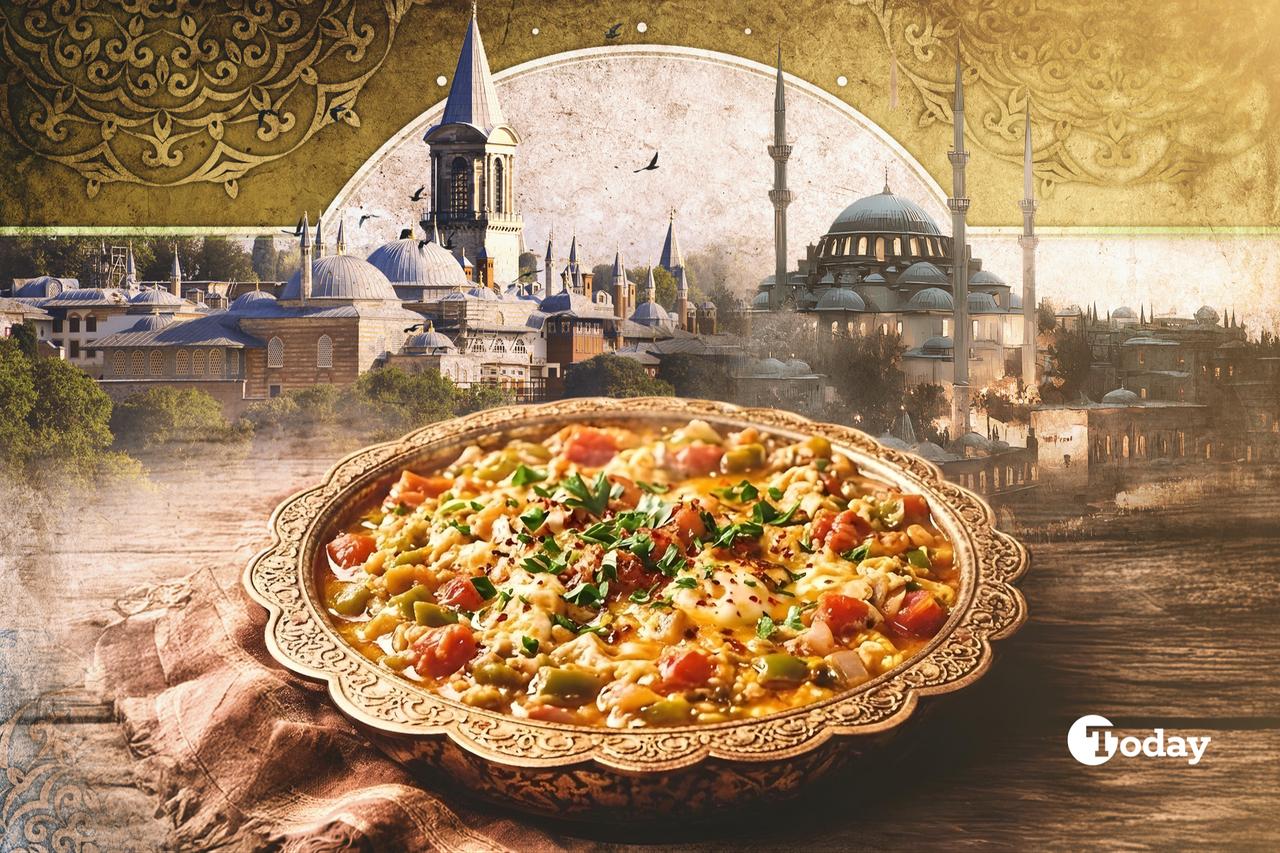


The pan arrives still muttering to itself. It is blotchy red, slightly tumescent, and makes no attempt whatsoever at presentation.
This is either the purest expression of Anatolian honesty or a dish that has looked at the Instagram generation and reckons it has nobody to impress.
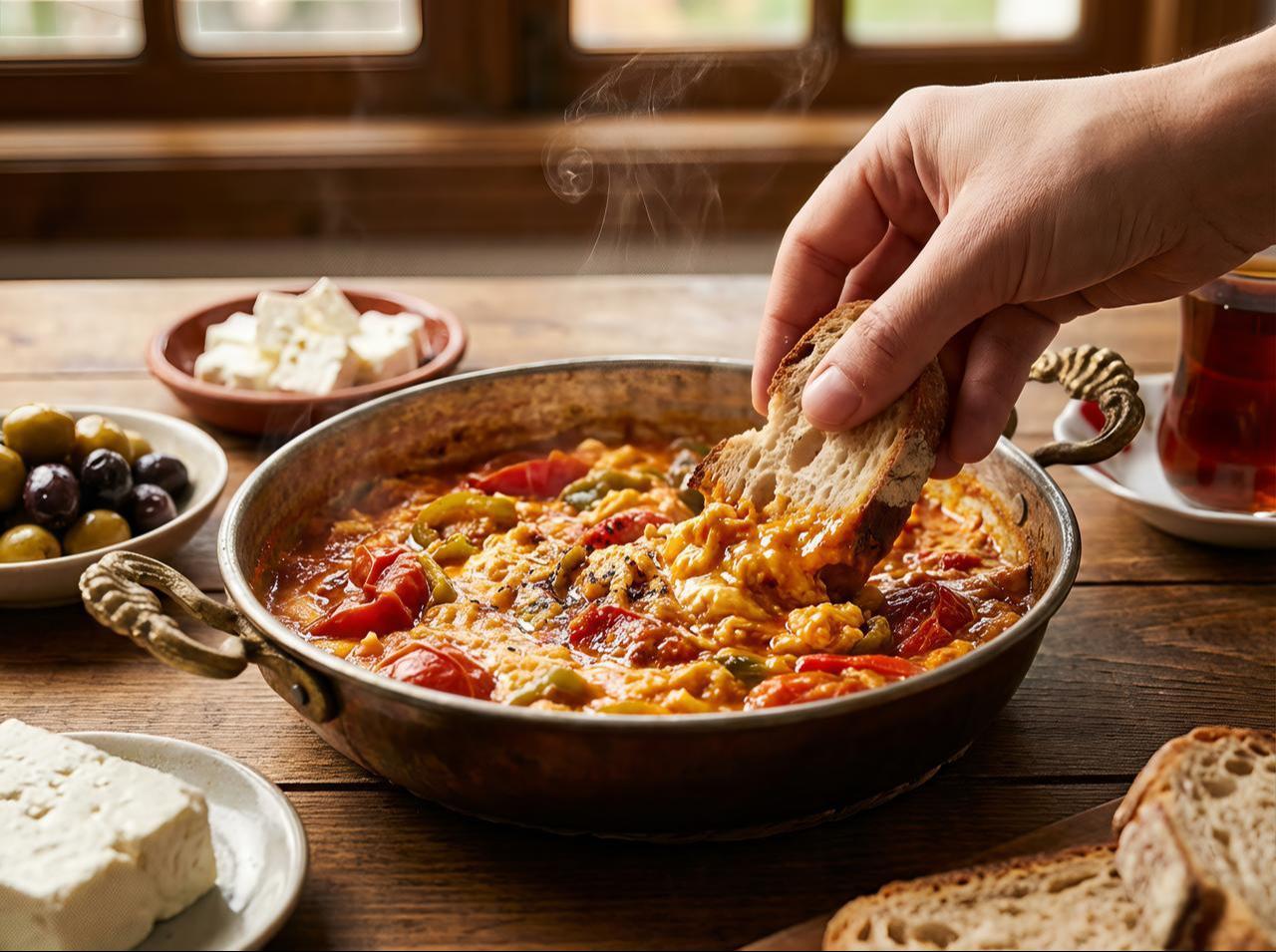
It resembles nothing quite so much as a half-drowned moon. Yet tear some bread and drag it through the sauce's face; what you get is warm, smoky and slightly sharp.
The egg is still trembling where it meets the tomato, like a man who has just been asked a very direct question by his wife.
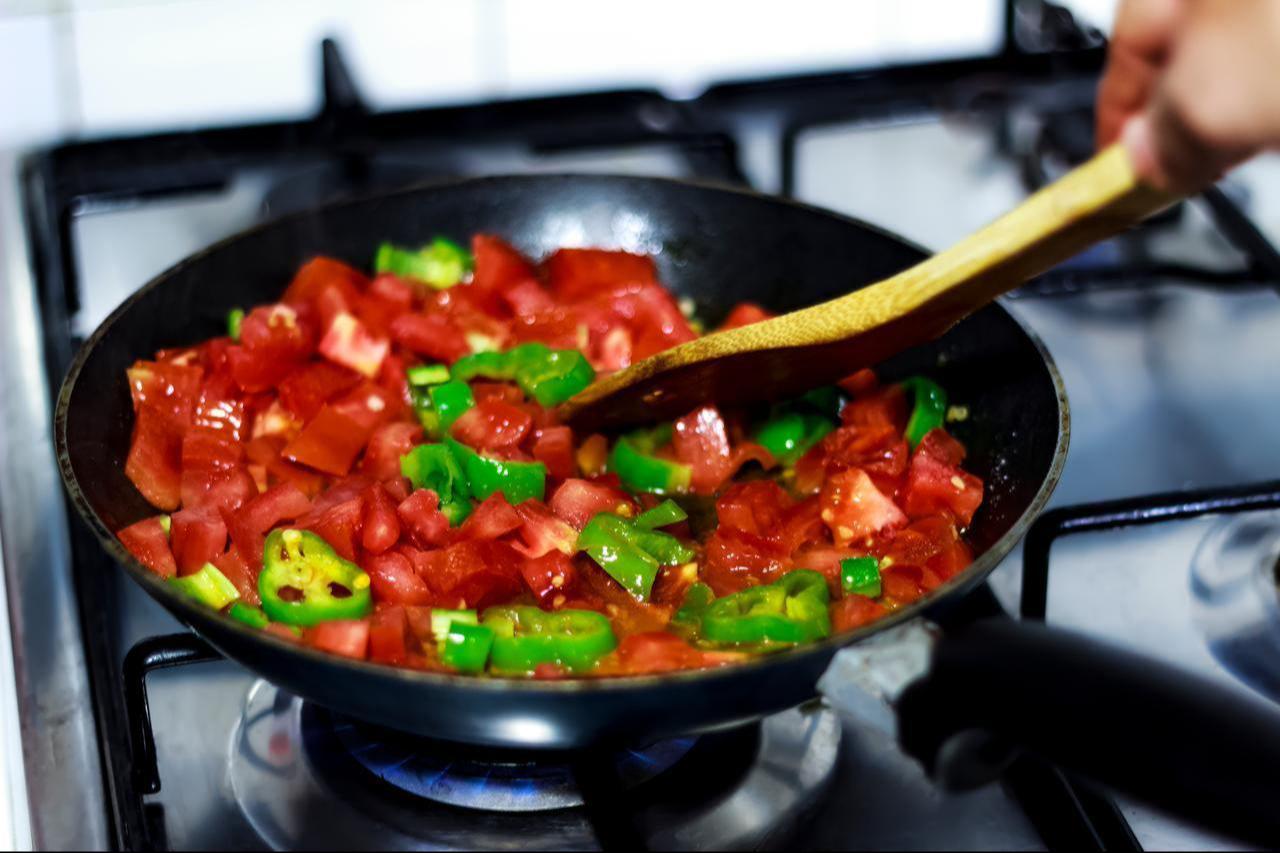

The dish takes 15 minutes on a relaxed morning and involves sweating peppers in olive oil and then reducing the tomatoes to something jammy.
Pul biber goes in—Türkiye's answer to the pizza delivery chili flake, except that it tastes of something.
Then the eggs are moved through the pan in small, unhurried gestures and pulled from the heat, still one decision away from done. This is the only moment requiring judgment and the window is approximately 20 seconds.
Overcooked menemen has had the joy systematically extracted from it, like a school reunion that technically involves all the same people, but whatever made it worth attending has got a better offer and left early.
It drives even the most placid Turk into a quiet fury, which is entirely appropriate, because the town the dish comes from is literally named after madness.
The Greek root—mainomenos—is the word Euripides used for Hercules in the moment he murdered his wife and children in a divine frenzy. He had just completed his 12 labors and returned home expecting, reasonably, a quiet morning.
The town is named after the worst breakfast in recorded mythology and the dish is named after the town.
The story of the food itself begins under the Lausanne Convention of 1923, when some 355,000 Muslims were expelled from Greece.
The Cretan contingent landed around Izmir with their clothes, their pride, and a habit of cracking an egg into mountain herbs and water, which, when you think about it, really is the absolute floor of a cuisine. It’s what you cook when there is no larder—just some water and greenery.
They removed the meat from the local stew, added the egg and Türkiye ran with it.
But then it outran Türkiye: west into Hungary as lecso, southwest into North Africa, and eventually—after several centuries of quiet migration and an Ottolenghi cookbook published in 2011—into London and New York as shakshuka.
There it is served with a bland passage about its North African heritage and a firm editorial decision not to mention any menemen whatsoever.

A fact which may have something to do with what happened in the town almost a century ago.
In 1930, a Naqshbandi dervish named Mehmet arrived in Menemen, fresh from distributing hashish to his companions in a nearby olive grove.
He announced himself as the returned Mahdi, claiming to command a caliphate army of 70,000 from a town whose population was nowhere near that. Nobody, in the general excitement, did the arithmetic.
The garrison dispatched a young reserve officer, Mustafa Fehmi Kubilay. He was a schoolteacher doing his military service—a man with a lesson plan and a one-year-old at home. Which is to say, he was a man with everything to lose and nothing to gain from this particular Tuesday morning.
In a fit of optimism, the soldiers were issued blank rounds, but when Dervish Mehmet absorbed the volley and remained standing, the crowd interpreted this as divine affirmation rather than a quartermaster's error.
Kubilay was rather predictably shot and dragged himself to the mosque steps before being decapitated. The two protagonists were both Cretans, both from the same displaced community who had arrived at the same town as refugees.
As the conspirators were led away, one was recorded complaining, "Weren't they going to give us money?"
Ataturk ordered menemen erased from the map, then rescinded this the following morning and left standing instructions that if he ever issued such a command again, he should be allowed to sit on it for a day.
The town survived a coup, an erasure order and 37 hangings. What it has never, in nearly a century, managed to recover from is the onion question.
The anti-onion position holds that the allium is an uninvited houseguest that has since begun rearranging the furniture and expressing opinions about the Wi-Fi.
The pro-onion position holds that without it, there is no base, only a collection of ingredients in proximity, hoping for the best, which also describes an alarming number of marriages.
In 2018, food critic Vedat Milor attempted to resolve the matter scientifically by posting a Twitter poll.
Almost half a million Turks voted. The result was 50.6% in favor of onion. A margin so narrow it not only failed to settle the argument but gave the losing side something new to argue about.
But the onion is merely the overture. Menemen is less a recipe than a recurring argument about what a recipe should contain, conducted at a volume normally associated with football chants.
Sucuk or no sucuk? Kasar melted through at the end, or treated as something only idiots who want to turn everything into pizza do? There’s also pastirma for those who feel that breakfast is insufficiently cumin-forward.
Are the eggs scrambled lovingly through the sauce, or cracked on top and left to poach like minor royalty waiting to be served—a version known, with a soupcon of venom, as “bus station menemen”?
Every Turkish family has a canonical version, arrived at through a process indistinguishable from inheritance, habit and selective amnesia.
Ingredients
Steps
1. Sweat the peppers
Warm the olive oil and butter in a wide, heavy pan over medium heat. Add the spring onions, green peppers and chilli and sweat gently for 8–10 minutes until softened and beginning to collapse. Add the garlic and cook for another minute. Do not rush this stage. The peppers need to lose their rawness entirely before anything else enters the pan.
2. Build the sauce
Add the tomato paste and stir through the oil for a minute until it darkens slightly. Add the chopped tomatoes, pul biber, cumin and oregano. Season with salt.
Cook over medium heat, stirring occasionally, until the tomatoes have collapsed and reduced to something jammy and thick—around 15 minutes. Taste. If the tomatoes are acidic, add a pinch of sugar.
3. The eggs
Reduce the heat to low. Make small wells in the sauce and crack in the eggs. Move them through the pan in slow, unhurried gestures—not scrambling aggressively, but folding them gently into the sauce as they begin to set.
Pull the pan from the heat while the eggs still look one decision away from done. They will finish in the residual heat of the pan. This window is approximately 20 seconds. Do not miss it.
4. Finish and serve
Scatter with parsley or chives. Bring the pan directly to the table. Serve with bread substantial enough to do the job.
Notes
On peppers: Sivri biber—long, thin Turkish green peppers—are the correct choice and available in Turkish supermarkets. Padron peppers are a workable substitute. Standard supermarket green peppers are too thick and too sweet and will make the sauce heavy.
On tomato paste: This recipe takes a position. Purists hold that tomato paste is a modern interloper that thickens the sauce at the cost of its freshness. They are not entirely wrong. If your tomatoes are genuinely ripe and good, leave them out. If they are not, the paste is doing necessary work and you should not feel bad about it.
On the onion question: This recipe takes a position. If your family takes a different one, that is between you and them.
On eggs: Four eggs for two people eating properly, or three people being polite about it.
On the pan: A wide, shallow pan gives better sauce reduction and more even egg distribution. A deep saucepan is a different dish.


 Set as preferred source
 Set as preferred source




 6 min read