Newsletters


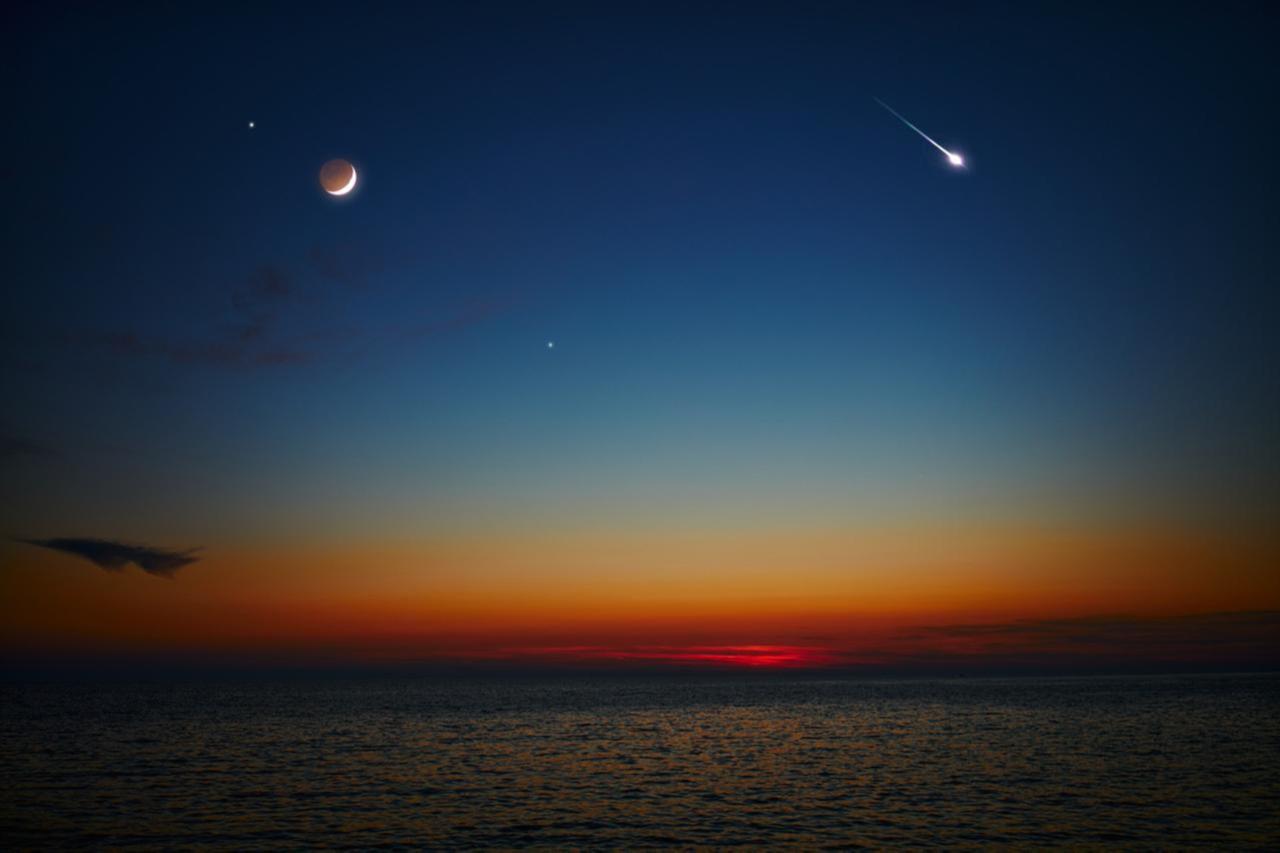


Six planets in the Solar System will come together on Feb. 28 in a celestial event known as a “planet parade.”
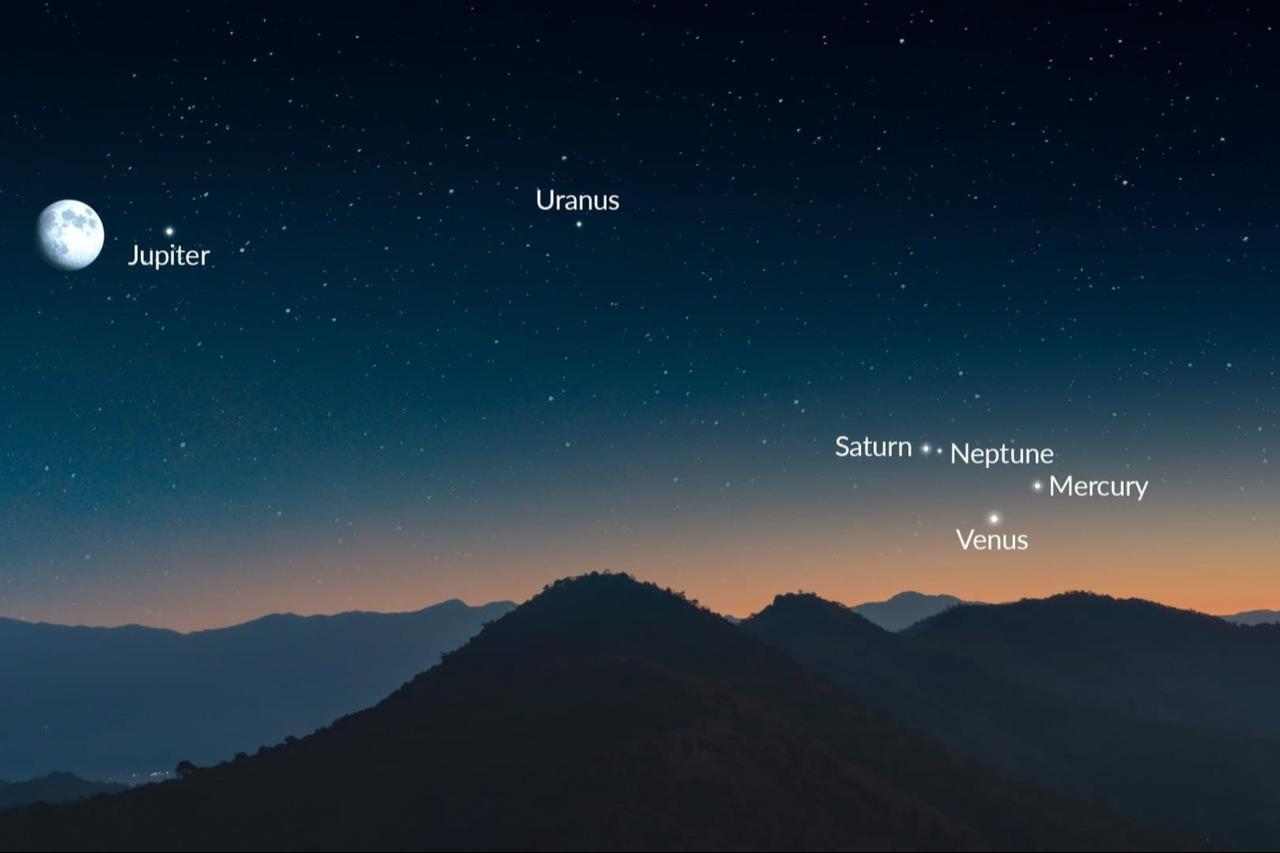
During the alignment, Mercury, Venus, Jupiter and Saturn will be visible to the naked eye, provided weather conditions are favorable.
The more distant planets, Uranus and Neptune, will require binoculars or a telescope for observation.
Observers are advised to look toward the western horizon about one hour after sunset from open areas free of tall buildings and trees that could block the view.
In this alignment, Mercury, Venus and Saturn will appear near the horizon line, while Jupiter, Uranus and Neptune will be positioned higher in the sky.
Clear skies will be essential for optimal visibility.

According to NASA data, seeing two or three planets together in the sky after sunset is considered a common occurrence.
However, the simultaneous appearance of four or more planets is described as a rare cycle that takes place only once every few years, making the upcoming six-planet alignment an uncommon astronomical event.


 Set as preferred source
 Set as preferred source


 2 min read
 1 min read