Newsletters


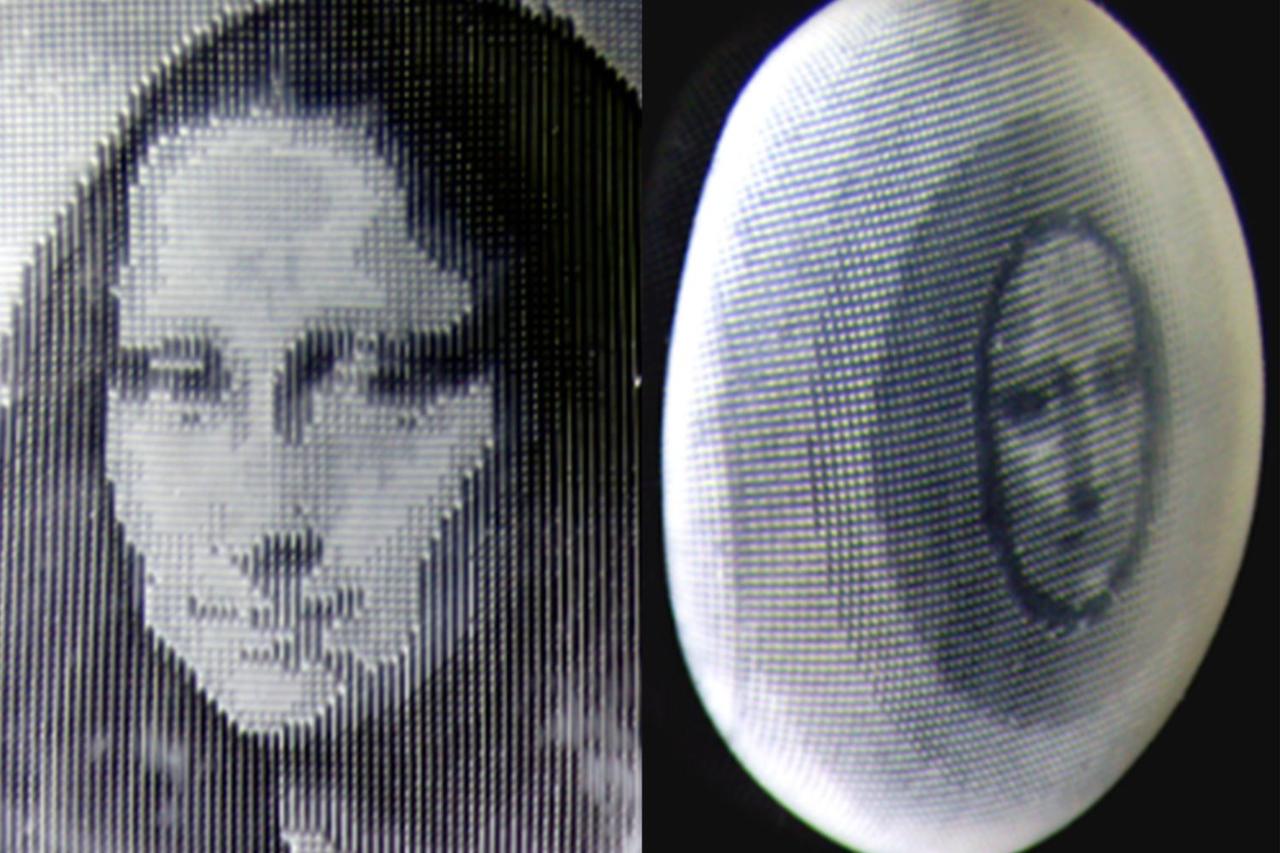


A research team at Pennsylvania State University has developed a new kind of synthetic material that mimics the remarkable abilities of octopus skin, capable of changing its appearance, texture and shape in response to external triggers.
The breakthrough, led by industrial and manufacturing engineering professor Hongtao Sun, could eventually lead to advances in adaptive camouflage, secure data encryption and soft robotics.
Unlike traditional materials with fixed properties, the new “smart synthetic skin” is made from a water-rich hydrogel that researchers can program to respond to heat, liquids or mechanical stress.
The team uses a printing technique called halftone-encoded 4D printing, which embeds tiny patterns, composed of binary data, into the material.
These patterns act like built-in instructions, directing how different parts of the material behave when stimulated.
To show the material’s versatility, the researchers encoded an image of the Mona Lisa within the smart skin. When washed with ethanol, the film remained transparent, and the image was hidden. When immersed in ice water or heated slowly, the Mona Lisa became clearly visible.
This demonstrates how the material can hide and reveal information based on environmental changes.
The team also showed that stretching the material can reveal patterns through mechanical deformation, adding another layer of potential use for security or sensing applications.
One of the most compelling features of the smart skin is its ability to change shape as well as appearance.
Flat sheets can morph into complex three-dimensional forms with textured surfaces without needing multiple layers or different materials.
By designing the halftone patterns carefully, the researchers can program both appearance and shape changes together, similar to how cephalopods coordinate body shape with skin patterning.
The team plans to further refine their platform to allow precise digital encoding of multiple functions in a single, adaptive system, with potential impacts across materials engineering, biomedical devices and beyond.


 Set as preferred source
 Set as preferred source



 1 min read