Newsletters


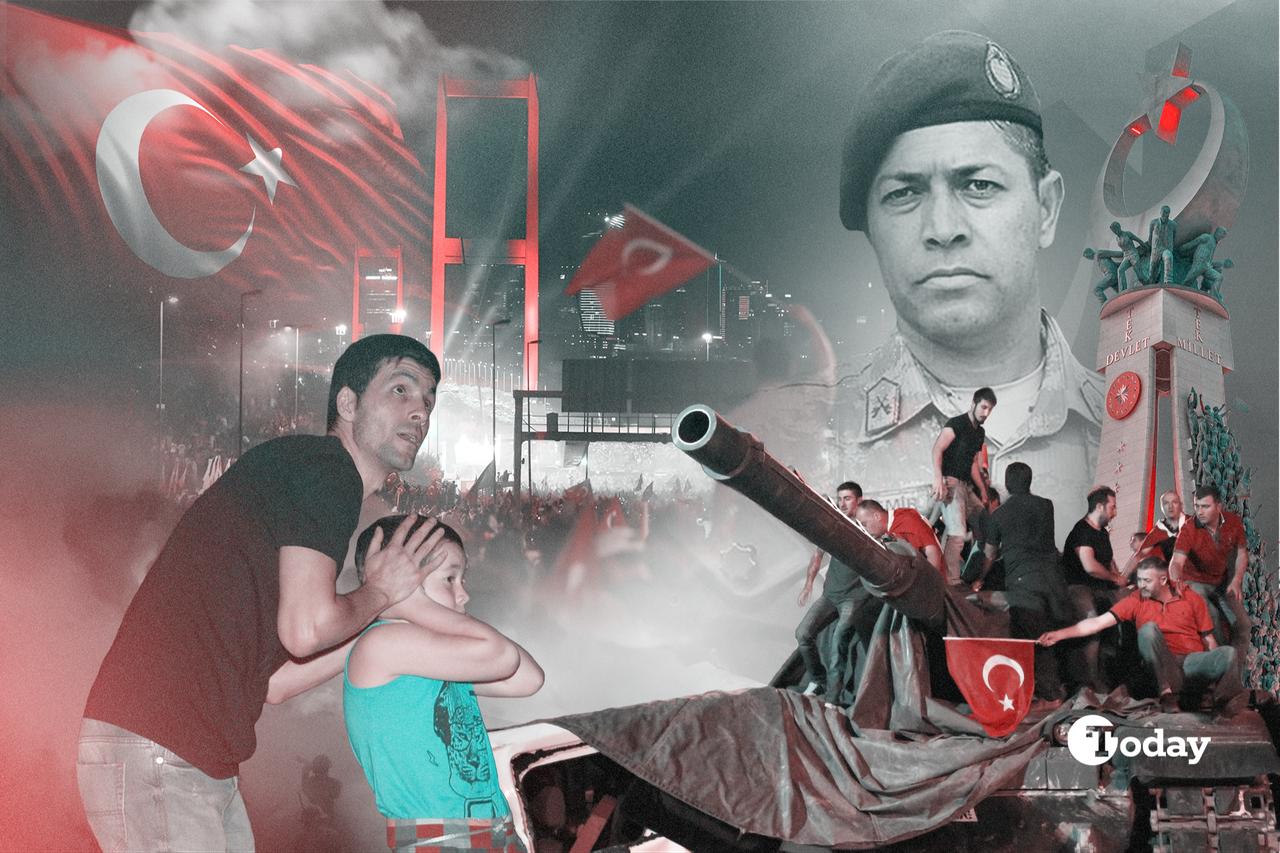


Ten years after military units seized bridges, bombed Parliament and opened fire on civilians, survivors still carry the physical scars of a night that reshaped Türkiye.
Musa Ilhan left his home in such a hurry that he did not change his clothes or put on proper shoes.
Wearing shorts and slippers, he joined crowds moving through Istanbul on the night of July 15, 2016, after reports emerged that terrorist organization FETO members had blocked major roads and military aircraft were flying over Ankara.
He initially planned to travel to the airport, where supporters of President Recep Tayyip Erdogan were gathering. But when he saw military activity near a municipal logistics center in Alibeykoy, he changed direction.
Ilhan later joined civilians confronting soldiers at Istanbul’s Disaster Coordination Center (AKOM).
Gunfire followed.
A bullet struck him in the chest and stopped about 2 centimeters, less than an inch, below his heart. Doctors decided removing it would pose a greater danger than leaving it in place.
Ten years later, it is still there.
“I was wearing slippers and shorts. I had nothing in my hands,” Ilhan said, recalling a later courtroom confrontation with the former lieutenant colonel accused of shooting him.
The officer claimed he had mistaken Ilhan for a member of the Daesh terrorist group, according to Ilhan.
“What about me looked like Daesh?” Ilhan said he asked him.
Ilhan is among the thousands whose lives were permanently altered during the attempted military takeover.
The coup attempt killed 253 people and left more than 2,000 others injured, according to Turkish authorities.
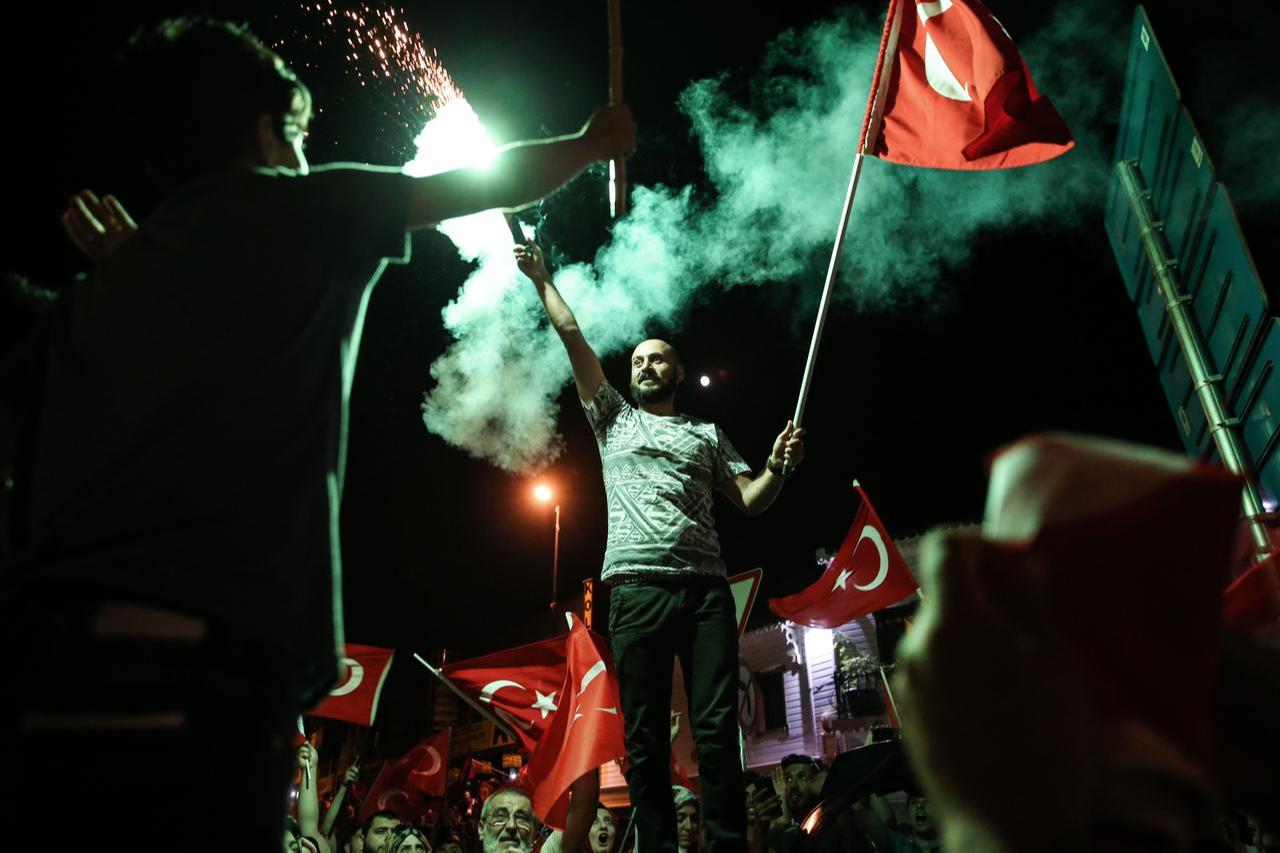

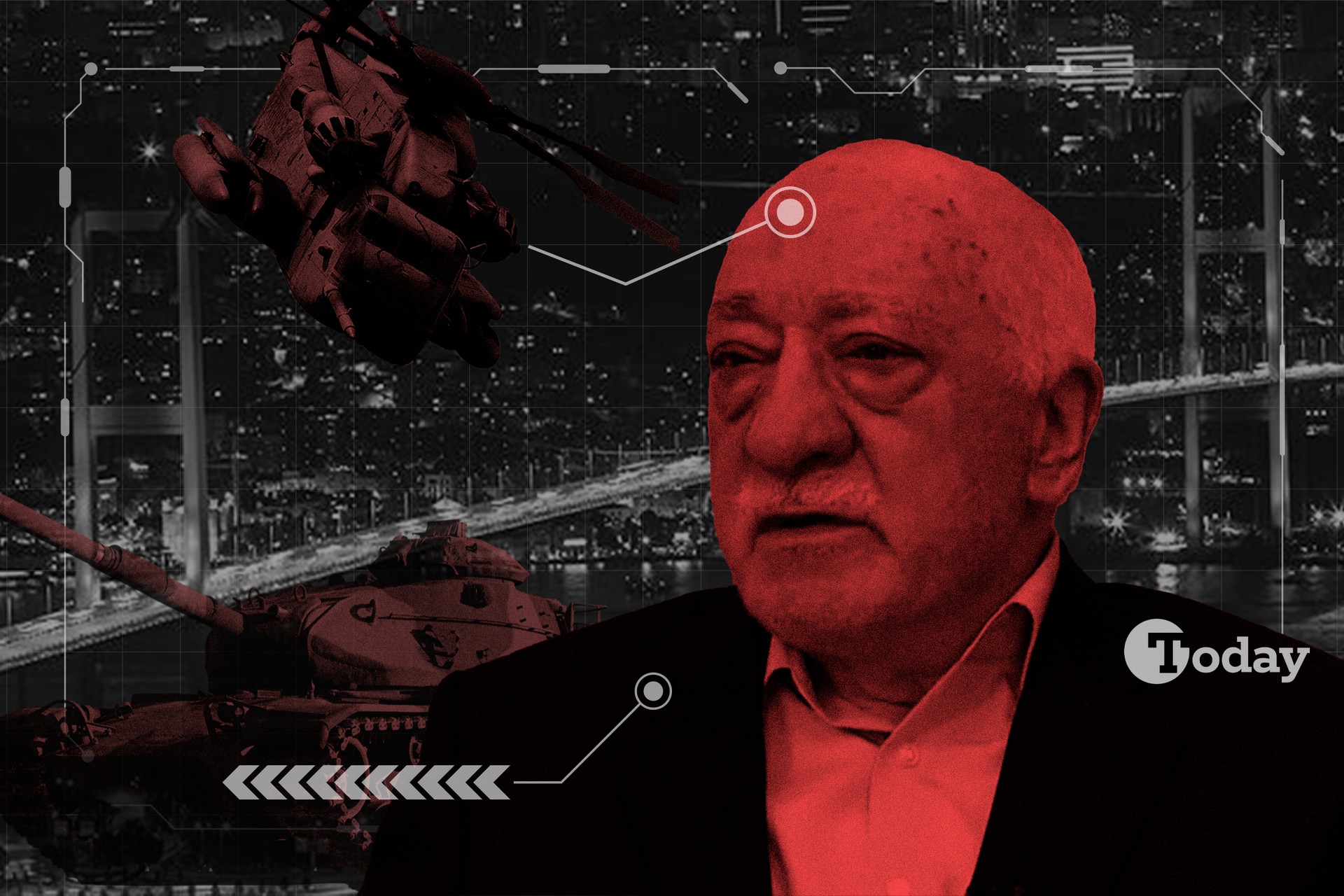
On Wednesday, Türkiye marks 10 years since the Fetullah Terrorist Organization (FETO) attempted to overthrow the elected government, deploying tanks, fighter jets and military helicopters against state institutions, security forces and civilians.
The night is remembered through the damaged walls of Parliament, the renamed bridge across the Bosphorus, and the bullets some survivors still carry inside their bodies.
It also marks a decade of investigations, trials and security operations against a network that had spent years building a covert presence inside the military, judiciary, police and other state institutions.
The organization was led from the United States by Fetullah Gulen, who died at a hospital in Pennsylvania on Oct. 20, 2024.
Türkiye submitted seven extradition requests to the United States concerning 27 alleged offenses, but Gulen was never extradited.
Two years after his death and a decade after the coup attempt, Turkish authorities say operations against the network remain active.
On Monday, the Interior and Justice ministries announced an operation against 968 suspects across all 81 provinces. The largest numbers of suspects were in Ankara, Istanbul, and Izmir, according to a joint statement.
Authorities said the operation targeted the organization’s current structures, covert networks and affiliated elements.
The coup attempt had initially been scheduled to begin at 3 a.m. on July 16.
Hours before the planned operation, however, an army aviation major went to the National Intelligence Organization (MIT) and provided information about the planned coup attempt.
The warning was passed to senior military commanders.
Then-Chief of General Staff Hulusi Akar ordered aircraft to return to their bases, closed Turkish airspace to military flights, and instructed commanders to prevent armored vehicles from leaving their units.
Information about the meeting between Fidan and military commanders reached officers involved in the coup plan.
The plotters moved the operation forward to about 8:30 p.m. on July 15.
By nightfall, soldiers had begun taking positions in Ankara and Istanbul. Tanks and armored vehicles left military compounds. Troops blocked Istanbul’s Bosphorus and Fatih Sultan Mehmet bridges.
F-16 fighter jets flew low over Ankara, their sound sending residents to windows, balconies and television screens in search of an explanation.
At military headquarters in Ankara, then-major general Mehmet Disli informed Akar of the coup shortly after 9 p.m. Akar refused to cooperate and was taken hostage.
Staff officer Bulent Aydin, a security aide to the land forces commander, was killed at military headquarters and became the first recorded fatality of the night.
At 11:02 p.m., then-prime minister Binali Yildirim telephoned a television channel and confirmed that an illegal military action was underway.
“The government representing the nation is at work,” he said, warning that those involved would pay a heavy price.
Three minutes later, Ankara prosecutors opened the first criminal investigation into the attempted takeover.
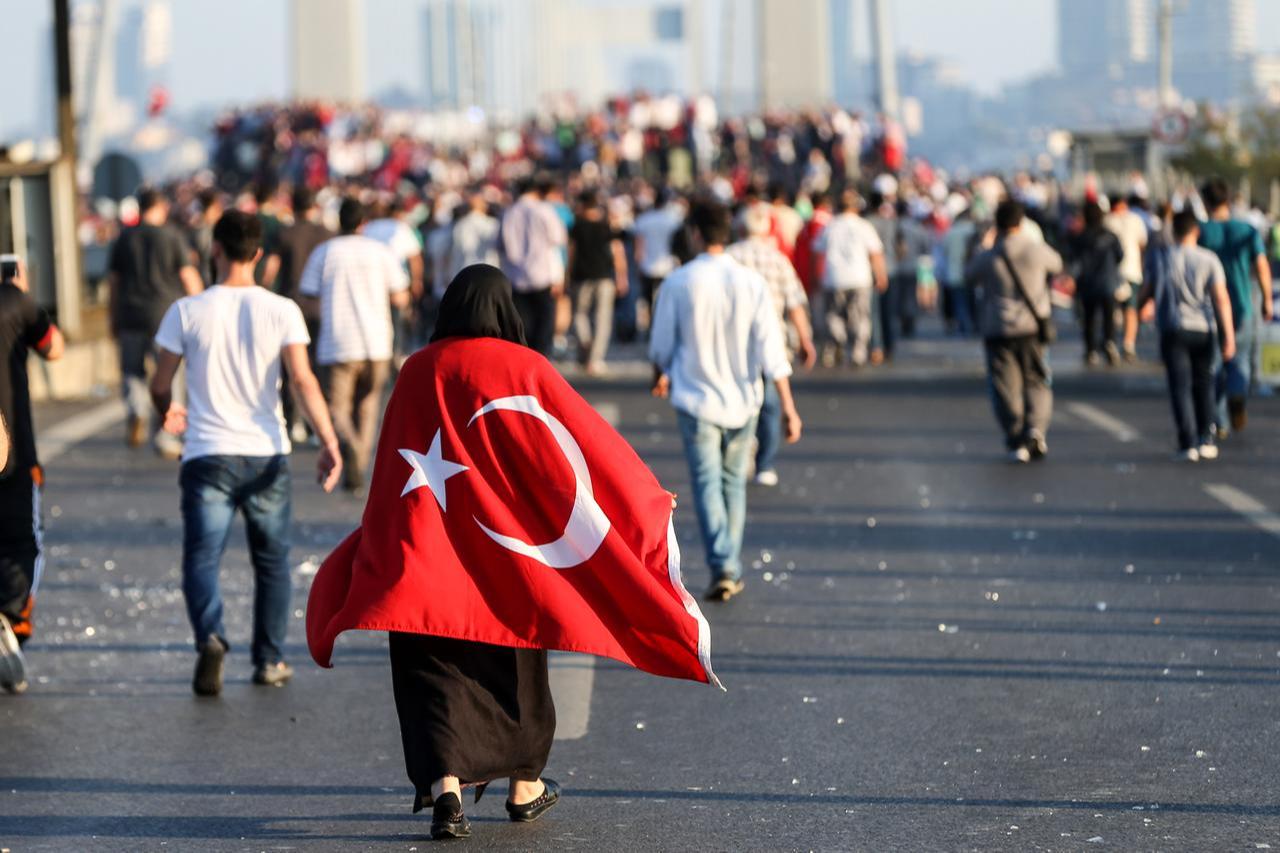
At 12:24 a.m., Erdogan appeared by video call on CNN Turk and urged citizens to gather in public squares and outside airports.
The call became one of the defining moments of the night.
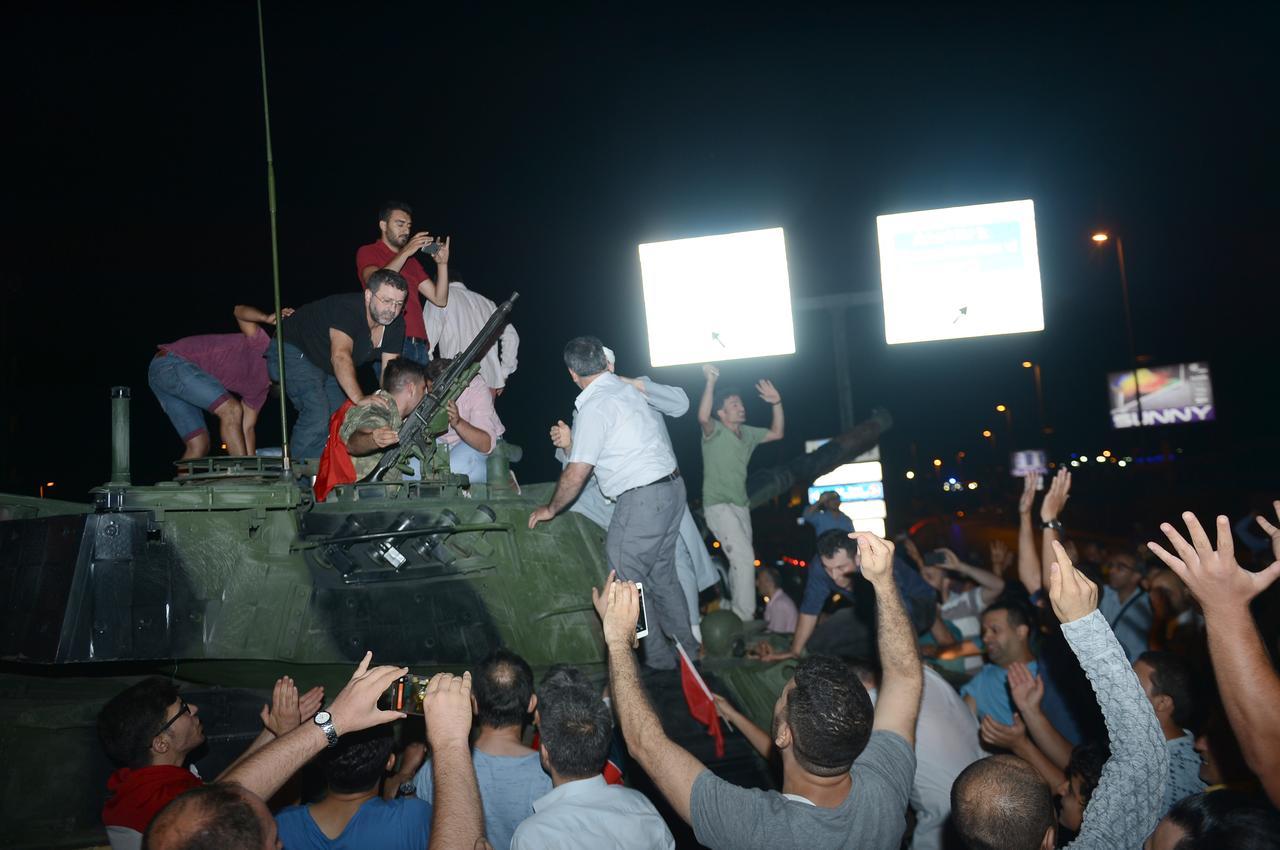
Crowds moved toward military positions, police facilities, airports and government buildings. In several locations, soldiers under the command of coup officers opened fire.
Attack helicopters fired on people protesting outside the Gendarmerie General Command in Ankara, killing nine and wounding dozens.
Fighter jets bombed Ankara police headquarters. Other aircraft struck the Police Aviation Department and the Special Operations Department in Golbasi, outside the capital. Helicopters fired on the MIT compound.
At the Special Forces Command, noncommissioned officer Omer Halisdemir shot brigadier general Semih Terzi, who had arrived with troops to take control of the unit.
Halisdemir was then shot and killed by soldiers accompanying Terzi. His action prevented the coup forces from taking control of the command.
Outside the headquarters of the chief of general staff, 36 civilians protesting the coup were killed.
The clashes unfolded simultaneously across the country, but the attack on Türkiye’s Parliament became one of the clearest symbols of the night.
As military aircraft roared over Ankara, 106 lawmakers from the ruling Justice and Development Party (AK Party), the main opposition Republican People’s Party (CHP) and the Nationalist Movement Party (MHP) made their way to the Turkish Parliament.
Some arrived in T-shirts and casual clothes, having left their homes without time to change.
They opened the General Assembly under the leadership of then-Parliament speaker Ismail Kahraman.
Shortly after 2:30 a.m., an F-16 dropped the first bomb near Parliament’s Dikmen Gate.
A second strike hit near the prime minister’s office inside the complex, filling the General Assembly hall with dust. Lawmakers protested the bombing before moving to an underground shelter, where they continued their work.
A third bomb struck while they were below ground.
Eighteen people were injured inside Parliament, while 12 police officers wounded elsewhere in the complex were taken to hospitals.
After 5 a.m., helicopters attempted to land troops in Parliament’s ceremonial area, but security forces prevented them from entering the grounds.
Inside the shelter, government and opposition lawmakers worked together on a joint declaration rejecting the coup.
Parliament reconvened in an extraordinary session the following afternoon, when representatives of four political parties publicly condemned the attempt.
Today, visitors to Parliament can see two memorials preserving the scars of the attack: one at the site where the first bomb landed near the Dikmen Gate and another surrounding columns damaged by a later strike inside the complex.
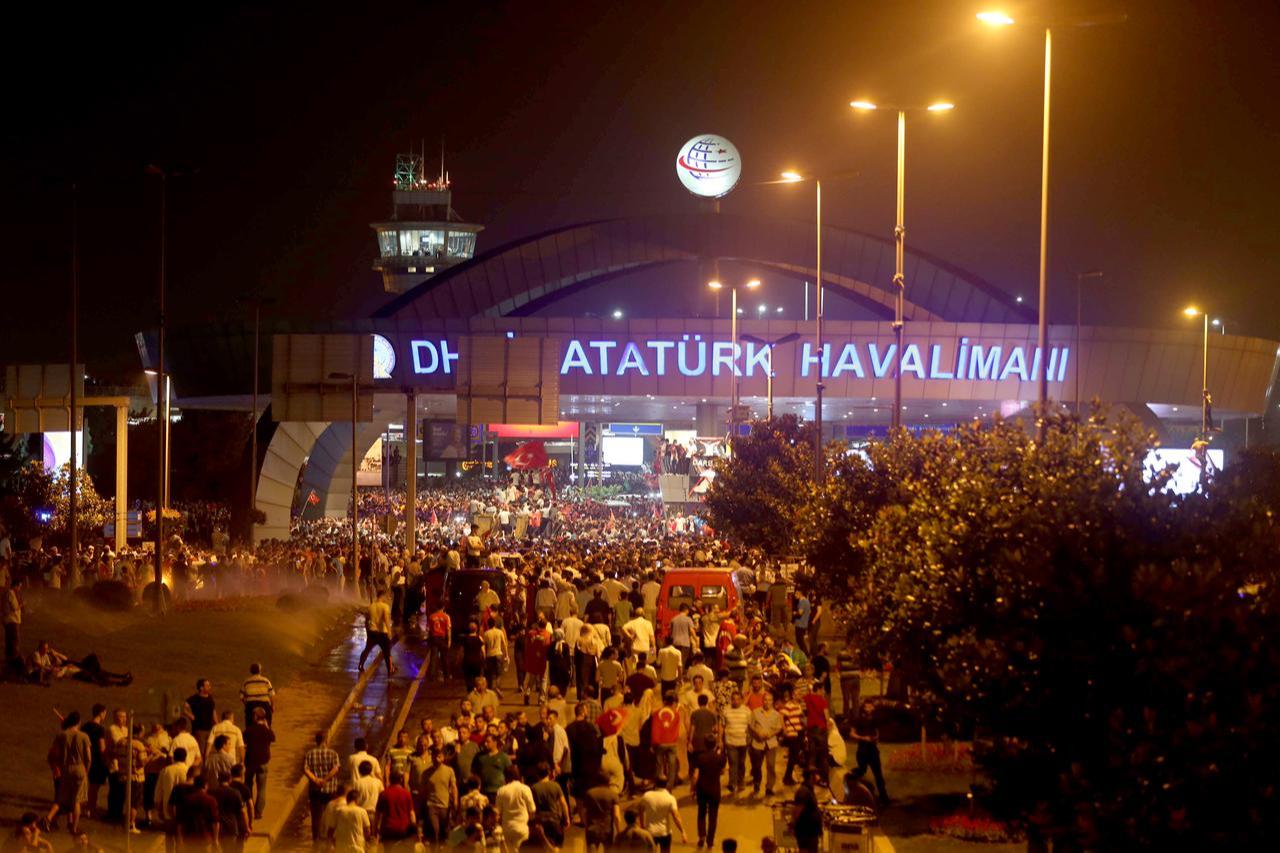
The attempt began to unravel by morning.
Troops holding the Bosphorus Bridge surrendered. Akar was freed from Akinci Air Base, which was used as the operational center of the coup attempt, and taken to the Cankaya presidential compound.
The runway at Akinci was bombed on government orders to prevent aircraft from taking off.
At 12:57 p.m. on July 16, Yildirim appeared alongside the defense minister and the chief of general staff to announce that the coup attempt had been brought under control.
It had lasted about 21 hours.
Official records say nearly 9,000 military personnel, 35 aircraft, 37 helicopters, 246 armored vehicles, including 74 tanks, and close to 4,000 light weapons were used during the attempt.
For some survivors, the anniversary is not confined to memorials or public ceremonies.
Ismail Acur lost his right eye after joining civilians confronting soldiers near Istanbul’s municipal headquarters in Sarachane.
A bullet entered his neck and lodged between his carotid artery and spinal cord. Doctors have not removed it because of the risk of paralysis or death.
Acur said he initially believed the bullet had only grazed him.
“When I touched my face, my eye fell into my hand,” he said. “I took a few more steps and collapsed.”
People around him believed he had died and covered his body with a Turkish flag. Emergency workers later detected a pulse and took him to a hospital.
Acur now uses a prosthetic eye and suffers from pain, dizziness and occasional loss of feeling in his hand.
The bullet in his neck also triggers metal detectors.
During one visit to a public building, Acur said, an officer asked whether he was carrying a weapon. Acur replied that he did not have a gun but did have a bullet in his neck.
“The officer said, ‘Let me take the bullet. You cannot enter with it,’” Acur recalled. “I told him, ‘I cannot take it out, but you can if you are able.’”
The officer then embraced him and began to cry, Acur said.
Ilhan, meanwhile, continues to visit the July 15 Memory Museum, where the shorts and slippers he wore that night are displayed alongside the belongings of those killed and injured.
Each visit brings the night back.
“Ten years have passed, and I am still living with that bullet,” he said.
Türkiye designated July 15 as Democracy and National Unity Day. Public commemorations, marches, exhibitions, and sporting events are held across the country each year.
For the 10th anniversary, authorities planned simultaneous flag relay runs in all 81 provinces, along with memorial walks, tournaments, and other events.
The government has also expanded financial and social assistance for the families of those killed and for people injured during the coup attempt.
According to the Family and Social Services Ministry, 2,571 relatives of those killed, injured survivors, and their family members have been placed in public-sector jobs.
Nearly 11,000 free transportation cards have been issued. Eligible families and survivors also receive discounted natural gas, priority in healthcare, education assistance, and other benefits.
The physical signs of the night have been incorporated into Türkiye’s public landscape.
The Bosphorus Bridge, where soldiers surrendered after a night of confrontation and gunfire, was renamed the July 15 Martyrs Bridge. The bomb damage at Parliament has been preserved. Schools, streets, and public buildings have been named after those killed.
Yet Monday’s operation against 968 suspects demonstrated that the official response remains focused not only on remembrance but also on a campaign that continues into the present.
For Ilhan and Acur, the distance between 2016 and 2026 is measured differently.
It is the distance between a bullet and the heart, between a bullet and the spinal cord, close enough that removing it remains too dangerous, and close enough that the night of July 15 has never entirely ended.


 Set as preferred source
 Set as preferred source


 1 min read
 1 min read