Newsletters





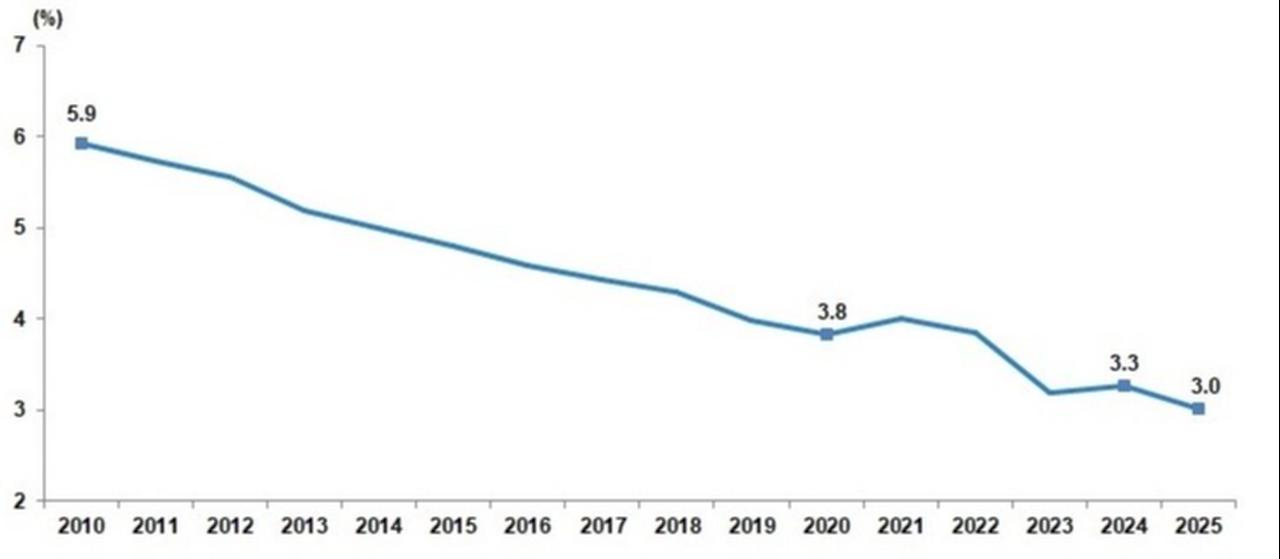
Cousin marriages in Türkiye have reached their lowest recorded level, falling to 3% of all newly registered legal marriages in 2025, down from 5.9% in 2010 and 3.8% in 2020, recent data from the Turkish Statistical Institute (TurkStat) released on May 12, 2026, shows.
The figures, published as part of TurkStat's annual statistics on family report ahead of the National Family Week, also reveal broader structural shifts in how households across the country are organized, with average household size shrinking, single-person living on the rise, and the traditional extended family model continuing its long-term decline.

Among individuals who married a first cousin in their most recent legal marriage, TurkStat data shows that 46.4% wed the child of a paternal aunt or maternal uncle, 27.2% married a paternal uncle's child, and 26.4% married a maternal aunt's child.
The geographic concentration of cousin marriages remains pronounced. When measured against the total stock of married individuals, and not only new marriages, the highest rate of consanguineous unions was recorded in Mardin at 19.7%, followed by Sanliurfa at 18.8% and Siirt at 16.7%. The lowest rate among married individuals was recorded in Edirne at 1.2%.
For new marriages registered in 2025, three southeastern provinces led the figures—Sanliurfa at 16.9%, Mardin at 11%, and Siirt at 10.8%. The lowest rates were recorded in Kutahya and Edirne, both in western Türkiye, at 0.4%.

Beyond marriage patterns, TurkStat data points to a sustained transformation in household composition.
The average household size in Türkiye fell from 4 persons in 2008 to 3.08 in 2025, continuing a trend that has persisted for nearly two decades.
The proportion of one-person households rose sharply over the same period, increasing from 13.9% in 2014 to 20.5% in 2025. More than one in five homes in the country now consists of a single occupant.
The highest rates of solo households were concentrated in northeastern and eastern provinces—Gumushane at 32.7%, Tunceli at 30.8%, and Giresun at 30.5%.
Batman, in the southeast, recorded the lowest rate at 11.5%.
At the same time, the proportion of extended-family households—defined as at least one nuclear family unit living together with non-family members—fell from 16.7% in 2014 to 13.5% in 2025.

Data from the Address-Based Population Registration System (ABPRS) shows that 70% of never-married individuals aged 25–29 were residing with at least one parent in 2025.
Of the 3.5 million never-married people in that age group, roughly 2.45 million lived with their mother or father, with males accounting for 42.6% of that share and females for 27.4%.
Despite the structural changes documented in the data, 69% of survey respondents cited family as their primary source of happiness in 2025, according to TurkStat's Life Satisfaction Survey.
Children were cited by 15.6%, while respondents themselves came in third at 4.8%.
The report was released to coincide with the National Family Week, observed during the last week of May each year.
The designation falls within the broader 2026–2035 Decade of Family and Population framework announced by the Turkish government.


 Set as preferred source
 Set as preferred source


 6 min read