Newsletters


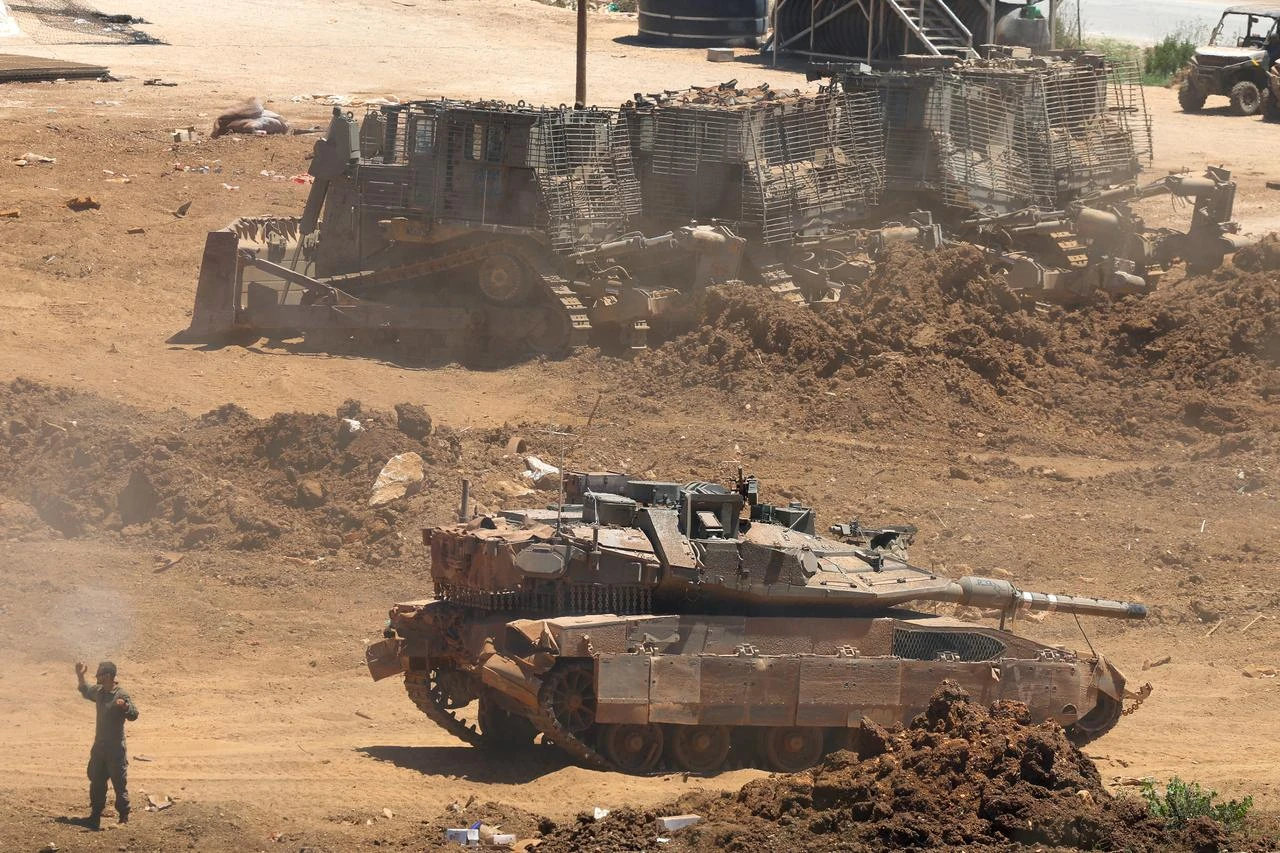


Turkish Vice President Cevdet Yilmaz said Friday that Türkiye welcomes the easing of sanctions on Iran and called for a full return to pre-war conditions, warning that Israel's military actions in the region represent an "expansionist policy" that threatens regional stability, not a security measure.
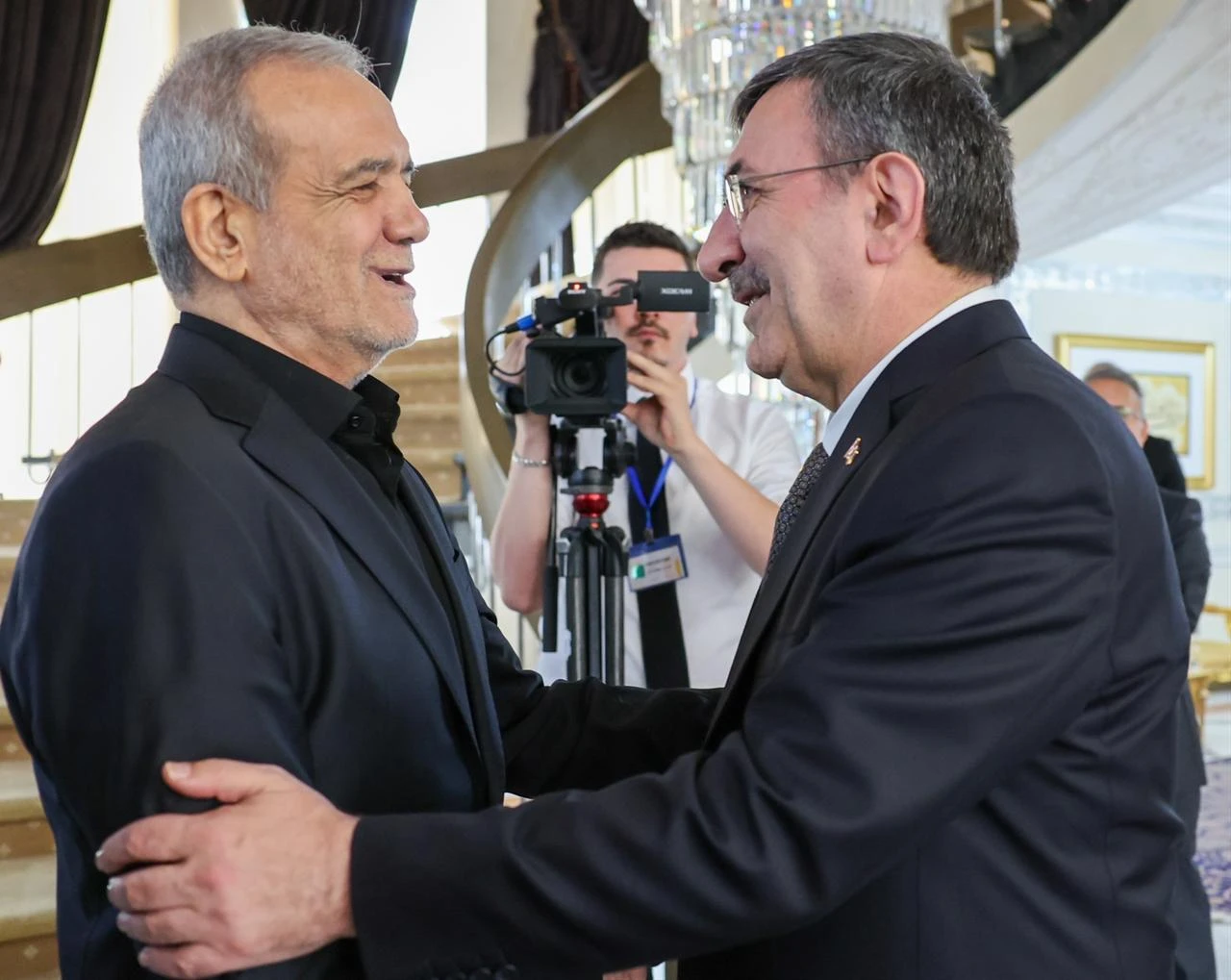
Yilmaz made the remarks to reporters in Tehran, where he traveled to attend the state funeral for former Iranian Supreme Leader Ali Khamenei.
Asked about the latest situation in the U.S.-Israel-Iran war, Yilmaz said a Memorandum of Understanding (MoU) is in place but acknowledged it has been violated at times.
"We all see this from time to time," he said, adding, "Certain reciprocal incidents are taking place. The end of these incidents as soon as possible, and the end of conflicts in the region, starting with Lebanon, is one of the important elements of the memorandum."
The Turkish vice president drew a clear distinction between Israel's stated justifications and his government's assessment. "What Israel says it is doing 'for its security' is not related to security, it is an expansionist policy and it is putting the stability of the entire region at risk," he said.
"We also saw in this war that the conflict not only produced human costs. It also produced major environmental and economic costs, starting with Hormuz," Yilmaz added.
He stressed the urgency of returning to pre-war conditions.
"Returning to normal pre-war conditions as quickly as possible is very important both for the global economy and the regional economy and for bilateral relations," he said.
Yilmaz said the region remains in a fragile phase, noting, "We are in a period open to provocations, open to sabotage. All of us must be very vigilant against these."
He argued that external actors are exploiting sectarian and ethnic differences to sustain conflict in the region, saying, "External powers playing games over this region are engaged in creating conflicts based on sectarian and ethnic differences and exploiting this region's resources."
"What we must do in response is, while respecting these differences, to highlight our common ground, develop and strengthen our relations, and raise the welfare of the region's peoples, nations and states without falling into these traps and conflicts. One of the most important conditions for this is an environment of peace and security. Where there is no security, there is no development. Economic development takes place in a secure environment," Yilmaz said.

"Iran is currently in the process of healing the wounds of war," Yilmaz said.
"I believe that the agenda of improving the economic welfare of the Iranian people will come to a more central position in the coming period," he added.
The Turkish VP noted that Ankara and Tehran are significant trading partners with a bilateral trade target of $30 billion, but said geopolitical tensions and sanctions have prevented the full realization of that potential.
"Now the easing and lifting of sanctions is on the agenda. We greatly welcome this," he said, adding, "These sanctions essentially punish the Iranian people. They drag down the welfare of the Iranian people and harm economic activity across the entire region. Therefore, the easing of these sanctions and their ultimate removal is something all of us desire. In such an environment, Türkiye-Iran relations and economic relations will have the opportunity to develop much more rapidly."
He noted that the normalization would allow the High-Level Strategic Council between the two countries to become active again, with cooperation spanning transportation, industry, trade and border crossings.
Yilmaz identified energy as the most significant area of bilateral cooperation, noting that Türkiye already imports natural gas from Iran through an existing pipeline.
"At one point, Turkmen natural gas was also transferred to Türkiye via Iran, but that has been suspended due to sanctions," he said. "Both in natural gas and other energy areas, energy cooperation with Iran is one of the most important items on our agenda. Of course, we would want to work on this with Iran as well."
The Turkish vice president also said he held a productive meeting with Iranian President Masoud Pezeshkian, and pointed to the MoU signed between Iran and the United States, noting that Türkiye is working for the memorandum to lead to lasting peace.
"As the Republic of Türkiye, we do not want war in our region, we want stability. We want all societies in the region to live in peace and stability," he said.


 Set as preferred source
 Set as preferred source


 6 min read