Newsletters


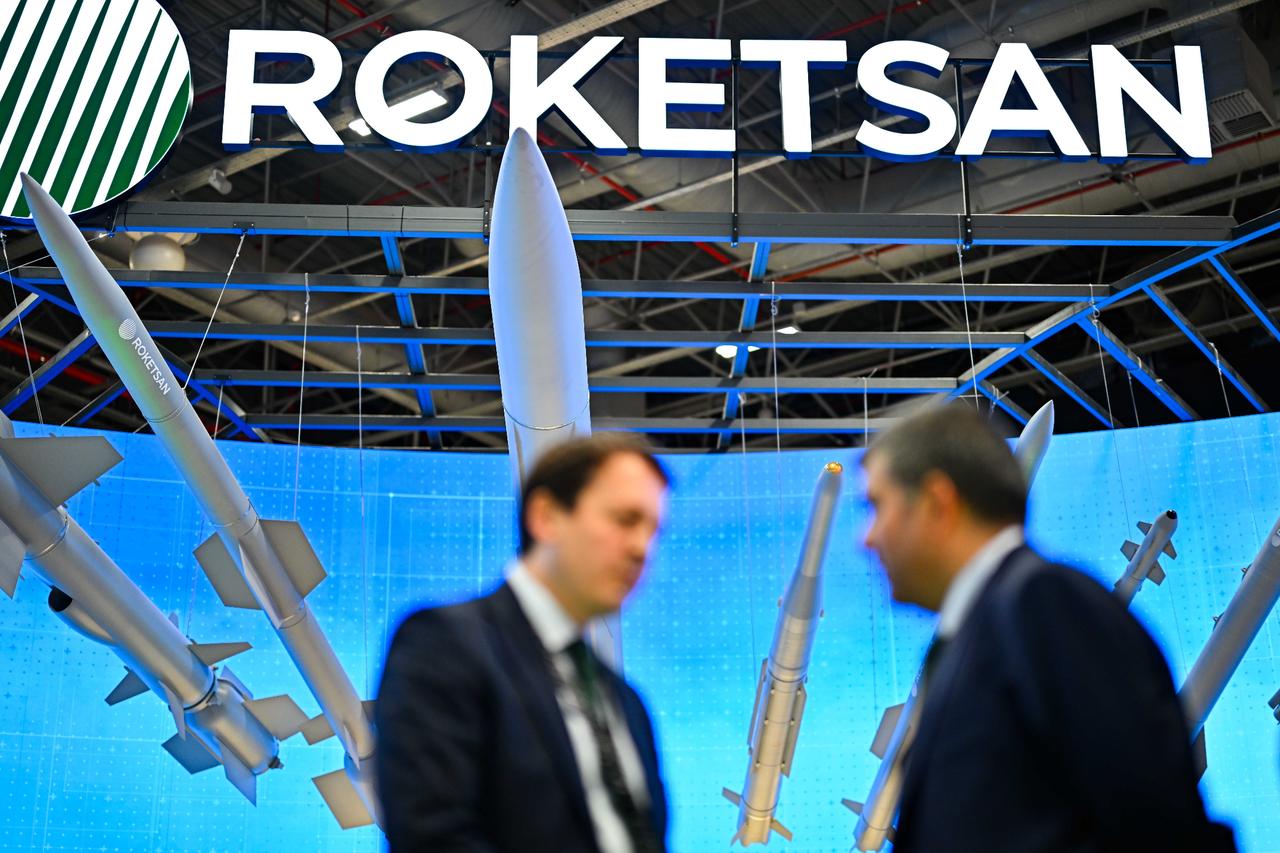


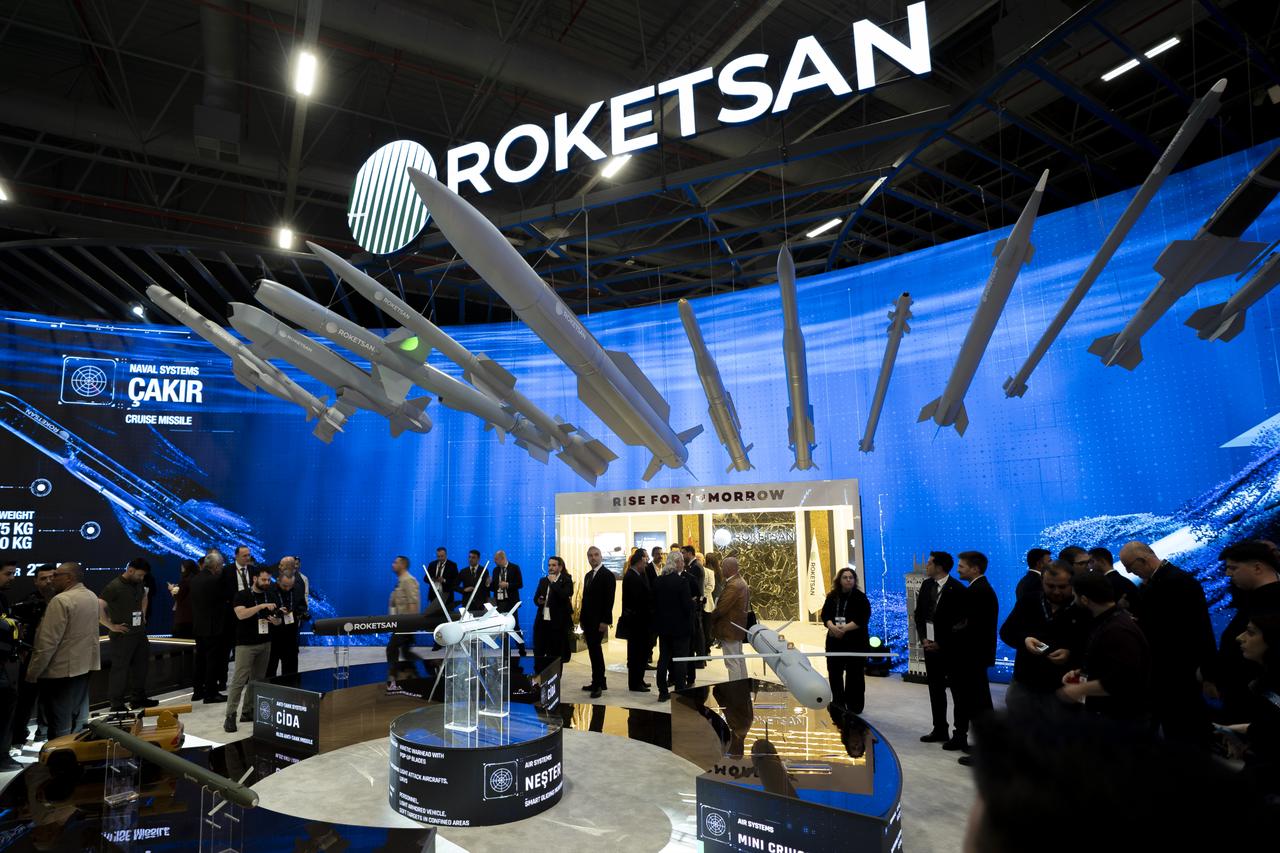
Turkish defense firm Roketsan's CEO Murat Ikinci told Türkiye's state-run Anadolu Agency (AA) at the SAHA 2026 that the company is targeting more than $1 billion in exports this year, a more than 50% increase on last year's $750 million.
He projected that Roketsan would be among the world's fastest-growing defense companies for the next five years, driven by AI integration, new mass-producible munitions and a near-tripling of order volumes.
"In the last 3-4 years, we have captured a growth trend of over 50% annually in dollar terms. We closed last year with exports above $750 million. This year we want to close it at above $1 billion, with growth exceeding 50%," Ikinci said, adding that Roketsan's 2025 revenue exceeded $2 billion and that the company expected to close 2026 well above $3 billion.
He also said order volumes had grown two to three times in the current period, which he described as "the most clear indicator" of the company's trajectory.
Roketsan is currently the second-fastest-growing defense company globally after Baykar and ranks 11th among global defense companies, Ikinci said.
To sustain this, he said the company was reinvesting all export revenue into production capacity: "We have opened nearly $1 billion in new facilities and launched $2 billion more in new investment. Roketsan is spending all the money it earns to increase its own production infrastructure capacity."
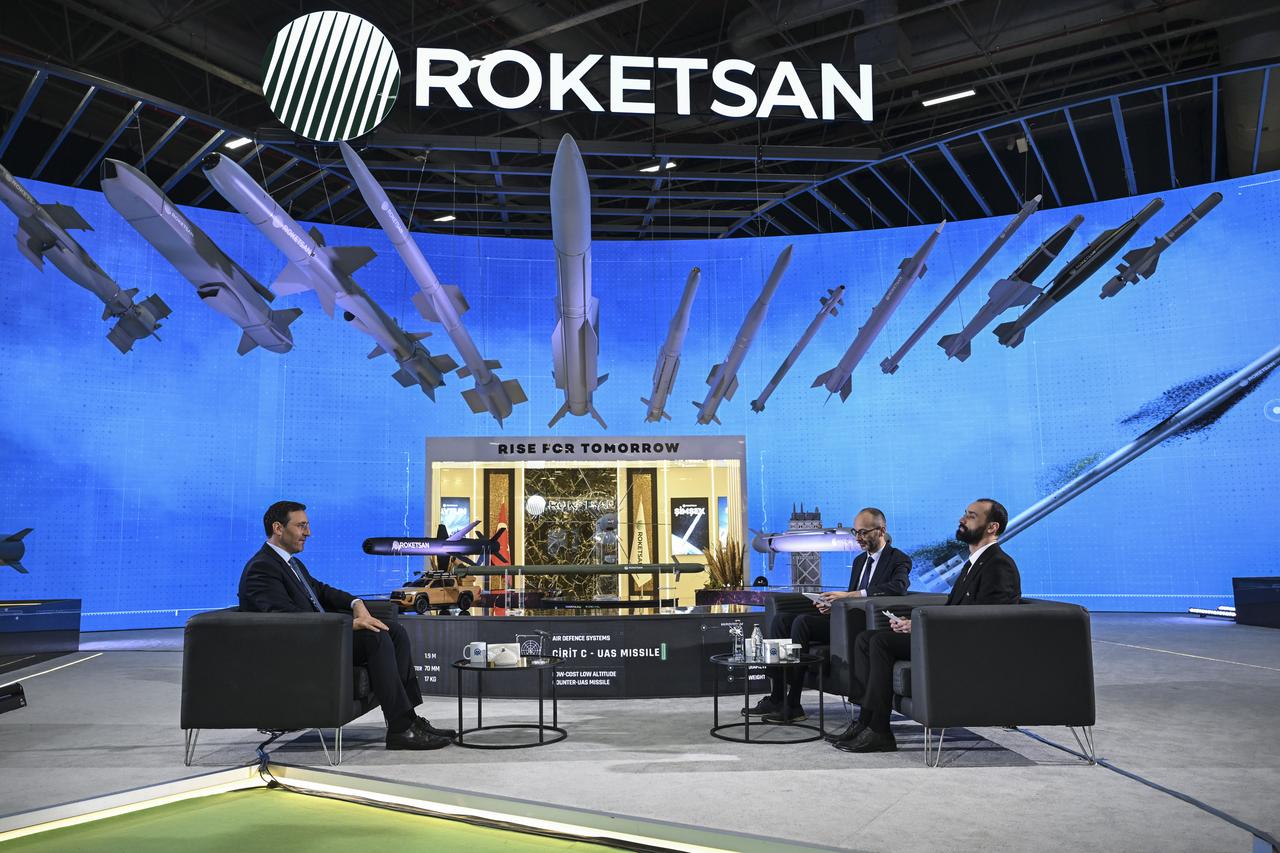

Ikinci outlined three areas where AI is being integrated. First, within munitions themselves, enabling missiles and smart munitions to independently identify correct targets and execute engagements under the right conditions.
Second, in command and control systems: "We want to make the next generation of command and control systems and operational systems as autonomous as possible, because the battlefield is now moving so fast. AI algorithms that facilitate human decision-making need to take on a very large part of the burden, especially in areas like air defense where seconds are critical."
Third, in production: AI mechanisms are being used to optimize factory output, improve efficiency and expand throughput on robotic lines.
Cida is a next-generation anti-tank missile with real-time video feed to the operator, enabling beyond-visual-range engagement.
"Cida's core philosophy is transferring the image from its seeker head to the operator to allow engagement of targets beyond line of sight," Ikinci said.
During trials, the missile achieved ranges exceeding 55 kilometers in air-to-ground configuration and over 35 kilometers in ground-to-ground mode.
Serial production has begun and tests will continue under more demanding conditions. Cida is designed for ATAK helicopters, other rotary platforms, armored vehicles and unmanned ground vehicles (UGVs).
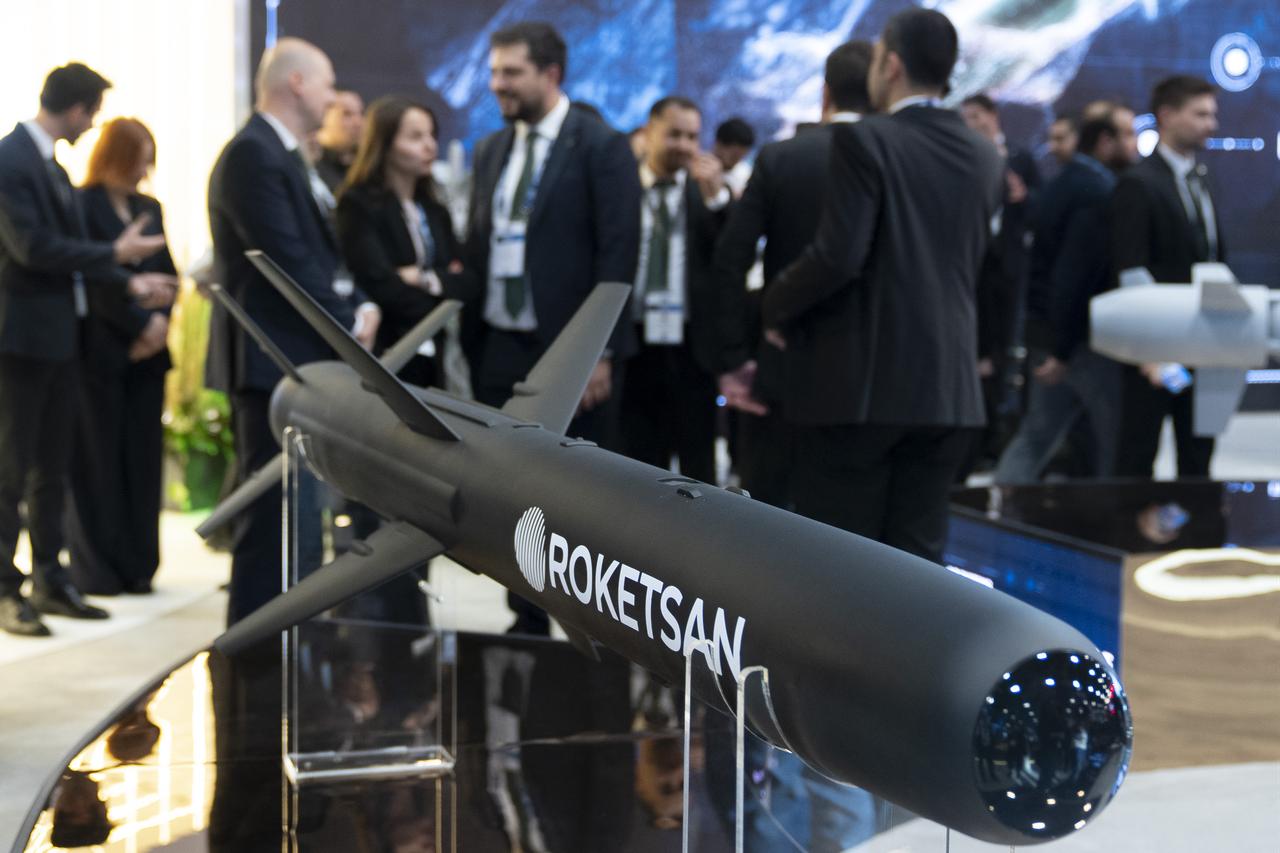
Roketsan has adapted its long-serving Cirit laser-guided missile into a cost-effective anti-drone solution, making it one of the few systems specifically developed to defeat low-cost drone swarms without using expensive interceptor missiles.
"We tried to find a cost-effective air defense solution against the rapidly growing number of drone attacks. The biggest change on Cirit was converting a laser-guided missile into a ground-to-air air defense missile by increasing the integration of the proximity sensor with the warhead," Ikinci said.
Cirit Anti-UAV has already been exported, with strong international demand from both Turkish Armed Forces partners and foreign customers.
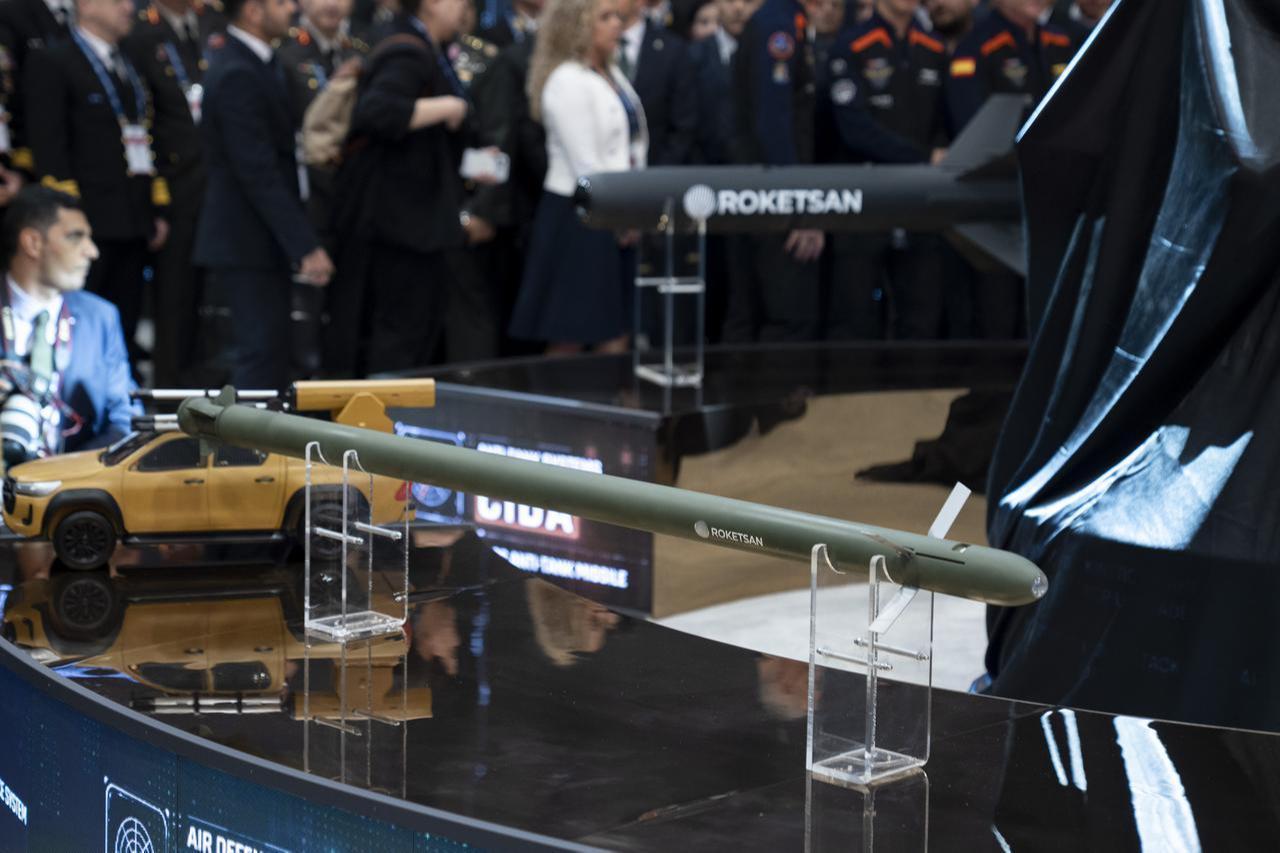
Nester is a non-explosive munition derived from the MAM-L warhead, with the explosive component replaced by a kinetic neutralization mechanism.
"Our Armed Forces are very sensitive about collateral damage, so Nester emerged from that idea. Nester's fundamental philosophy is a technology based solely on neutralizing the mechanism that threatens you, without using any explosives," Ikinci said.
The system is already fielded.
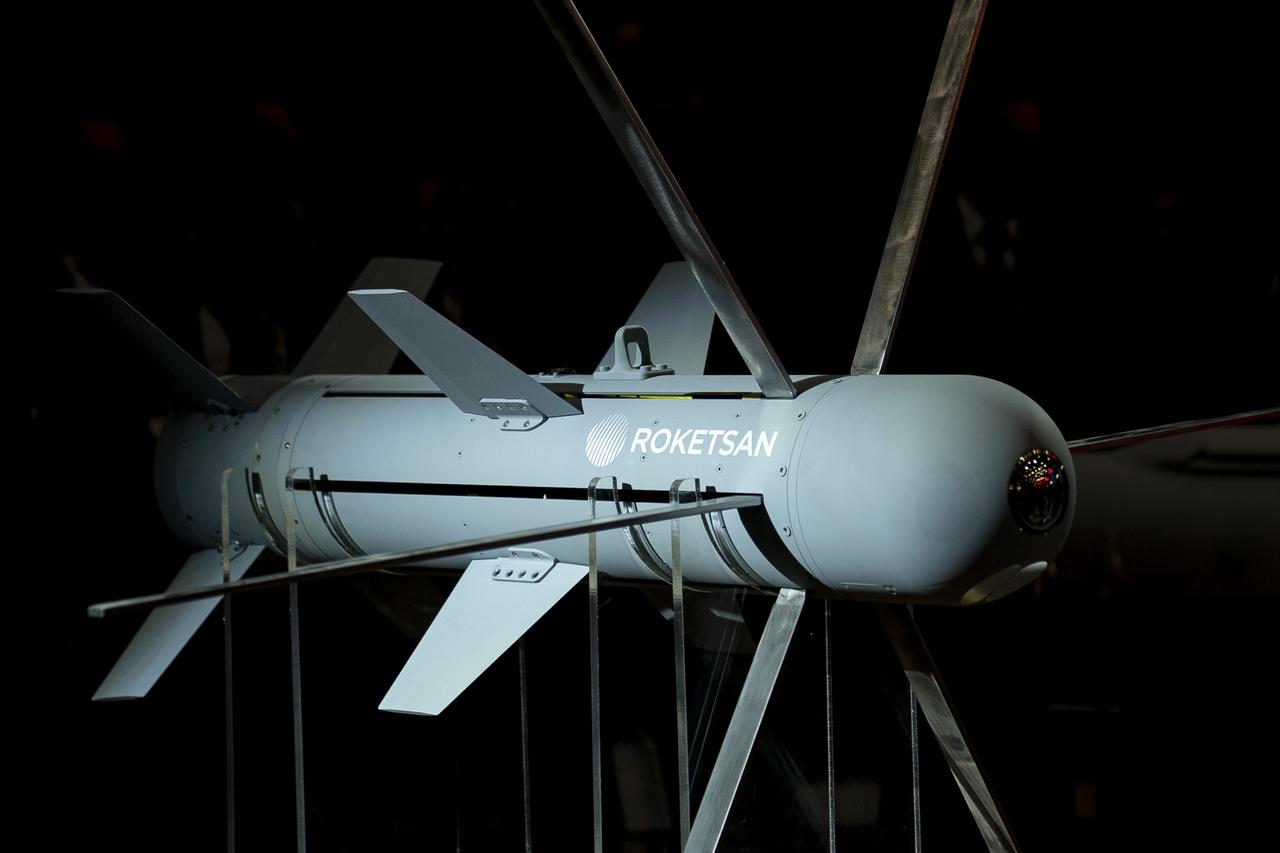
The Mini Cruise Missile, described as the smallest member of Roketsan's SOM, ATMACA and Cakir family, is designed to extend the long-range strike capability of Turkish UCAVs and aircraft at a fraction of the cost of conventional cruise missiles.
"The Mini Cruise Missile can be produced very quickly and cost-effectively, launched from our UCAVs and aircraft, and can deliver effects up to 250 kilometers. The materials to be used are very easily sourced, easily processed, formed from a mold rather than CNC machining, from plastic to metal to sheet, yet it does not sacrifice any capability of advanced cruise missiles," Ikinci said.
It features GPS-independent navigation, seeker heads, maneuverability and an efficient warhead family.
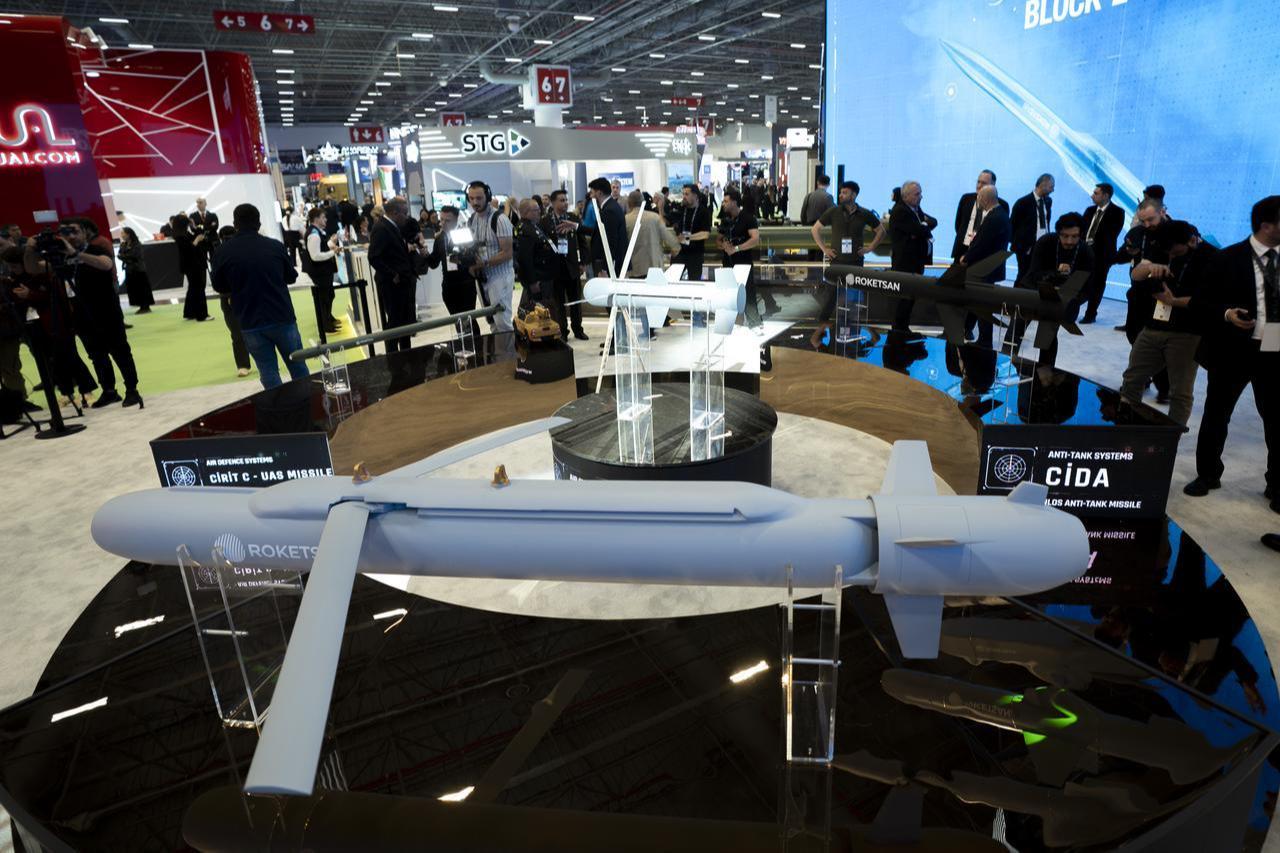
At a SAHA 2026 panel on global air and missile defense, Ikinci sharpened the strategic argument: "In any conflict situation, it becomes very difficult to procure the missiles, product lines and consumables we use in air defense systems from abroad, and their stocks can be depleted very quickly."
"Using munitions that we produce ourselves and develop ourselves is very important for Türkiye, we have no chance of sustaining operations," he added.
Aselsan CEO Ahmet Akyol reinforced the point at the same panel, describing Ejderha 210 microwave weapon, Gokberk laser, Gokalp interceptor drone and the Shotgun FPV interception system as the new lower-layer additions to the Celik Kubbe architecture.
DeltaV CEO Mehmet Kahraman said his company was working on exo-atmospheric intercept systems, hybrid rocket motors and reaction control technologies for integration into future Siper variants.


 Set as preferred source
 Set as preferred source


 2 min read
 1 min read