Newsletters





Turkish defense engineering firm STM unveiled four new unmanned aerial vehicles (UAVs) and one unmanned underwater vehicle (UUV) at SAHA Expo 2026 in Istanbul, including a 1,000-kilometer loitering munition, a VTOL ISR drone, and an armed submarine.
STM General Manager Ozgur Guleryuz told Breaking Defense the company was "really open" to co-production and technology collaboration with Gulf states, including building STM-designed drones locally in those countries or developing indigenous systems tailored to their own technologies.
Guleryuz told Breaking Defense that STM was looking to support localization in Gulf and Middle Eastern countries, stating, "We are really willing to produce some things locally." If a technology is developed in a Gulf country, we can try to develop drones indigenous to it, using their technology if they need our support, or we can even produce them there directly. Or we can produce these drones that have been designed by STM in those countries. Also, we are really open to the kind of collaboration."
He confirmed STM had already signed MoUs in the region and said the company's integration model, relying on subcontractors rather than its own large facilities, made it inherently suited to international co-production.
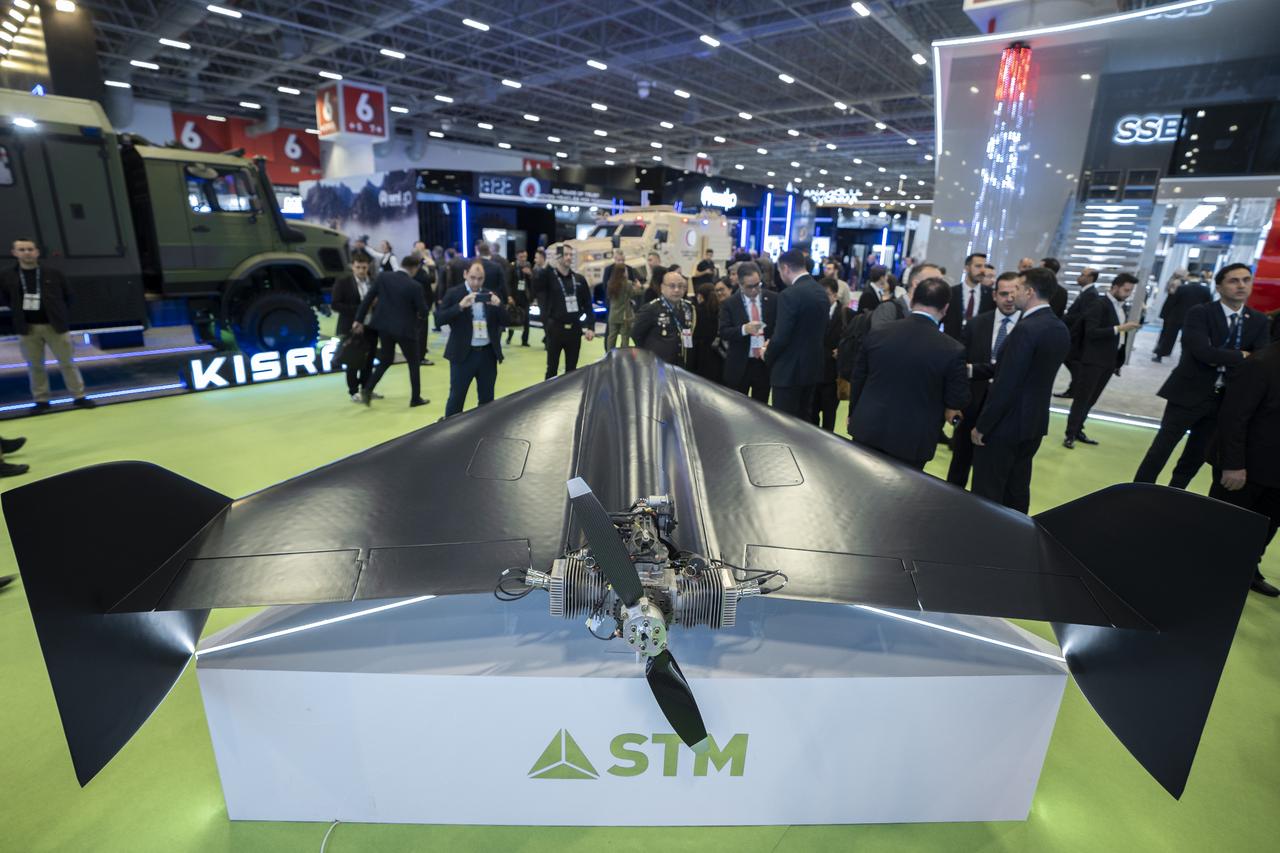
STM unveiled Kuzgun, a fixed-wing one-way attack UAV with a range exceeding 1,000 kilometers, a speed of 180 kilometers per hour, and a high-explosive fragmentation warhead.
Breaking Defense noted its design features similarities with Iran's Shahed 136.
Guleryuz confirmed that swarm deployment was already on the agenda and that the platform was undergoing tests. It has "no contract at the moment, but there's huge interest in it," he said.

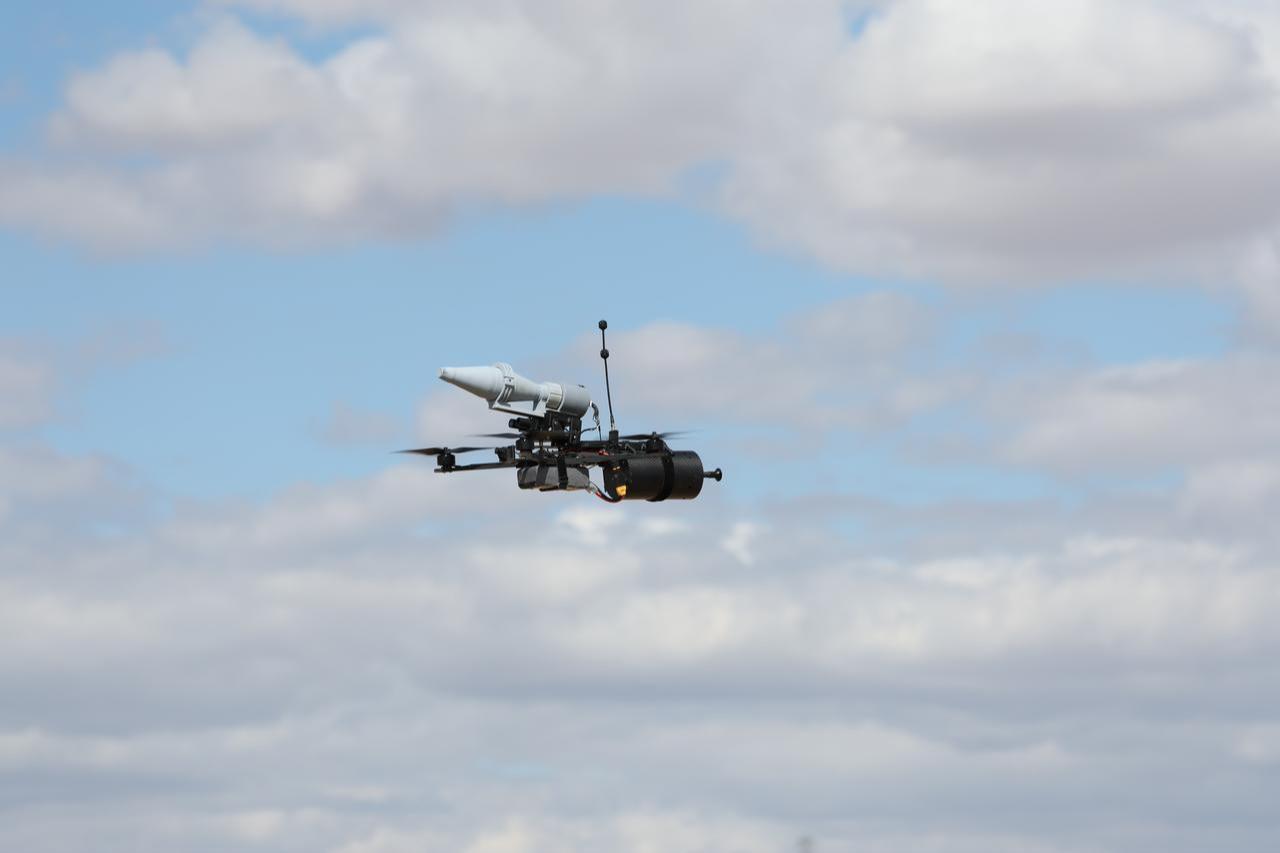
STM's most operationally significant SAHA 2026 announcement was the integration of the JINN Electronic Warfare Pod, developed by EHSIM, onto the Kargu loitering munition platform.
In field tests, a JINN-equipped Kargu detected and blinded enemy air defense radars using DRFM-based jamming, generating false radar echo signals that flooded air defense screens with deceptive data, while Kargu FPV drones armed with armor-piercing munitions passed through the resulting electromagnetic corridor to strike targets precisely.
"This capability allows us to open a digital gap in the enemy's defensive line by preventing the detection of friendly elements," Guleryuz said.
"By neutralizing high-cost radar systems with the integrated power of our low-cost, high-technology platforms, we are opening a new chapter in asymmetric warfare," he noted.
Kargu has been in Turkish Armed Forces service since 2018, is in active use across 15 countries on four continents, and can be deployed by a single soldier within one minute.
It operates in GNSS-denied and electronic warfare environments via STM-developed software, carries AI and image-processing capabilities, and can swap payloads between anti-personnel and armor-piercing warheads in the field.
STM also showcased ongoing test flights of Turul, a fixed-wing VTOL ISR drone with a 200-kilometer operational range, a 60-kilometer communication range, a 35-kilogram takeoff weight, a 3.6-meter wingspan, and a two-hour endurance at 2,000 meters.
Guleryuz said that Turul can launch and land from naval platforms or any land point without runway infrastructure and provides "uninterrupted intelligence even in difficult weather conditions and high-altitude missions" through sub-cloud operational capability.
Turul was first introduced at IDEF-2025 and is moving toward serial production.
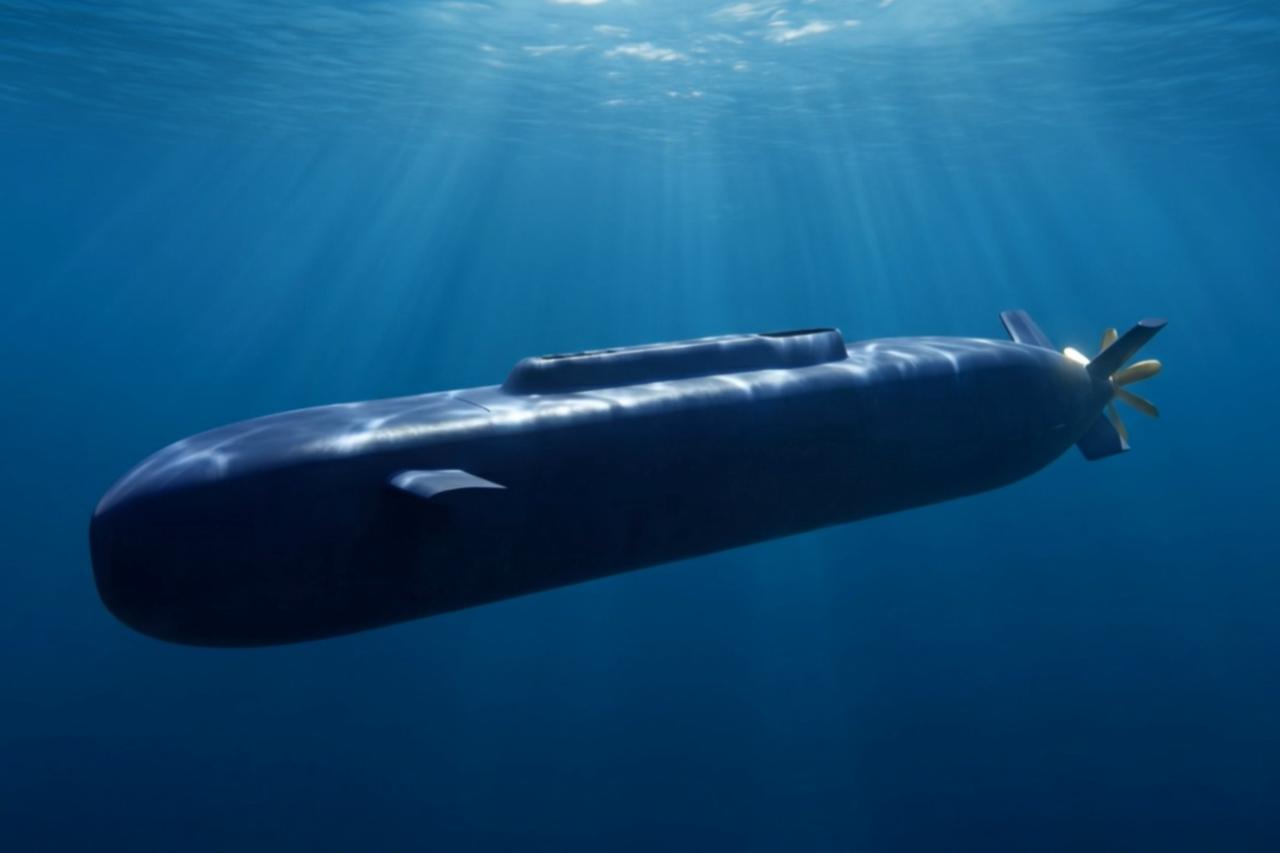
STM debuted Tengiz, its largest autonomous unmanned underwater vehicle family, equipped with heavy torpedo launch capability and smart loitering munitions.
The 11.2-meter-long system operates at depths of up to 400 meters at 8 knots and can conduct ISR, anti-submarine warfare, and electronic warfare missions. Also on display was the Togan-M Mini UAV, a 2.5-kilogram foldable ISR system.


 Set as preferred source
 Set as preferred source


 1 min read
 1 min read