Newsletters


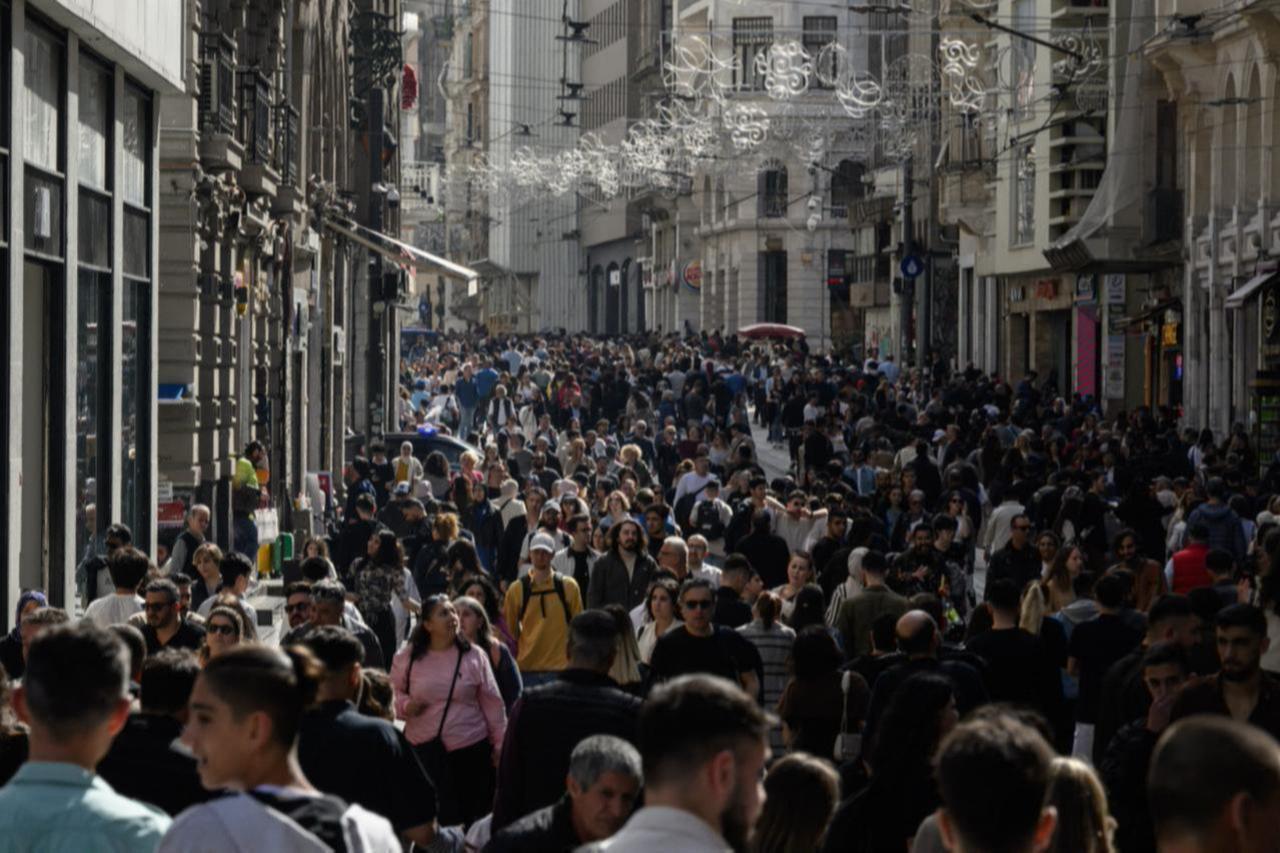


Türkiye recorded the lowest level of social trust among 25 countries surveyed by Pew Research Center, with only 14% of adults saying most people can be trusted while 84% believe people cannot be trusted.
The findings from Pew's Spring 2025 Global Attitudes Survey, conducted between January and April among 28,333 adults across 25 nations, place Türkiye at the bottom of both overall rankings and among middle-income countries. The survey asked whether adults believe most people can be trusted or whether one needs to be careful in dealing with others, a standard measure researchers use to gauge social cohesion.
Social trust refers to the expectation that other members of society will act in good faith. Research shows it influences civic participation, institutional confidence and economic development. People with higher social trust are more likely to help neighbors, participate in community activities and express confidence in public institutions.
Across the 25 countries examined, trust levels varied dramatically. Sweden led with 83%, followed by the Netherlands at 79% and Canada at 73%. The United States recorded 55%, while Australia, Japan and South Korea all exceeded 50%.


Türkiye's 14% trust rate falls well below other middle-income nations surveyed. Among nine middle-income countries, the median social trust level stood at 27%, nearly double Türkiye's figure.
Other middle-income countries showed measurably higher trust despite facing similar economic challenges. Mexico recorded 18%, Kenya 20%, Brazil 22% and South Africa 27%. Even in regions where overall trust remained low, such as sub-Saharan Africa and Latin America, Türkiye's numbers fell below regional patterns.
The survey employed face-to-face interviews in Türkiye and nine other countries, while telephone interviews were conducted in wealthier nations including Canada, France, Germany and Sweden.
Pew's analysis revealed a correlation coefficient of 0.75 between per-capita gross domestic product and social trust levels, indicating a strong relationship between economic prosperity and interpersonal trust. Across 16 high-income countries, a median of 59% of adults said most people can be trusted, compared with 27% in nine middle-income countries.
Sweden and the Netherlands recorded the highest social trust among high-income nations, while Türkiye, Mexico, Kenya and Brazil registered the lowest among middle-income countries. The United States, despite having the highest per-capita GDP among surveyed nations, showed trust levels comparable to less wealthy countries like Indonesia and Spain.
Trust levels remained flat in Türkiye between 2024 and 2025 at 14%, showing no change. This contrasts with shifts in other countries—Germany rose 13 percentage points since 2020, Sweden increased 12 points, and Indonesia jumped 12 points from 2024 to 2025. France declined 6 points since 2020.
The survey found no major differences in trust based on religious affiliation in most countries, including Türkiye. However, demographic patterns emerged elsewhere: people with higher education and income levels generally expressed greater trust, particularly in high-income nations. In 11 mostly wealthy countries, older adults reported higher trust than younger people.
Pew's analysis revealed a consistent relationship between social trust and attitudes toward international engagement. People who trust others tend to support cooperative foreign policies and view international organizations more favorably.
In Türkiye, adults who said most people can be trusted were 16 percentage points more likely to view NATO favorably than those who distrust others—43% versus 27%. Overall, only 30% of Turkish adults hold favorable views of NATO, while 52% view the alliance unfavorably, making Türkiye one of three NATO member states where negative views predominate.
The pattern extended across surveyed nations. In the Netherlands, 71% of adults who trust others viewed NATO favorably, compared with 48% of those who distrust others. Germany showed a 23-point gap between trusters and distrusters.
This relationship transcended political ideology. In France, trusters on both the left and right viewed the European Union more positively than distrusters. Among left-leaning French adults, 76% of trusters held favorable EU views compared to 51% of distrusters, while on the right, 56% of trusters viewed the EU favorably versus 43% of distrusters.
The connection between social trust and international cooperation suggests that interpersonal confidence shapes not only community relationships but also perceptions of a country's role in global affairs.
Pew Research Center, a nonpartisan organization based in Washington, D.C., conducts public opinion polling and demographic research on social issues and global trends. Founded in 2004 as a subsidiary of the Pew Charitable Trusts, the center takes no policy positions and emphasizes methodological transparency in its research.


 Set as preferred source
 Set as preferred source


 1 min read
 1 min read