Newsletters


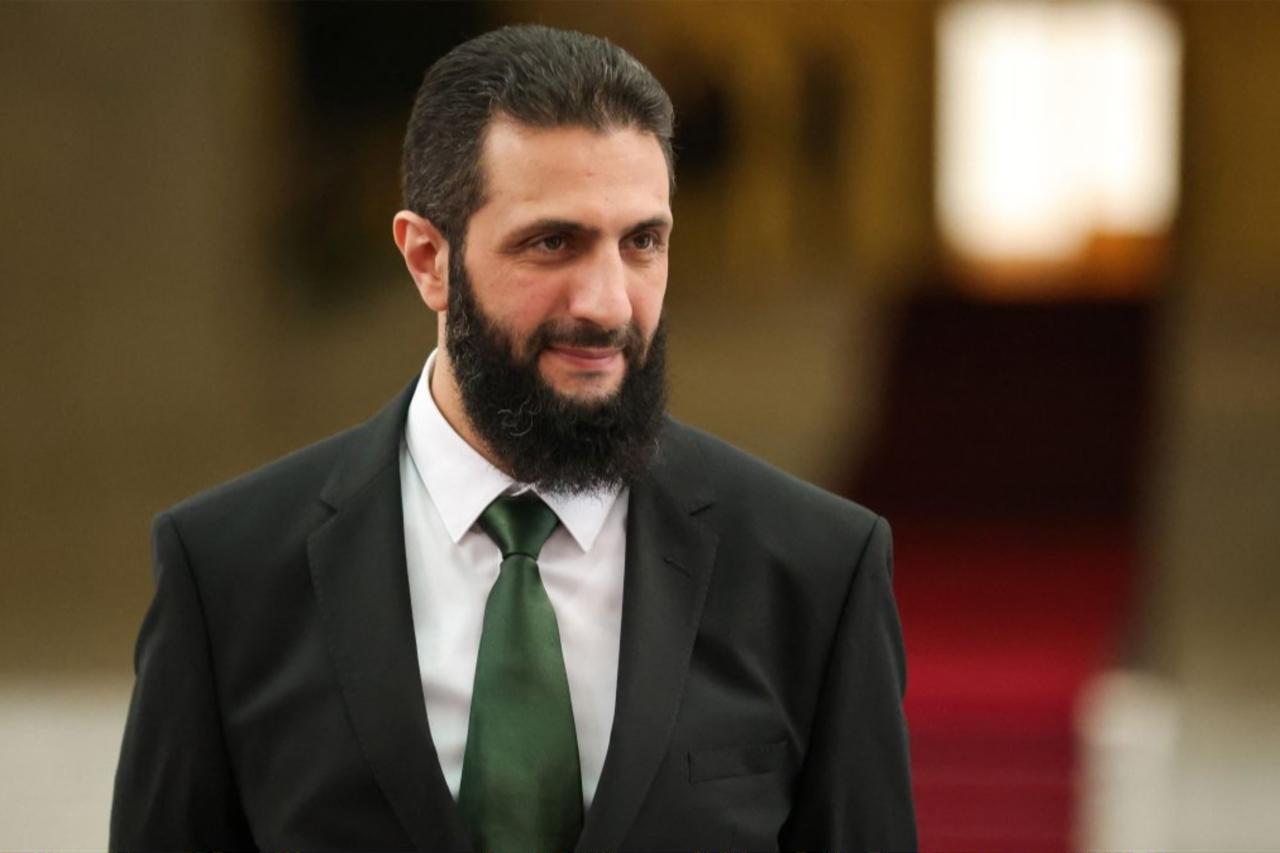


Syrian state TV, Al-Ikhbariya Syria, aired footage Thursday from President Ahmed al-Sharaa’s interview, saying protecting Syria’s Kurds depends on integrating with the country’s “new reality,” arguing that linking them to the terrorist organization PKK and escalating tensions with the Syrian state does not provide protection.
That came after Syria’s Information Ministry said on Wednesday that it reserves the full right to broadcast the interview conducted by the Erbil-based Shams channel with President Ahmed al-Sharaa, after the channel later apologized for not airing it.
Shams TV apologized Tuesday evening for canceling a prerecorded interview with al-Sharaa, claiming that his “unusually offensive” and “warlike” rhetoric toward the Syrian Democratic Forces (SDF) undermined the intended goal of regional de-escalation.
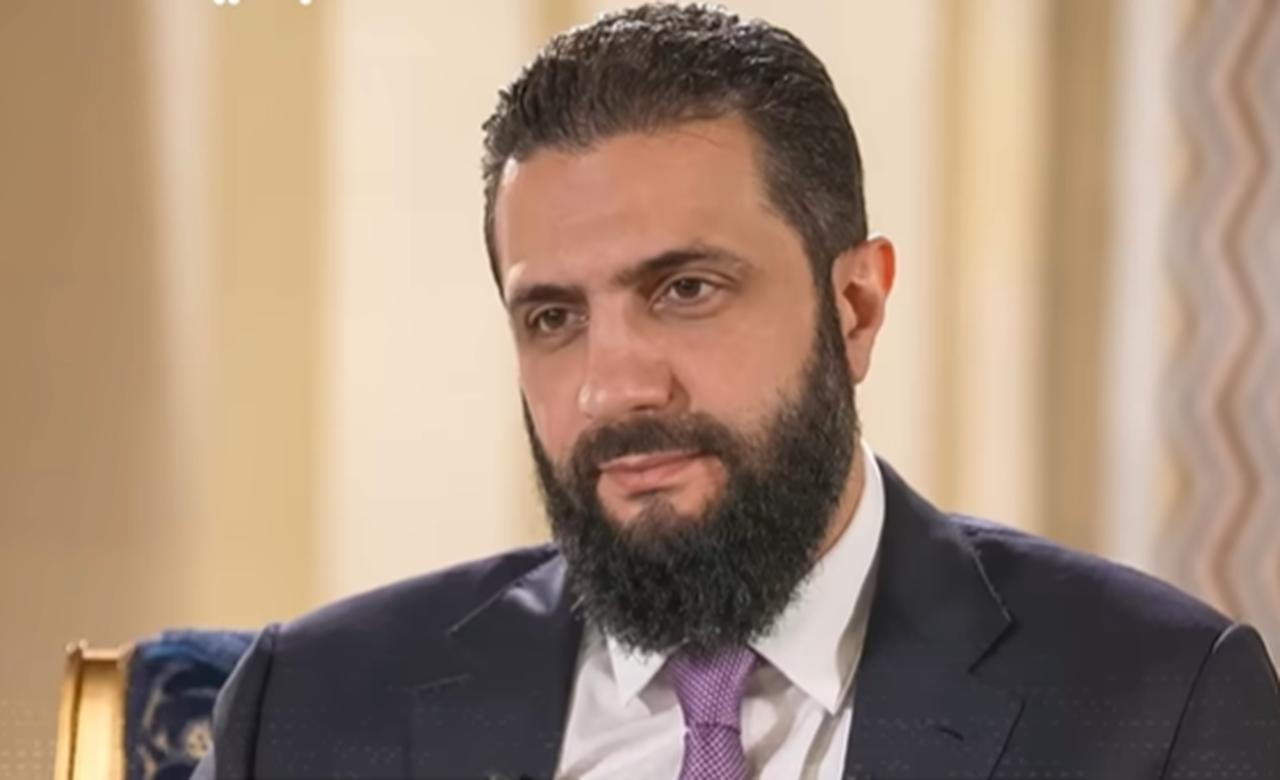

In the video Al-Ikhbariya Syria aired, al-Sharaa said the SDF had prevented the Syrian state from entering northeast Syria and operating institutions there.
Al-Sharaa said northeast Syria spans an area of about 50,000 square kilometers (19,305.1 miles) and contains “all of Syria’s wealth.” He noted that more than two-thirds of the country’s wheat production used to come from the region.
He said the loss of access to the Northeast led to a “very large decline” in revenues.
He said he lost about $20 billion over the past year “for the benefit of the Syrian state” due to what he described as the SDF’s intransigence, and it is preventing the state from entering the area and operating oil institutions and others.
Al-Sharaa said the agreement signed by SDF chief Mazloum Abdi “does not include federalism or self-administration” and affirms a “unified Syria,” stressing that any new administrative arrangement “cannot be granted as geographic gifts” by an individual decision or based on “personal preferences.”
Al-Sharaa said imposing an administrative model by force through “military defiance” in a specific area, while concentrating “Syria’s wealth” there and encompassing millions of residents who “do not want these ideas,” then using that to pressure for federalism or self-rule is “illogical,” in his words.
He added that he raised these points directly with Mazloum Abdi on a previous occasion, questioning whether “self-administration” is actually being implemented in a vast area spanning three provinces that “could be 10 provinces,” and whether places such as Deir ez-Zor are being given the right to decide their own affairs, given the presence of fragmented armed forces in the region.
He also cited the example of Sheikh Maqsoud, saying decisions were coming from “Qandil.”
He added that many security and military cadres within the SDF report to Qandil and to the “PKK,” receiving orders directly, and said “no one denies” this, describing it as more than just “media and political debate” in some respects.
He added that the Kurds have an “old problem” with Türkiye dating back 40 or 50 years, arguing that Syria “cannot bear the costs” of addressing this problem on its own territory.
He said Syria’s stability “benefits Iraq, benefits Lebanon, benefits Jordan, benefits the Gulf states, and benefits Türkiye as well,” arguing that the economy is “closely linked” to security stability.
He concluded by saying that the presence of armed forces outside the authority of the state and the law “threatens regional stability,” and that its repercussions will affect neighboring countries, including Jordan, Iraq and Türkiye.
He added that insisting on a military presence in northeast Syria “does not harm Syria alone,” noting that “all countries collectively” are working to resolve this issue, including the United States, European countries and regional states.
He argued that the SDF receives external support estimated at about $2 billion annually, questioning where that money goes and why Syria “pays all these costs” at a time when it faces the challenge of reconstruction and does not want Syria to be subjected to “politicized loans,” arguing that the country can rebuild itself.
He said that half of the funds the SDF receives goes to “tunnels and caves” that “did not benefit it in any way,” while the other half goes to “Qandil Mountain” near the Syrian-Iraqi border.
“Is there any country in the world whose borders are not under control?” He added that the tunnels between the Sinjar area and the Syrian border are “very large,” he asked.
Al-Sharaa added that he opened the door to negotiations a year ago, accepted “everything,” and remains committed because the “10 March” agreement enables the Syrian state to manage these resources. He said the SDF’s commitment to this agreement is a “solution for all of Syria.”
In March 2025, the Syrian presidency announced an agreement for the SDF's integration into state institutions, reaffirming territorial unity and rejecting any division attempts.
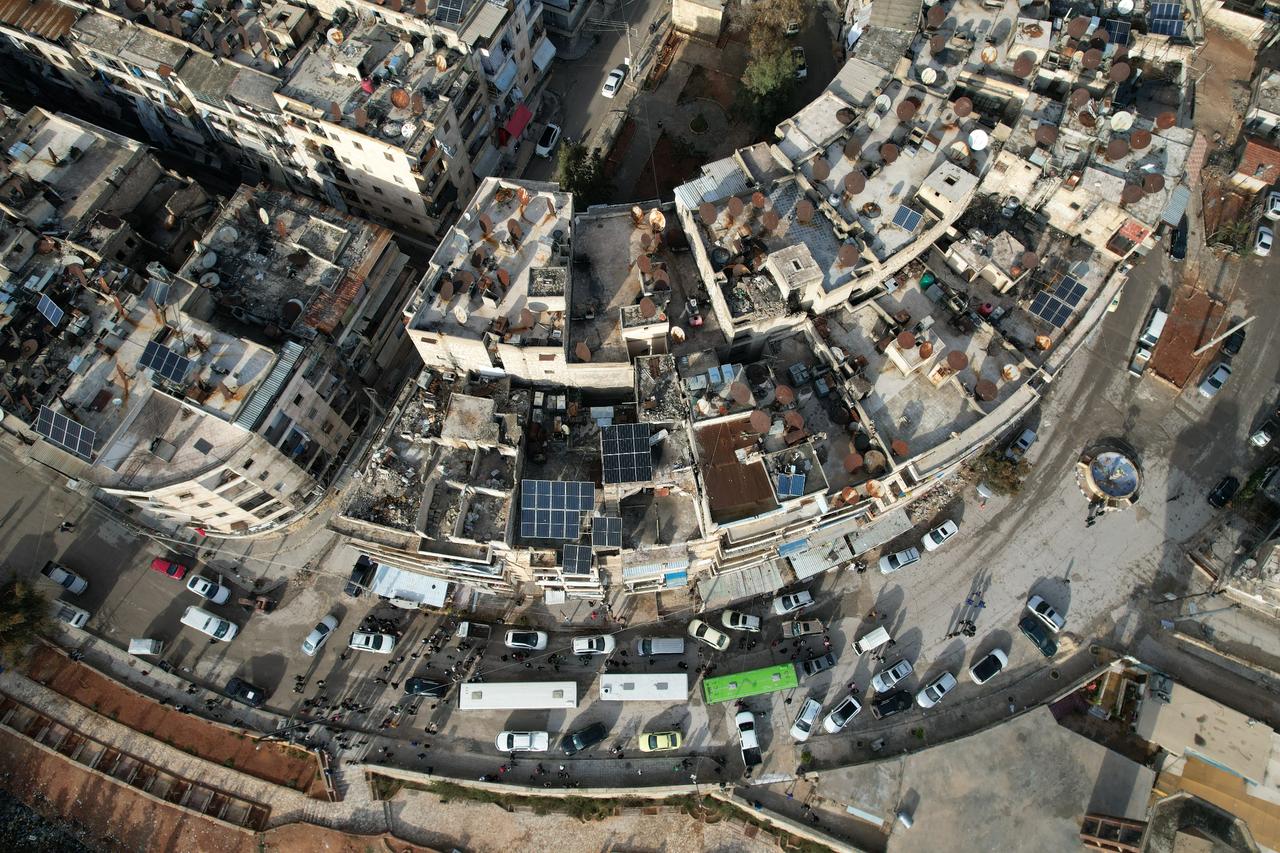
On Jan. 6, violence erupted in Aleppo when the SDF, which the "YPG" terrorist organization uses as a front in Syria, launched attacks from areas it controls in the Ashrafieh, Sheikh Maqsoud and Bani Zaid neighborhoods, targeting residential areas, civilian facilities and army positions, leaving 24 people dead and 129 wounded.
The army responded on Jan. 8 by launching what it described as a "limited" military operation, which it ended on Jan. 10. It said it regained control of those neighborhoods and allowed armed members of the group to leave for the country’s northeast, where it has its stronghold.
Al-Sharaa continued, saying that “Syria will not stand by watching this scene,” adding, “I am not threatening, but this is an explanation.” He continued: “Threats are for the weak. I am not threatening. I am explaining reality, advising, and laying out contexts.”
He said the “military, political and security” situation is not in the SDF’s favor, calling for the “right choice” of joining hands to restore production and begin reconstruction in Syria.
Ahmed al-Sharaa said one of the structural problems within the SDF is “multiple heads,” which, in his words, makes negotiations with a party that may not have the ability to implement the agreements it signs.
He added that there is an “open link,” regardless of claims that this is not the case or that it does not resemble what is alleged, arguing that the real decision-making within the SDF lies with military and security forces, leaving thinking focused primarily on military and security issues.
Al-Sharaa then asked, “Can the Kurdish component in Syria be protected through a cross-border organization that came from outside the country, the PKK?”
He added that, in his view, the solution put forward by the group amounts to “recruiting some minors” and imposing “compulsory conscription” on girls and men, along with “escalating the situation” with the Syrian state. He asked, “Does that count as protecting the Kurdish component?”
Al-Sharaa said protecting the Kurdish component, in his view, is achieved through integration into the “new reality” within the Syrian state.
He argued that the state represents “significant capital” for the Kurds because, as he put it, it does not say it does not want Kurds, nor does it reject their participation in governance.
In a related context, al-Sharaa denounced what he described as attempts by the SDF to build tunnels and trenches amid residential neighborhoods with a Kurdish majority in the city of Aleppo.


 Set as preferred source
 Set as preferred source


 1 min read
 1 min read