Newsletters


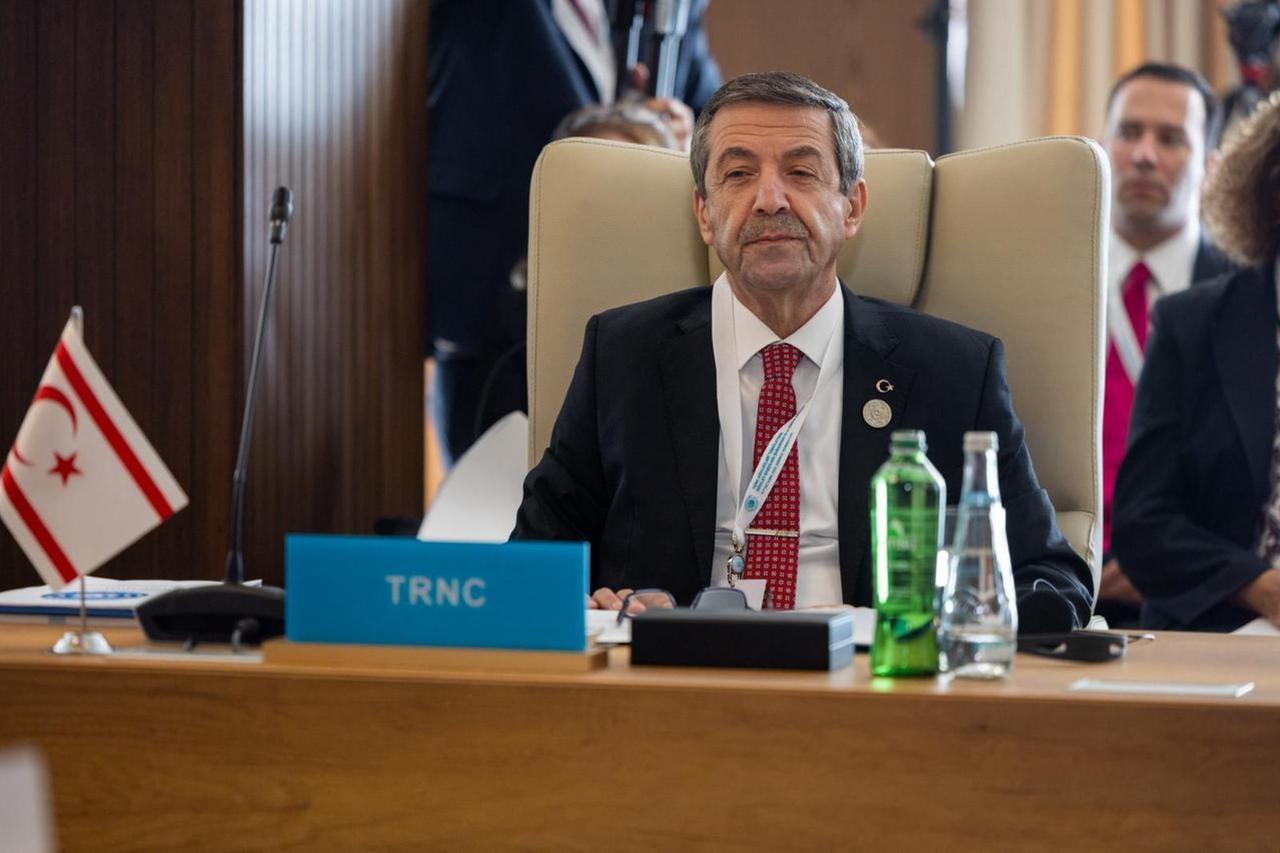


Tahsin Ertugruloglu, Minister of Foreign Affairs of the Turkish Republic of Northern Cyprus, is one of the most prominent figures in Turkish Cypriot diplomacy. He is a staunch advocate of the vision of sovereign equality and a two-state solution to the Cyprus issue.
In an exclusive interview with Türkiye Today, Minister Ertugruloglu assessed a wide range of critical issues. He pointed to rising hate crimes against Turkish Cypriots and criticized the European Union’s loss of neutrality and the Greek Cypriot side’s policies of international isolation.
He also addressed the United Nations’ policies on the buffer zone and tensions in Cayhan Duzu, as well as deepening military and strategic cooperation between Israel, Greece and Greek Cyprus in the Eastern Mediterranean.
Drawing on his long-standing political experience and active role, Ertugruloglu argues that the pursuit of a federation-based solution is now a failed model, whilst emphasising that a lasting solution on the island can only be achieved through the recognition of the Turkish Cypriot people’s equal international status and sovereign equality.
The Turkish side says a lasting, results-oriented process is not possible until sovereign equality and political status are clarified in the Cyprus issue. In your view, is the UN approach genuinely solution-oriented, or does it apply indirect pressure to return the Turkish Cypriot side to old federation parameters?
The challenges and difficulties about the Cyprus issue extend well beyond the scope of confidence-building measures, and instead arise from misguided fundamental assessments and the partial policies pursued by the international community.
It is not a realistic expectation that renewed attempts at confidence-building measures—consistently obstructed by the Greek Cypriot side’s deliberate abuse of the “recognition of the TRNC” argument as a pretext to block progress—would establish a new and viable diplomatic ground conducive to meaningful negotiations. Let me explain;
It should be recalled that the “1960 Republic of Cyprus” was established based on a partnership between two co-founding peoples, namely the Turkish Cypriot and Greek Cypriots, where neither side could claim authority over the other.
The Cyprus issue commenced when the Greek Cypriot co-founder of the 1960 Republic of Cyprus tried to impose its political will on the Turkish Cypriot co-founder by force of arms and illegally converted the Republic into a purely Greek Cypriot entity by expelling its Turkish Cypriot partner from all state organs in 1963.
The large-scale violence and gross human rights violations necessitated the U.N. Security Council to deploy the United Nations Peacekeeping Force in Cyprus (UNFICYP) to the island in 1964 (Resolution 186) to stop the atrocities perpetrated against the Turkish Cypriot people.
However, Resolution 186 falsely and unjustly allowed the Greek Cypriot aggressor to be the sole representative of the defunct republic. The unjust situation created by Resolution 186, which does not reflect the legal and political reality of the two co-founding peoples, has long been the primary source of the problem, as it enforces the maximalist policies of the Greek Cypriot side.
A comprehensive reassessment of the UNFICYP's mandate, functions, and operations in light of the island's changed circumstances is necessary and long overdue. There are two separate states and two distinct sovereign peoples on the island.
Resolution 186 is one of the two major mistakes that stand in the way of any just solution to the Cyprus issue; the other is the admission of the Greek Cypriots to the EU as presumably “Republic of Cyprus”, in violation of the very criteria of EU membership, namely the Copenhagen Criteria.
The Greek Cypriot side, having usurped the seat of government by force of arms in December 1963 and continuing to benefit from its usurped position as the “internationally recognised government”, has neither the incentive nor the intention to share power and prosperity with the Turkish Cypriot side as equal partners; and instead, prefers the continuation of the unacceptable status quo.
In this regard, the long-standing approach adopted by the international community—one that has, over time, reinforced the Greek Cypriot side’s intransigence—has been the biggest contributing factor.
Accordingly, the international community bears a clear responsibility: it should refrain from further enabling or sustaining these misperceptions, and instead act in a manner that respects the inherent sovereign equality of the two states on the island, thereby contributing to the establishment of a more balanced and sustainable state of affairs.
As is well known, over the past five decades and numerous rounds of United Nations-led negotiations, many efforts have been made toward uniting the Island under a “federal” settlement based on political equality.
Despite the continuous goodwill and constructive approach shown by the Turkish Cypriot side, none of these initiatives yielded any positive results.
Overwhelming rejection of the U.N.’s Annan Plan in 2004 by the Greek Cypriots at the separate and simultaneous referenda held in both states, the collapse of the Cyprus Conference held in 2017 at Crans Montana, as well as all the failed past efforts, proved that “federation” is no longer a realistic formula for the settlement of the Cyprus issue.
Therefore, in line with the calls of the U.N. Secretaries-General to the two sides to “think outside the box”, the Turkish Cypriot side tabled its new vision at the 5+U.N. informal meeting, which took place in Geneva, on 27-29 April 2021, with the firm conviction that it will bring the much-needed stability, security and cooperation in and around our island with a win-win approach. The rationale behind the Turkish Cypriot proposal is embedded in reality.
A sustainable agreement on the Cyprus issue can only be achieved through a paradigm based on the reality that there exist two peoples and two states with sovereign equality on the island.
Encouraged by its usurped status, the Greek Cypriot side approaches confidence-building measures not as a means to foster genuine cooperation, but rather as a vehicle to advance its maximalist positions.
To give an example, concerning the opening of additional crossing points, instead of committing to the framework agreed in New York, the Greek Cypriot side began raising new issues and putting forward requests for transit passages for Greek Cypriots that fall outside the scope of the original consensus, which was intended to ensure mutual benefit for both peoples.
Requests for transit passages are not merely technical requests; they reflect attempts to gain advantage within the buffer zone and to diffuse Greek Cypriot authority over the buffer zone.
The recent attempt by the Greek Cypriot side to enter the Cayhan Duzu region, accompanied by a United Nations Peacekeeping Force, and its subsequent blocking by TRNC security forces and Turkish troops, has reignited the debate over sovereignty and jurisdictional boundaries. How do you assess the U.N.’s approach to the buffer zone?
Cayhan Duzu is located within the territory and jurisdiction of the TRNC. To place the matter in its proper context, it is necessary to recall that the issue dates back to 1985, when UNFICYP, with the temporary authorisation of the Turkish Cypriot side, to prevent illegal hunting activities in the region, moved its observation post—previously located within the buffer zone to the southwest of Cayhan Duzu—to its present location within the TRNC.
Furthermore, owing to the logistical challenges of accessing the Beyarmudu plateau via Pile, the route situated in Cayhan Duzu began to be utilized by UNFICYP based on our permission.
It must be clearly underscored that the temporary permissions previously granted to use the road and to move the post—extended solely as a gesture of goodwill—do not in any way constitute a transfer of authority nor transfer the sovereignty of the area. Sovereignty over this territory remains exclusively with the TRNC.
The years-long double standards by UNFICYP resulted in numerous permissions and/or tacit approvals—through inaction—being effectively granted to the Greek Cypriot side for substantial construction projects, which amount to permanent violations of the buffer zone; the list is long.
UNFICYP’s inaction in favour of the Greek Cypriot side and in violation of the buffer zone, as well as its indifference toward the requests by the Turkish Cypriots over the years, have resulted in a preferential treatment for the benefit of Greek Cypriots within the buffer zone in general and within the sensitive village of Pile in particular.
This preferential treatment, which is in no way compatible with the mandate or duties of UNFICYP, feeds resentment and distrust between the two sides while exacerbating estrangement, increasing tension, countering trust-building efforts and changing the status quo to the advantage of one side only, thereby calling the UN’s impartiality into question.
UNFICYP’s one-sided approach has fostered the Greek Cypriot misperception that it can extend its pseudo-authority also over the buffer zone. This has further reinforced the Greek Cypriot misperception that “it alone can represent the whole island”, which remains the main obstacle to a comprehensive settlement on the island.
UNFICYP is expected to repeatedly call for the reversal of every unauthorized Greek Cypriot construction/activity and to discontinue practices that encourage Greek Cypriot violations, which result in Greek Cypriot dominance within the buffer zone.
In clear contrast, a visible double standard is being applied towards the Turkish Cypriot side. For example, in August 2023, UNFICYP used its full operational capacity to physically block the pre-notified long awaited humanitarian Yigitler-Pile road construction within TRNC territory—an initiative that had been discussed with UNFICYP thorough numerous meetings at the highest levels over a period of more than 35 years—in an exclusive and unprecedented manner, through the deployment of its personnel and vehicles, in a way not observed about the Greek Cypriot side.
UNFICYP turned this humanitarian road project of Turkish Cypriots into an international issue through instant verbal and written statements, as well as physical confrontation. The attitude of UNFICYP not only brings its presence on the island into question, but also damages its credibility.
If UNFICYP continues its partial approach, the Turkish Cypriot side would have no option but to take reciprocal measures, in line with the principle of reciprocity, in order to preserve the delicate balance within the buffer zone.
We see that the Greek Cypriot side is attempting to further isolate the Turkish Cypriot side on the international stage, particularly by using European Union membership as a tool for political pressure. At the level of the European Parliament, statements made regarding the anniversary of the founding of EOKA have also brought these debates back into the spotlight. In your view, has the EU completely lost its status as a neutral actor in the Cyprus issue?
Even EU officials have acknowledged that admitting the Greek Cypriot Administration as a member of the EU in 2004, purporting to represent the entire island, before a final settlement was a serious mistake.
Since 2004, the EU has been a party to the Cyprus issue, and under the pretext of “member-state solidarity”, the EU unconditionally sides with the Greek Cypriots and Greece.
The EU, by consistently aligning itself with the Greek Cypriot side, takes one-sided steps, issues biased statements, and produces reports that reflect factually incorrect and unilateral Greek Cypriot narratives.
Failing to maintain equal distance from both sides, the EU effectively contributes to further complicating the Cyprus issue by unconditionally reinforcing Greek Cypriot positions and facilitating their demands that perpetuate unjust restrictions on the Turkish Cypriot side. In doing so, this approach undermines the EU’s ability to play a neutral and constructive role in the Cyprus issue.
There are assessments that the recent increase in provocative actions by the Southern Cyprus and Greece—including attacks on the Turkish flag, activities in schools that foster the EOKA mentality—have given rise to serious security concerns. How do you assess the political responsibility of the Greek Cypriot side and the silence of the international community?
Multiple recurring incidents are being publicly reported every year involving hate-motivated verbal and physical attacks by the Greek Cypriots against Turkish Cypriots, including assaults on Turkish Cypriot youths and civilians in public spaces.
Such incidents, which are widely characterised by ethnic hostility that sometimes include the use of nationalist symbols, burning of flags and anti-Turkish slurs, are regular practices being observed frequently in the Greek Cypriot side.
Anti-Turkish rhetoric—manifested as hate speech and collective blame—persisted across political discourse, public protests, social media, commentary, and especially the education system, including curricula and textbooks used in primary, secondary, and high schools.
Hate speech against Turks and Turkish Cypriots that surge in Greek Cypriot media and public discourse, also with calls for "enosis" (union with Greece) that vilify Turkish presence.
These patterns are documented and frequently covered in media reports. Under these circumstances, where such actions and discourse are supported by Greek Cypriot officials themselves, it is not realistic to expect Greek Cypriot political actors to take effective actions to stop them.
International actors, as well as reports, refrain from covering the hostile public discourse of political figures, physical or verbal insults by Greek Cypriot civilians, and the anti-Turkish and racist content of the Greek Cypriot education system. Neither international actors nor relevant international reports assess this harmful climate, nor do they examine the Greek Cypriot administration’s responsibility to revise this policy.
The military cooperation, joint exercises, energy projects and defense agreements that have gained momentum recently within the framework of the Israel-Greece-Southern Cyprus tripartite alliance in the Eastern Mediterranean are attracting attention. How do you interpret the activities of this alliance?
Since the early 2000s, the Greek Cypriot side has sought to establish alliances through agreements with major powers, regional actors, and multinational companies in both the hydrocarbon and defense sectors. These efforts are aimed at excluding the Turkish Cypriot side and Türkiye, and at forming a front against them. In the field of hydrocarbons, the rights of both the Turkish Cypriots and Türkiye are being violated.
However, due to our firm determination to safeguard our rights in the Eastern Mediterranean, the Greek Cypriot side has been unable to achieve tangible outcomes. No initiative that excludes Turkish Cypriots and Türkiye can succeed. We have no intention to infringe upon the rights of others; however, it must be clearly understood that any attempt to encroach upon our rights will not be tolerated.
The Greek Cypriot Administration has significantly accelerated its military proliferation, particularly after the Greek Cypriot leader Christodoulides assumed the leadership of the Greek Cypriot side, investing billions of euros into military equipment and armaments.
As the late Founding President Rauf Denktas aptly stated: “If this effort is directed at the Turkish Cypriots, it is excessive; but if it is directed at Türkiye, it is entirely insufficient and will never be enough.”
More recently, including under the leadership of Christodoulides, the Greek Cypriot Administration has been actively establishing defence partnerships with multiple third countries.
By unilaterally opening our island to the military use of the United States, Israel, and France, the Greek Cypriot administration has effectively transformed the island into a military base serving the interests of global powers, becoming party to the specific conflicts.
Indeed, by using the United States and Israel’s operations against Iran as a pretext, the Greek Cypriot Administration has facilitated the deployment of military forces by multiple countries, including Greece, on and around the island to the detriment of delicate balances. Continued intensive armament activities and military cooperation undertaken by the Greek Cypriot side are turning our Island into a target that creates a major security risk.
In this context, should the international community seek to genuinely preserve the state of calm, measures should be taken to prevent and discourage the Greek Cypriot side from engaging in activities that generate tension and render the island a potential military target.
Such developments that raise legitimate security concerns cannot be ignored by either the Turkish Cypriot side or Türkiye, as a guarantor power, in the exercise of its responsibility to ensure the safety and security of the Turkish Cypriot people. To preserve the already fragile balance on the island, the Turkish Cypriot side, together with Türkiye, is left with no other option but to take reciprocal steps.
Do you believe that this strategic rapprochement is a factor fuelling the increasing hardening of Greece and Southern Cyprus’s rhetoric and actions towards Türkiye and the TRNC, and does Israel’s role within this tripartite framework play a part in shaping this rhetoric and these attitudes?
Greece and the Greek Cypriot Administration are seriously concerned about Türkiye’s increasing importance and strength in the region.
The role played by Türkiye has a global impact. Türkiye contributes significantly to global peace and stability by taking initiatives to resolve issues through peaceful means, diplomacy, and dialogue with regional and global actors.
In contrast, the Greek Cypriot Administration and Greece cooperate with Israel—whose actions threaten regional peace and stability—to counterbalance Türkiye’s growing influence.
This is the wrong path. No one who stands against Türkiye has won, nor will they win at any time. On the contrary, no one has suffered from Türkiye’s friendship.
Peace, cooperation, and stability in the region cannot be secured by standing against and infringing the rights of Türkiye (the country with the longest coast in the Mediterranean) and the Turkish Cypriot people. Greater cooperation in the region involving Türkiye and Turkish Cypriot people is the only way to an inclusive, fair and equitable win-win approach.
This is the only solution that will uphold the rights and interests of all parties concerned.


 Set as preferred source
 Set as preferred source


 2 min read