Newsletters





Germany's domestic intelligence chief calls for a sweeping expansion of his agency's powers, warning that Russia views Germany as "enemy number one" and that the country faces its most dangerous security environment since World War II.
Sinan Selen, president of Germany's Federal Office for the Protection of the Constitution (Bundesamt für Verfassungsschutz—BfV), said in an interview with the Suddeutsche Zeitung that his agency must transform from an intelligence-gathering body into an operational secret service capable of acting, not only observing.
"Security and sovereignty result from deterrence and resilience," Selen said.
"We must work more operationally in the future. For this, we need new and expanded capabilities," he added.
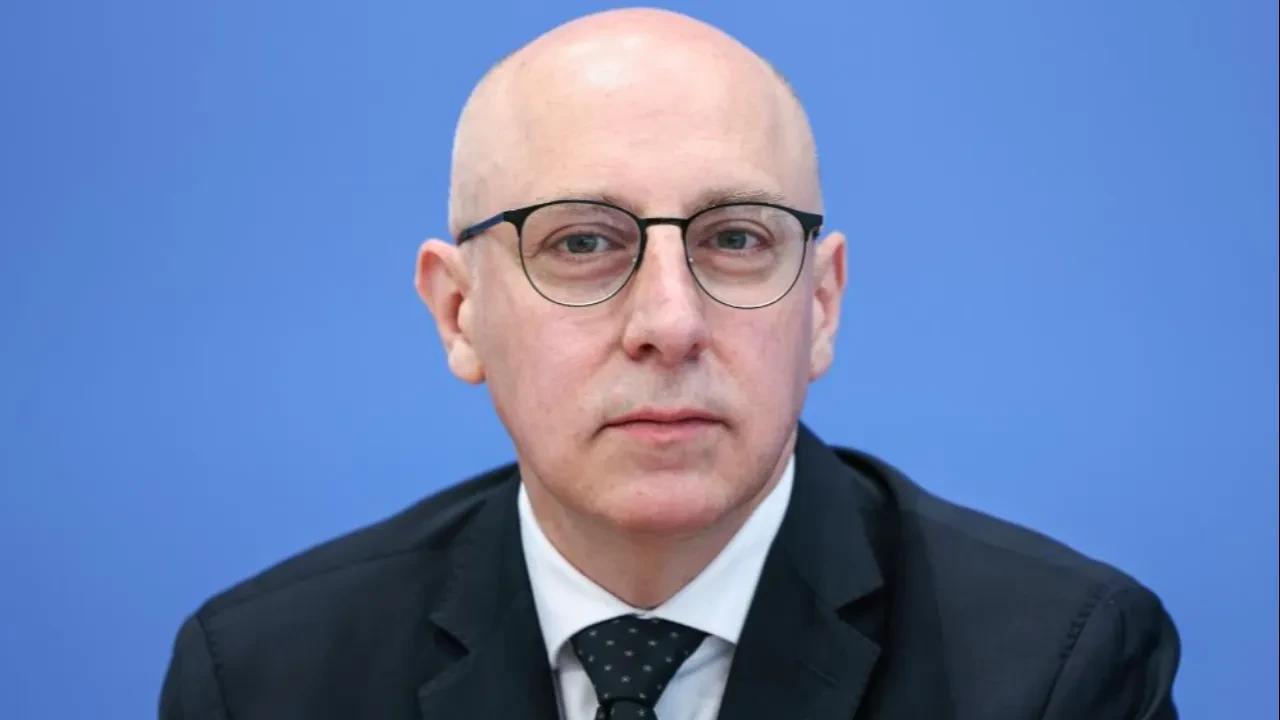

Selen said Russia is conducting a systematic campaign against Germany, going well beyond espionage.
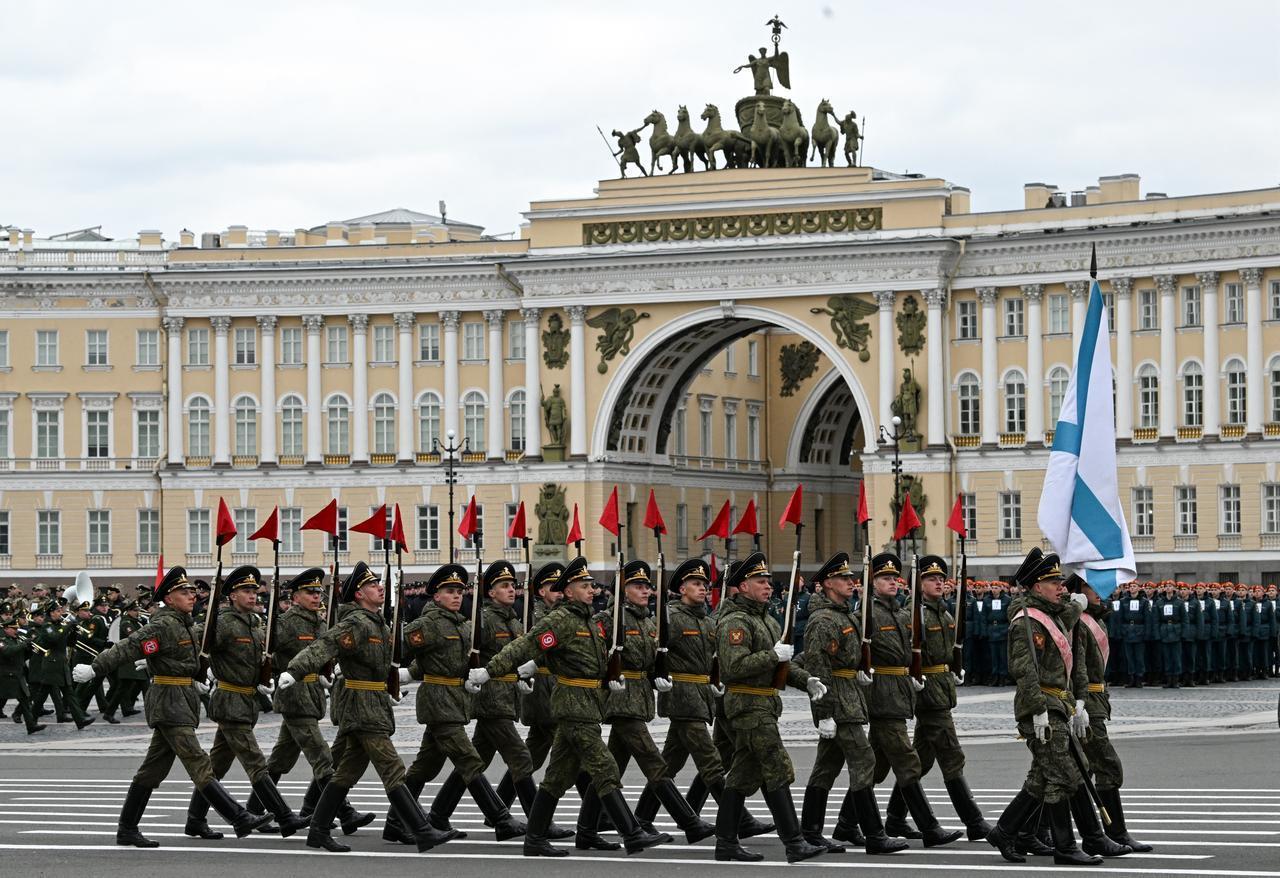
"We are enemy number one," he said, describing how Moscow is systematically mapping Germany's vulnerabilities, running disinformation campaigns, conducting sabotage operations, and planning assassinations on German territory.
In a recent case, the Verfassungsschutz observed that Russia had a German arms manager under surveillance, a man whose Bavarian company delivers drone parts to Ukraine. Federal prosecutors arrested two agents in late March in connection with the operation, according to the Suddeutsche Zeitung.
Selen said the level of danger posed by Russia is not yet fully understood inside Germany, pointing to Finland as a country where public awareness of the threat is far sharper.
"They are aware of the confrontation," he said.
"Violent extremists, terrorists and foreign powers threaten our free democratic order and our security every day," Selen said at an event at the Bavarian State Representation in Berlin.
According to news portal Spiegel, the Verfassungsschutz is set to gain the power to covertly infiltrate and examine the computers and mobile phones of targets. The agency is also expected to be permitted to use artificial intelligence and facial recognition software to identify leads in large datasets.
Germany's foreign intelligence service, the Federal Intelligence Service (BND), is set to receive expanded powers as well.
Interior Minister Alexander Dobrindt announced earlier this month that a reform would soon transform Germany's intelligence services into "a real secret service."
Selen described his agency's required transformation in stark terms.
"Our task is not to explain or observe, but to control or prevent threats," he said. The goal, he said, is to "detect dangers, stop threats, and with the knowledge gained, prevent new ones before they emerge."
He said a "thorough transformation" of the agency is necessary, especially when dealing with "planned extremist attacks or weapons shipments."
The Verfassungsschutz currently has about 4,500 agents and operates from main locations in Cologne and Berlin, as well as offices in various cities, often under invented company names, according to the Suddeutsche Zeitung.
Not everyone supports the proposals.
Rolf Gossner, a longtime attorney and co-publisher of the annual "Grundrechte-Report," a civil liberties assessment serving as a counterpoint to the Verfassungsschutz's annual report, said the expansion concentrates too much power in a single agency.
"Bundling intelligence and operational powers in the Verfassungsschutz leads to a highly problematic concentration of power. That must not be allowed," Gossner said.
Gossner has spent decades challenging domestic intelligence powers in German courts. He was monitored by the Verfassungsschutz for roughly 40 years, primarily due to contacts with left-wing extremist organizations. In 2020, the Federal Administrative Court ruled Gossner's surveillance unconstitutional.
Konstantin von Notz, deputy faction leader of the Greens and a member of Germany's parliamentary intelligence oversight committee, said reform is overdue but must come with strict safeguards.
"Our adversaries must not believe that Germany is not capable of defending itself," von Notz said, adding, "A reform of the intelligence services is long overdue."
But he drew a firm line around the Verfassungsschutz specifically, saying expanded powers would only be acceptable "if parliamentary oversight can also be sharp and effective."
"We will not sell our fundamental values," von Notz said.
Beyond Russia, Selen is locked in an open confrontation with the far-right Alternative for Germany party, the AfD, which is currently leading all national polls, according to the Suddeutsche Zeitung, and is hoping for an absolute majority in Saxony-Anhalt state elections in September.
The Verfassungsschutz classified the AfD as a "confirmed far-right extremist" organization in May of last year, backed by more than 1,000 pages of documentation, quotes, essays and posts by AfD figures the agency says demonstrate the party's hostility to the constitution.
A Cologne administrative court halted the classification in late February pending a final ruling, after the AfD filed a legal challenge.
Selen said the AfD has been filing lawsuit after lawsuit against his agency in an effort to escape the extremist label, calling it an open power struggle.
AfD politician Maximilian Krah stated the party's objective plainly. "The goal is to shake off the surveillance of the party by the Verfassungsschutz," Krah said.
AfD co-leader Alice Weidel called Verfassungsschutz agents "sleazy Stasi informers" in December 2025. The confrontation gained an international dimension when U.S. Vice President J.D. Vance criticized Germany's treatment of the AfD at the Munich Security Conference in February 2025, calling it undemocratic and accusing the German government of showing "fear of its own people."
Selen, 54, was born in Istanbul in 1972 and moved to Cologne at age 4 with his parents, both of whom were journalists at Deutsche Welle. He studied law at the University of Cologne, focusing on police, European, and administrative law. He has since given up his Turkish citizenship and is the first Verfassungsschutz president with Turkish roots.
He has held the position since last October.
His career includes roles at the Federal Criminal Police Office (BKA), where he headed the protection detail for then-chancellor Gerhard Schroder and then-interior minister Otto Schily, and served on the special commission that investigated German connections to the Sept. 11 perpetrators.
He was later brought to the Interior Ministry by Wolfgang Schauble, where he worked under future BND chief Gerhard Schindler. After a period at a tourism company, TUI, where he built a security department, he returned to government service as vice president of the Verfassungsschutz before taking the top post.


 Set as preferred source
 Set as preferred source


 1 min read
 1 min read