Newsletters


Iran's military said Thursday it had targeted sites in Kuwait, Qatar and Bahrain with one-way attack drones, state media reported, in retaliation for U.S. strikes earlier in the day that hit roughly 90 Iranian military targets.
The Iranian army said that "in continuation of the attacks by the Islamic Republic of Iran's army on U.S. bases in the region," it had targeted a Patriot missile interceptor system in Kuwait, an early warning system in Qatar and fuel tanks in Bahrain with "a large number of various types of army kamikaze drones."
Iran's Islamic Revolutionary Guard Corps (IRGC) said in a statement carried by state media that it launched strikes an hour after new attacks by "the enemy" on various regions of Iran.
The strikes, it said, destroyed infrastructure and key facilities at the Arifjan and Ali al-Salem bases in Kuwait and the Juffair and Sheikh Isa bases in Bahrain, and marked 'the first stage of a punitive response' to violations of the ceasefire.
The IRGC warned that further U.S. strikes would trigger retaliation against additional American bases in the region.
State TV later added Qatar to the list of targets, reporting that a satellite antenna, described as an early-warning site, had also been struck.
There was no immediate word of damage or casualties in any of the three Gulf Arab states, and Kuwait's military said it was actively intercepting incoming drones and missiles.
Sirens sounded at least twice in Bahrain, home to the U.S. Navy's 5th Fleet headquarters, in what appeared to be a larger wave of attacks than the previous day's.
The attacks came hours after U.S. Central Command (CENTCOM) said it had struck approximately 90 Iranian military targets on July 8, including air defense systems, coastal surveillance assets, missile and drone storage sites, naval capabilities and logistics infrastructure along Iran's coastline.
"U.S. Central Command (CENTCOM) forces completed an additional round of strikes against Iran, July 8, to further degrade Iran's ability to attack commercial shipping and innocent civilian mariners in the Strait of Hormuz," CENTCOM said in a statement posted to X, adding that a prior round on July 7 had hit about 80 targets, including more than 60 IRGC small boats.
Iran's top negotiator, Mohammad Bagher Ghalibaf, accused the United States of "bullying and breaking promises" and said the Strait of Hormuz would only reopen on Tehran's terms. "If you strike, you'll get hit," Ghalibaf wrote on X.
"The Strait of Hormuz will only open with 'Iranian arrangements,' not American threats," he said.
Iran's Health Ministry said U.S. strikes on five provinces over July 8 and 9 killed at least 14 people and injured 78 others.
Hossein Kermanpour, head of the ministry's Public Relations and Information Center, said in a post on X that 47 of the injured remained hospitalized while the rest had been discharged.
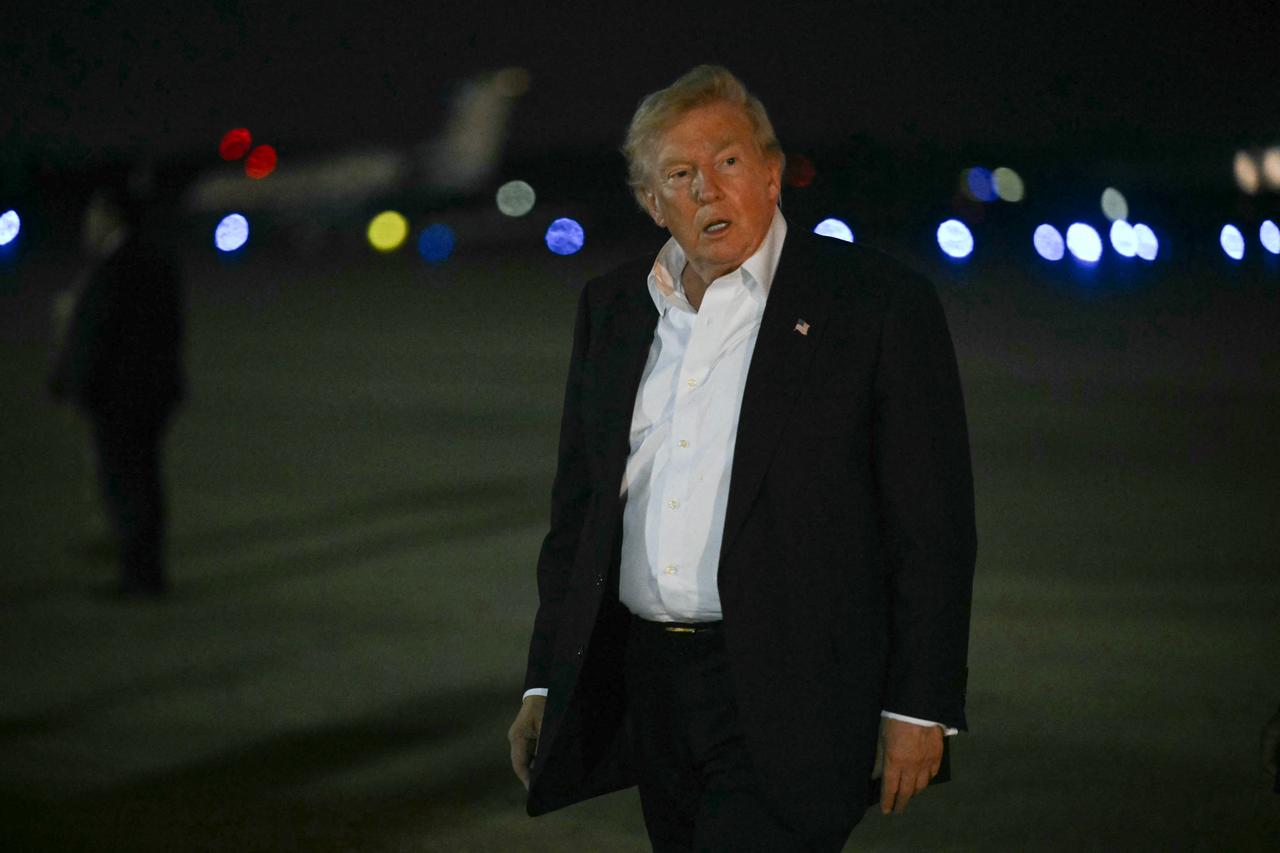
Speaking to reporters aboard Air Force One as he returned to the United States from the NATO summit in Ankara, U.S. President Donald Trump said Iranian officials had reached out.
"They called a little while ago. They want to make a deal so badly. I just don't know if they're worthy of making a deal. I'm not sure they'd honor a deal we make. That's the problem," Trump said.
On the latest U.S. strikes, Trump said: "Every time they hit us, we'll hit them 20 times. And we did that last night." He said Iran's own strikes were retaliatory but insubstantial, adding, "We've already won militarily. They have very little left."
Asked whether the two countries were headed toward full-scale conflict, Trump said, "I don't know. We'd win it very quickly... We have many ways we could win."
Trump made a brief stop at RAF Mildenhall in Suffolk, England, on the way home, changing planes before continuing to Joint Base Andrews; he denied the stopover was related to any security threat, saying, "I have a threat all the time. I'm number one of their list."

A U.S. official told Axios the White House is preparing for what could become a multi-day or multi-week exchange of fire with Iran over the Strait of Hormuz, with the length depending on whether Tehran continues attacking commercial shipping.
"We're going to slap them a bit so they understand we're not f**** around," the official said.
Officials told Axios the administration believes it has more room to escalate because hundreds of oil tankers have managed to leave the Gulf through the strait in recent weeks, easing concerns about an immediate oil-price spike.
A separate U.S. official said the current round of strikes followed frustration among more hardline factions within Iran's leadership who felt a June 17 Pakistan-brokered Memorandum of Understanding (MoU) had not delivered benefits for Tehran, including the release of frozen funds tied to nuclear steps Iran had not yet taken.


 Set as preferred source
 Set as preferred source


 4 min read