Newsletters




While military tensions escalate across the Middle East, global attention remains focused on oil prices and energy flows.
However, analysts warn that a more fundamental crisis could emerge. The region’s most critical strategic commodity may not be oil but drinking water.
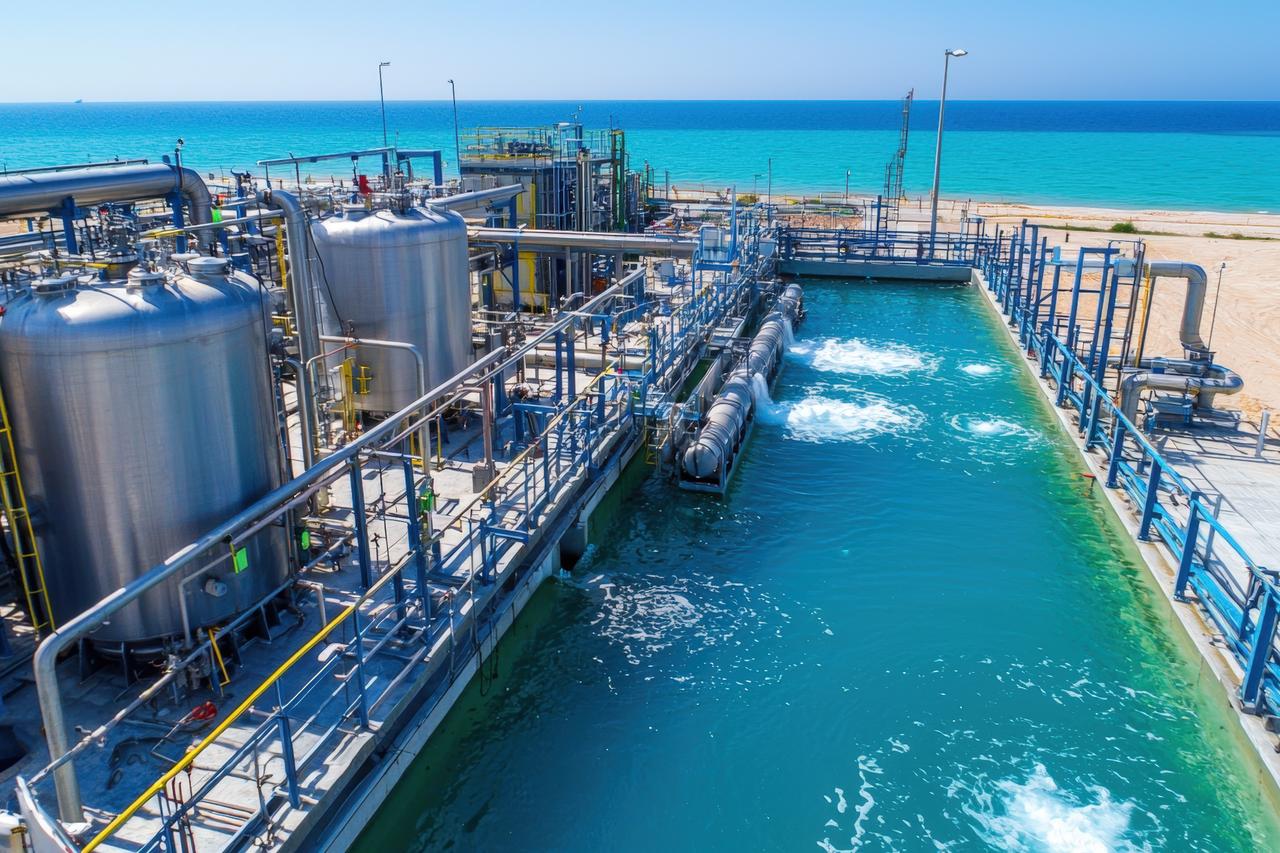
Across the Persian Gulf, modern cities depend on desalination plants that convert seawater into potable water. For the Gulf Cooperation Council (GCC) states—Saudi Arabia, Kuwait, Bahrain, Qatar, the United Arab Emirates, and Oman—these facilities sustain daily life and basic state infrastructure.
Security experts warn that this heavy reliance could turn desalination plants into vulnerable “soft targets” if the conflict with Iran widens.
Countries across the Gulf region operate more than 400 desalination plants, producing roughly 40% of the world’s desalinated water, as reported by Iran International.
In several Gulf states, the drinking water supply depends almost entirely on these facilities.
Dependence on desalination is particularly high in several countries:
In desert climates with limited rainfall and heavily depleted aquifers, desalination has become the infrastructure that makes modern life possible.
Intelligence agencies have long recognized the strategic implications of that dependence. According to Bloomberg, a declassified assessment from the U.S. Central Intelligence Agency described water as the Middle East’s “strategic commodity,” noting that officials in several Gulf states view it as more important to national well-being than oil.
Unlike oil supplies, which can be rerouted through global markets, water systems cannot easily adapt if major facilities are damaged.
The centralized structure of Gulf water infrastructure means that damage to a single facility could trigger a rapid humanitarian emergency.
One example frequently cited by analysts is the Jubail desalination plant on Saudi Arabia’s Persian Gulf coast. The facility supplies more than 90% of Riyadh’s drinking water through a pipeline system stretching roughly 500 kilometers.
A 2008 U.S. diplomatic cable warned that the Saudi capital could face a severe crisis if the plant or its infrastructure were destroyed.
The memo stated that Riyadh “would have to evacuate within a week” if the facility, its pipelines, or associated power infrastructure were seriously damaged. It added that “the current structure of the Saudi government could not exist without the Jubail Desalinization Plant.”
Regional leaders have voiced similar concerns. Qatar’s prime minister warned last year that an attack on Iran’s nuclear facilities could “entirely contaminate” waters across the Persian Gulf and threaten drinking supplies in Qatar, the United Arab Emirates, and Kuwait, as reported by Iran International.
Officials in Doha previously estimated that the country could run out of potable water in just three days during such a crisis. Qatar later expanded its emergency reserves by constructing 15 massive water reservoirs.
Direct military strikes are not the only threat to water infrastructure. Environmental damage linked to the conflict could also disrupt desalination systems.
Two major risks are frequently highlighted by analysts:
There is historical precedent for environmental warfare in the region. During the 1991 Gulf War, Iraqi forces deliberately released as much as 11 million barrels of crude oil into the Persian Gulf, damaging about 800 kilometers of coastline, according to Euractiv.
Scientists reported that roughly 30,000 seabirds died after oil coated their feathers. Researchers later found that residues from the spill remained embedded in seabed sediments for decades.
Recent military developments have already demonstrated the vulnerability of critical infrastructure in the region.
Iran has struck a power station in Fujairah in the United Arab Emirates that supports one of the world’s largest desalination plants. In Kuwait, debris from a drone interception reportedly caused a fire at another desalination facility.
Because desalination plants underpin drinking water supply, sanitation systems, and electricity generation across Gulf cities, damage to these installations could quickly escalate into a broader humanitarian emergency.
While global markets continue to watch the Strait of Hormuz for its impact on oil shipments, analysts warn that the stability of the region may ultimately depend on whether the Persian Gulf’s water infrastructure remains intact.


 Set as preferred source
 Set as preferred source



 2 min read