Newsletters


Israeli soldiers are buying fishing nets from fishermen on the Sea of Galilee and the Mediterranean coast for personal protection against Hezbollah's first-person view (FPV) drone threat, a senior Israeli army official confirmed to The War Zone (TWZ). This serves as the most vivid indicator yet of how far the Israeli military fell behind a threat it was warned about but remained unprepared for.
"The drone threat has become a nightmare for the fighters on the ground," a senior Israeli army official told The War Zone.
"Indeed, Israeli soldiers are equipping themselves with fishing nets, most of which are being purchased in the city of Tiberias on the shores of the Sea of Galilee," the Israeli official noted.
He added that nets were also being bought from fishermen in Akko and Haifa.
The Israeli army has already deployed approximately 250,000 square meters of protective mesh, equivalent to roughly 35 football fields, and is procuring an additional 280,000 square meters.
Israeli I24 News reported that 158,000 square meters had already been distributed, with roughly an additional 185,000 square meters on order. The total area sought across multiple reports is approximately 50 to 55 football fields.
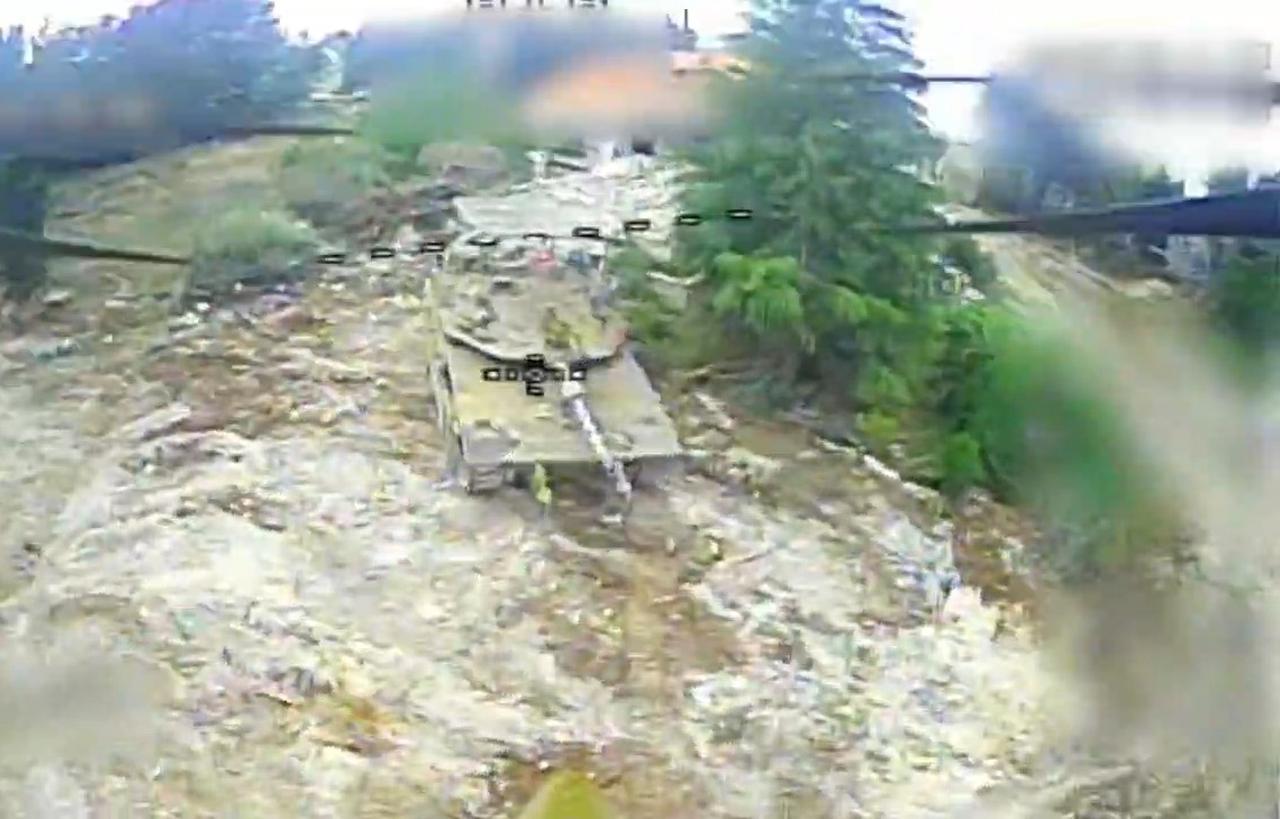

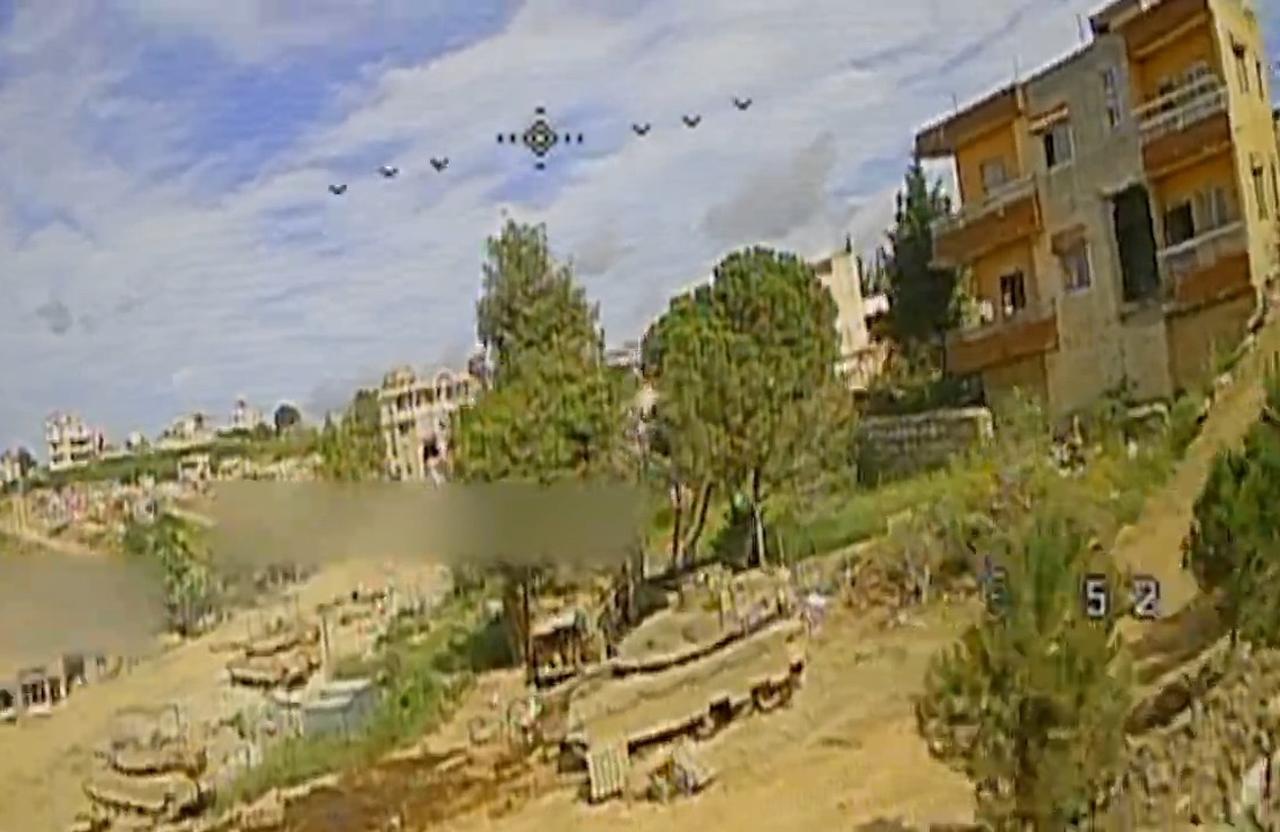
Hezbollah's "Ababil" FPV kamikaze drones use fiber-optic cable guidance, which defeats Israel's jamming technologies by transmitting control signals through cable rather than radio frequency.
Combined with fiber-optic guidance, the addition of thermal cameras "creates an extraordinary level of deterrence against the forces operating inside Lebanon and along the border," the Israeli army official said.
"It severely restricts movement both during the day and at night. It is terrifying, dangerous, and frightening in equal measure," the official added.
Military analyst Yaakov Lappin, a research fellow with the Alma Research and Education Center, told CBC that these drones are "basically a nightmare for any radar detection" because they fly low, leave minimal signatures and are very difficult to intercept. Hezbollah has also developed a tactic called "perching," landing drones near likely Israeli routes and reactivating them when soldiers approach.
"They're not going to be physically detected until someone physically sees them," Lappin said.
Since the April 16 ceasefire, 11 Israeli soldiers have been killed, with at least four deaths attributed to drone strikes. The most recent death was 19-year-old Sergeant Nehoray Leizer, killed on May 24 when his armored personnel carrier (APC) was struck.
The Israeli army official described a fundamental operational contradiction by stating, "The forces are essentially static. They cannot advance toward the drone-launch areas, nor can they effectively target the drone logistics and operational chain extending through the Beqaa Valley, Tyre, Sidon, and even Beirut."
He said the political-security cabinet and Netanyahu were pushing for overt operations to demonstrate Israeli presence in southern Lebanon, while U.S. demands were simultaneously restricting operational freedom.
"It is a classic Catch-22," he noted.
"Our operational doctrine must change," the official added.
"We need to shift from completely exposed operations, where our soldiers become easy targets for Hezbollah, to covert and concealed activity," the official said.
He said the result was "severe harm to our soldiers and a weakening of the Israeli army against an enemy that is bound by no rules or constraints. This is a dangerous and absurd asymmetry, sheer recklessness."
Elbit Systems CEO Bezhalel Machlis told Reuters on Tuesday that the company was working with the Israeli defense ministry to develop a counter-drone solution, including what he described as "energy weapon solutions" such as lasers.
"We are very active in energy weapons such as lasers. There are other means also relevant to this threat. We are heavily involved in the development of a solution to this challenge," Machlis said after Elbit reported a sharp rise in first-quarter revenue and profit.
The Israeli army's Northern Command drone school, established in March 2024, has simultaneously been transforming ground forces into what its commanders describe as units with their own "micro air force."
"At any given moment, there are thousands of our systems above the enemy. That is the reality they live with 24/7," school instructors told Yedioth Ahronoth.
An Israeli military official said detection and interception systems were being integrated, but acknowledged, "It is not a complete solution yet. The learning curve is insane on both sides."
Meantime, Hezbollah has struck an Iron Dome battery at Misgav Am, armored vehicles including HMMWVs, and a Merkava Mk. IV tank, using Ababil drones typically armed with Soviet-era 93mm PG-7VL anti-tank RPG warheads.
More than 15 explosive drones detonated inside Israel on Tuesday, mostly in military zones.
Robert Tollast, a land warfare specialist at the Royal United Services Institute, told CBC: "The longer they can persist with this threat, then it starts to have strategic implications. As more Israeli soldiers are killed and wounded, the effects will add up."
He added that Hezbollah's drone operators had "picked up this fiber optic threat relatively quickly" and that Israeli adaptation, while likely, would not happen overnight.


 Set as preferred source
 Set as preferred source



 2 min read