

 Newsletters





Thousands of Albanians marched through the capital for a second consecutive week Thursday, keeping up daily pressure on Prime Minister Edi Rama over a planned multi-billion-dollar luxury resort on the country's Adriatic coast linked to Jared Kushner, the son-in-law of U.S. President Donald Trump, and Ivanka Trump.
Demonstrators stretched down Tirana's main boulevard to the government headquarters, clutching signs reading "Albania is not for sale" and calling for Rama to resign.
The protests, which have taken on the informal name the "Flamingo Revolution" after the migratory birds that populate the threatened wetland, show no sign of fading.
The estimated $4.6-billion development, connected to Kushner's investment firm Affinity Partners, would include luxury hotel complexes in the protected coastal zone of Vjosa-Narta near the village of Zvernec, as well as a separate resort on the uninhabited island of Sazan, once a secret communist military base, which developers also hope to transform into a high-end tourist destination.
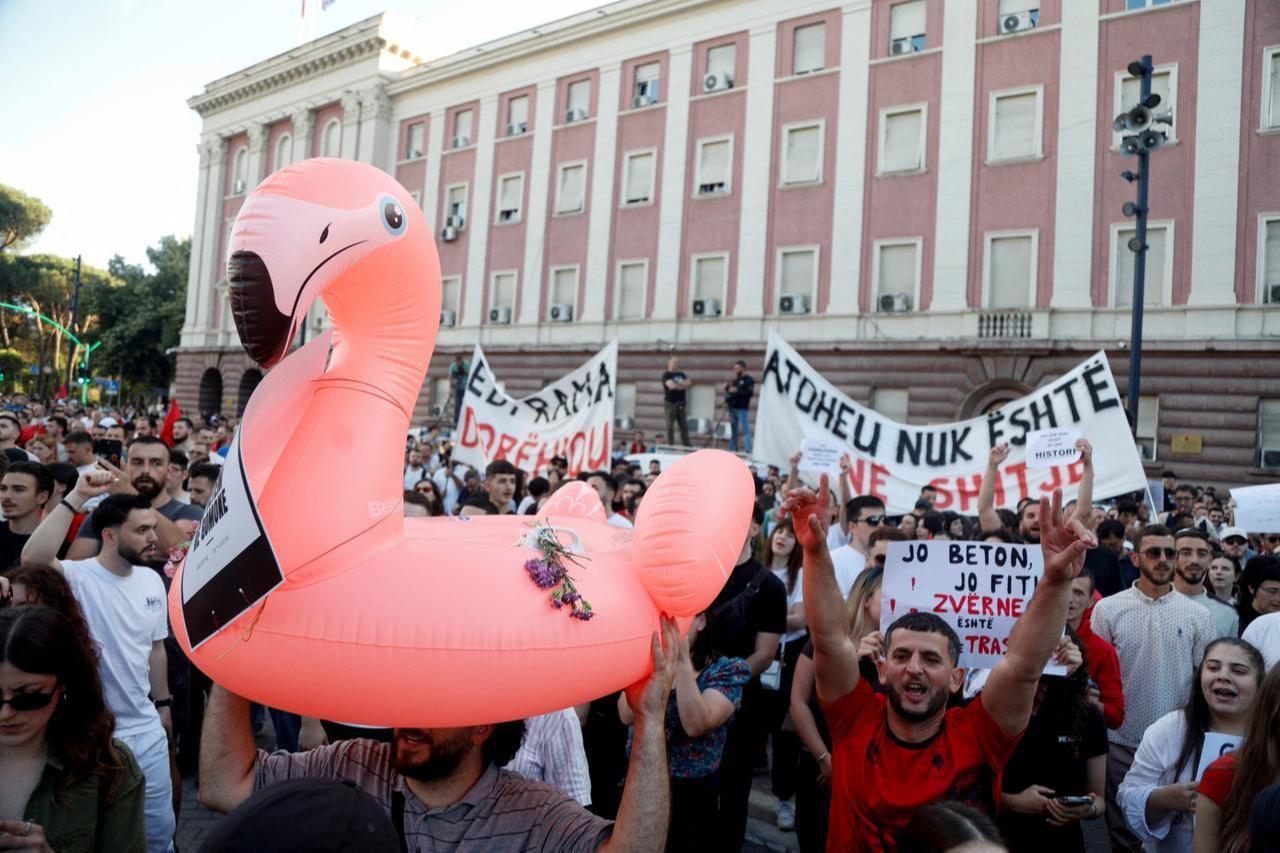

The unrest began in late May after workers installed barbed wire around part of the nature reserve earmarked for the project.
Videos of bulldozers on the beach and violent confrontations with private security guards spread rapidly online, triggering widespread public outcry that quickly migrated to Tirana.
Protesters say the development poses an unacceptable risk to the Narta Lagoon, a critical stopover for migrating birds.
"The project in Zvernec will destroy our nature, it will be built on a protected land, on a nature reserve, so this will detract from our country as a tourism destination," said Fadel Dia, an IT entrepreneur who attended Thursday's march draped in a crimson and black Albanian flag.
Student Teftalia Papa put it more simply: "We don't want this type of investment because it could damage our environment and change this place forever."

For many marchers, the resort is only part of the story. Demonstrations have become a broader outlet for accumulated frustration at perceived corruption in the Balkan nation, with protesters demanding Rama step down after nearly 13 years in power.
University lecturer Ervin Goci said the atmosphere reminded him of the early 1990s, when Albania's communist government collapsed under the weight of popular unrest. "People are fed up," he said. "Get rid of all this political class and start a new Albania."
Rama, who has led the country since 2013 and won a fourth term in parliamentary elections last year, has repeatedly downplayed the protesters' concerns, insisting the project has not been formally approved and there is "no reason to worry."
He has also invited demonstrators to send a delegation to discuss possible solutions, an offer the protest movement rejected.
Albania's anti-corruption prosecution body, SPAK, has since opened an investigation into the funds used to acquire land titles in the area, as well as changes to Albanian law that critics say were crafted to facilitate the project.
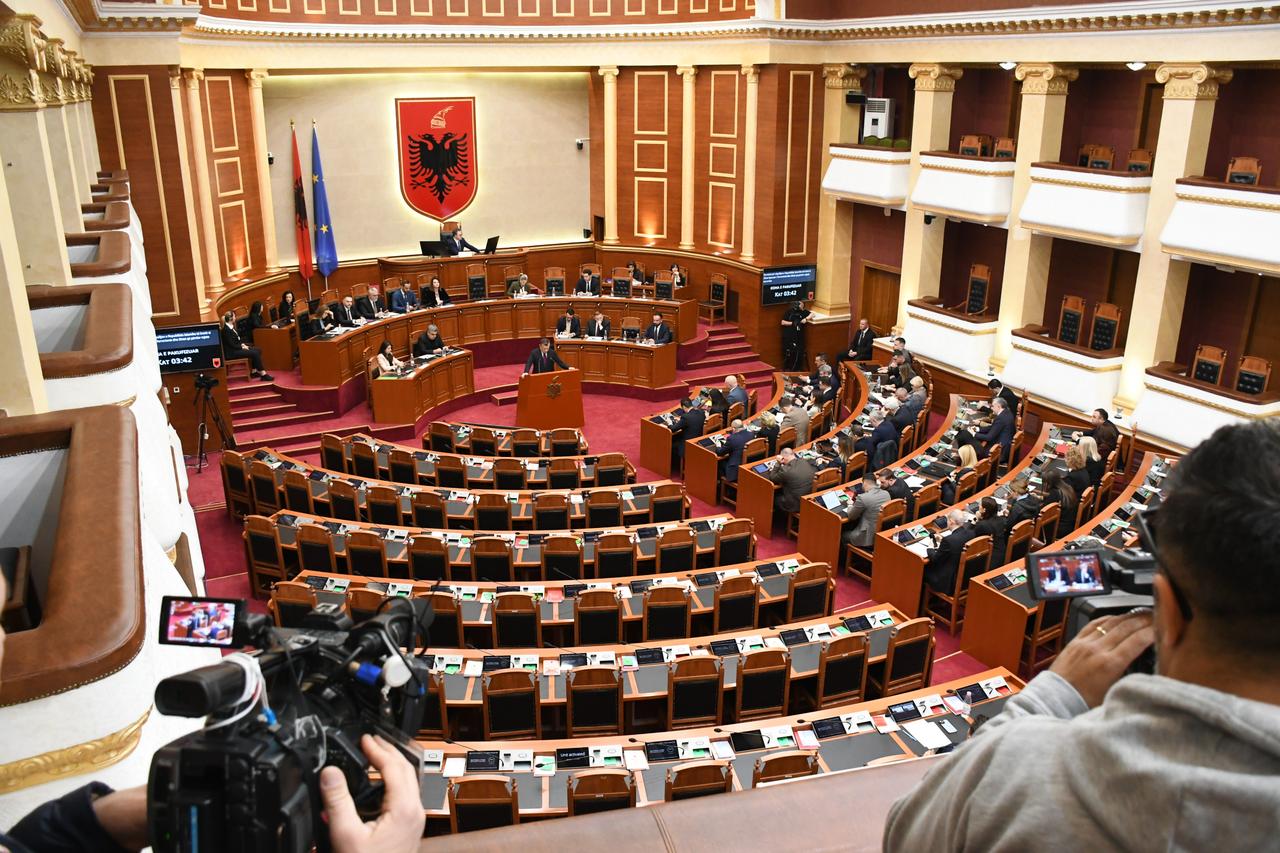
In 2024, parliament passed legislation reclassifying the Sazan and Vjosa-Narta areas to permit large-scale development, a move opposition parties and environmental groups argue was written specifically to accommodate Kushner-linked investors.
The controversy has now drawn in Brussels. The European Commission warned Albania on June 9 to "refrain from actions that could undermine" its bid to join the European Union, cautioning that proceeding with the resort could put Tirana on a collision course with EU environmental standards and jeopardize progress in its accession talks, one of Rama's defining political goals.
Albania has roughly 450 kilometers of coastline that remained largely undeveloped during decades of communist rule.
Environmental groups have long warned that the country's pristine coastal ecosystems are uniquely vulnerable to rapid, large-scale development. In January, around 40 environmental organizations formally called for the suspension of the resort plans, citing threats to biodiversity.
Kushner's firm Affinity Partners has been granted special strategic investor status by Albanian authorities. The project is one of several Affinity-linked ventures in the Balkans; the firm is also pursuing a luxury development on the site of a former Yugoslav army headquarters in Belgrade, Serbia, which triggered its own round of protests last year.


 Set as preferred source
 Set as preferred source


 2 min read

 1 min read



