Newsletters


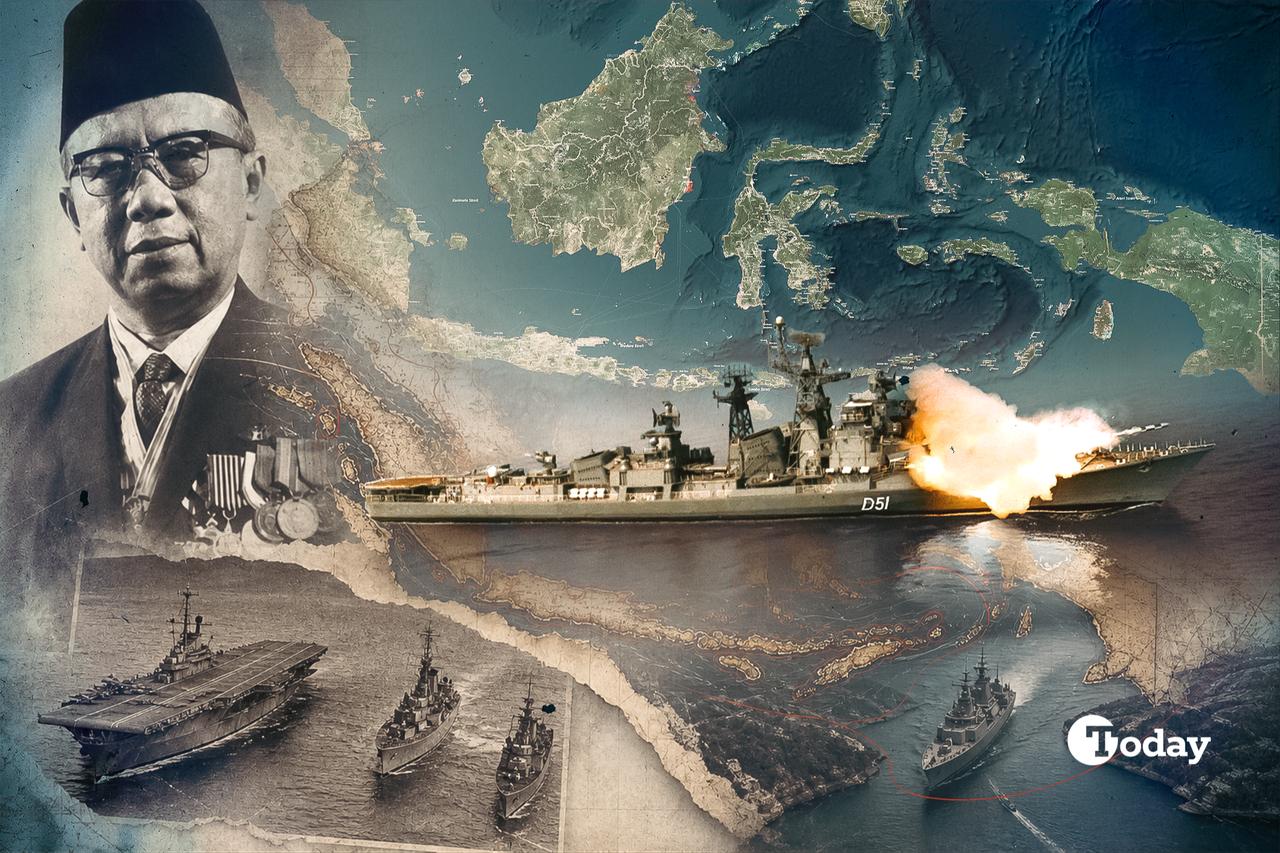


In 1964, the British aircraft carrier HMS Victorious and two destroyer escorts sailed south through the Sunda Strait and into an Indonesian legal argument. Britain and Indonesia had spent the previous year in an undeclared conflict over the formation of Malaysia.
Jakarta nevertheless grounded its objection in a 1957 declaration by a little-known prime minister, Djuanda Kartawidjaja, claiming the water between Indonesia’s islands as sovereign territory.
When the carrier returned from Australia, it took the long way home through the Lombok Strait.
Whether war or paperwork rerouted the flotilla is impossible to settle. Indonesia’s navy could not have stopped a British carrier group, and the Djuanda Declaration had yet to acquire standing in international law.
What Jakarta possessed was a claim cheap enough for Britain to accommodate in the middle of a conflict it was already fighting on land.
Nobody tested it that week, and restraint of that kind has held the Turkish Straits for 90 years. Djuanda’s successors spent the next quarter-century negotiating what British caution had temporarily conceded, until the archipelagic-state doctrine entered the United Nations Convention on the Law of the Sea (UNCLOS) in 1982.
On July 7, at Merdeka Palace, Indonesia signed a different kind of instrument to defend the archipelago. President Prabowo Subianto and Indian Prime Minister Narendra Modi agreed to a deal supplying Indonesia with BrahMos supersonic cruise missiles. They are mobile, sea-skimming, and well-suited to the strait geography that Jakarta’s diplomats had spent decades enclosing in law.
The purchase, estimated by Indian sources at $630 million, belongs to a longer ledger that includes Chinese J-10 fighters, security pacts with Australia and Japan, a defence partnership with Washington, and repeated Prabowo visits to Moscow.
By one count, Indonesia has concluded 87 defense agreements with 36 countries in 25 years. Prabowo has accelerated rather than invented the habit.
Jakarta discovered long ago that the cleanest way to stay non-aligned is to align with everyone all at once, and that the cheapest way to acquire a defense industry is to have several foreign powers compete to donate one.
There is a valid, duller explanation for BrahMos. Indonesia has almost 17,000 islands and a navy that cannot cover them.
Chinese coast guard vessels have repeatedly entered its exclusive economic zone off the Natuna Islands, shadowing survey ships and confronting drilling operations in waters claimed by Beijing’s nine-dash line.
A mobile anti-ship missile is an unsurprising answer. The complication is Jakarta’s insistence that no dispute exists. Indonesia does not accept that it is a South China Sea claimant. Its hardware is answering a threat its diplomacy declines to name.
Eighteen months ago, Hasjim Djalal, the diplomat most closely associated with writing Djuanda’s claim into UNCLOS, died in Jakarta. He never saw whether Indonesia still trusted the law alone. His successors are now arguing over that question.
Vice foreign minister Arif Havas Oegroseno holds that a superior fleet need not be defeated in battle to lose its advantage. It merely needs to be “priced out of the water.” Chokepoints, missiles, and political risk can make access cost more than the objective is worth. The argument runs directly from Djuanda to BrahMos.
Jefferson Ng, a doctoral candidate in Indonesian politics at the Australian National University, and Aristyo Rizka Darmawan, a lecturer in international law at Universitas Indonesia, have each found the legal seam in Oegroseno’s doctrine. Indonesia’s right to build a deterrent is uncontested. Using that capability to deny passage is another matter.
UNCLOS requires Indonesia to preserve archipelagic sea-lanes passage while neutral. Belligerency would permit it to target enemy warships, while passage for neutral shipping would have to continue. Political temptation and legal authority therefore arise at different moments.
Dita Liliansa of the University of New South Wales puts a price on the ambiguity. Indonesian foreign policy has rested since independence on bebas aktif—free and active non-alignment. Weaponising the straits would merely move the geopolitical pressure elsewhere.
“Either way, whoever loses out in a conflict will accuse Indonesia of being non-neutral, and that’s the real cost,” she said.
“Does Indonesia see Iran as a precedent? Is Indonesia prepared to accept pariah status over this? That’s what’s being flirted with here.”
Five days after the signing, Jakarta showed how neatly it can separate possession from alignment. Fourteen countries and the European Union marked the 10th anniversary of the 2016 arbitral ruling against China’s South China Sea claims by restating it as binding law.
Beijing lodged formal protests and repeated its familiar insistence that outsiders had no standing to discuss Chinese sovereignty.
Indonesia declined to join the statement, preferring its established formula of acknowledging the ruling without presenting itself as a claimant.
India, which had just sold Jakarta the missiles, also stayed out. Buyer and seller accepted a contract that might irritate Beijing and skipped a declaration that certainly would.
Jakarta has paid no visible diplomatic price for BrahMos. Beijing made no public fuss. Six weeks later, the two sides were discussing a joint Indonesian munitions factory and possible Chinese technology transfer.
Washington will proceed with Super Garuda Shield this September. The cost may arrive only when Jakarta invokes the capability. For the moment, the powers using Indonesian waters appear to prefer an armed custodian whose intentions remain negotiable.
Türkiye appears to vindicate that bargain. In February 2022, Ankara determined that a war existed, invoked Article 19 of the Montreux Convention, and barred belligerent warships from the Turkish Straits. The decision preserved enough neutrality for Türkiye to host negotiations and help broker the grain corridor.
The comparison, however, contains a trap. Article 19 is mandatory. Once Ankara recognized a war, exclusion followed, subject to the right of vessels to return to their Black Sea bases. Türkiye’s judgement concerned whether a war existed, when to say so, and how firmly to discourage non-belligerents from sending warships of their own. That narrow scope protected it. The convention had written Ankara’s leverage 90 years earlier.
Indonesia has no comparable provision prescribing when its sea-denial capability may be used. UNCLOS supplies obligations, and the law of armed conflict supplies limits. Neither converts a future Indonesian decision into treaty administration. In short, Oegroseno is at risk of constructing a doctrine in public while procurement outruns procedure.
That sequencing helps explain the diplomacy surrounding the purchase. The joint statement issued during Modi’s July visit omitted the South China Sea paragraph included in the statement from Prabowo’s Delhi visit 18 months earlier. In other words, Jakarta’s hardware got louder as its language got quieter.
Its subsequent exercises and industrial talks with China carried the same message. BrahMos had been folded into bebas aktif as one more relationship for Jakarta to accumulate.
Seven decades of legal argument secured the archipelago before Indonesia had a fleet worth the name. Djalal’s generation bought the water with paper. His successors have bought the missile while the rule for its use remains unsettled.
Montreux followed the opposite sequence. In the Turkish Straits, the rule preceded the warship. Whether Indonesia’s reversal matters will remain unknown until a grey hull between the islands forces the question.


 Set as preferred source
 Set as preferred source



 2 min read