Newsletters


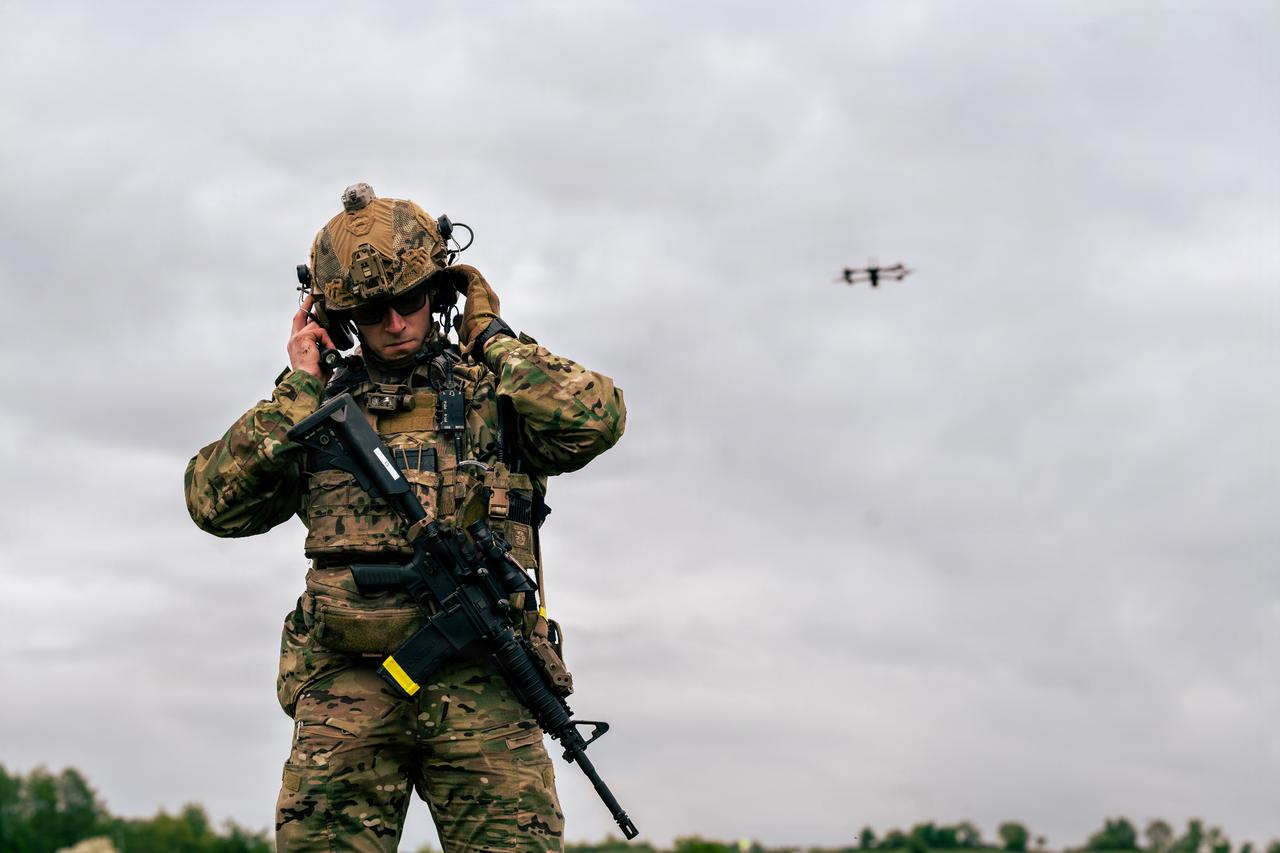


A leaked U.S. Army safety memorandum dated March 21, 2026, warns that the Pentagon's rapid push to weaponize cheap commercial drones is causing "basic explosive safety principles" to be ignored, and will "ultimately lead to a greater risk associated with mishaps and accidents."
Following an incident in which an XM183 MiniBlast pyrotechnic cartridge detonated during troubleshooting at Fort Polk's Joint Readiness Training Center, injuring a Special Forces soldier with lacerations to the arm and face and a concussion, CBS News reported.
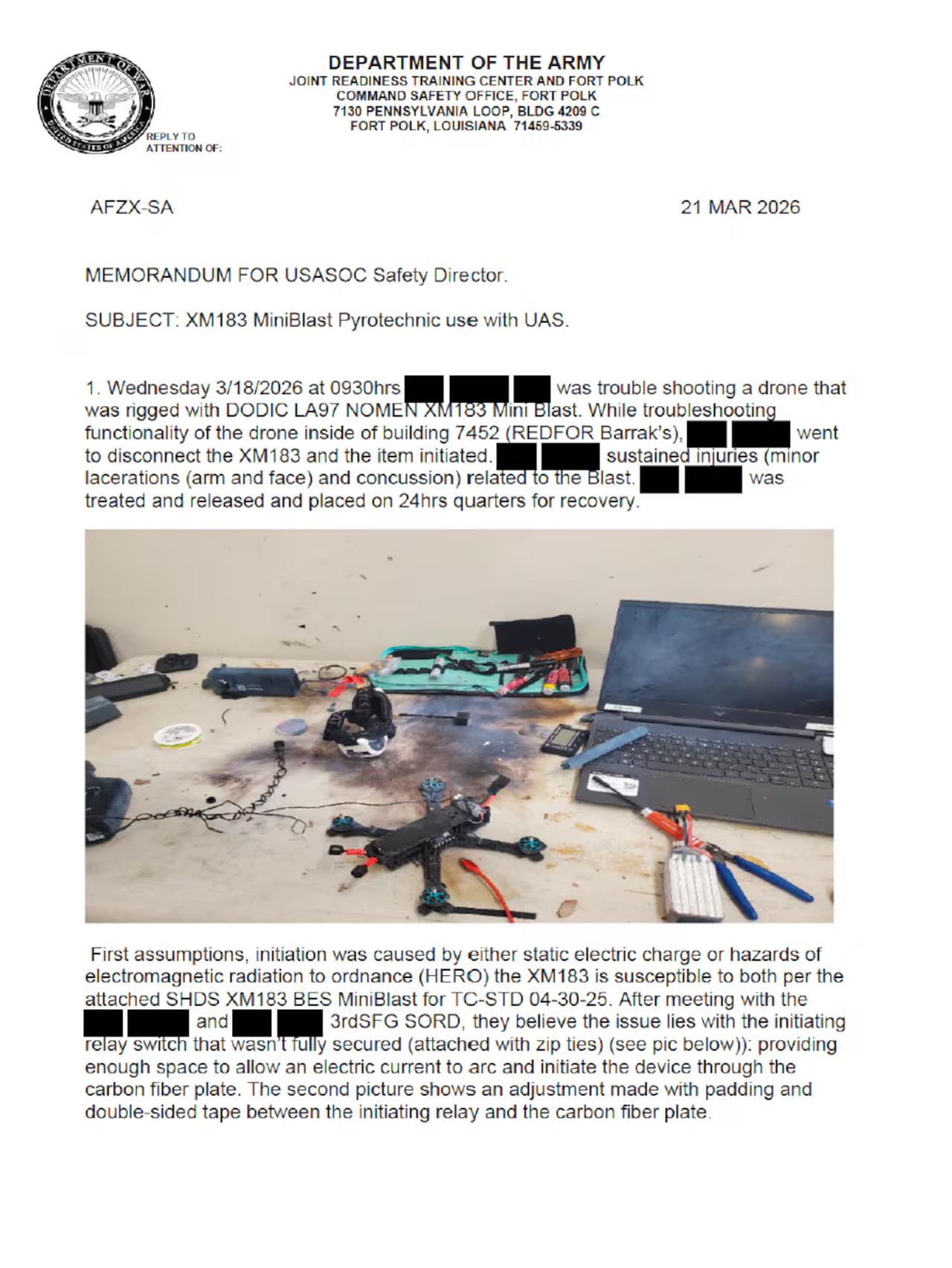
A military safety memorandum details a March 18 drone explosion at Fort Johnson that involved a 3rd Special Forces Group soldier.
According to the document, the soldier was troubleshooting a drone equipped with an XM183 MiniBlast explosive inside Building 7452 at 9:30 a.m. when the device accidentally detonated as he tried to disconnect it. The memo was sent by the base Command Safety Office to the USASOC Safety Director at Fort Bragg.
The soldier sustained "minor lacerations (arm and face) and concussion," was treated and released, and placed on 24-hour quarters for recovery. Army SOCOM Col. Allie Scott confirmed to CBS News that the soldier returned to duty shortly after.
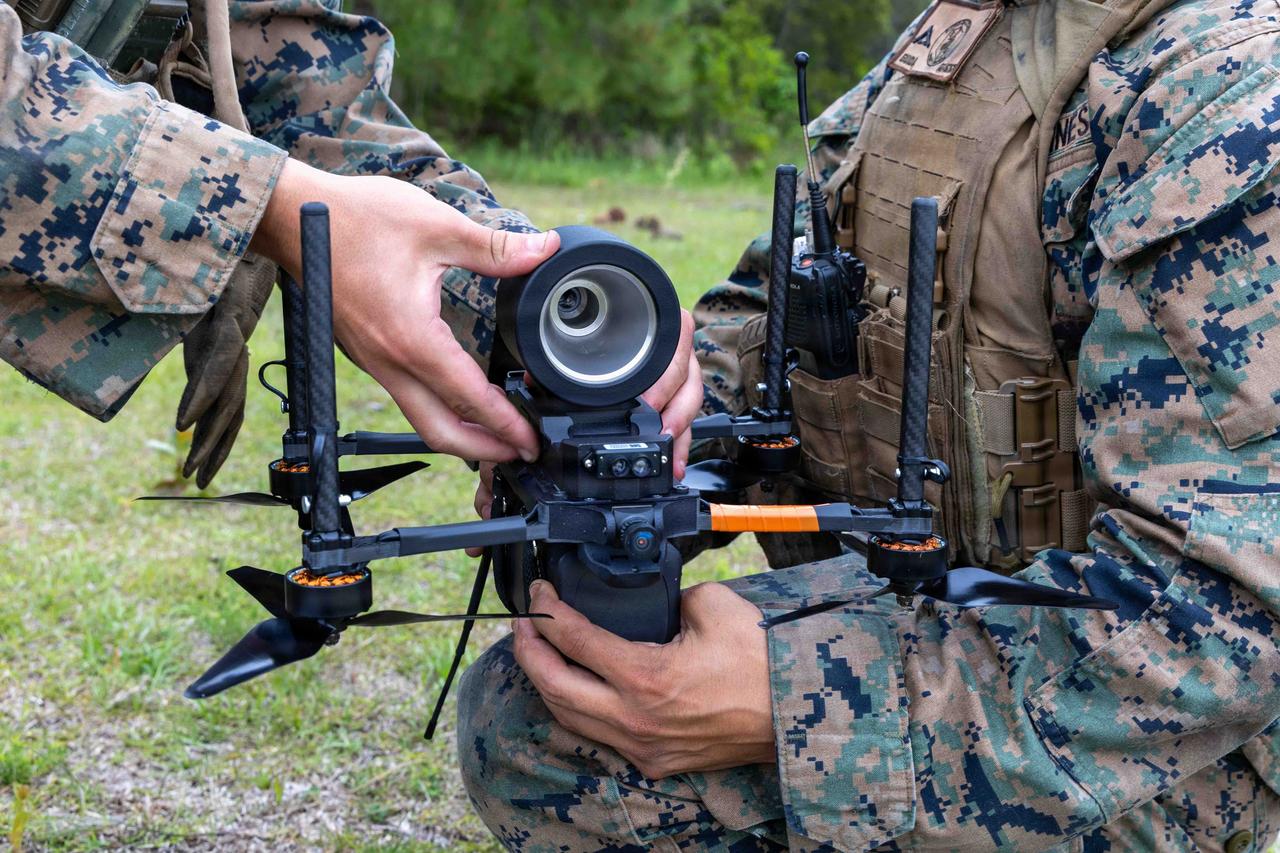

An explosive safety specialist assessed that the detonation was likely triggered by static electricity or electromagnetic radiation—both known risks associated with the XM183 device.
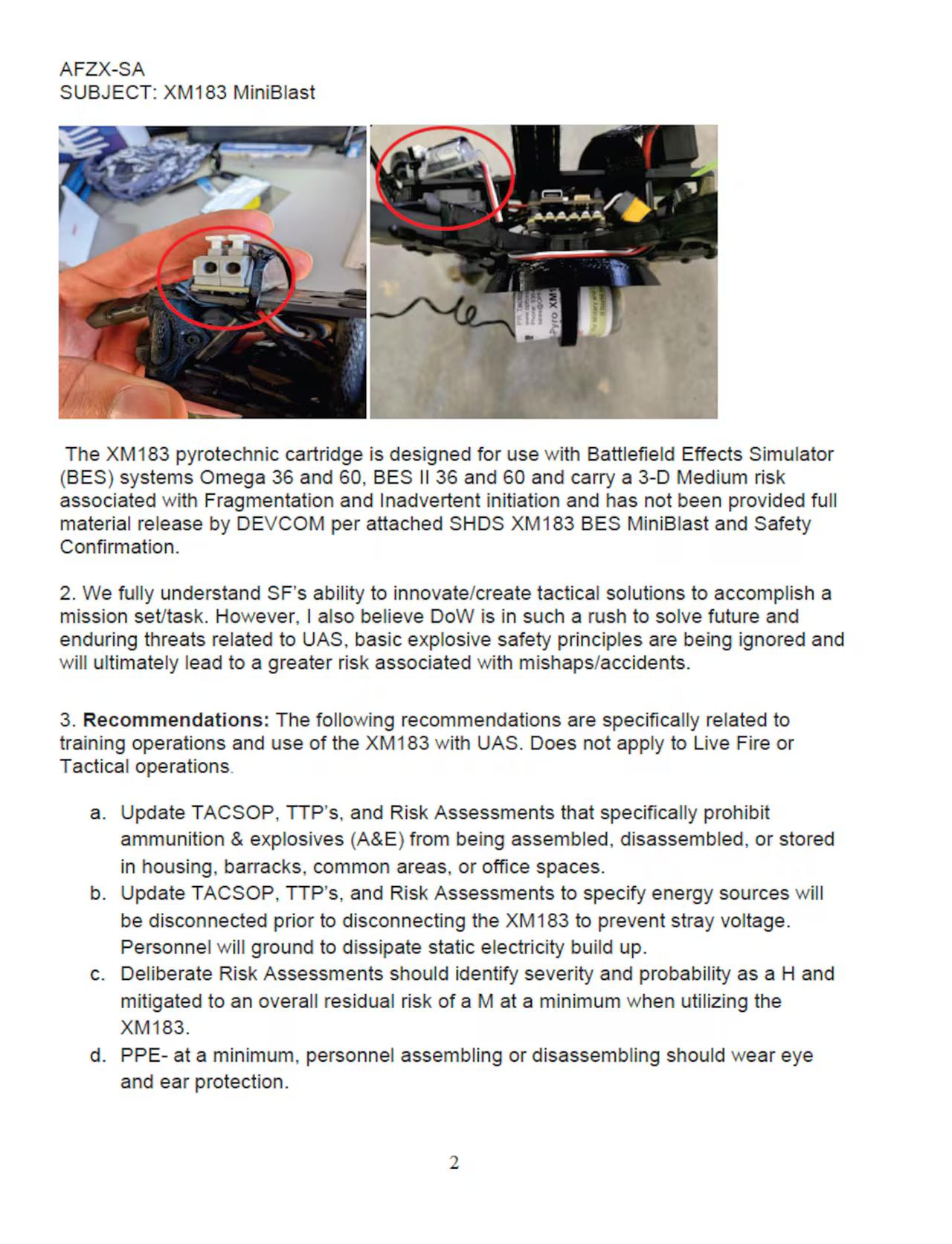
According to the memorandum, a loose initiating relay switch, secured only with zip ties, may have allowed an electric current to arc through the drone's carbon-fiber plate and trigger the explosion.
The XM183 is rated at medium hazard risk for fragmentation and inadvertent initiation, and the memo noted that the Army's Combat Capabilities Development Command had not provided "full material release" for the cartridge, meaning it had not been formally cleared as safe for use under Army regulations.
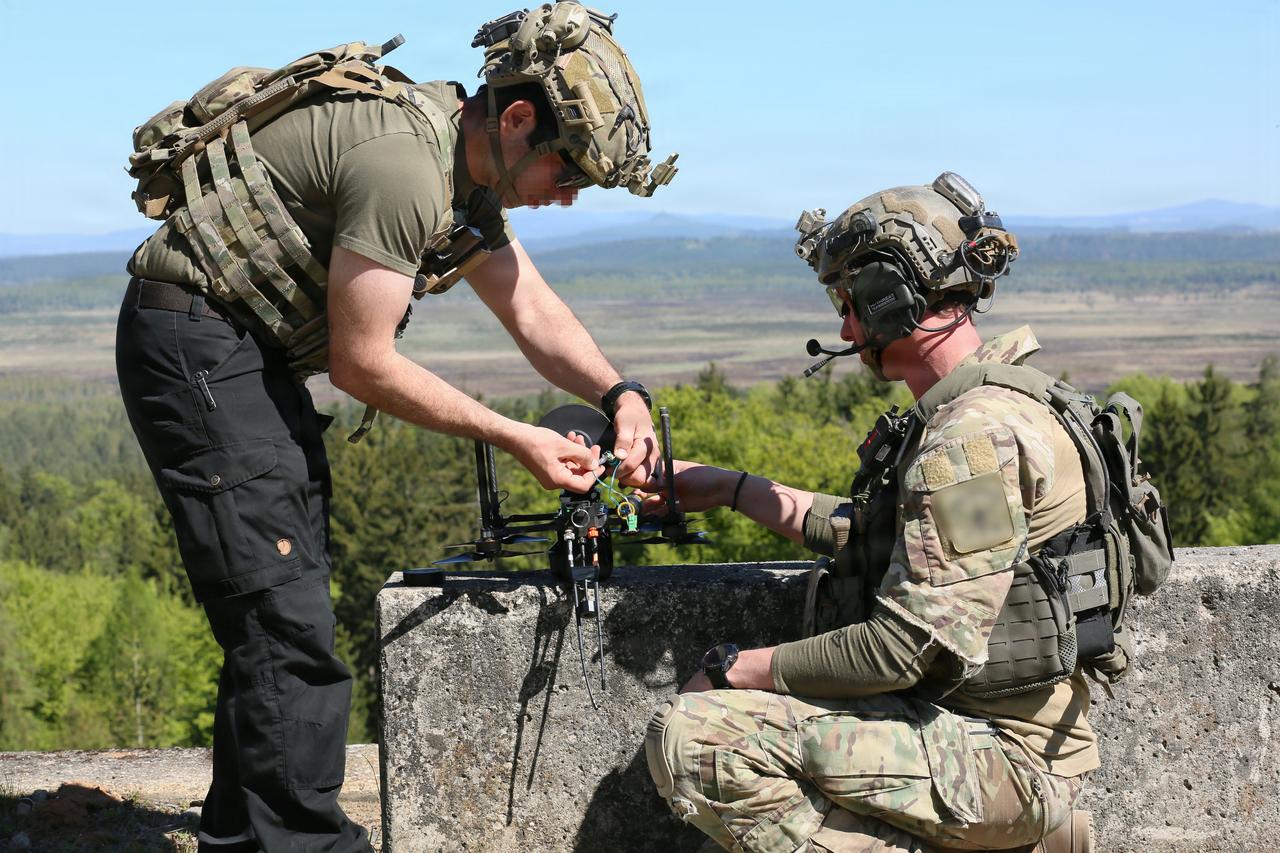
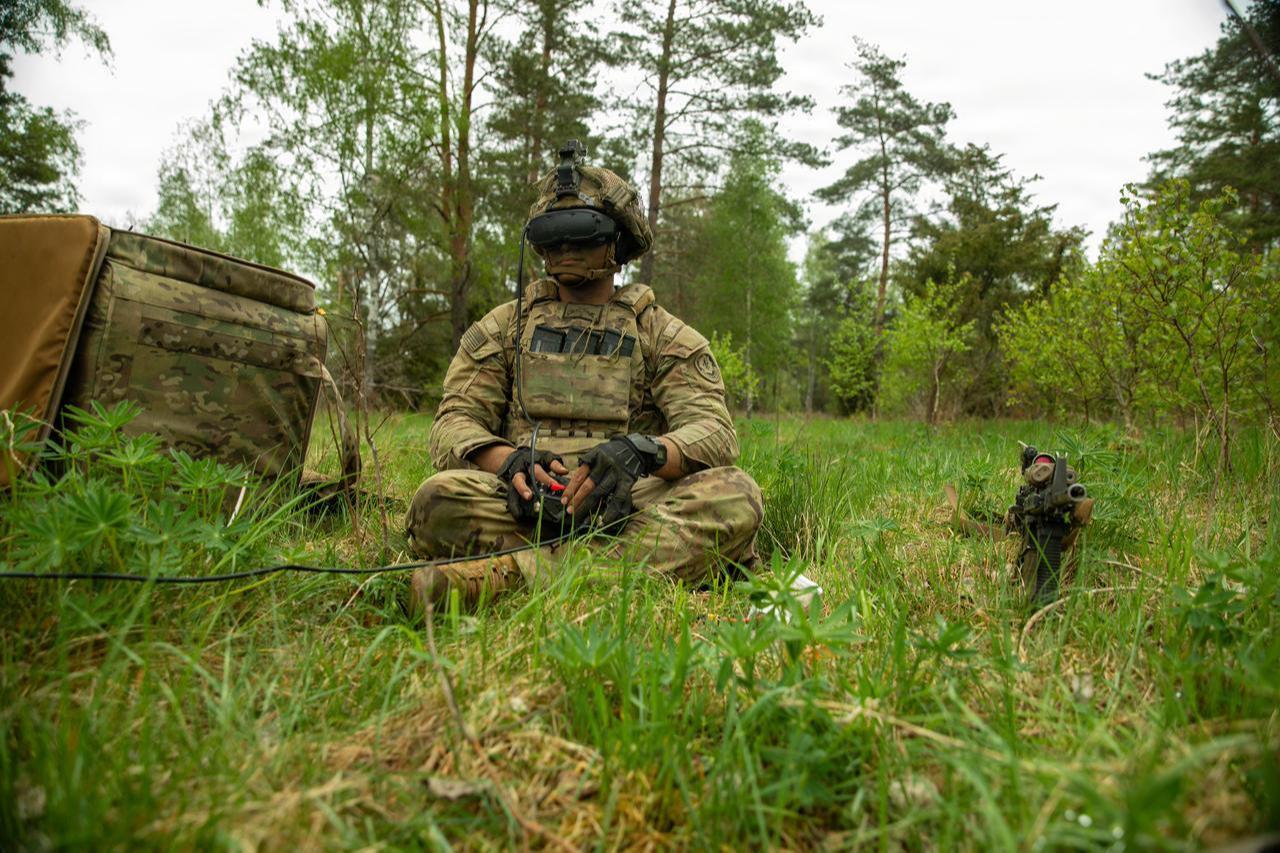
The memo stated, "We fully understand Special Forces' ability to innovate and create tactical solutions to accomplish a mission set/task. However, I also believe the Department of War is in such a rush to solve future and enduring threats related to Unmanned Aerial Systems, basic explosive safety principles are being ignored and will ultimately lead to a greater risk associated with mishaps/accidents."
The specialist recommended updating Tactical Standing Operating Procedure (TACSOP), Tactics, Techniques, and Procedures (TTPs), and Risk Assessments to prohibit assembly, disassembly, or storage of ammunition and explosives in barracks, common areas, or offices.
That would require energy sources to be disconnected before removing the XM183 to prevent stray voltage, grounding personnel to dissipate static electricity, and mandating eye and ear protection at a minimum for all assembly and disassembly operations.
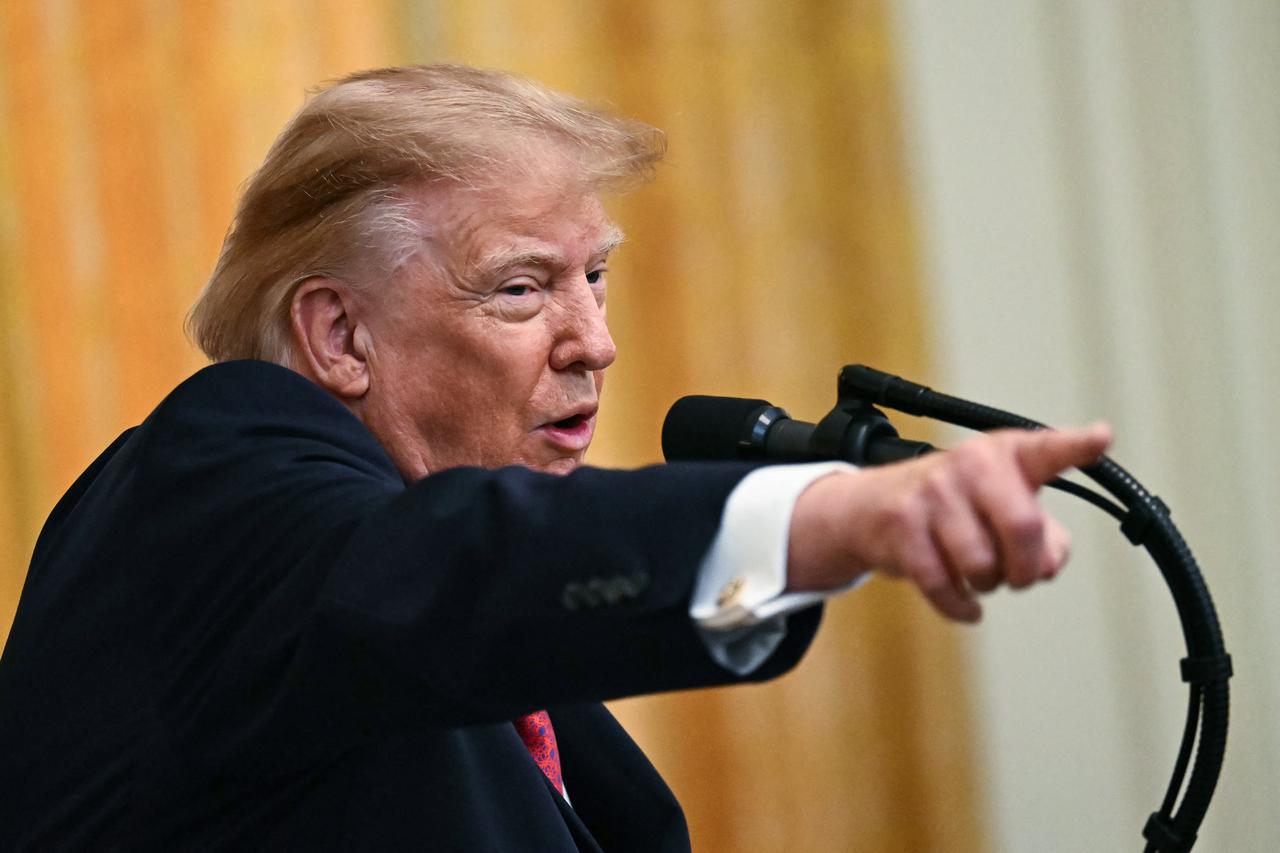
The warning comes in sharp contrast to a July 10, 2025, memorandum issued by Defense Secretary Pete Hegseth. In the document, titled "Unleashing U.S. Military Drone Dominance," Hegseth ordered senior Pentagon leadership to strip away regulatory barriers.
"I am rescinding restrictive policies that hindered production and limited access to these vital technologies, unleashing the combined potential of American manufacturing and warfighter ingenuity," Hegseth wrote. "The Department's bureaucratic gloves are coming off."
The Pentagon subsequently announced plans to produce roughly 340,000 drones over two years.
"We will deliver tens of thousands of small drones to our force in 2026, and hundreds of thousands of them by 2027," Hegseth declared.
Army Col. Scott told CBS News the safety specialist's comments "appear to be his opinion and not based in fact."
The Army's Combat Readiness Center at Fort Novosel said it did not receive a request to investigate the incident because it did not meet the required threshold of equipment damage value or permanent injury.


 Set as preferred source
 Set as preferred source


 4 min read