Newsletters


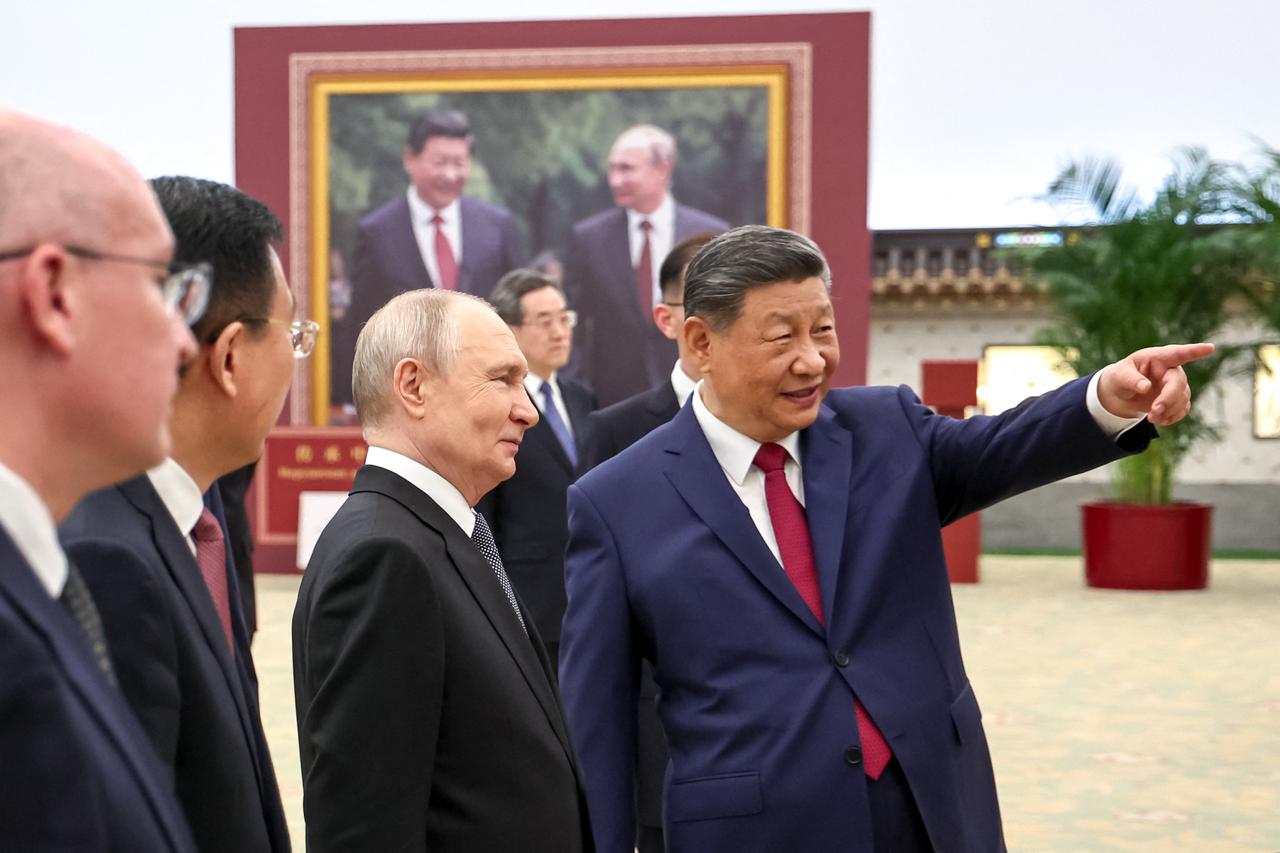


When a hot microphone caught Vladimir Putin telling Xi Jinping at a Beijing military parade last September that human organs could be "constantly transplanted, to the extent that people can get younger, perhaps even immortal," some observers dismissed it as eccentric small talk between aging leaders.
It was, according to the Wall Street Journal (WSJ), a glimpse into one of Russia's most unusual flagship scientific programs.
"Human organs can be constantly transplanted, to the extent that people can get younger, perhaps even immortal," Putin told Xi.
Xi replied: "It is predicted that by the end of the century, people in the future could live to be 150 years old."
Putin's fascination with defying bodily decline has become a state priority: a $26 billion national longevity initiative called "New Health Preservation Technologies," unveiled in 2024, drawing on methods ranging from 3D-printing living tissue and harvesting organs from mini-pigs to cryotherapy and gene therapy.
"In the Russian Federation, work is underway on a whole range of scientific programs in this field," the Kremlin press service told the WSJ, adding, "These projects are supported by the state, and many scientific and research institutions are taking part in them."

Russia's state scientists have focused on two key technologies. The first is bioprinting, 3D-printing living tissue, with researchers claiming to have bioprinted human cartilage tissue and a mouse thyroid gland.
The second is xenotransplantation, growing human organs inside mini-pigs, a breed deemed genetically compatible with humans. Both efforts aim to achieve human organ replacement by 2030.
Last month, Russia's government announced scientists were developing a gene-therapy treatment designed to slow cellular aging. Deputy Science Minister Denis Sekirinsky, speaking on April 23, said the drug "represents one of the most promising avenues in the fight against aging."
The initiative promises to save 175,000 lives by the end of the decade, a figure that drew uncomfortable wartime commentary when it was announced, as it roughly matched independent estimates of Russian military casualties in Ukraine.

The initiative is spearheaded by two figures close to Putin. His daughter, Maria Vorontsova, an endocrinologist, oversees state-backed genetics programs.
The other is physicist Mikhail Kovalchuk, head of the Kurchatov Institute, the Soviet-era nuclear research center, and the intellectual architect of the Kremlin's longevity drive.
Kovalchuk, brother of Putin's close ally and banker Yuri Kovalchuk, has argued that science will soon allow humans to repair and replace body parts indefinitely. "It is difficult to discuss immortality, but the ability to repair man will undoubtedly increase," he told Russian media.
Kovalchuk has also fused longevity science with the Kremlin's civilizational worldview. In a 2015 speech, he warned that the West was moving toward the creation of "servant humans," people with limited self-awareness and manipulated reproduction.
He has also suggested the U.S. was behind the COVID-19 pandemic.
Unlike similar research funded by Silicon Valley billionaires such as Jeff Bezos, Sam Altman and Peter Thiel, Russia's work has produced little peer-reviewed research in major international journals, according to the WSJ.
Speaking to the WSJ, Alexander Ostrovskiy, the Russian scientist who pioneered bioprinting in the country and left Russia after the full-scale invasion of Ukraine, offered a blunt assessment.
"If there are no publications then there are no real results, and their statements should probably be taken as aspirations, not to say dreams," Ostrovskiy said.
"It's impossible to do science in isolation. They are probably telling Putin what he wants to hear to secure funding," he added.
Putin's other longevity adviser, Vladimir Khavinson, dubbed "Putin's gerontologist" by Russian media, promoted peptide-based antiaging therapies derived from calf tissue and received one of Russia's highest state awards for achievements in medicine.
Khavinson argued that human beings were meant to live to 120, citing biblical scripture. He died in 2024, at 77.
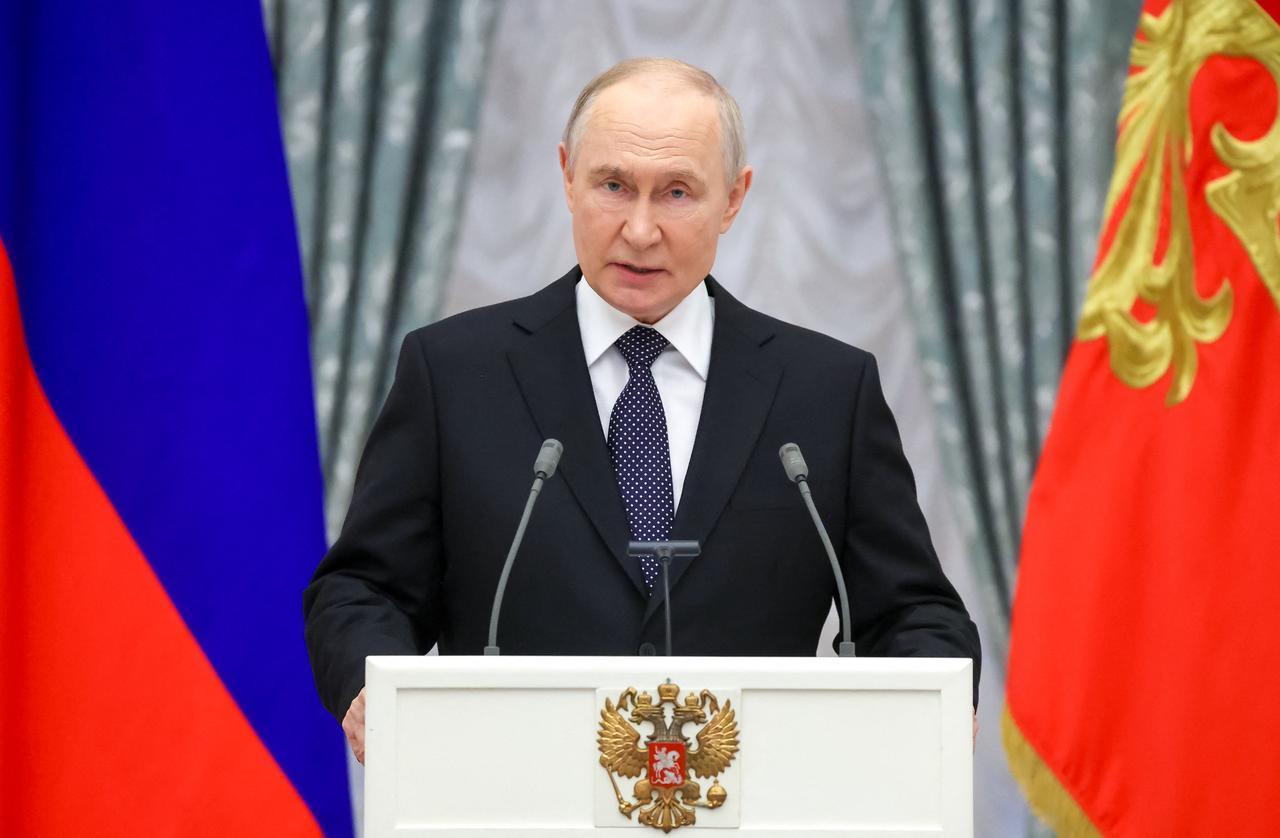
Putin, 73, has spent decades cultivating an image of physical vigor, hunting shirtless, playing hockey and riding Harley-Davidson motorcycles. But behind the staged virility lies, according to the WSJ, a ruler unusually preoccupied with decline.
During a Kremlin meeting in 2018, Putin advised then-Austrian Chancellor Sebastian Kurz to try a cryotherapy chamber, where the body is exposed to temperatures as low as minus 170 degrees Fahrenheit (-112.2 degrees Celsius).
Kurz later recalled his surprise when Putin enthusiastically described the benefits of regularly standing naked in the freezing chamber.
During the COVID-19 pandemic, Putin imposed elaborate quarantine protocols, including disinfection tunnels and lengthy isolation requirements. His famously long tables became symbols of both political distance and germophobia.
Most of Putin's closest aides are also in their 70s: the Kovalchuks, Yuri Ushakov, Sergey Chemezov, and Nikolai Patrushev. Putin's quest to escape aging echoes a long Russian tradition.
In the 1920s, Soviet polymath Alexander Bogdanov pursued rejuvenating blood transfusions before dying at 55 from his own self-inflicted experiments.
In the 1930s, physician Oleksandr Bogomolets organized the world's first longevity conference and claimed humans could live to 150. He died at 65.
Putin has ruled Russia for 25 years. Constitutional changes made on his watch allow him to remain in power until 2036.


 Set as preferred source
 Set as preferred source


 4 min read