Newsletters


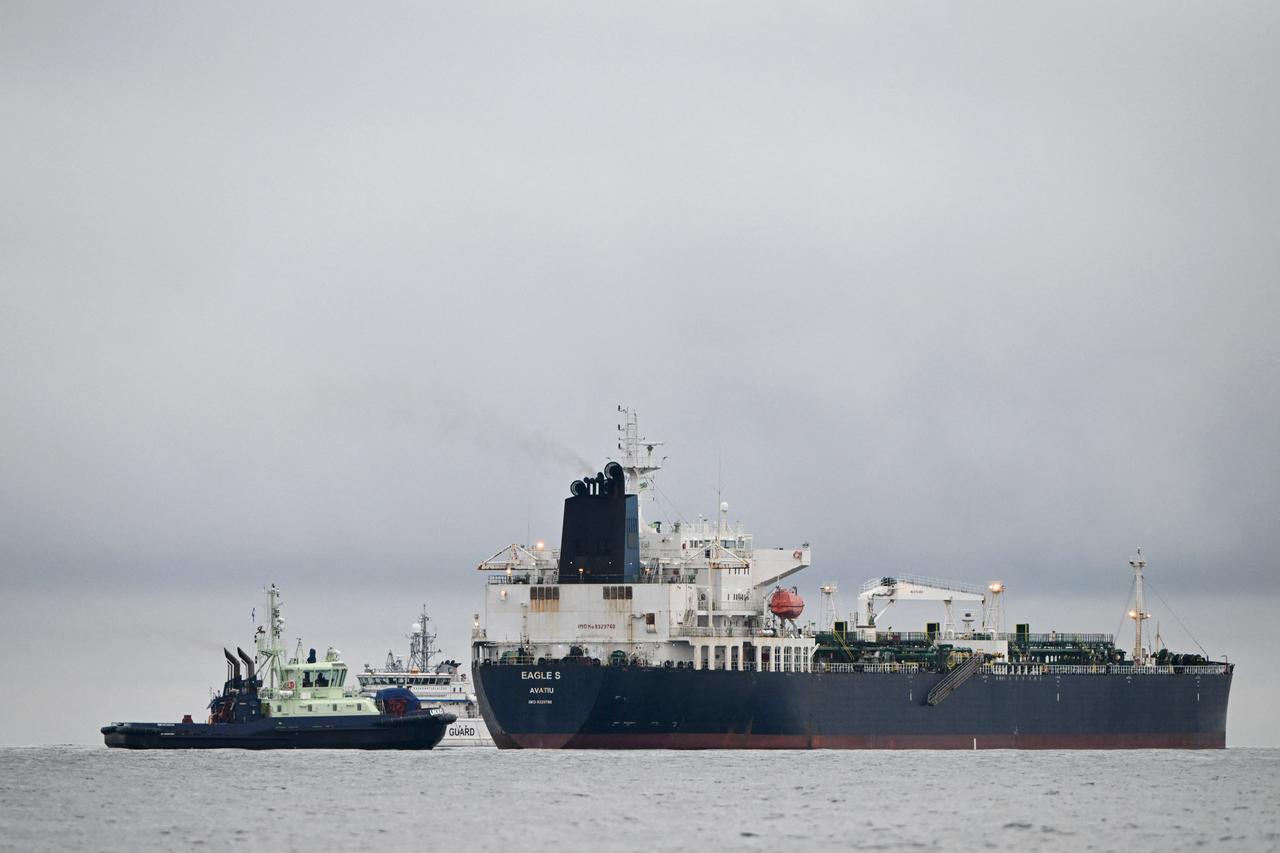


Russian personnel with links to the country's military and security services have engaged in espionage in European waters while working covertly on ships carrying Russian oil, Western and Ukrainian intelligence sources told CNN on Friday.
Since the full-scale invasion of Ukraine in 2022, Moscow has built up a so-called shadow fleet of hundreds of tankers carrying Russian oil from Baltic and Black Sea ports despite Western sanctions, earning the Kremlin hundreds of millions of dollars annually.
In recent months, some of these ships, often registered to unrelated countries, have acquired extra crew members shortly before leaving port, according to Ukrainian intelligence. The additions are predominantly Russians with security backgrounds, causing alarm in European capitals.


Multiple intelligence sources told CNN that several of these men are employed by a secretive Russian company called Moran Security Group. Some are mercenaries who previously worked for Russia's private military contractors, including the notorious Wagner group.
Moran is a private security firm with ties to Russian military and intelligence, Western intelligence sources said. The U.S. Treasury sanctioned the firm in 2024 for providing "armed security services" for Russian state-owned enterprises.
Moran personnel have been placed on multiple tankers in Russia's shadow fleet and are frequently the only Russians on board, according to both Ukrainian and Western intelligence sources.
"Having private armed groups onboard shadow fleet vessels is this classic plausible deniability," Jacob Kaarsbo, a former Danish intelligence official, told CNN. "Everyone with even half a clue knows that these guys take their orders from the Russian state but it's hard to prove."

One Western intelligence source said that on one occasion, Moran personnel took photographs of European military installations from one of the shadow fleet vessels.
The Russians on board are also tasked with monitoring the ships' captains because most are not Russian citizens, according to Oleksandr Stakhnevych of the Foreign Intelligence Service of Ukraine.
Intelligence sources also told CNN that these men have engaged in sabotage but did not provide further details.
Danish sea pilots who board tankers to help navigate straits say Russian men on board frequently appear to be in charge and are hostile toward inspectors.
"I have personally seen at least two shadow fleet boats where crew is mostly non-Russians, but suddenly you'll see one or two Russians as part of the list," said Bjarne Caesar Skinnerup of Denmark's state pilot service DanPilot.
"On board, it seems they run the ship, have more power than even the captain," Skinnerup told CNN. Sometimes they wear uniforms, including what appeared to be Russian Navy camouflage.
In July, DanPilot reported to Danish authorities that "there are more and more reports of ships that have a few extra crew members, probably Russian, who are wearing military uniforms and are very active in photographing, among other things, bridge areas."
A senior Swedish navy commander, Ewa Skoog Haslum, said last year that some Russian-linked tankers in the Baltic had been carrying "antennas and masts that typically do not belong" to merchant ships.

CNN traced the activities of one sanctioned tanker called Boracay, which left the Baltic port of Primorsk on Sept. 20 with two Russian Moran personnel aboard, the only Russians among a crew of Chinese, Myanmar and Bangladeshi nationals.
Two days later, the ship was off Denmark's coast, just as drone sightings disrupted traffic at Copenhagen airport and flew near Danish military bases.
"The coincidence between the incident and the presence of the vessel in the area can be regarded as suspicious," a Western intelligence source told CNN.
Days later, the French military boarded the Boracay off Brittany after it failed to provide proof of nationality. The two Russians were discovered and questioned privately. The Chinese captain was arrested and charged with "disobeying instructions."
"Our working assumption is that Russian ships have been involved in at least some of the unexplained drone events close to European coastlines," one European intelligence official told CNN.
Moran's deputy director Alexey Badikov dismissed the premise, telling CNN "it's completely crazy" that a crude oil tanker would launch drones, arguing fishing vessels would be used instead.

Moran Security Group, founded in 2009, had extensive ties with Wagner and Russia's military and intelligence services, according to Western intelligence sources.
Two previous Moran directors, Evgeny Sidorov and Vadim Gusev, founded the Slavonic Corps in 2013, the private military company from which Wagner emerged.
Moran's website says it seeks "active-duty or retired officers who have served in special forces units (GRU, airborne troops, naval commandos)." The GRU is Russia's military intelligence service.
Moran's head Vyacheslav Kalashnikov is a retired lieutenant colonel of Russia's FSB intelligence service, while two managers listed on its website are former commanders of nuclear submarines.
Ukrainian intelligence said it observed the introduction of these guards on shadow fleet vessels about six months ago.

The U.K.'s new foreign intelligence chief, Blaise Metreweli, said this week that "Russia is testing us in the gray zone with tactics that are just below the threshold of war," including "drones buzzing airports and bases, aggressive activity in our seas above and below the waves."
Skinnerup believes there should be tougher joint international action to intercept ships without insurance and proper registration.
"Do we dare to do that? Because what would be the reaction from Russia?" he asked. "If we have to do something, it has to be a joint European thing."


 Set as preferred source
 Set as preferred source


 1 min read

 1 min read