Newsletters




The administration of U.S. President Donald Trump is considering expanding the country’s nuclear arsenal and potentially resuming some form of underground nuclear testing following the expiration of the last major U.S.-Russia arms control treaty, according to a report published Monday by The New York Times.
The report said recent statements by senior officials indicate Washington is reviewing options to deploy additional nuclear weapons and preparing for the possibility of renewed testing, a move that would mark a major shift from decades of U.S. policy focused on limiting and reducing deployed warheads.

The report followed the expiration of the New START treaty, which had capped the number of deployed strategic nuclear warheads for both the U.S. and Russia at about 1,550.
Trump declined an informal extension proposed by Russian President Vladimir Putin while discussions on a replacement agreement were ongoing.
On Feb. 5, Trump said Washington should pursue a “new, improved, and modernized” nuclear arms control agreement rather than extending New START with Moscow.
Thomas DiNanno, the State Department’s undersecretary for arms control and international security, told a disarmament forum in Geneva that the expired treaty had imposed “unilateral constraints” on Washington and said the U.S. is now free to strengthen its nuclear deterrence.
He said options include expanding existing nuclear forces and activating non-deployed nuclear capabilities if directed by Trump.
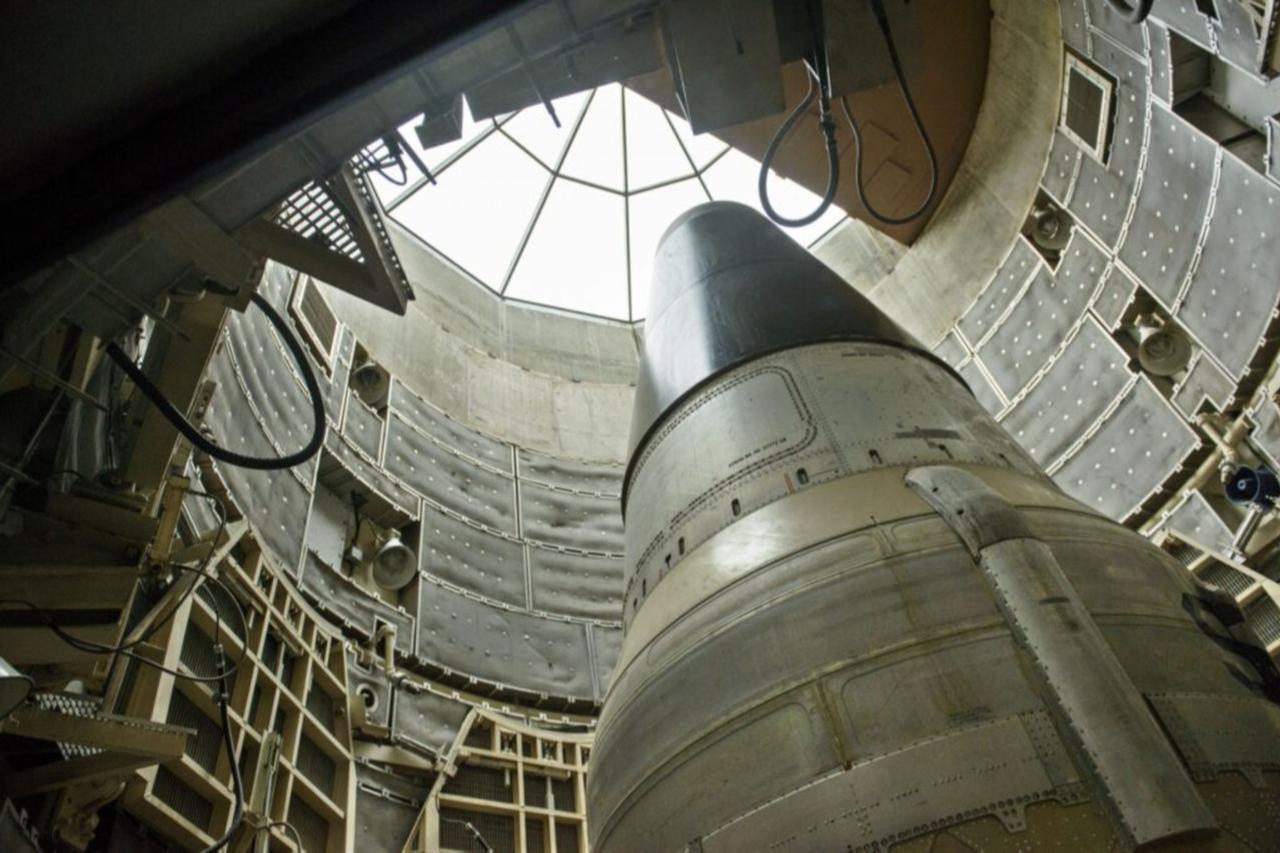
One possible step involves reactivating missile tubes on U.S. Navy Ohio-class submarines that had been disabled to comply with treaty limits, allowing additional nuclear-armed missiles to be deployed at sea.
Some experts cited in the report said such measures could be aimed at pressuring Russia and China into new arms control negotiations, while others warned they could instead spark a broader nuclear arms buildup.
DiNanno also addressed nuclear testing, offering the first detailed explanation of Trump’s earlier statement that the U.S. could resume nuclear testing “on an equal basis” with Russia and China.
He suggested that Moscow and Beijing may have conducted smaller, hard-to-detect nuclear explosive tests, including a suspected Chinese test in 2020, though an international monitoring network reported no detection at the time.
Jill Hruby, former head of the National Nuclear Security Administration, told the newspaper that the administration’s intentions remain unclear.
Terry C. Wallace, former director of Los Alamos National Laboratory, also expressed surprise at the certainty of claims regarding foreign nuclear testing, according to the report.
The U.S. last conducted a full-scale nuclear explosive test in 1992.


 Set as preferred source
 Set as preferred source


 1 min read
 1 min read