Newsletters


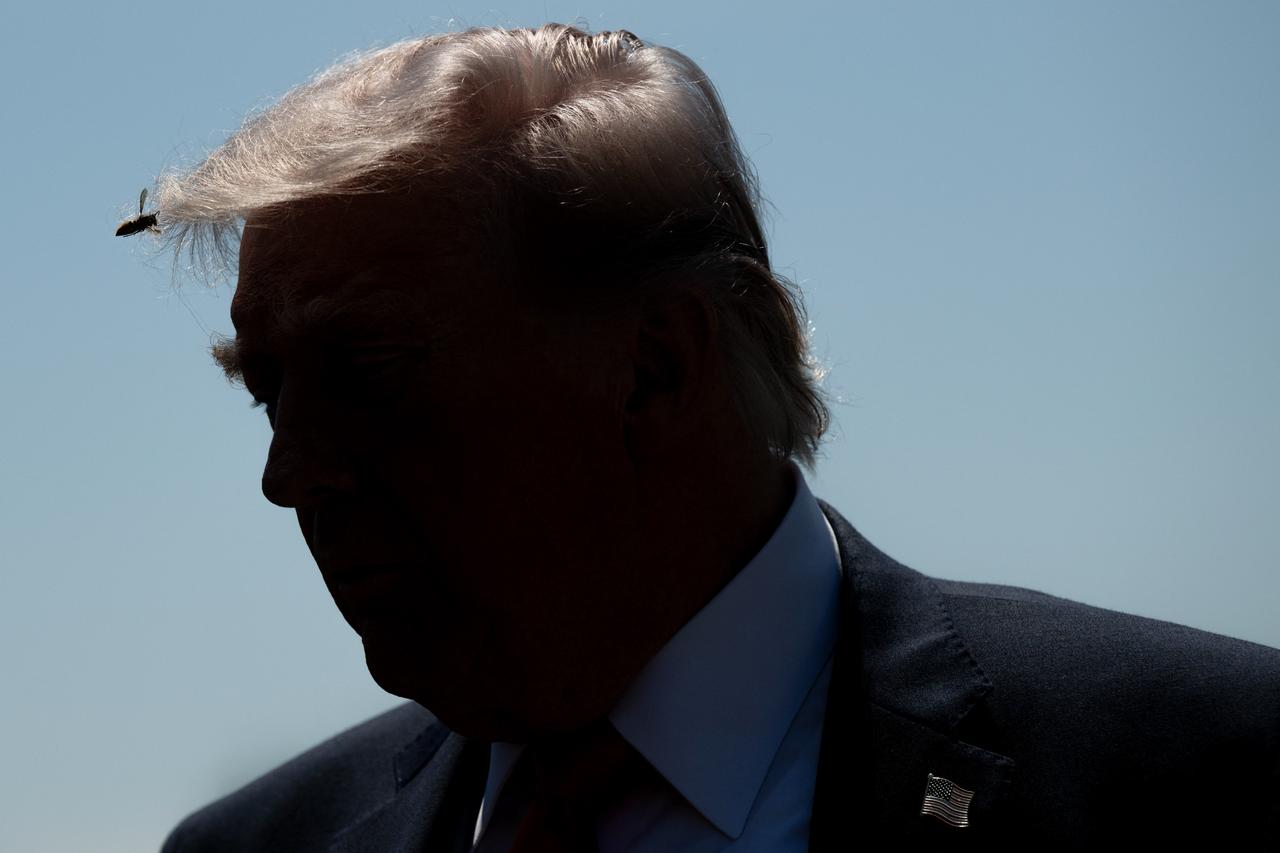


Tucker Carlson, the political commentator and former Fox News host who was once among Donald Trump's most prominent media allies, says the U.S. president was "more a hostage than a sovereign decision-maker" in the Iran war, controlled, he claims, by Israeli Prime Minister Benjamin Netanyahu and a network of influential donors and media figures who pushed Washington into a conflict Trump privately opposed.
Carlson made the remarks in an interview with The New York Times (NYT) released on Saturday.
"Trump was more a hostage than a sovereign decision-maker," Carlson said.
When asked to clarify who he believed held Trump captive, Carlson replied: "By Benjamin Netanyahu and by his many advocates in the United States. And we know that not simply because Trump started the war on Feb. 28, but because he couldn't get out of it."
Carlson said that within hours of Trump announcing a ceasefire with Iran on April 8, Israel "publicly, in a way that was designed to get the attention of everyone, including the Iranians, starts killing civilians in Lebanon."
He argued the intent was to "end any talk of a negotiated settlement, to keep this going until Iran was destroyed and chaotic, which is the Israeli goal."
"Trump said, I want a negotiated settlement. Israel stopped the settlement. Trump refused to even criticize Netanyahu in public. Are you joking? That's slavery. That is total control of one man by another," Carlson said.
Carlson said he flew to Washington three times in the weeks before the war and met with Trump in the Oval Office, also having lunch with him on one occasion and speaking with him by phone many times on the subject.
He said Trump would begin "almost every conversation" with the question: "Do you want Iran to have a nuclear weapon?"

Carlson said he directly warned Trump that attacking Iran would be catastrophic for the United States, citing Iran's geography and its control over "the greatest span of coastline along the Persian Gulf, which is the source of a fifth of the world's energy."
He said Trump "perfectly understood the consequences."
"My strong feeling by the end of those conversations, the last one was probably a week before the war began, was that he felt he had no choice and that he was resigned to it," Carlson said.
"He was unhappy about it. He didn't seem enthusiastic at all," he added.
Carlson said Trump told him repeatedly: "It's going to be all right. Everything's going to be OK."
He said he interpreted this not as conviction but as "a justification from a man who feels he has no choice."
He said he told Trump directly: "The people pushing you to do this hate you. They're your enemies. This will destroy you. This will gravely harm our country."
Carlson said he found no one inside the Trump administration who was "enthusiastically pushing this war on Trump."
He described the pressure as coming entirely from outside, through "constant calls from donors and people with influence over the president," naming Rupert Murdoch and Miriam Adelson, as well as media figures including Mark Levin and Sean Hannity, whom he said told Trump, "you will be a figure out of history, you will save and redeem Israel."
Carlson said he also spoke with Secretary of State Marco Rubio about the matter and detected no enthusiasm for the war from him either, despite Rubio's long record of describing Iran as the greatest threat facing the United States, a characterization Carlson called "a ludicrous statement."
Carlson said he did not believe Trump was mentally diminished, describing him as "not well informed on a lot of topics" but possessing "remarkable powers of insight into people and power dynamics."
He also referenced the resignation of Joe Kent, whom he described as the head of the counterterrorism center, shortly after the war began. Carlson said Kent stated that "this decision is connected to a series of seemingly disconnected events, all of which revolve around violence, and we need to find out more about how this happened." Kent was subsequently threatened with an FBI investigation, Carlson said, and "no one followed up on that."
Carlson, who addressed the 2024 Republican National Convention and said Trump's survival of an assassination attempt amounted to "divine intervention," said his opposition to the Iran war was never about Trump personally but about the consequences for the United States.
"I just didn't want the United States to go to war with Iran," he said, adding, "And this was worse even than I imagined."


 Set as preferred source
 Set as preferred source


 1 min read