Newsletters


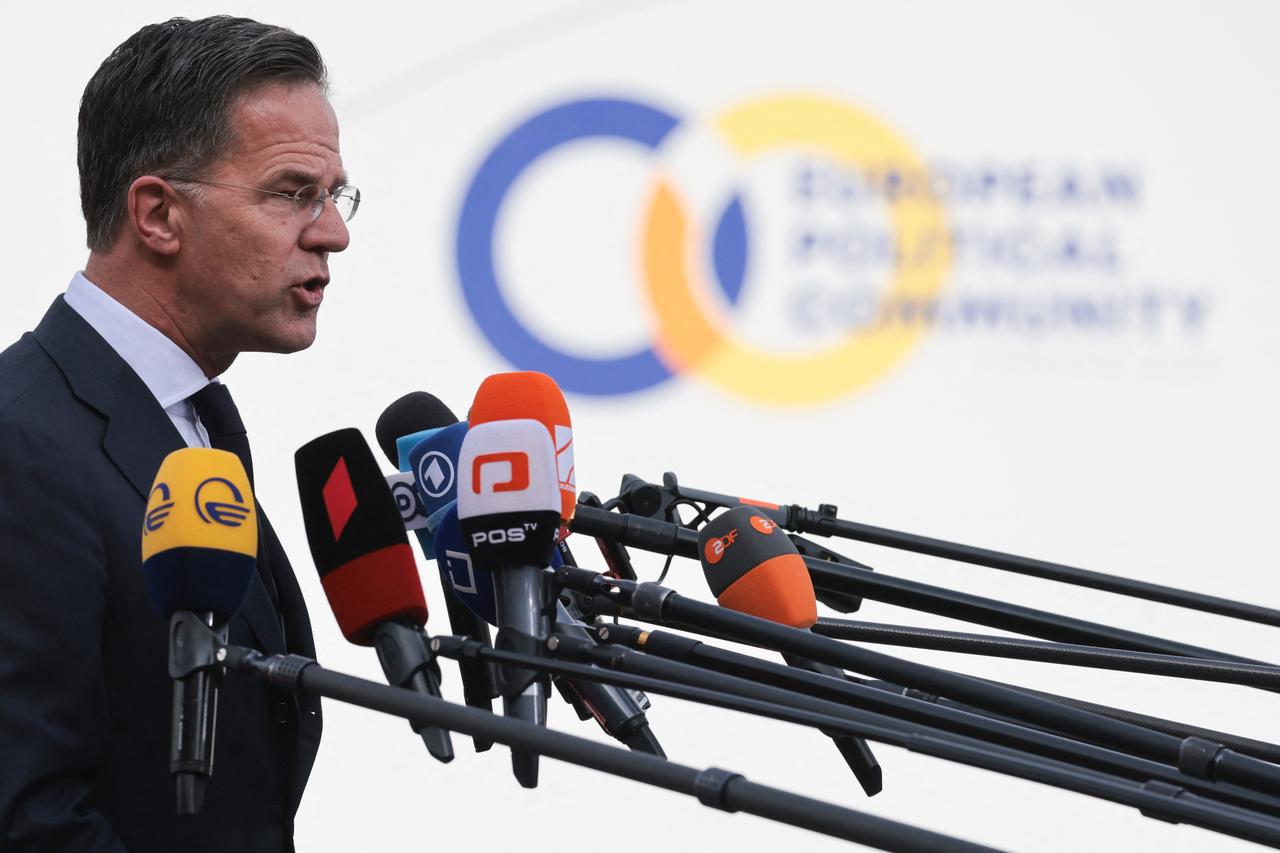


NATO Secretary-General Mark Rutte said Tuesday that transforming defense investments into concrete military capabilities will be one of the main topics at the alliance’s summit in Ankara on July 7-8.
Speaking at a joint press conference with Montenegrin Prime Minister Milojko Spajic in Podgorica, Rutte said NATO leaders would focus on strengthening collective defense, boosting defense production and continuing support for Ukraine.
“Only a few weeks remain until the NATO Summit in Ankara. There, we will show that we are ensuring security today for 1 billion people on both sides of the Atlantic and fulfilling our promises,” Rutte said.
He stated that the summit would comprehensively address the development of NATO’s critical military capabilities and ways to accelerate defense industry production.
Rutte also stressed that production capacity in both Europe and the United States remains insufficient to meet current security demands, describing the issue as a shared transatlantic challenge.
Rutte recalled that nearly nine years have passed since Montenegro joined NATO, describing the country as a “valuable member” of the alliance.
He said Montenegro maintains its security with the support of 31 allies, noting that fighter jets from Greece and Italy help protect Montenegrin airspace.
At the same time, Montenegro contributes to NATO missions by deploying troops to the alliance’s forward land forces in Latvia and Bulgaria, as well as participating in the Kosovo Force (KFOR) mission in Kosovo.
Rutte said Montenegro also plays an important role in maintaining peace and stability in the Western Balkans.
Emphasizing the strategic importance of the region, he warned that security cannot be taken for granted and must be protected continuously through joint efforts.
While expressing support for constructive regional cooperation, Rutte also said some actors are attempting to destabilize the Western Balkans and obstruct progress.
“NATO will not allow past problems to resurface,” he said, adding the alliance would respond to malicious activities carried out within NATO territory.
Rutte said the world is becoming increasingly dangerous, pointing to Russia’s continued war in Ukraine, China’s more assertive posture and instability in NATO’s southern neighborhood.
He stressed that allies must invest more in defense, expand defense production and maintain support for Ukraine.
Welcoming Montenegro’s defense spending exceeding 2% of gross domestic product (GDP), Rutte expressed hope that the country would continue increasing investments.
He also thanked Montenegro for providing military assistance to Ukraine and contributing to NATO trust funds and support mechanisms.
Responding to questions about remarks suggesting some NATO members could allow their bases to be used for possible Middle East operations, Rutte said his earlier comments had been “more metaphorical” and declined to provide operational details.
He nevertheless described Montenegro as one of NATO’s most committed allies and said the United States views the country as a reliable partner both within NATO and bilaterally.
Asked about NATO’s future, Rutte said he was “extremely optimistic” and argued that U.S. President Donald Trump played a major role in increasing allied defense spending.
He noted that major economies such as Canada, Spain, Belgium and Italy had not met NATO’s 2% defense spending target at the start of last year, but said the entire alliance has now reached that benchmark.
According to Rutte, increasing defense spending is essential not only for balancing burden-sharing with the United States but also for strengthening deterrence against threats, particularly from Russia.
Montenegrin Prime Minister Spajic said the country has significantly strengthened its military capacity in recent years.
He announced that Montenegro plans to sign an important intergovernmental agreement with the United States in June focused on critical infrastructure projects with both civilian and military applications.
Spajic also said Montenegro is expanding cooperation with Canada, Germany and other partners.
“We believe we will become a much more productive and better member of NATO,” he said.
He added that Montenegro aims to contribute to lowering tensions in the Western Balkans and improving regional understanding and cooperation.


 Set as preferred source
 Set as preferred source


 1 min read
 1 min read