Newsletters


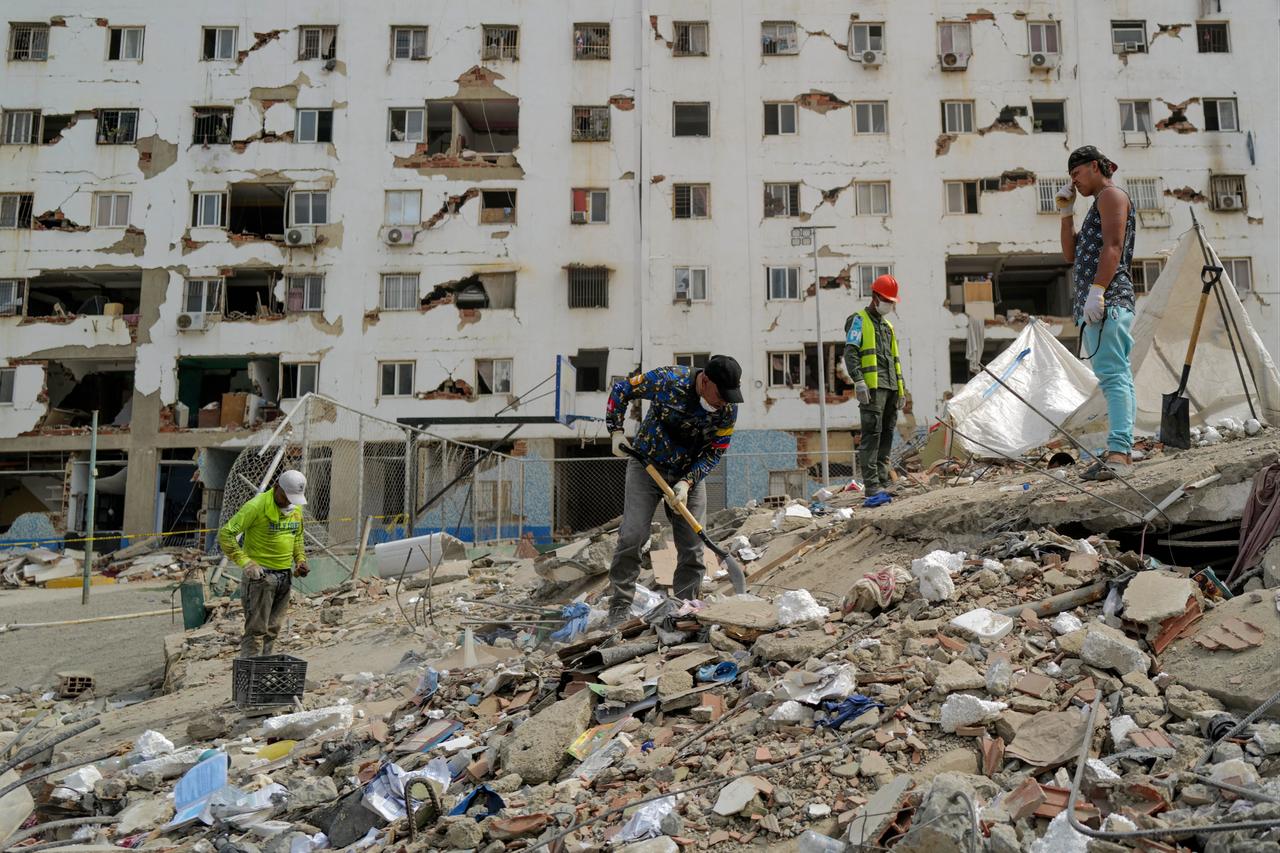


Rescue teams raced Sunday to find more survivors after two powerful earthquakes struck Venezuela last week, as the death toll neared 1,500 and foreign rescue teams continued to arrive in La Guaira, the hardest-hit state.
The death toll from Wednesday's twin earthquakes rose by 20 on Sunday to reach 1,450, according to Jorge Rodriguez, the acting president's brother and president of the National Assembly.
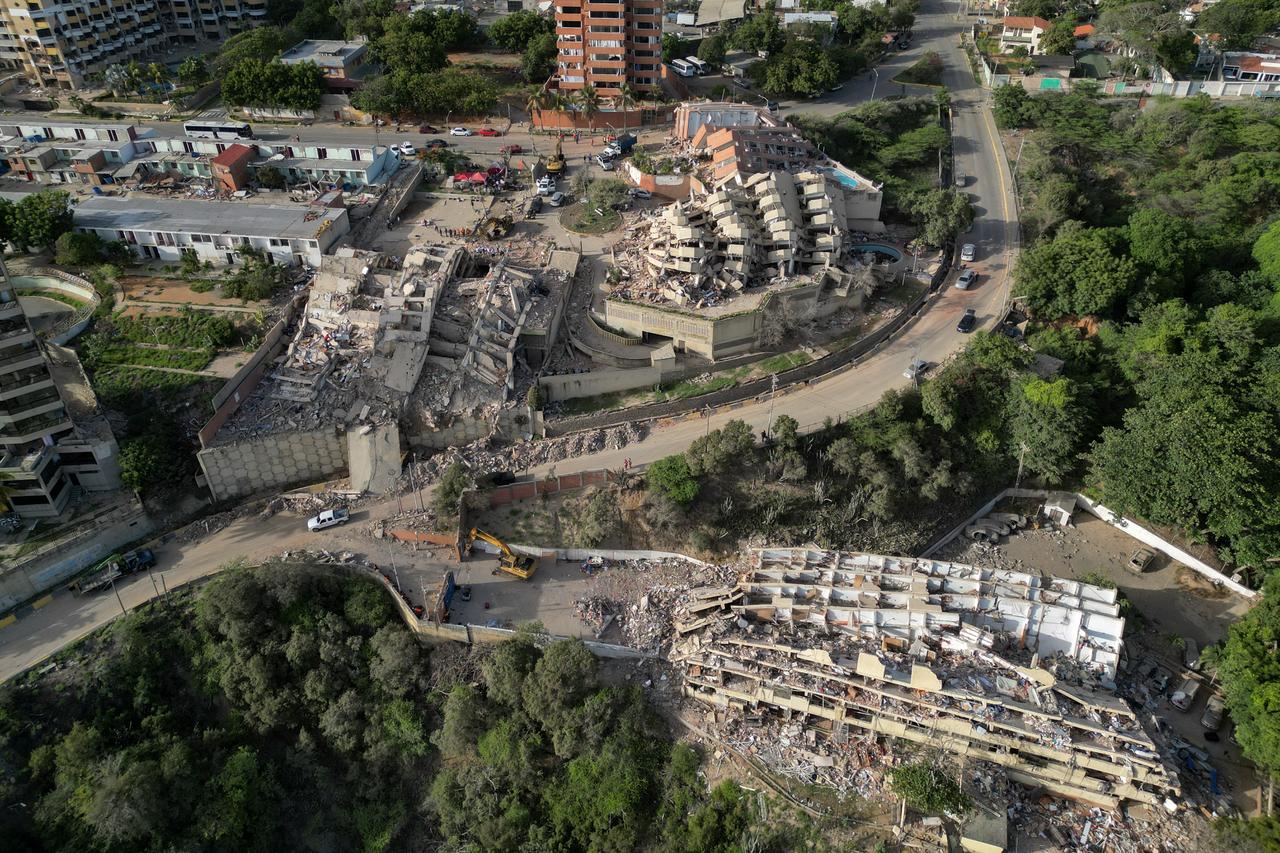
He said 3,150 people remained injured, 12,721 had been displaced, and 774 buildings had collapsed.
"We are in critical hours, in crucial hours to continue rescuing lives and to build camps where those people who have lost their homes, or who cannot return, for whatever reason, to their residences can stay," he said.
Dozens of buildings collapsed into piles of sand and rubble in La Guaira, a coastal state about 40 kilometers north of Caracas.
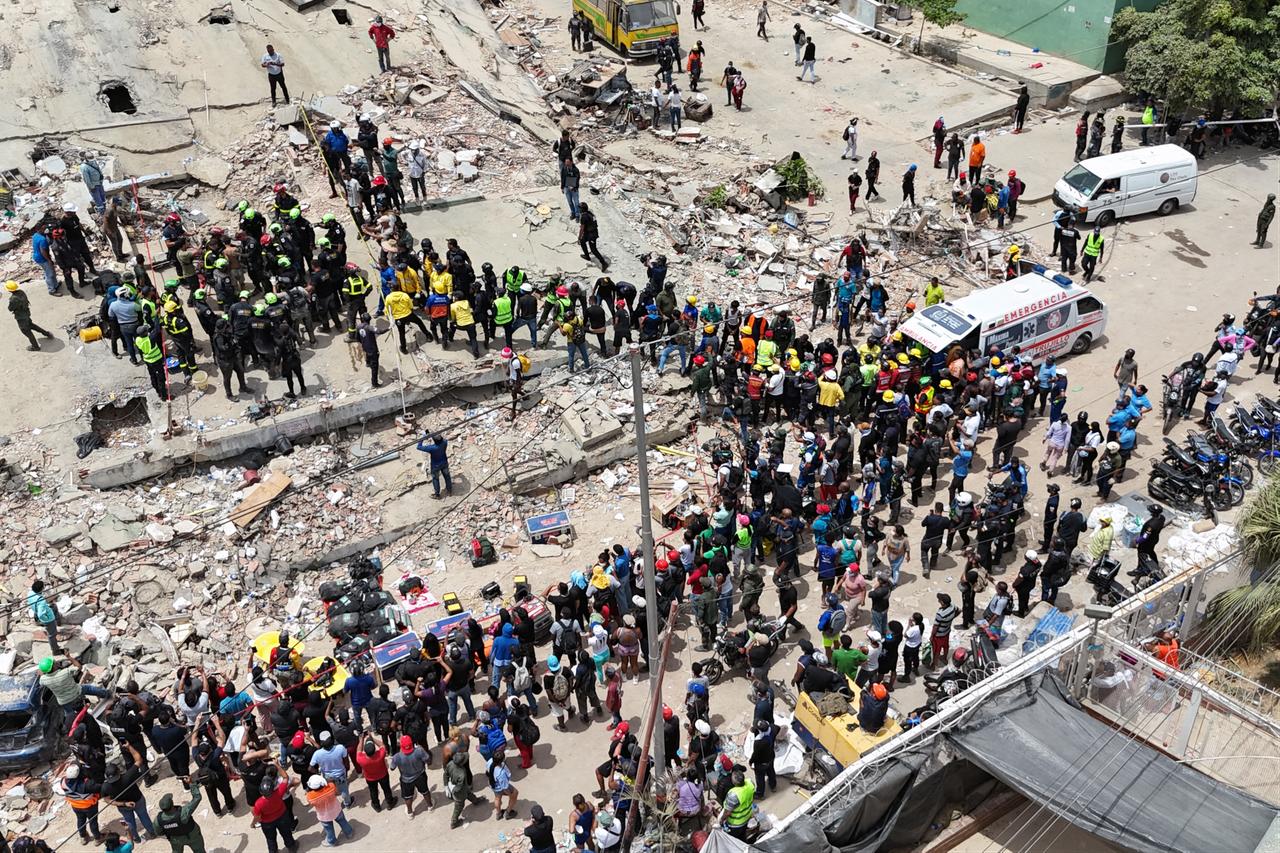

Interim President Delcy Rodriguez said rescue and recovery efforts would continue as signs of life were still being detected.
"Rescue and recovery efforts are ongoing. We've recovered people alive, so operations are not being suspended. We always maintain hope," Rodriguez said after announcing a presidential commission that would determine whether buildings were habitable.
Flanked by several ministers, Rodriguez said school classes would be suspended for one more week, and that electricity supply in La Guaira had been restored to 75%.
The government, headed by Rodriguez since the U.S. ousted her predecessor in a January raid, had thanked civilian volunteers ferrying aid to La Guaira but later tightened access to the road, saying traffic was preventing the efficient movement of emergency vehicles.
Families and volunteers spent days pulling survivors and bodies from the rubble before the arrival of more than 2,600 foreign rescue workers, often complaining of limited heavy equipment and a limited official presence.
Hundreds of aftershocks deepened the damage and kept residents on edge.
The government said at least 33 people had been rescued by Saturday evening, including several children, while tens of thousands remained unaccounted for.
A father and his son were pulled out alive from the rubble of a collapsed building on Sunday as rescue workers raced against time to find more survivors.
Although the government has reported hundreds missing or trapped, just under 50,000 people were listed as unaccounted for on a website promoted by the country's political opposition on Sunday, down from 55,000 a day earlier.
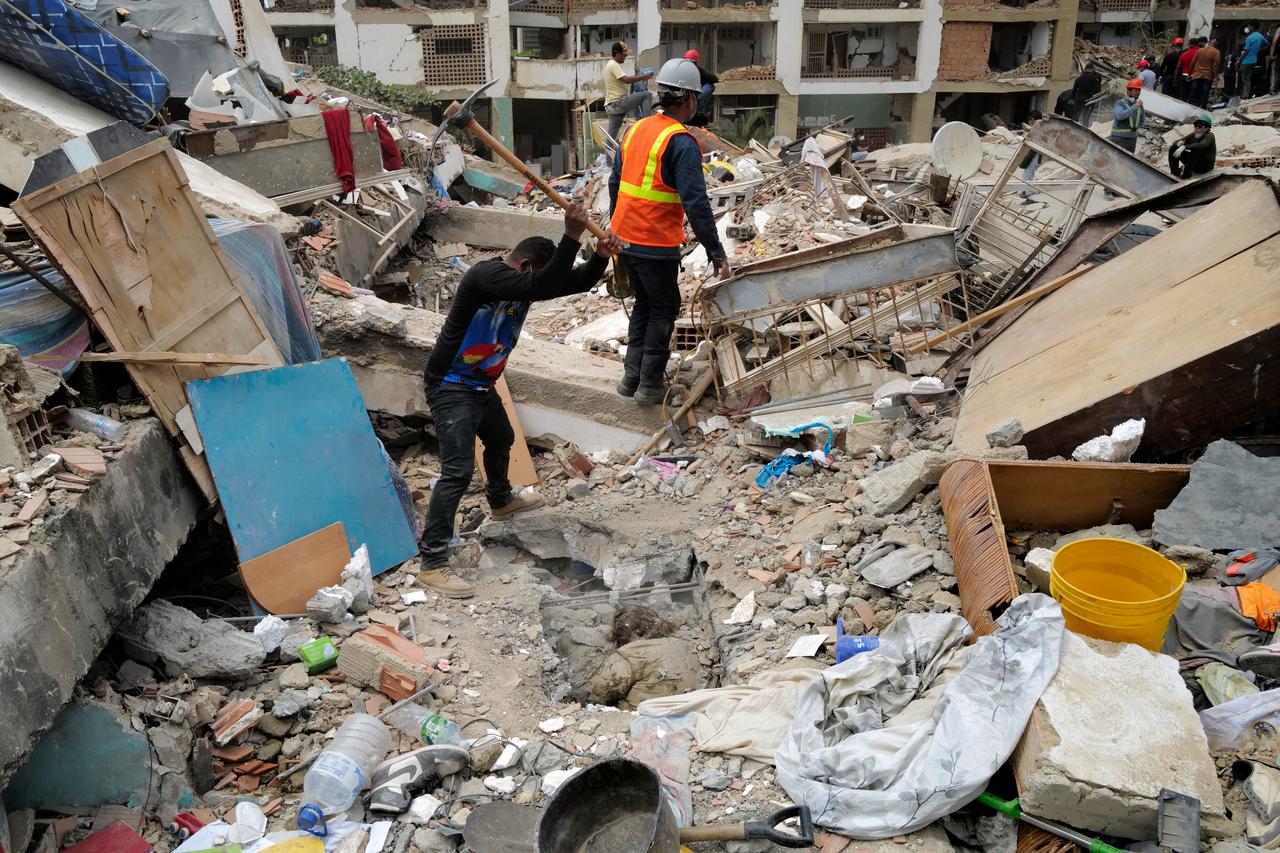
The U.S. Geological Survey (USGS) estimated that more than 10,000 deaths were possible from the magnitude 7.2 and 7.5 earthquakes, which would place them among Latin America's deadliest of the last century.
"There exists a window of roughly three days, 72 hours, where the probability afterwards decreases that you can save people alive," said Sebastian Eugster, the leader of the Swiss rescue team.
The 80-member Swiss team had found multiple people alive in the rubble after alerts from eight search dogs, but had not been able to pull them out in time to save them, he said.
Saturday evening marked 72 hours since the earthquakes.
The U.S. State Department hailed the rescue of an infant by U.S. rescue crews on Saturday, posting a video on X showing helmeted rescuers removing the blanket-wrapped and crying child from the rubble.
A Colombian rescue team also saved an 11-year-old boy, Moises, who had been trapped about 3 meters deep in rubble after identifying his location with a scanner, Reuters TV reported.
He was removed on a stretcher with a broken arm, his eyes covered with cloth to protect them from the shock of daylight. His mother and sister were killed.
Mexican rescuers working at a collapsed building in the town of Caraballeda rescued another 11-year-old boy, Rodriguez said on X late Saturday, showing crews carrying a small figure on a stretcher out of the rubble.
Pope Leo told worshippers gathered for the Angelus prayer in Rome on Sunday that he wanted "to express my closeness to the Venezuelan sisters and brothers affected by the recent earthquakes" and thanked rescue workers.
In Caracas, hundreds of volunteers gathered after the twin earthquakes to sort and box donated clothing and relief supplies for quake victims.
In the Altamira district, search-and-rescue teams continued working at the rubble of a high-rise building after the two major earthquakes on June 24, while volunteers maintained an aid effort nearby.
With the help of volunteers from different parts of the city, donated materials were boxed collectively and prepared at collection centers to be delivered to quake victims.
According to Venezuelan media, between 25,000 and 30,000 people across the capital have been unable to return to their homes because of fears over aftershocks and ongoing damage assessments.
In Chacao, Altamira and neighborhoods linked to the historic center, some buildings collapsed, while more than 600 buildings were found to have deep cracks, damaged load-bearing columns and structural deterioration.
Some residents have set up tents in parks on their own, while thousands of Caracas residents whose homes were destroyed or heavily damaged are staying in temporary shelters set up in indoor stadiums, municipal sports halls and schools.
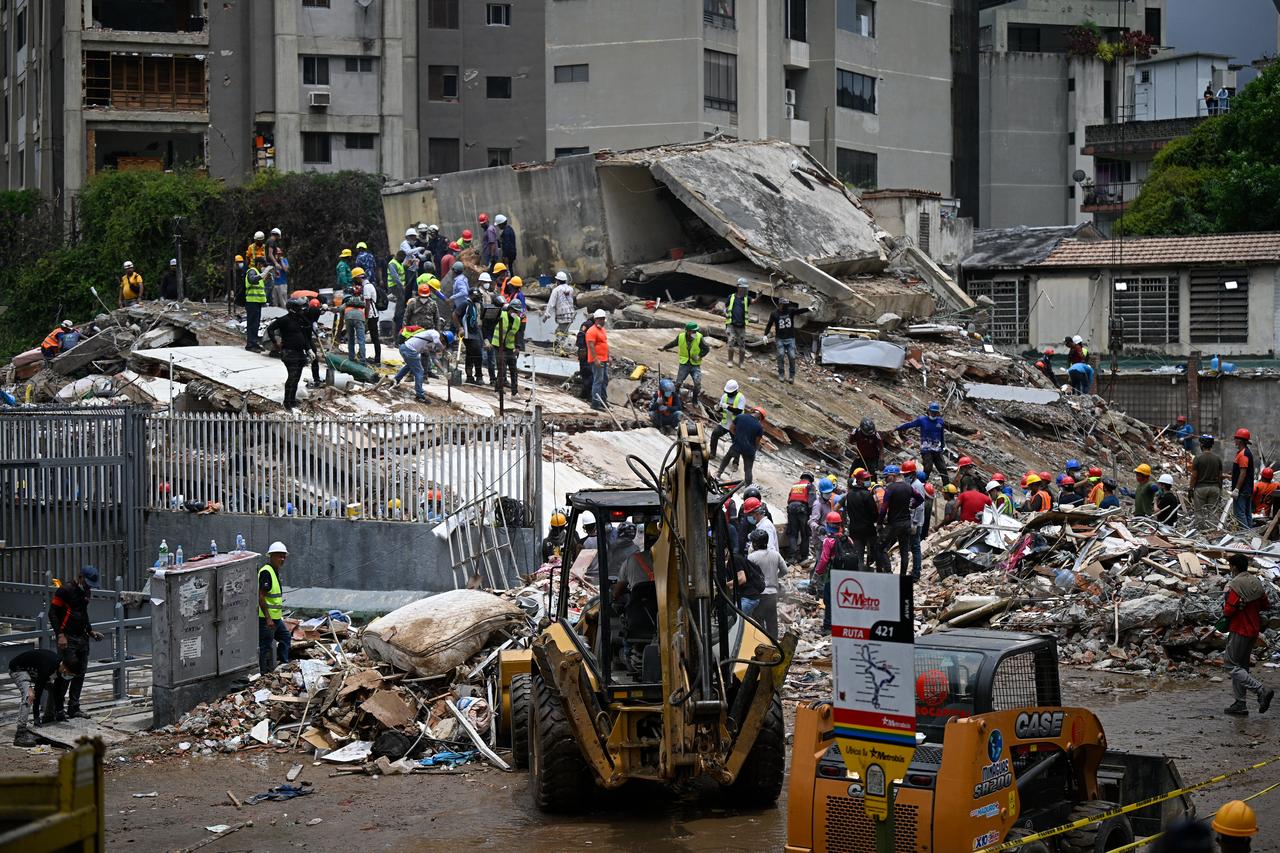
Venezuelans, with support from security forces and civil society groups, have worked to send relief supplies quickly to disaster areas, especially La Guaira, where the heaviest loss of life and property was recorded.
At the same time, security forces increased measures after looting incidents were reported in some quake-hit areas.
The irregular distribution and waste of aid supplies also triggered criticism in a country where poverty remains high.
The delay in identifying bodies after the disaster has also deepened concerns over disease and the humanitarian crisis, as dozens of bodies were left in the open in the yard of a hospital in La Guaira.
A senior U.S. official said Saturday that a funding package worth hundreds of millions of dollars was expected to be announced within the next day or so, in addition to the $150 million already committed by the Trump administration.
Opposition leader and Nobel Peace Prize winner Maria Corina Machado told media outlets Sunday she planned to return to Venezuela, where she had been living in hiding since a 2024 presidential election that international observers say the opposition won, until she left in December to receive her prize.
A White House official told Reuters on Saturday that her plan to return home was frustrating senior officials in Washington, who said it was too soon after the disaster.
Venezuela's largest refinery, the 645,000-barrel-per-day Amuay, shut down operations Sunday after a large power outage in western Falcon state, workers from the facility said.


 Set as preferred source
 Set as preferred source


 1 min read
 1 min read