Newsletters


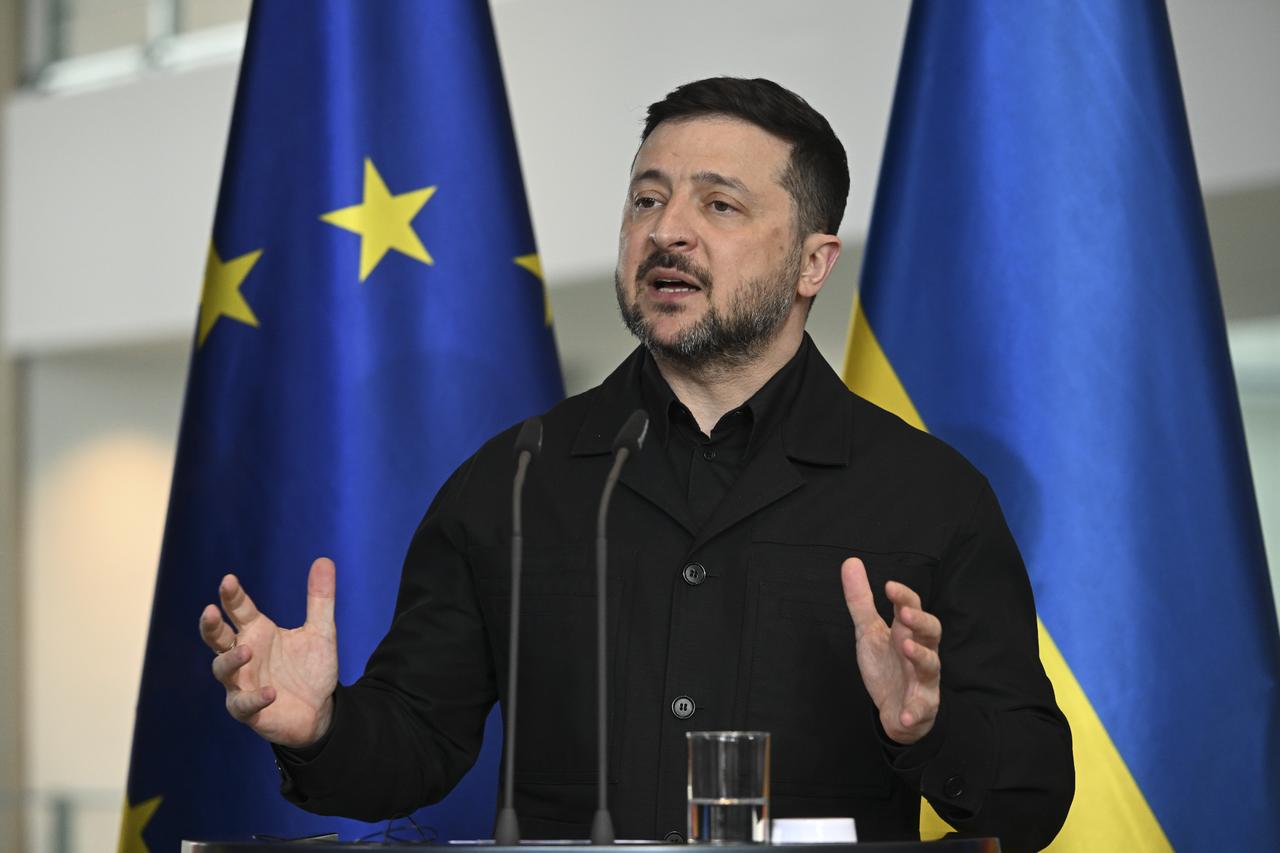


Ukrainian President Volodymyr Zelenskyy on Thursday welcomed the European Union’s approval of a €90-billion ($105 billion) loan for Ukraine, after the measure was unblocked following months of opposition from Hungary’s outgoing prime minister Viktor Orban.
“Today is an important day for our defense and for our relations with the European Union. The European support loan for Ukraine has been unblocked, €90 billion over two years,” Zelenskyy said on X.
“It matters that Ukraine is securing this level of financial certainty, after more than four years of full-scale war,” he added, urging that the first tranche be disbursed by May or June.
The EU gave the long-awaited green light Thursday, ending a prolonged dispute with Budapest that had delayed both the loan and a new sanctions package against Russia.
European Commission President Ursula von der Leyen welcomed the decision.
“While Russia doubles down on its aggression, we are doubling down on our support to the brave Ukrainian nation enabling Ukraine to defend itself and putting pressure on Russia’s war economy,” she said.
The breakthrough came as Zelenskyy arrived in Ayia Napa, Greek Cyprus, for talks with EU leaders.
Zelenskyy said he hopes the funds will be delivered by “the end of May, beginning of June” to strengthen Ukraine’s military and support domestic weapons production.
 2 min read
The loan had been blocked amid a dispute between Orban and Kyiv, with Budapest demanding repairs to a pipeline damaged by a Russian strike.
The standoff eased after Ukraine completed repairs and resumed oil flows to Hungary and Slovakia, officials said.
Orban, a frequent critic of EU support for Ukraine, lost power this month after 16 years in office, with pro-EU opposition figure Peter Magyar winning the election.
EU officials expressed hope that decision-making on Ukraine would accelerate without Budapest’s opposition.
During meetings in Greek Cyprus, EU leaders are also expected to discuss the Middle East conflict and its economic fallout, including rising energy prices.
Leaders from the region, including Joseph Aoun, Abdel Fattah el-Sisi, Ahmad al-Sharaa, and Hussein bin Abdullah, are set to join discussions.
A key concern for Europe is the Strait of Hormuz, where disruptions have driven up oil prices and affected fuel supplies.
An EU official said the bloc is “ready to contribute” to keeping the strait open, depending on developments.
Leaders will also begin discussions on the EU’s 2028–2034 budget, with the European Commission proposing a package of around €2 trillion ($2.3 trillion).
Differences persist between member states, with France advocating increased investment and Germany pushing for fiscal restraint.
Officials warn that failure to reach an agreement before France’s presidential election next year could complicate negotiations further.


 Set as preferred source
 Set as preferred source


 1 min read