Newsletters


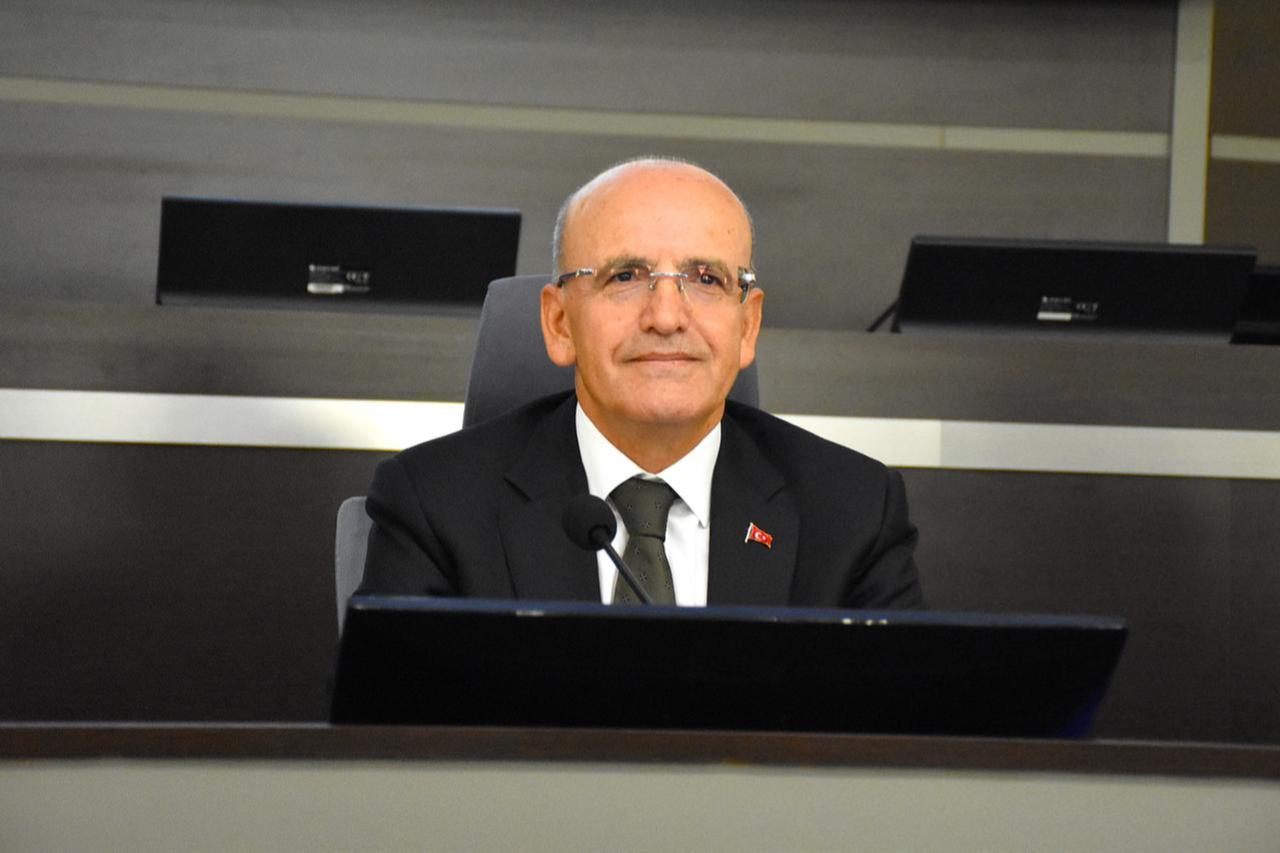
The Central Bank of the Republic of Türkiye (CBRT) Governor Fatih Karahan said the underlying inflation trend continues to slow despite food and energy supply shocks, while a survey by the bank showed that year-end inflation expectations edged up in September.
In a presentation on Friday in Istanbul, Karahan stressed that recent inflation figures and leading indicators continue to point to weaker price pressures despite monthly fluctuations.
Data on economic activity and the limited pass-through of supply shocks to domestic prices point to weakness in domestic demand, Karahan added. Elevated energy prices linked to geopolitical developments, however, pose an upward risk to the inflation outlook.
Türkiye's annual inflation fell to 31.5% in August 2026, down from a peak of 75.5% in May 2024, Karahan pointed out. Food and energy prices have recently put upward pressure on inflation, with monthly energy inflation averaging 3.9% in July-August and food inflation averaging 2.1% over the same period.
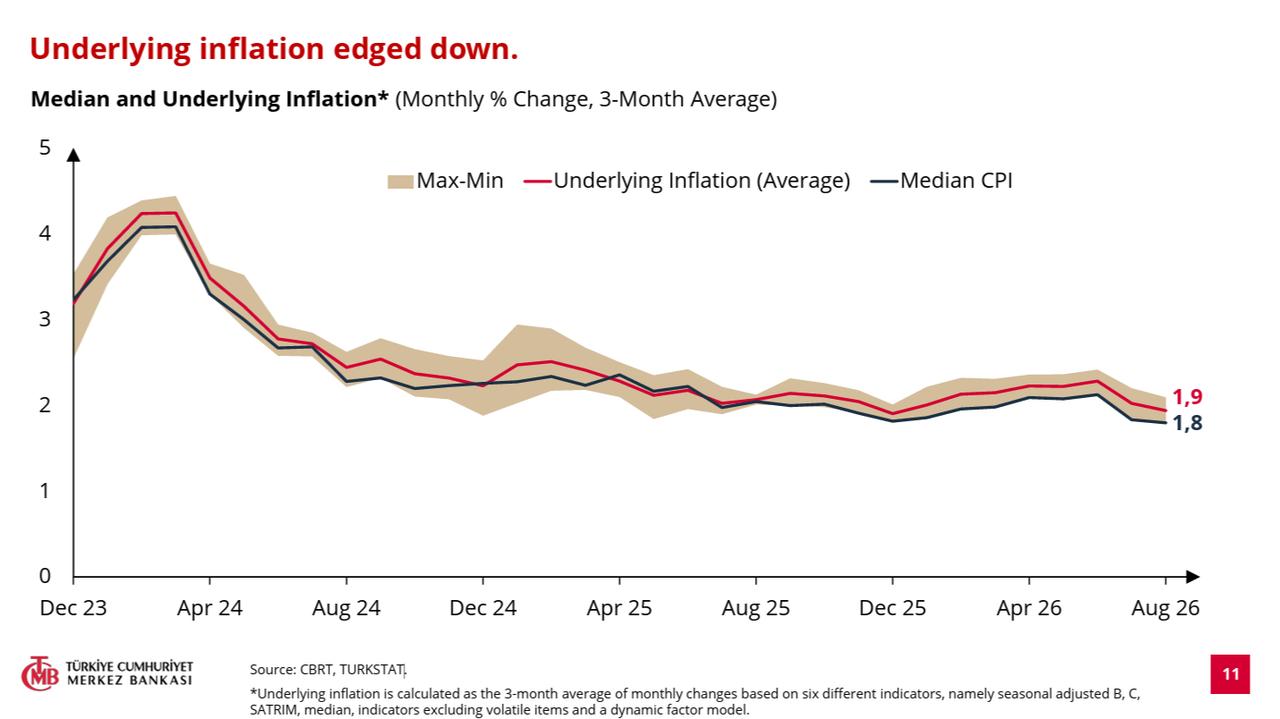
Despite these pressures, underlying monthly inflation eased to 1.9%, while median consumer inflation fell to 1.8% as inertia in core goods and services began to break down, he emphasized.

The central bank’s assessment shows that domestic demand weakened in the second quarter, with the slowdown becoming more pronounced in the third quarter.
Annual GDP growth fell to 2.3% in the second quarter of 2026, while quarterly growth came in at 1.1%. External demand and industrial production drove the quarterly expansion, while final domestic demand weighed on growth.
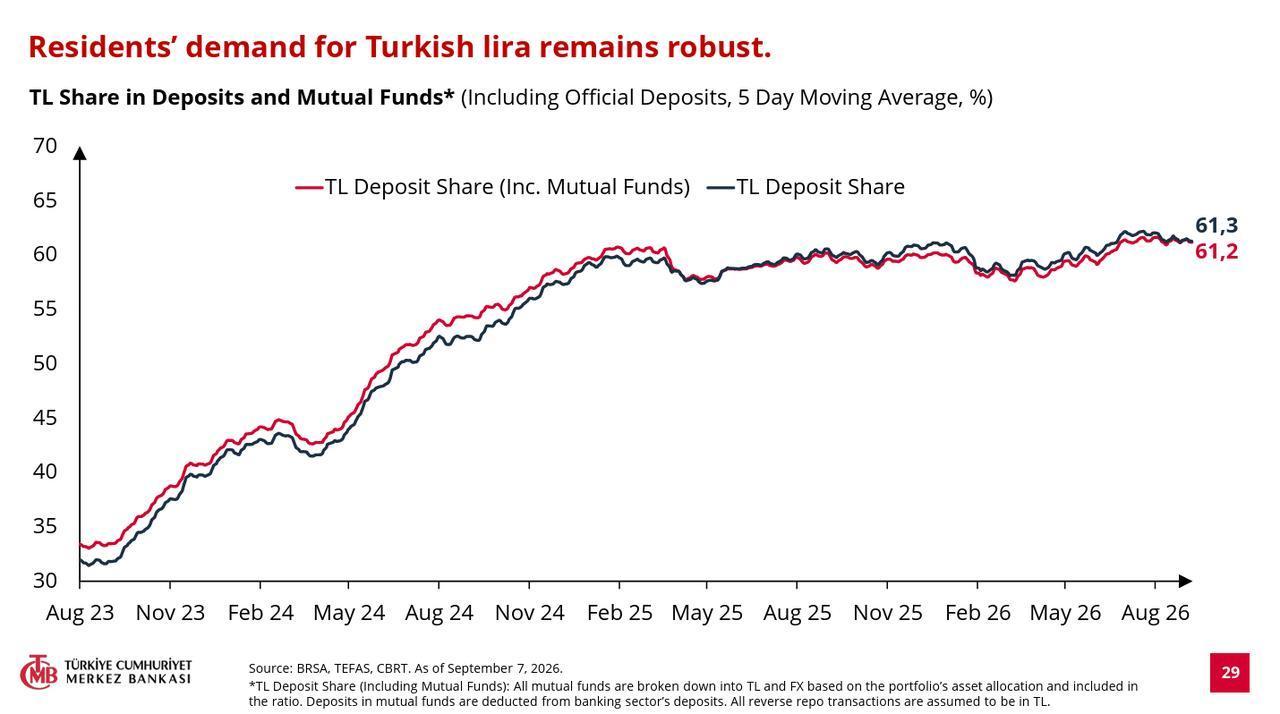
Strong demand for the Turkish lira, the tight monetary policy stance, and strengthened macroprudential measures are helping contain the risk of renewed dollarization.
The lira’s share of total deposits and investment funds rose to 61.3%, while the CBRT’s gross international reserves stood at $184 billion in early September 2026. Net reserves excluding swaps also reached $53 billion.
Total credit growth fell to 25.9%, although it remained at moderate and reasonable levels, Karahan indicated. He reiterated that if the inflation outlook deviates significantly from interim targets, the monetary policy stance will be tightened.
The presentation comes a day after the central bank held its key funding rate at 37% for a fifth consecutive meeting, while warning that elevated energy prices amid geopolitical developments pose an upward risk to the inflation outlook.
Meanwhile, the CBRT’s September Market Participants Survey showed year-end inflation expectations rising to 29.6% from 29.4%.
Conducted with 67 participants from the real and financial sectors and professional groups, the survey also put September inflation expectations at 2.1%, pointing to an annual rate of 30.1%. Twelve-month inflation expectations remained largely unchanged at 23.7%, while the 24-month forecast rose to 18.3% from 18%.

Participants also put the policy rate at around 35.1% by the end of 2026, pointing to roughly 200 basis points in cuts over the bank’s remaining two meetings. The 12-month policy-rate expectation fell to 29.2%.
Participants lowered their year-end dollar/TL forecast to 51.5716 from 51.6567, but raised their 12-month forecast to 58.6049 from 57.4278. The expected year-end current-account deficit narrowed slightly to $50.1 billion from $50.2 billion, while next year’s forecast fell to $44.4 billion from $44.4 billion.
Growth expectations also weakened, with the 2026 GDP forecast falling to 3% and the 2027 forecast declining to 3.9% from 4%.


 Set as preferred source
 Set as preferred source


 1 min read
 1 min read