Newsletters




Global banks increasingly expect the Central Bank of the Republic of Türkiye (CBRT) to keep its policy rate unchanged at its Sept. 10 meeting and begin cutting rates in October after August inflation came in below market expectations.
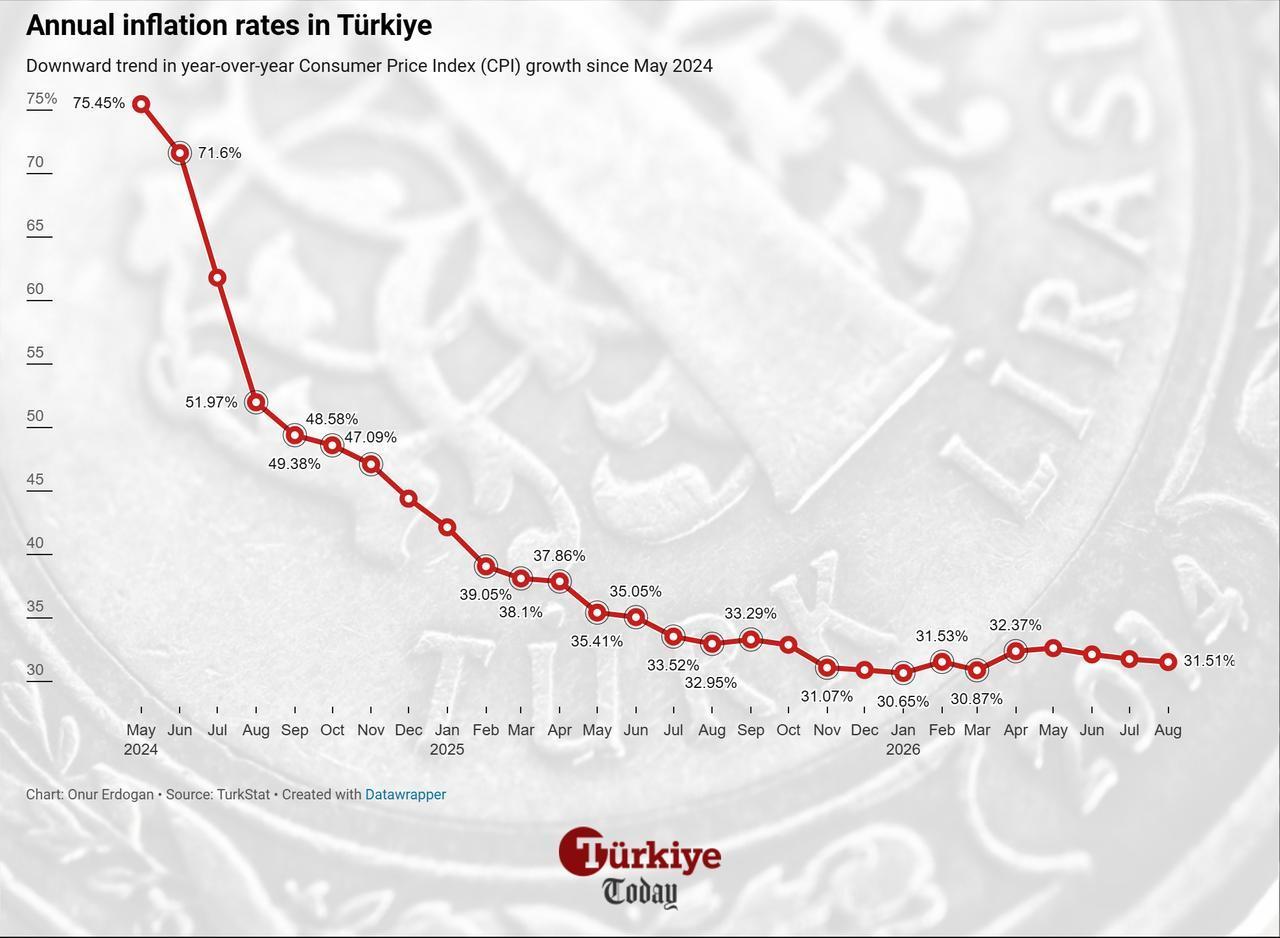
Consumer prices rose 1.8% in August, while annual inflation fell from 31.8% in July to 31.5%. The softer headline reading strengthened the case for monetary easing, although sticky services inflation, higher producer costs and renewed energy-price pressures kept expectations for an aggressive easing cycle in check.
Morgan Stanley, a U.S.-based global investment bank, expected the CBRT to hold its policy rate at 37% on Sept. 10 before starting cuts in October. The bank forecast 100-basis-point reductions at both the October and December meetings, which would have brought the policy rate to 35% at the end of 2026.
The U.S. bank also projected a gradual continuation of the easing cycle in 2027, with the policy rate reaching 27.5% by year-end. It warned, however, that inflation risks could lead to upward revisions to its rate forecasts.
BBVA Research, the economic research arm of Spanish banking group BBVA, brought forward its first-cut forecast to October from December. It projected a 100-basis-point reduction in October, taking the policy rate to 36%, where it expected the CBRT to keep it through the end of the year.
The analysts retained their 2026 inflation forecast at 30%, saying weaker demand and steps to reduce the impact of past inflation on prices could help keep September inflation around 2% if food prices remained moderate and energy costs stayed stable.
BBVA nevertheless identified persistent services inflation, elevated inflation expectations and a broadly flat underlying inflation trend as risks to the disinflation process.
MUFG, a Japan-based global banking group, was the exception to the September-hold view and saw a stronger case for a cut this month. It cited the third consecutive monthly decline in annual inflation, the below-consensus August reading despite elevated energy costs and core goods inflation falling to its lowest level since November 2020.
MUFG said continued disinflation and weak domestic demand could justify further easing, although high oil prices could slow the pace of subsequent cuts.

Citi, one of the major U.S. financial groups, expected the CBRT to leave its policy rate unchanged at the Sept. 10 meeting and saw limited room for rate cuts during the second half of 2026. The bank argued that weaker domestic demand had yet to generate a meaningful disinflationary effect, while inflationary pressures were increasingly reflecting structural factors.
Citi projected the policy rate at 35% at the end of 2026 and expected inflation to finish the year slightly above the 30.9% recorded at the end of 2025.
The bank also highlighted a deterioration in inflation expectations. Twelve-month expectations had risen 159 basis points from their February low to 23.69%, while 24-month expectations had moved above 18%, marking their highest level since January 2025.
ING, a Netherlands-based global banking group, also anticipated no policy change in September. It pointed to the CBRT’s resumption of weekly repo auctions at the end of August, which had brought effective funding costs and TLREF, the Turkish Lira Overnight Reference Rate, down from around 40% toward the 37% policy rate.
ING said the short interval between that liquidity adjustment and the Sept. 10 meeting made another policy move unlikely. It also identified energy and education prices as sources of upward pressure, while relatively moderate food inflation provided some relief.
Goldman Sachs, another U.S.-based investment bank, also said August data showed broad stabilization in underlying inflation at current levels and that the improvement in services inflation was slowing. The bank retained its 29% year-end inflation forecast but said higher energy prices had shifted the risks around that projection to the upside.
It also assessed that continued weakness in domestic demand could generate further disinflation, although higher energy costs could offset some of that progress.
Ahead of the central bank’s next decision, the government’s new 2027-2029 Medium-Term Program (MTP) raised its 2026 year-end inflation forecast to 28.4%, while setting targets of 21% for 2027, 13.5% for 2028 and 9% for 2029.
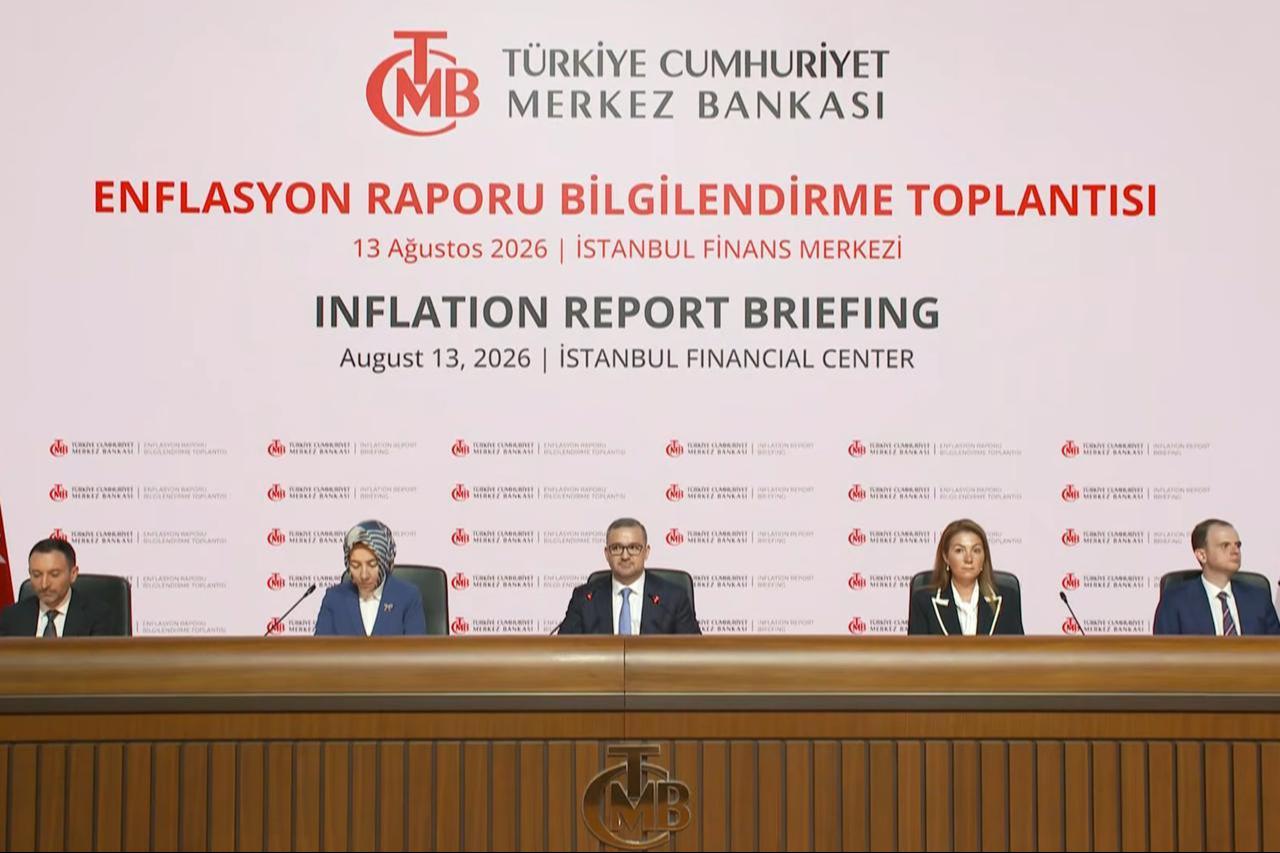
The update follows the CBRT’s latest Inflation Report in August, which lifted its 2026 year-end inflation forecast to 28% from 26%. The central bank also projected inflation at 15% at the end of 2027 and 9% at the end of 2028, while maintaining its medium-term target at 5%.
Addressing the revision, CBRT Governor Fatih Karahan said the change was significant but did not warrant a pessimistic view of the inflation outlook, adding that the targets were set in coordination among economic policymakers. He also said this coordination would become stronger, particularly on administered and regulated prices.
Karahan attributed part of the revision to changing global conditions, saying the impact of wars and other supply shocks on inflation had become more pronounced. He estimated that these effects had added "close to 7 percentage points" to inflation this year through higher energy costs, transportation, food and other goods.
Despite those pressures, Karahan said monetary policy was proving effective in areas driven by domestic demand, particularly core goods.
Core goods inflation had remained relatively contained despite higher commodity prices and exchange-rate movements, which was consistent with the ongoing rebalancing in domestic demand, he added.


 Set as preferred source
 Set as preferred source


 2 min read
 1 min read