Newsletters





The Eastern Dragon dominates world trade, but the way it shares its wealth has been quite problematic, to say the least, for some countries.
China’s meteoric rise over the past three decades has reshaped global supply chains, lifted millions out of poverty, and turned the country into the world’s manufacturing powerhouse. As trade volumes grow, so do concerns over imbalance—especially for countries like Türkiye, which import far more than they export.
In an interview with Türkiye Today, Turkish technology tycoon Aydin Mistacoglu highlighted the benefits of increased Chinese investment in Türkiye.
Recently elected as the head of the Foreign Economic Relations Board’s (DEIK) Türkiye-China Business Council, Mistacoglu sits at the intersection of trade, technology, and diplomacy. As chairman of Mistacoglu Holding—best known as the strategic partner of Chinese smartphone giant Oppo in Türkiye—he is uniquely positioned to assess both the opportunities and shortcomings of the bilateral relationship.
“China needs Türkiye,” he says bluntly. “For the future, China must invest in alternative markets as a kind of Plan B. If it insists on winning alone and not sharing, that approach is not sustainable.”
The numbers underline his point.
Bilateral trade between Türkiye and China reached $53 billion in 2024, a record level that cements China’s position as Türkiye’s second-largest trading partner and its primary source of imports.
However, this relationship is far from equal. Türkiye runs a massive trade deficit with China, importing high-value manufactured goods such as electronics and machinery, while exporting mostly raw materials and low-value-added products.
Data shows the scale of the imbalance: in 2025, Türkiye exported roughly $3 billion–$3.4 billion worth of goods to China while importing around $44 billion–$45 billion, resulting in a deficit of about $40 billion–$42 billion.
Even as Turkish exports to China show signs of improvement—rising 32% year-on-year in January 2025—the structural gap remains wide.
For Mistacoglu, this is not just a statistical issue.
“We want to increase it. But it must be balanced and based on high-value-added production.”


Mistacoglu believes the solution lies in transforming Türkiye from a consumer market into a production hub for Chinese companies.
“Chinese companies should come to Türkiye not just to sell, but to produce,” he says. “With Türkiye’s domestic market and its surrounding geography, products manufactured here can be exported to multiple regions.”
Türkiye’s strategic advantages are hard to ignore.
As part of the EU Customs Union, goods produced in Türkiye can effectively enter European markets with fewer barriers, often carrying the label of being “Made in Europe.”
Combined with its proximity to the Middle East, Central Asia, and North Africa, the country offers a logistical bridge between continents.
Despite booming trade, investment flows tell a different story.
According to official figures, around 1,419 Chinese companies operate in Türkiye with total investments of $3.2 billion, spread across sectors such as telecommunications, energy, and finance.
Mistacoglu finds this level insufficient when compared to Türkiye’s potential and to Chinese investments in similarly sized economies.
“When we look at countries of comparable scale, Chinese investments in Türkiye remain quite low,” he notes. “This can be improved through closer cooperation and mutual trust.”
He also points to a critical gap in financing.
“Chinese financial institutions must increase their support for Turkish companies. We are not yet at a sufficient level in terms of financing,” he says.
Recent developments suggest movement in that direction. Türkiye and China have renewed a currency swap agreement worth approximately ₺189 billion (35 billion Chinese Yuan), aimed at facilitating bilateral trade and financial cooperation.
In addition, China’s ICBC has launched Türkiye’s first renminbi (RMB) clearing bank, a move expected to ease transactions in local currencies and reduce dependence on the U.S. dollar—an important step for deepening economic ties.
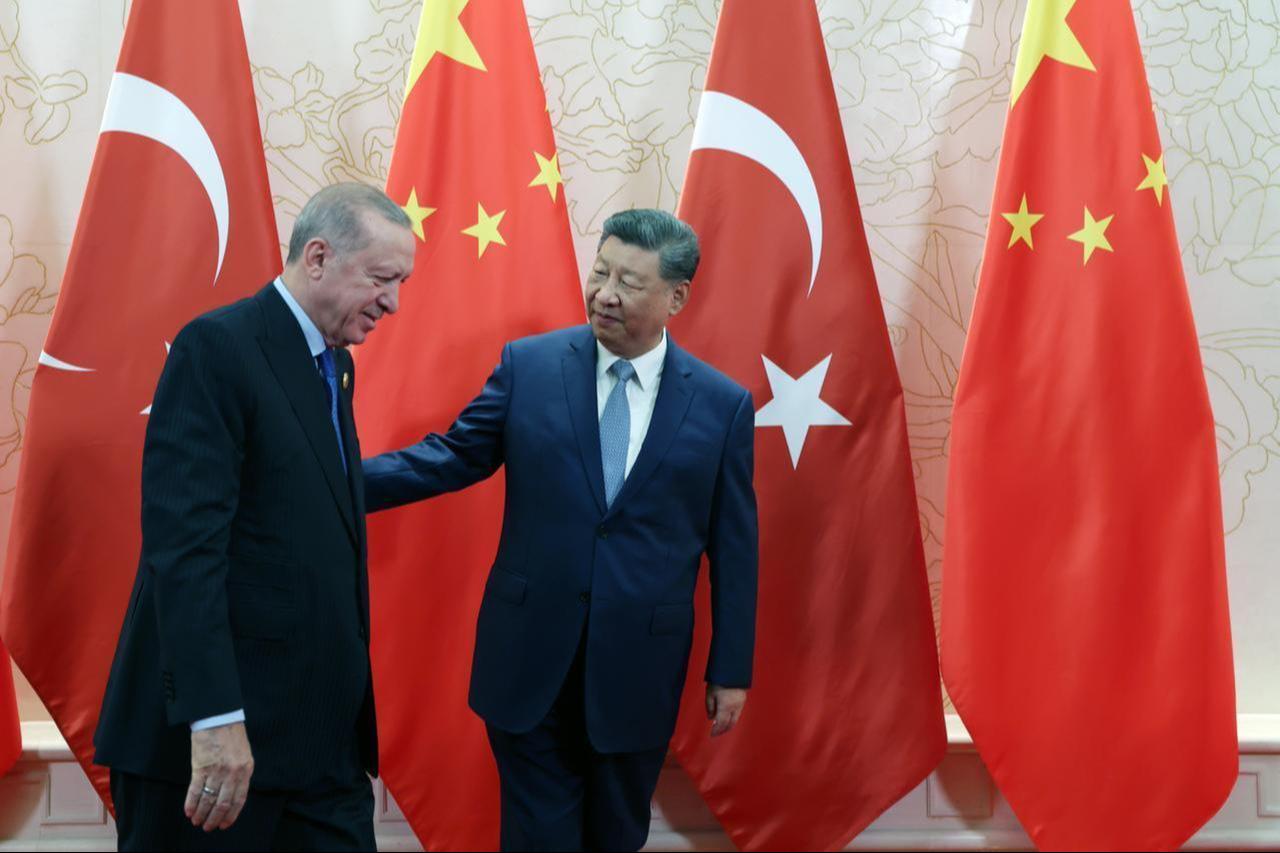
Yet, for Mistacoglu, these steps are only the beginning.
Beyond trade figures, both sides increasingly emphasize technology and innovation as the next frontier.
China’s transition toward high-quality, innovation-driven growth aligns with Türkiye’s ambitions to move up the value chain. Turkish industry, already producing over $273 billion in exports annually, is seeking to expand its footprint in advanced manufacturing, electronics, and defense.
Mistacoglu sees this convergence as a major opportunity.
“We expect Chinese companies to come more strongly in technology and industry,” he says. “Production partnerships in Türkiye can create a win-win model.”
He adds that such cooperation would not only help balance trade but also strengthen supply chain resilience at a time of growing global fragmentation.
“The global system cannot function if one side only accumulates and the other only consumes,” he argues. “There must be sharing of production, of technology, and of investment.”
For Türkiye, the path forward is clear: attract more Chinese investment, expand exports, and position itself as a regional manufacturing hub.
If China wants sustainable partnerships—and not just expanding trade surpluses—it may need to rethink how it engages with countries like Türkiye.
As Mistacoglu puts it, “The future lies in cooperation. And in that future, Türkiye is not just a market—it is a partner.”


 Set as preferred source
 Set as preferred source



 1 min read