

 Newsletters


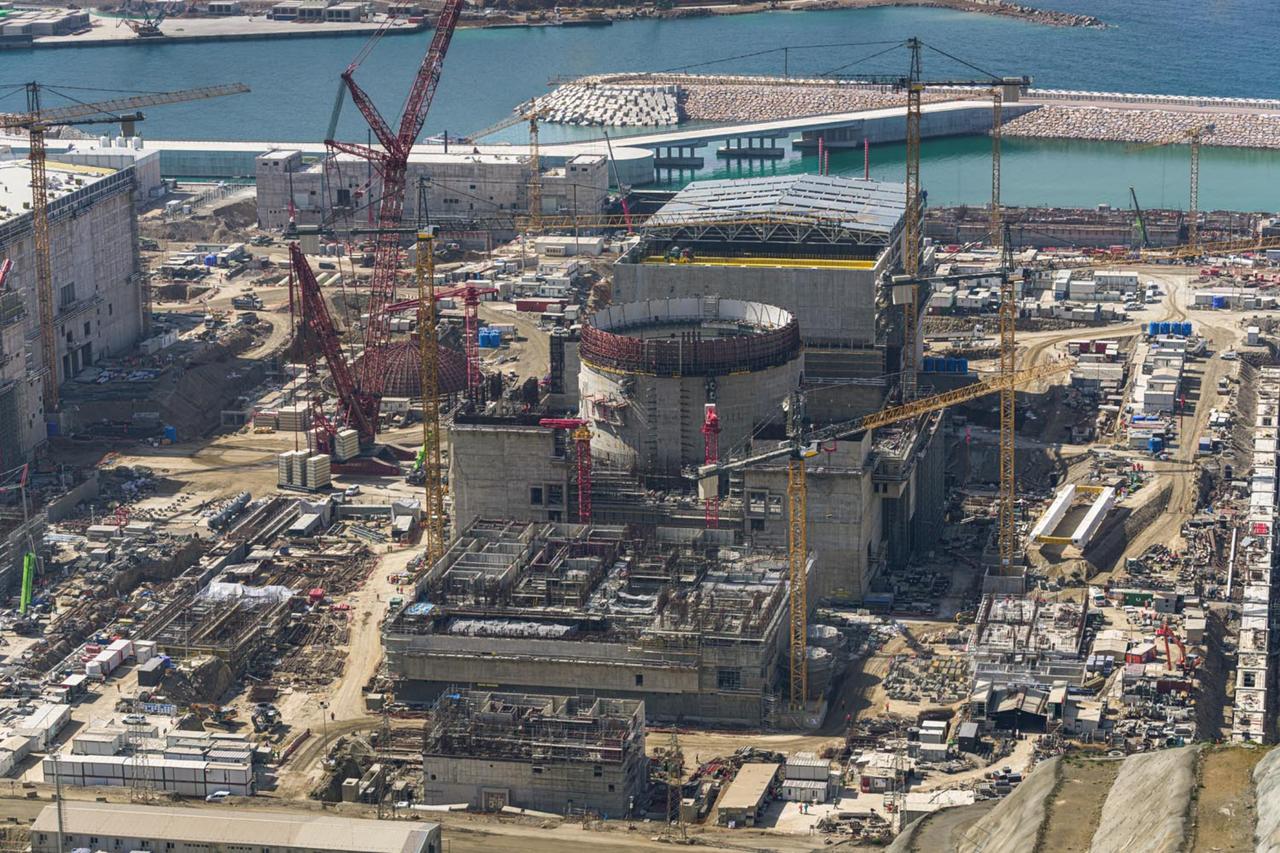


Final checks are underway on equipment and systems at the first unit of the Akkuyu Nuclear Power Plant in Mersin as preparations continue for its commissioning, Akkuyu Nuclear Inc. General Manager Sergei Butckikh said.
Butckikh told Anadolu that construction work at the plant in the Gulnar district is continuing simultaneously across all four units.
He said work on the first unit has accelerated and that the project is at a critical stage.
“We are currently at a very important stage in the first unit. All equipment and systems are being put through the necessary control operations and made ready for the commissioning phase,” Butckikh said.

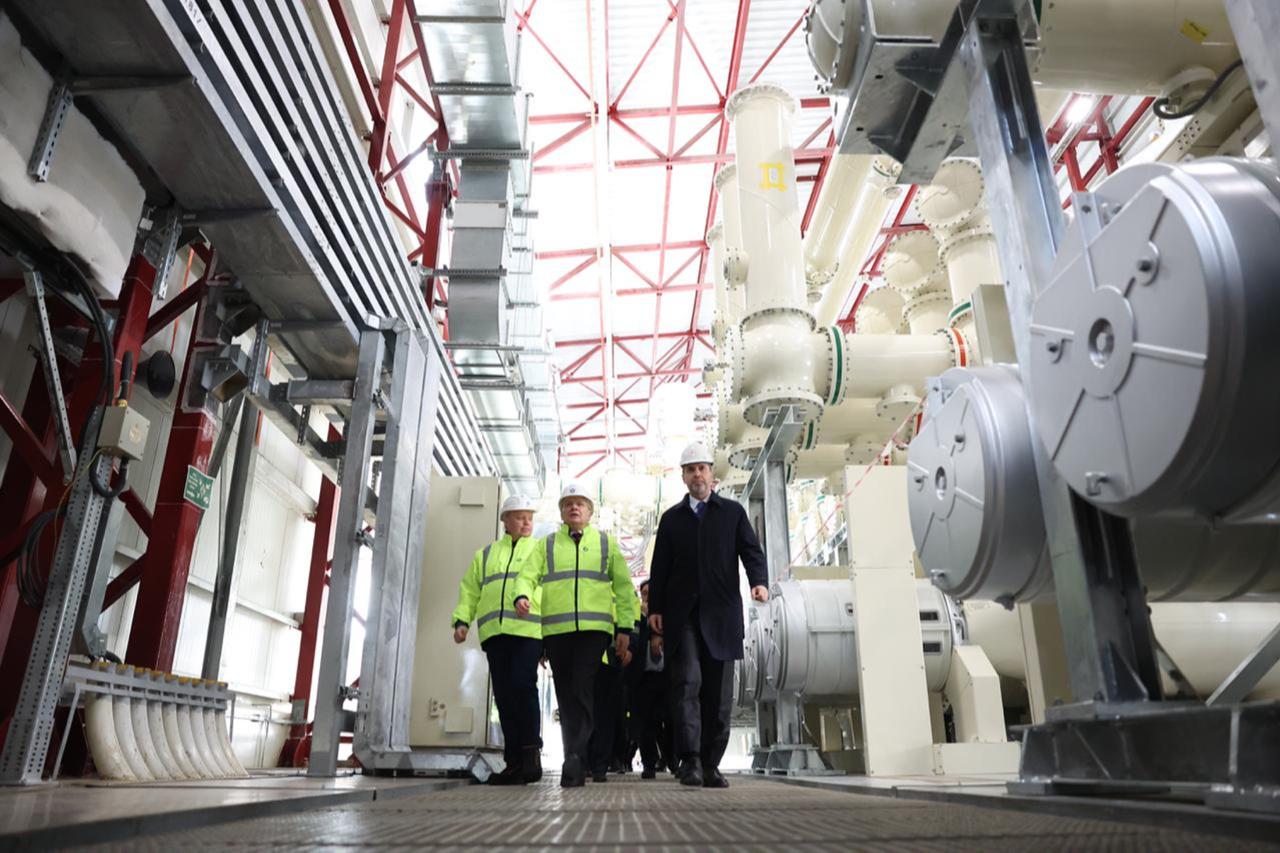
Butckikh said preparations are continuing for primary circuit hydraulic tests, the loading of dummy fuel rods into the reactor and hot and cold trial phases, which are key testing stages.
He said commissioning work is being carried out across the Akkuyu NPP site, with systems and equipment gradually being moved into operating mode.
“During this phase, all systems and equipment will be gradually switched to operating mode,” Butckikh said.
He said the goal is to make the plant ready for the fuel loading stage, known as physical start-up.
“We are making every effort, especially in the first unit, for the commissioning of the plant. We are carrying this out not alone, but in cooperation with the Ministry of Energy and Natural Resources, the Nuclear Regulatory Authority and other relevant institutions,” he said.
Butckikh said turbine plant installation work is continuing at the second unit, while welding has begun on the main circulation pipeline. Work on the third and fourth units is also continuing carefully, he added.
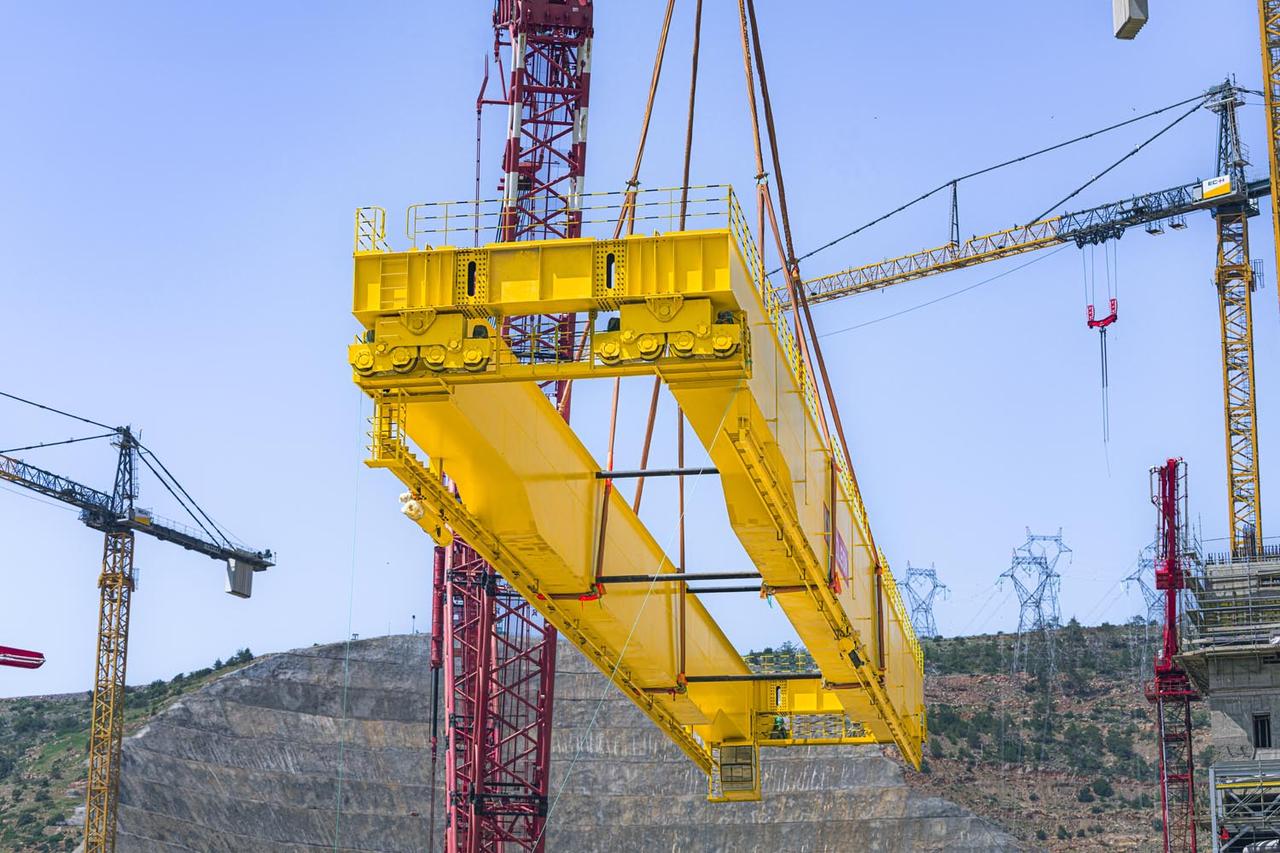
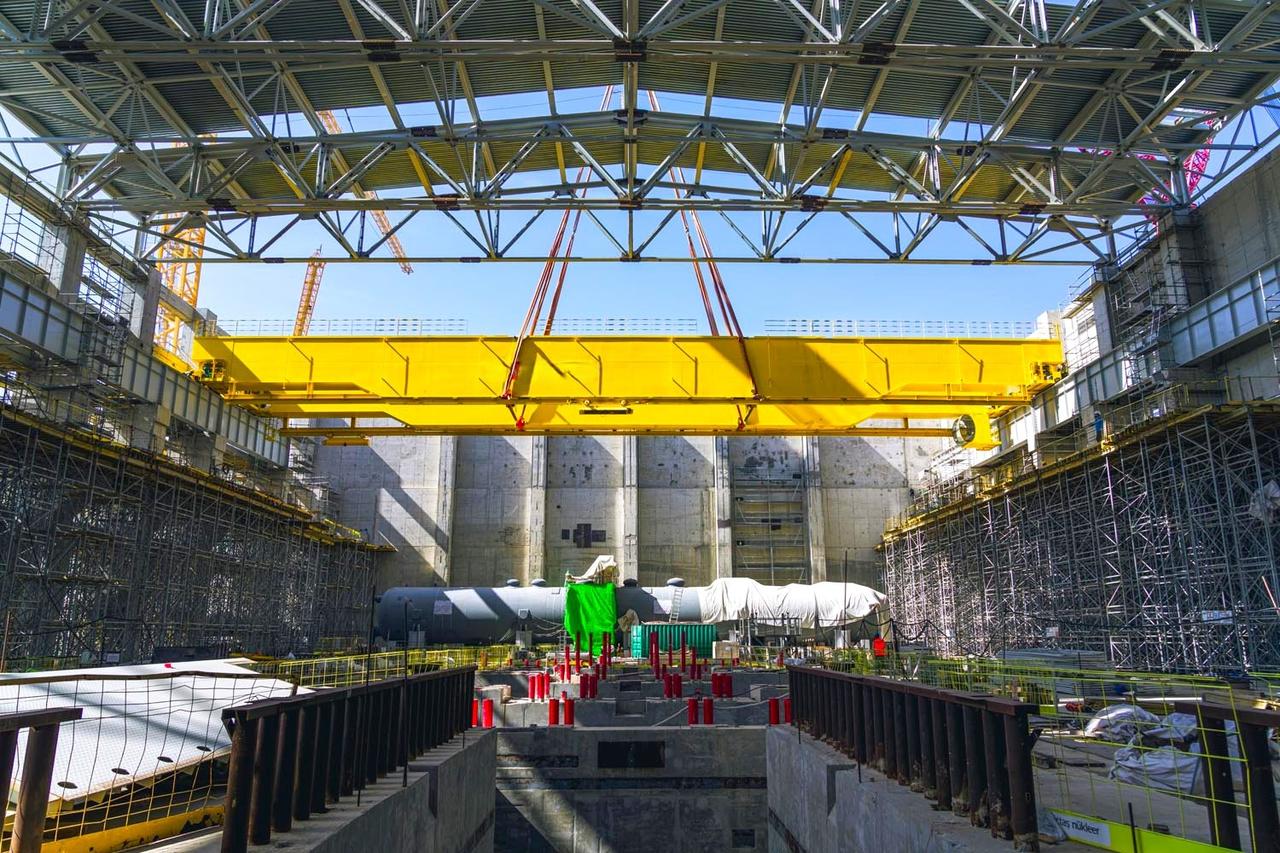
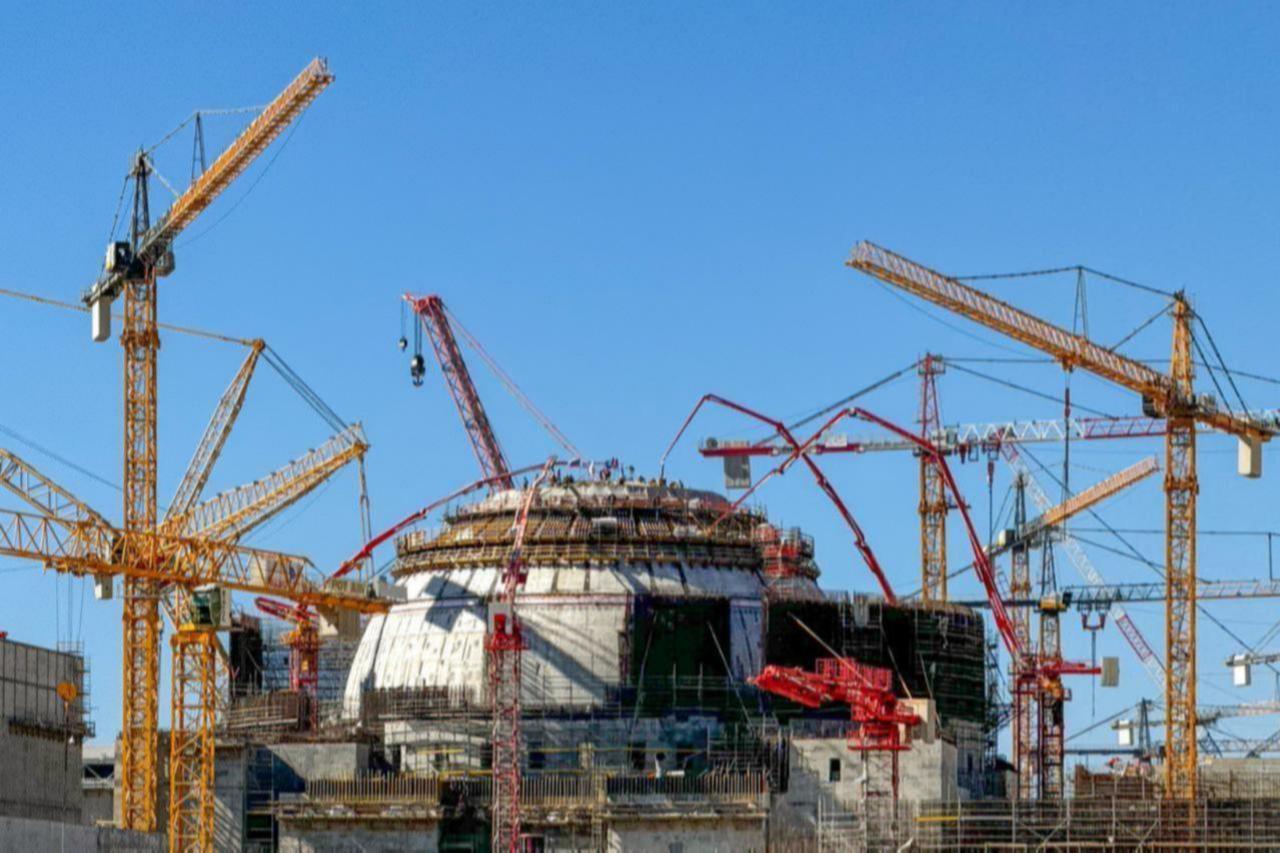
A major installation stage has also been completed at Akkuyu NPP’s third power unit, where the main overhead crane was installed in the turbine hall.
According to Akkuyu Nuclear Inc., the plant, Türkiye’s first nuclear power plant, is being built by Russia’s state nuclear energy corporation Rosatom.
The 350-ton-capacity main overhead crane was placed in the turbine hall of the third unit using a heavy-duty crawler mobile crane. The installation took about six hours.
The crane will be used to move equipment and materials during both the construction and operation of the power unit.
It will help place turbine cylinder rotors weighing more than 100 tons, turbo generator components, pipeline parts, and other equipment into their standard positions.
During the plant’s operating period, the crane will also be used for maintenance and scheduled repair work at the turbine facility.
After being placed in its standard position, the crane’s electric load-carrying systems will be installed. Electrical circuits, control, and command systems will also be adjusted.
Internal mechanisms and equipment responsible for safe operation will be tested and calibrated. Before being put into operation, the crane will undergo static and dynamic tests, including tests at maximum load.
 1 min read
The machine halls of Akkuyu NPP’s power units include three overhead cranes placed at different levels and designed to operate together under an advanced automation and control system.
The system is designed to prevent collisions between cranes, hook blocks and steel ropes.
The 350-ton main overhead crane is located at the upper level, while two auxiliary overhead cranes with capacities of 30 tons and 15 tons are located at lower levels.
Butckikh said the crane’s commissioning will allow the installation of the main equipment for the turbine facility to begin.
“With the commissioning of the crane, we will move to the installation phase of the main equipment of the turbine facility,” he said.
He added that the crane will allow completion of the turbine hall’s roof structure and create the necessary conditions for equipping the turbine facility with its main technological systems.
“The installation precision provided by the crane is of great importance for the success of commissioning operations and the operational reliability of the power unit,” Butckikh said.
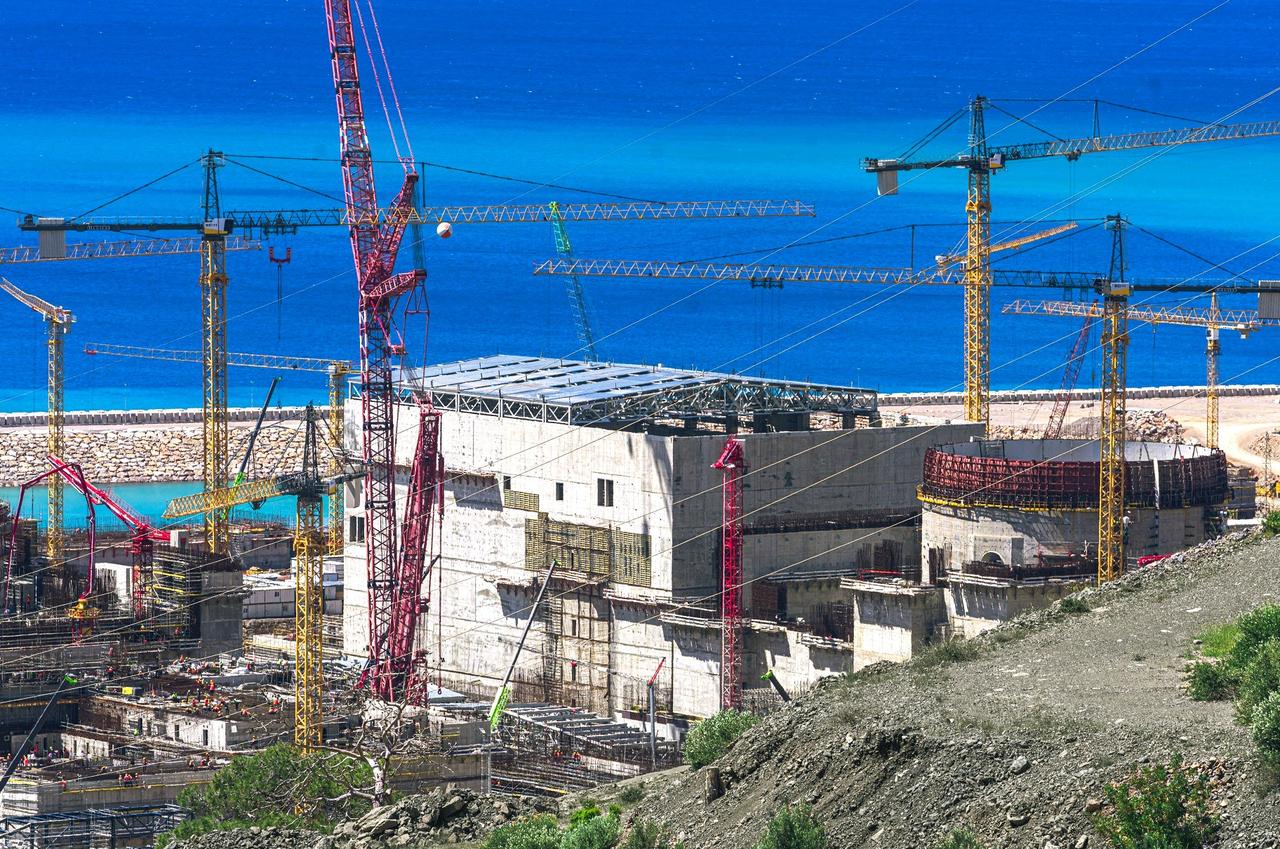
Akkuyu NPP will consist of four reactors, each with a capacity of 1,200 megawatts.
After the first unit is commissioned, the remaining units are expected to enter service at one-year intervals.
Once fully operational, the plant is expected to meet 10% of Türkiye’s electricity demand on its own.
The plant’s planned operating life is 60 years, with the possibility of being extended by another 20 years.


 Set as preferred source
 Set as preferred source



 1 min read



