Newsletters





As the calendar turned to Jan. 1, 2000, the world feared a technological disaster: the Y2K bug. This glitch in legacy software, where the year “00” could be misread as 1900, threatened banks, power grids, and transportation systems. The crisis never materialized, but the year marked the start of a period of rapid innovation that reshaped how people live, work, and communicate, and expanded humanity’s reach from genes to outer space.
Over the past 25 years, technology has moved from the margins to the center of daily life. More than 5.5 billion people were connected to the internet by 2025, a dramatic rise from about 360 million at the millennium. This connectivity accelerated the globalization of information, culture, and economic activity, while fundamentally changing social structures and everyday experiences.


The June 2007 launch of Apple’s iPhone transformed communication, computing, and entertainment. While not the first smartphone, it set new standards for design and usability, making advanced technology accessible to billions.
Eighteen years on, over 3 billion iPhones have been sold. Smartphones now serve as essential tools for work, navigation, photography, and online commerce. They also gave rise to the app economy, enabling services like ride-hailing, mobile banking, and e-commerce. By 2024, Apple reported that its App Store ecosystem had generated $1.3 trillion in developer sales.
Advances in touchscreen technology, operating systems, and high-density batteries placed computing power that once filled entire rooms into devices that fit in a pocket, reshaping how people interact with technology daily.
Smartphones fueled the growth of online platforms built around user-generated content. YouTube, launched in 2005, allowed anyone to upload and share videos easily. Social networks such as Facebook, Instagram, and WhatsApp further transformed communication, enabling real-time global connection.
Social media played a role in events from the Arab Spring uprisings to global protest movements, while also raising concerns about misinformation, addiction, and mental health. Beyond social interaction, it shaped journalism, politics, online gaming, livestreaming, and creator-driven economies. Platforms like Uber and Airbnb disrupted traditional labor and hospitality markets, sparking debates over regulation and workers’ rights. Emerging technologies such as blockchain and non-fungible tokens (NFTs) also challenged traditional financial systems and digital ownership models.
Global life expectancy rose from around 68 years in 2000 to over 73 by 2024. The 2003 completion of the Human Genome Project opened doors to personalized medicine and genetic research, while consumer DNA testing offered millions of insights into ancestry and health.
CRISPR gene-editing technology enabled precise DNA modifications, culminating in the first approved therapy for sickle cell disease in 2023. Capsule endoscopies, artificial organs, and retinal implants improved lives, while robotic exoskeletons and brain implants restored movement and communication for patients with paralysis.
Automated insulin delivery systems advanced diabetes care, and semaglutide-based drugs such as Ozempic and Wegovy reshaped public discussions around obesity. The COVID-19 pandemic highlighted rapid innovation, with mRNA vaccines developed, tested, and authorized in under a year, accelerating research for vaccines against influenza, RSV, and cancer.
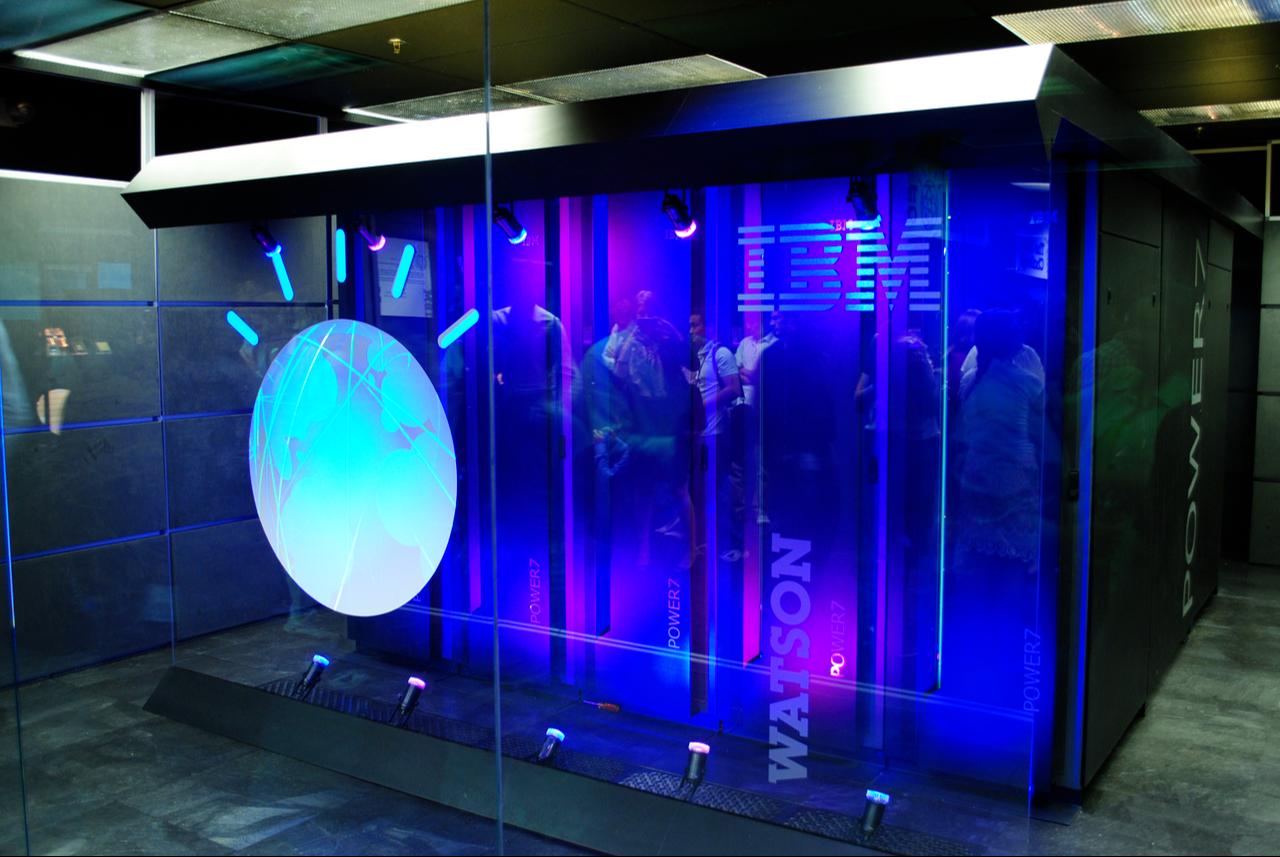
IBM’s Watson amazed the world in 2011 by defeating human champions on the quiz show Jeopardy, signaling AI’s potential. AlphaFold, developed by Google Deep Mind, solved the 50-year-old protein folding problem, earning its creators the 2024 Nobel Prize in Chemistry.
Generative AI entered public life in 2022 with ChatGPT, reaching 100 million users in weeks and demonstrating capabilities such as outperforming most aspiring lawyers on the U.S. bar exam. By 2025, AI tools had transformed work across industries, raising questions about education, labor, ethics, misinformation, and regulation.
The Large Hadron Collider confirmed the Higgs boson in 2012, explaining how particles acquire mass. In 2015, LIGO detected gravitational waves, opening a new way to study cosmic events. The James Webb Space Telescope, launched in 2021, offered unprecedented views of distant galaxies and exoplanets, while Mars rovers uncovered signs that the Red Planet once had conditions suitable for life.
Private companies revolutionized access to space. SpaceX successfully reused orbital rockets in 2017, lowering costs and expanding commercial spaceflight beyond government programs.
Technology helped address climate change and energy needs. LED lighting replaced incandescent bulbs, drastically cutting energy use, while solar photovoltaic costs dropped nearly 90% between 2010 and 2023. Wind energy production rose from 17 gigawatts in 2000 to over 1,100 gigawatts in 2024.
Electric vehicles, led by Tesla’s Model S, grew rapidly. The 2015 Paris Agreement united nearly all nations to combat global warming. The Svalbard Global Seed Vault, opened in 2008 in the Arctic, now preserves over 1.3 million seed samples as a safeguard against disasters, war, and climate change.
Not all innovations were about survival. Robotic vacuum cleaners like Roomba automated chores, Nintendo Switch reimagined portable gaming, and Fenty Beauty pushed the cosmetics industry toward inclusivity.
Navigation was transformed by Google Maps and Street View, while streaming platforms changed how music, film, and television are consumed. Crowdfunding platforms enabled creators to finance projects directly, bypassing traditional investors.
From 2000 to 2025, humanity witnessed a cascade of acceleration: faster computing, rapid scientific breakthroughs, and profound societal changes.
These advances brought benefits, risks, and new ethical challenges. The coming decades will test not whether innovation continues, but how societies choose to guide it.


 Set as preferred source
 Set as preferred source


 1 min read

 1 min read