Newsletters





Türkiye’s Treasury and Finance Ministry has suspended the inflation accounting requirement for the fourth provisional tax period of 2025, expanding an earlier exemption that had already applied to the first three quarters.
The decision was published in the Official Gazette on Wednesday, following growing calls from business groups and financial professionals for relief from quarterly reporting burdens.
Under current legislation, inflation accounting will continue to apply on an annual basis. The latest communique confirms that businesses will not be required to make inflation adjustments for any provisional (quarterly) periods in 2025 but will still need to do so when filing their full-year tax returns.
 1 min read
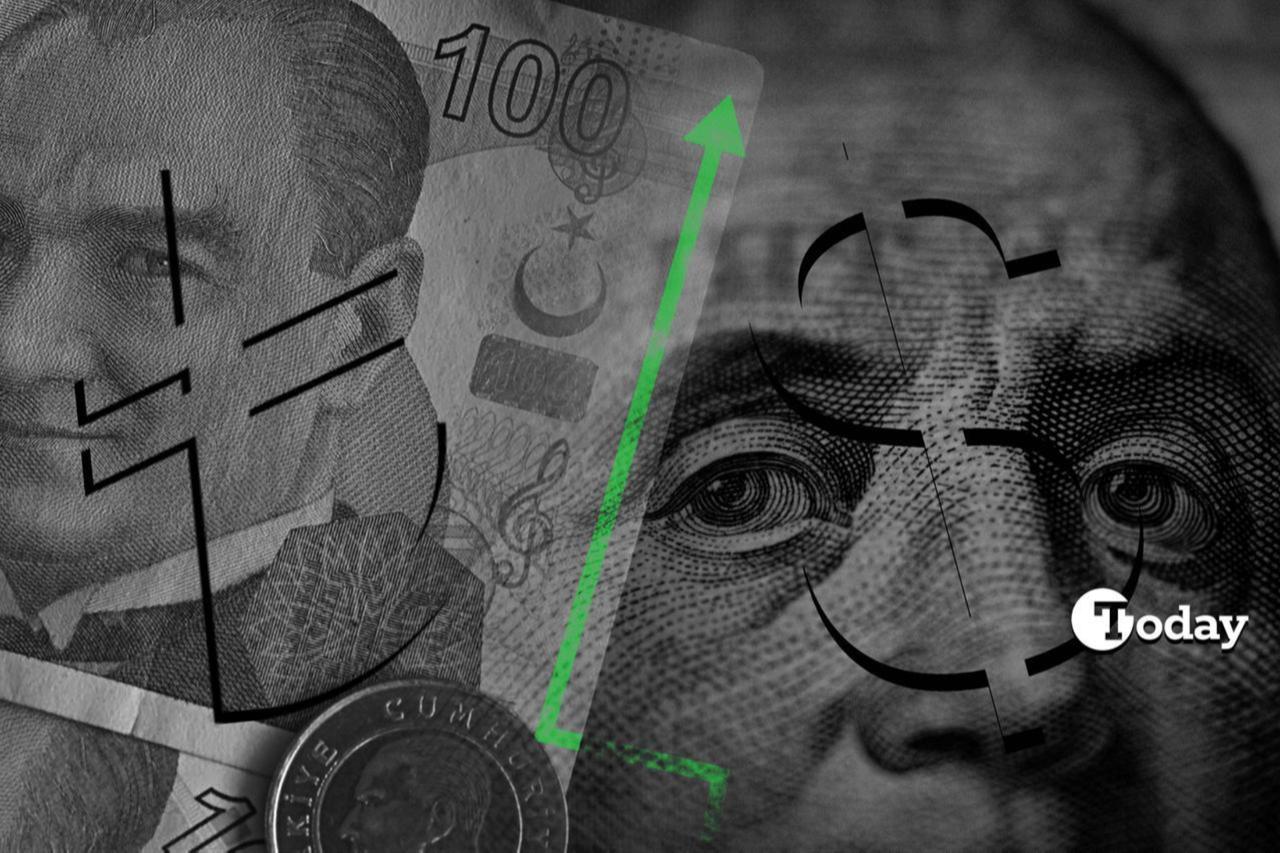
Under Türkiye’s tax law, businesses are required to apply inflation accounting when the domestic producer price index, or D-PPI, increases by more than 100% over the last three accounting periods, including the current one, and also rises by more than 10% within the current period. The system was reintroduced in 2023 and became mandatory at the start of 2024 due to persistently high inflation.
While the system was designed to help businesses avoid inflated tax burdens by reflecting real values, many have argued that its quarterly application has become burdensome amid slowing inflation, leading to higher compliance costs, greater uncertainty, and increased overall tax pressure.
The exemption does not apply to companies engaged in the continuous trade or production of processed gold and silver, due to high price volatility and sector-specific dynamics.
In a similar move, the Banking Regulation and Supervision Agency (BRSA) announced Tuesday that the banking sector and several non-bank financial institutions will no longer apply inflation adjustments, making permanent a practice that had already been in effect since December 2024.
Alongside the latest exemption, a draft bill was submitted to the Parliament that proposes suspending inflation accounting for the 2025, 2026, and 2027 fiscal years, covering both annual and provisional periods. For those using special accounting calendars, the exemption would apply to periods ending in 2026, 2027, and 2028.
If approved, inflation accounting would not be applied at all during that year.


Leading business and professional associations welcomed the exemption from provisional-period inflation accounting, while urging the government to consider broader and lasting reforms.
Orhan Aydin, head of the Anatolian Lions Business Association (ASKON), said the move would simplify reporting processes and ease the burden on small and medium-sized enterprises (SMEs). "We believe that removing inflation adjustment during provisional periods will save time and cost and reduce complexity in declarations," he told state-run Anadolu Agency.
The Ankara Chamber of Commerce Chairman Gursel Baran described the move as a "reasonable" step that brings consistency across the fiscal year, noting that the quarterly application had created a heavy bureaucratic burden and often increased the tax load on SMEs. "Our expectation is for this practice to be removed altogether and for the tax system to be reconsidered with an approach that supports the real economy," he said.
Separately, Irfan Huseyin Yildiz, president of the Union of Chambers of Certified Public Accountants of Türkiye (TURMOB), underlined the need for structural changes. "This regulation reduces the workload for both taxpayers and professionals," he stated. "If it is to be suspended or abolished altogether, then the ‘Permanent Revaluation’ mechanism already present in our legislation should be activated, as it would be more suitable for both the business community and the tax administration."


 Set as preferred source
 Set as preferred source


 1 min read