Newsletters





Global business bankruptcies are expected to rise further over the next two years, with the ongoing Iran war adding roughly 7,000 additional cases worldwide, according to a new report by Allianz Trade.
The insurer said global insolvencies, which already climbed 6% in 2025, are set to increase by another 6% in 2026, marking a fifth consecutive year of growth before leveling off at a high base in 2027.
The report linked the rise directly to the widening impact of the Iran war, which has disrupted energy markets, lifted transport costs and strained global supply chains.
Beyond the immediate shock, second-round effects are building. Inflation is picking up pace, financial conditions are tightening and business confidence is losing ground, creating a tougher operating environment for companies.
"These developments are pushing up costs across global value chains, from agrifood to manufacturing, healthcare and technology," CEO Aylin Somersan Coqui noted, adding that energy-heavy industries like transport, chemicals and metals are under particular pressure.
Firms with weak pricing power, thin margins or high debt levels are feeling the strain more sharply as rising input costs collide with softer demand.
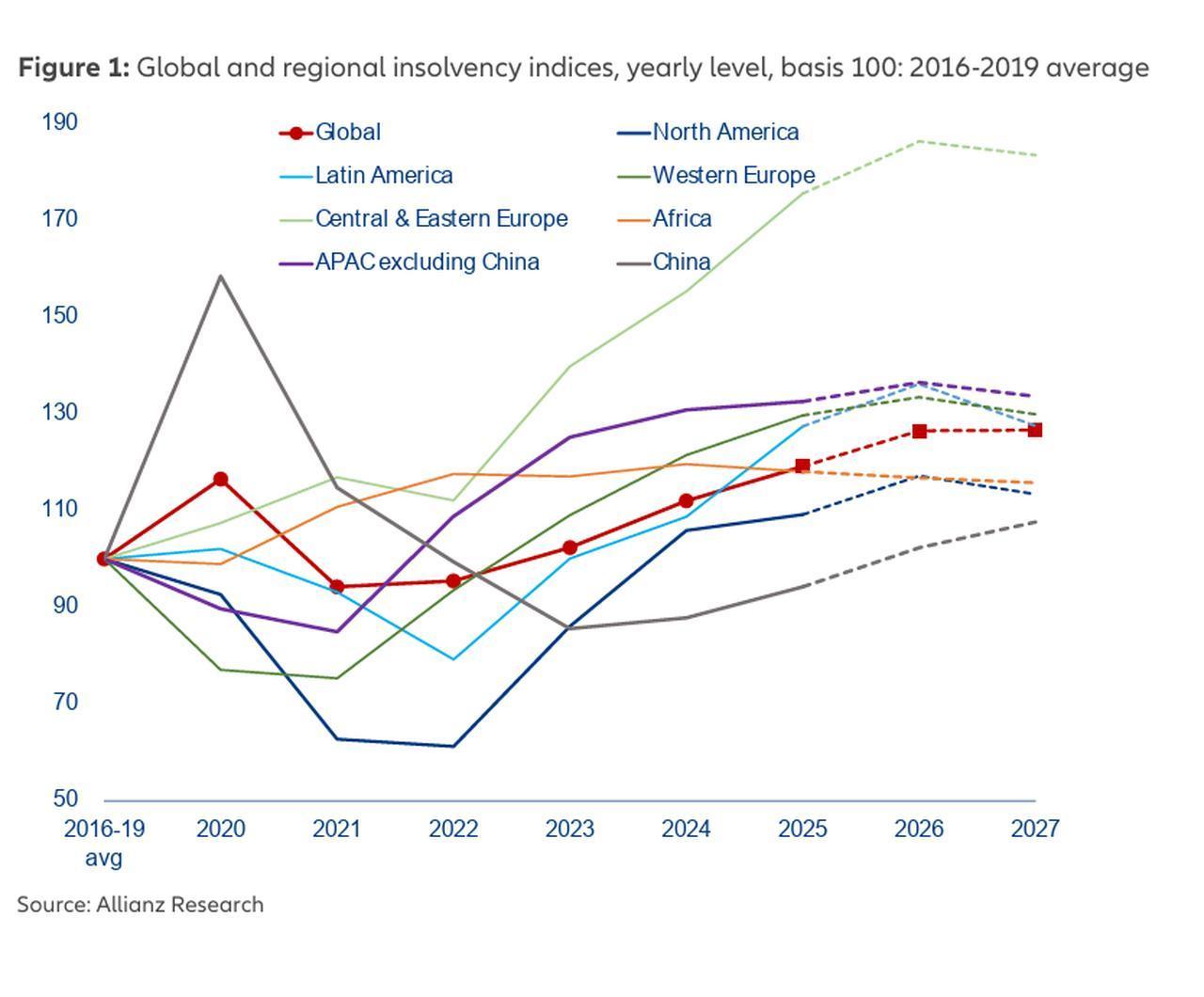

The outlook could worsen if tensions intensify. A prolonged disruption in the Strait of Hormuz would likely trigger longer-term shortages in oil, gas and key commodities, amplifying the shock across global markets.
In a more severe scenario, Allianz Trade estimates global bankruptcies could jump by 10% in 2026 and a further 3% in 2027.
"That would translate into around 4,100 additional insolvencies in the United States and about 10,500 in Western Europe over the 2026–2027 period," said Maxime Lemerle, lead analyst for insolvency research.
Rising insolvencies are also expected to spill over into labor markets. Around 2.2 million jobs could be directly at risk globally in 2026 under the baseline scenario, the report found.
Construction, retail and services are likely to take the hardest hit. Europe leads the exposure with 1.3 million jobs at risk, including roughly 960,000 in Western Europe, while North America could see around 460,000.
Overall, employment at risk due to company failures would account for about 6% of total unemployment across the United States and Europe, the report assessed.


 Set as preferred source
 Set as preferred source


 1 min read

 1 min read