Newsletters





Türkiye's stock exchange, Borsa Istanbul, has lifted its temporary ban on short selling and restored its standard order-to-trade ratio after emergency measures introduced during the Iran war expired, returning the country's equity market to normal trading rules.
According to a disclosure made on Monday, the Capital Markets Board's (CMB) temporary restrictions, which had been in place between March 2 and June 26, had ended. As a result, the standard 5:1 order-to-trade ratio returned on June 29.
The CMB introduced the measures after Turkish stocks came under heavy selling pressure following the outbreak of the Iran war. The restrictions, including a ban on short selling, were aimed at calming markets and limiting volatility during the sharp downturn.
Short selling is a trading strategy in which investors borrow shares and sell them with the expectation of buying them back later at a lower price.
While it can improve market liquidity and price discovery, Turkish regulators often restrict the practice during periods of severe market stress because it can accelerate declines.
The order-to-trade ratio measures the number of orders entered, modified or canceled relative to executed trades. In March, Borsa Istanbul tightened the ratio from 5:1 to 3:1 to curb excessive order activity and algorithmic trading as markets turned volatile.
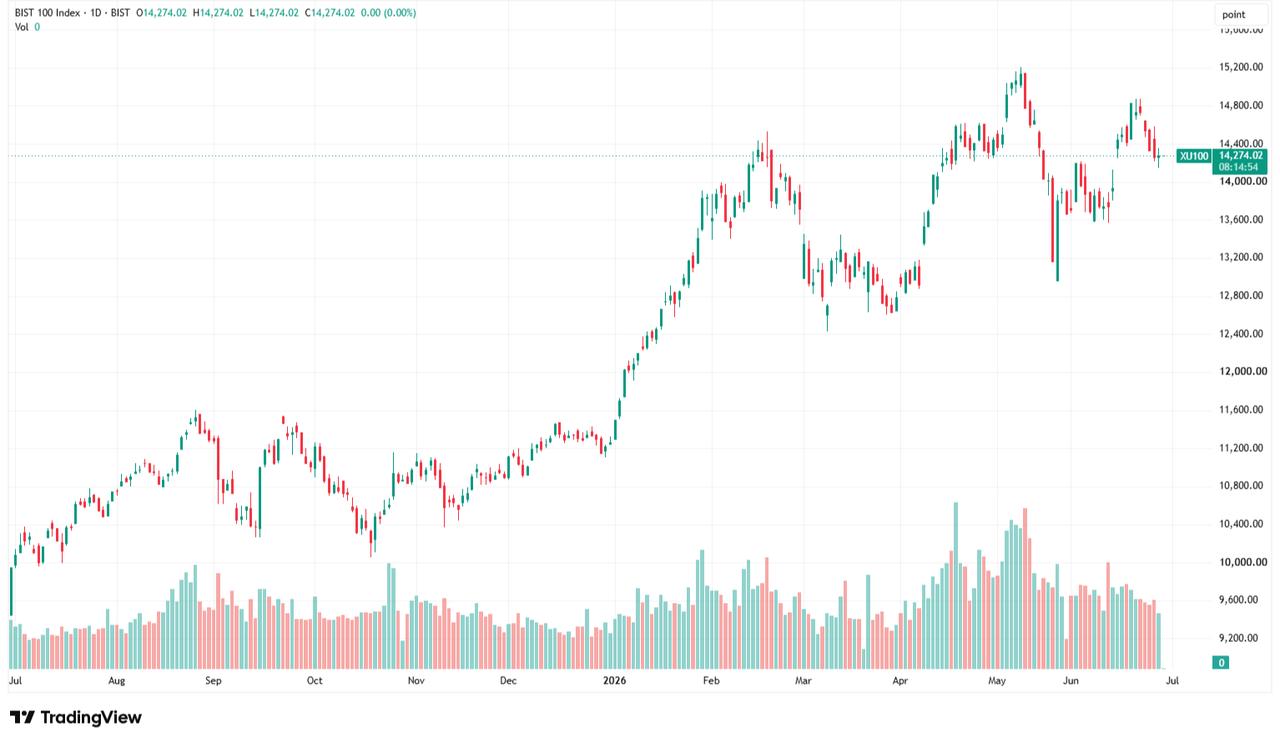

During the first week of the Iran conflict, Turkish equities recorded a net foreign outflow of $755.6 million, marking the largest weekly outflow on record during that period. Cumulative outflows peaked at $1.3 billion between Feb. 27 and April 3.
As of June 19, cumulative foreign outflows since the start of the war stood at $1.2 billion, reversing the $2.4 billion inflow recorded between the start of the year and the outbreak of the conflict.
Despite the pressure, Turkish equities still posted net foreign inflows of $1.3 billion since the start of the year as of the week ending June 19.
The benchmark BIST 100 index opened Monday's session up 0.3% at 14,321.44 points.


 Set as preferred source
 Set as preferred source


 1 min read

 1 min read