Newsletters




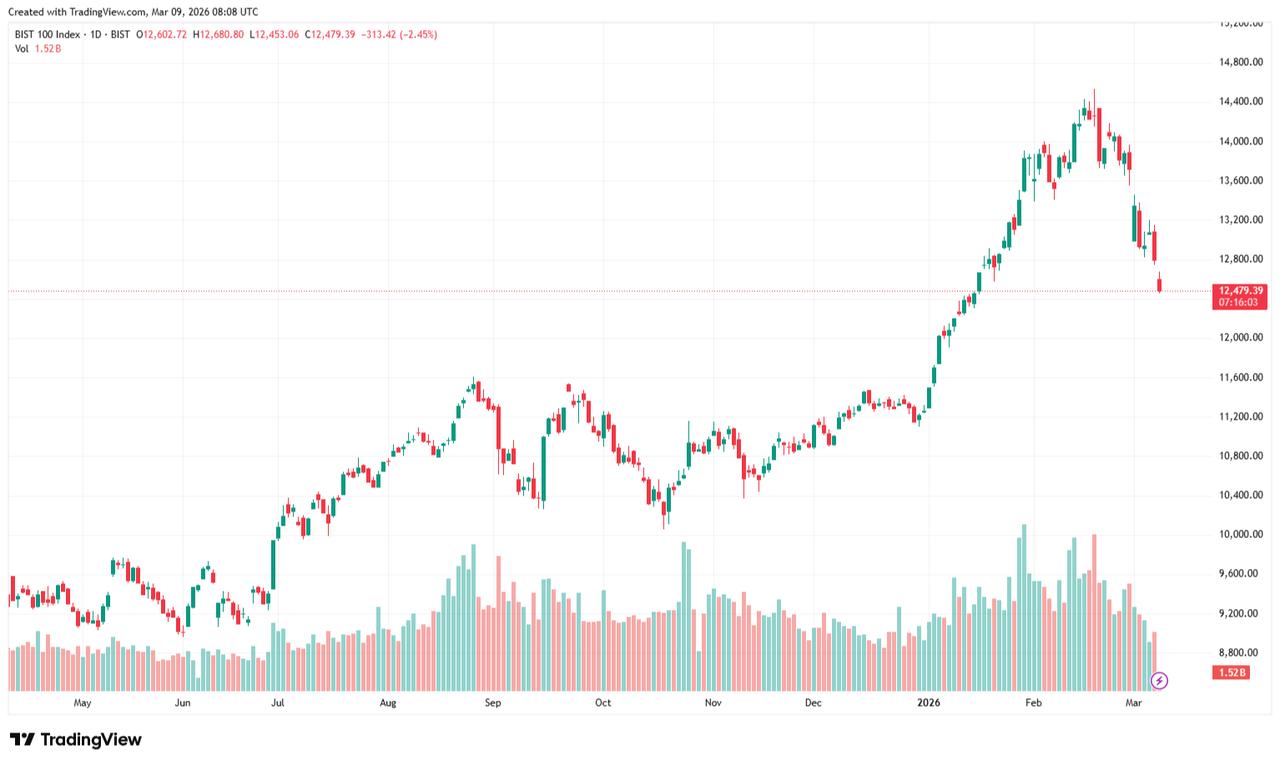
Türkiye's benchmark stock index BIST 100 kicked off the week with a 1.5% loss on Monday at 12,602.72, mirroring the global sell-off after oil prices neared $120 per barrel in early trading amid supply disruptions in the Strait of Hormuz linked to the Iran war.
The banking index dropped 3.2% as higher energy costs fueled concerns that prolonged supply disruptions could intensify inflationary pressures. Among sector indices, the chemical, petroleum and plastics sector was the only gainer, rising 3.83% as higher energy and chemical prices supported the industry.
In the following hours, losses deepened to 2.6%, pushing the index down to around 12,450 points, while the banking index extended its decline to more than 4% as selling pressure continued across the sector.
The BIST 100 had already ended the previous week under selling pressure, closing Friday down 2.19% at 12,792.81 points, bringing its weekly loss to 6.7%.
Global markets started the week in negative territory as the sharp rise in oil prices increased concerns that higher energy costs could slow economic activity and reinforce inflationary pressures.
Asian markets recorded notable losses, while European and U.S. indices also opened the week lower as investors reacted to the surge in oil prices and the potential economic impact of supply disruptions in the Strait of Hormuz. Concerns that rising energy prices could intensify cost-driven inflation have also strengthened expectations that central banks may adopt a cautious approach to monetary policy in the coming period.

Türkiye’s Treasury and Finance Minister Mehmet Simsek said authorities are closely monitoring developments as global uncertainty and sharp energy price fluctuations persist. "We are going through a period of high global uncertainty and sharp fluctuations in energy prices," Simsek said, adding that past experience shows such shocks are usually temporary.
Meanwhile, the Capital Markets Board of Türkiye decided to extend market-stabilizing measures on Borsa Istanbul. The regulator said the ban on short selling in the equity market will remain in place until the end of the trading session on March 13. Authorities also allowed a temporary easing of equity ratio requirements for margin trading during the same period.
The measures were first introduced before the previous week’s opening session as part of steps aimed at supporting market stability during the Iran crisis.


 Set as preferred source
 Set as preferred source


 1 min read

 1 min read