Newsletters


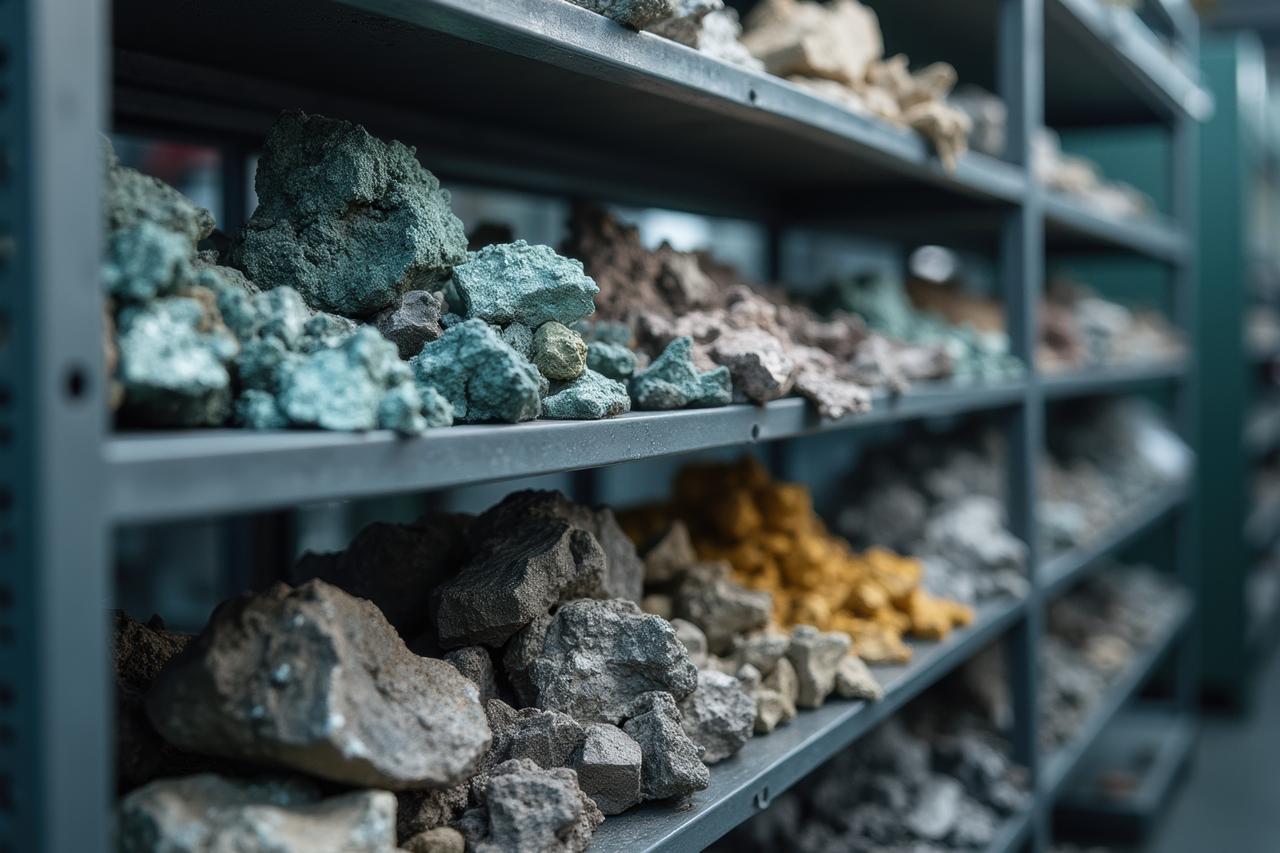


The head of the Union of Chambers and Commodity Exchanges of Türkiye (TOBB) Mining Council Ibrahim Halil Kirsan has proposed establishing a “Critical Minerals Authority” or a “Critical Minerals Technology Institute” to better evaluate Türkiye’s rare earth elements (REE) and critical mineral resources.
Kirsan said Türkiye’s underground resources have the potential to shape future technologies, noting that rare earth elements and critical minerals are increasingly central to global economic and geopolitical competition.
Kirsan said competition and trade tensions among China, the United States and the European Union are largely driven by access to rare earth elements and critical minerals used in electric vehicles, batteries, renewable energy technologies, industrial robots and the defense industry.
“We are in the middle of a new industrial revolution,” Kirsan said. “The coming economic order will be based on a mineral economy.
The world is heading toward a mineral supply crisis similar to the oil shocks of the 1970s. Minerals are becoming the new oil.”
Kirsan said digitalization, electrification across industries and the expansion of clean energy technologies are expected to further increase demand for critical and strategic minerals.
He noted that advanced economies have begun to view access to these resources as a matter of national security.
Kirsan said China currently controls about 70% of global critical mineral production and about 90% of rare earth refining capacity, while not sharing the refining technology with other countries.
He said Türkiye, located at a strategic crossroads and possessing significant mining potential, has emerged as a prominent candidate country in rare earth elements.
According to Kirsan, Türkiye ranks eighth globally in mineral diversity, 22nd in reserves and 28th in value among 168 mining countries.

Kirsan recalled that after positive laboratory-scale experimental results, work has continued at the Beylikova rare earth elements pilot facility operated by Eti Maden.
He said that cooperation with countries that possess rare earth refining technology, including the United States, Japan, South Korea, Australia and European countries, would play a key role in bringing Türkiye’s rare earth deposits into production through joint projects.
Kirsan said coordinated management of rare earth and critical mineral studies conducted by public institutions and universities would be better achieved through a “National Critical Minerals Strategy Document.”
He proposed establishing either a “Critical Minerals Technology Institute” or a “Critical Minerals Authority” to implement this strategy.
Kirsan said rare earth and critical minerals involve the Energy and Natural Resources Ministry in terms of raw materials, the Industry and Technology Ministry for processed end products, and the National Defense Ministry due to defense and security considerations.
He suggested forming a commission with experts from the three ministries to define the proposed institution’s mandate and legal framework.
Kirsan said such a structure would help identify Türkiye’s mineral and metal needs based on industrial supply and demand and support mining projects that convert resources into end products in line with environmental, social and governance criteria.
He said the proposed framework would support investment, strengthen public-private partnerships and ensure Türkiye’s mineral resources are utilized in line with the economic and social interests of future generations.


 Set as preferred source
 Set as preferred source


 1 min read