

 Newsletters


Chinese technology company Huawei unveiled new microchip and computer cluster hardware designed for training and operating artificial intelligence systems at the "Huawei Connect" conference held in Shanghai.
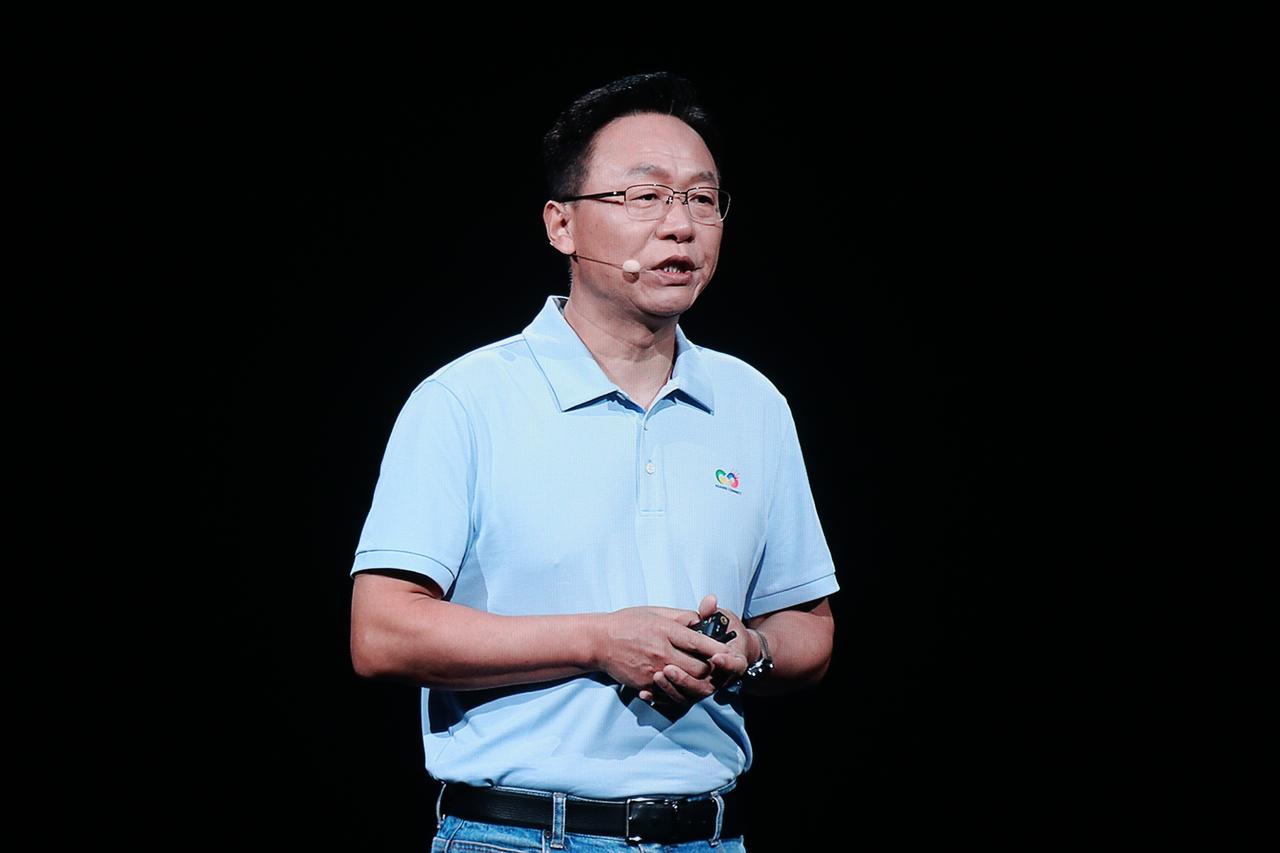
In his opening presentation at the conference, Huawei Deputy Chairman Eric Xu introduced upcoming versions of the company's "Ascend" graphics processing units, developed for AI technology, along with the "Atlas SuperPoD" systems, which are computer clusters that run these units together.
Xu stated that the new "Ascend 960DT" chip, to be used in training AI models, will be released in the first quarter of 2027, while the "Ascend 960PR" chip, to be used in data processing operations known as inference in AI models, will be released in the third quarter of 2027.
The next-generation products in this chip family, called "Ascend 970" and "Ascend 980," will be released in 2028 and 2029, respectively.
The company's currently available "Ascend 950" graphics processor is filling a significant gap in the development of AI systems due to U.S. export restrictions on advanced Nvidia chips.
Huawei's progress in this chip technology, together with the other computing and network hardware infrastructure the company provides, is playing an important role in the advancement of Chinese companies in the field of artificial intelligence.

In May, Huawei announced that it would transition to a new microchip architecture based on a principle called the "Tau Scaling Law," claiming it would overcome the limitations of "Moore's Law," which points to size constraints in advanced chip development, through a folded structure designed to shorten signal transmission time.
There had been speculation about how this microchip architecture, which will first be used in Mate 2 smartphones, would be applied to AI chips. Xu offered some clues about this at the conference.
Xu said that through the Tau Scaling Law, the company would be able to develop semiconductor microchips with performance equivalent to 1.4-nanometer chips by 2031 without needing advanced lithography machines, which face similar export restrictions targeting China, and that they could multiply not only processor performance but also bandwidth, memory capacity, and connection speeds without the need for geometric miniaturization.
Meanwhile, several major innovations in Huawei's "Atlas SuperPoD" computer cluster infrastructure, used for training and operating AI systems, were announced for the first time at the conference.
Xu stated that the newly released "Atlas 960E SuperPoD" system will be the first in the industry to use "NPO" (near-packaged optics) technology, which enables communication between circuits and units through optical connections instead of electrical ones.
The system, which brings together a large number of graphics processing units, is designed to make the training and inference processes of AI models with up to 10 trillion parameters faster and more efficient.
Emphasizing that Huawei views artificial intelligence as the latest major technological revolution and that no single company will create this new world alone, Xu said the company believes this potential can only be realized through an ecosystem based on the collaboration of application agents across different layers.
He added that the company's core strategy is to provide processor and hardware infrastructure for AI and computing systems while adhering to the principles of open source and open systems.


 Set as preferred source
 Set as preferred source


 1 min read




 1 min read


