Newsletters




Seventeen years ago, an anonymous figure named Satoshi Nakamoto launched Bitcoin.
The invention spawned a $2.4 trillion unregulated industry. Nakamoto mined 1.1 million coins early on and never spent them. This hoard sits untouched and evades all public scrutiny.
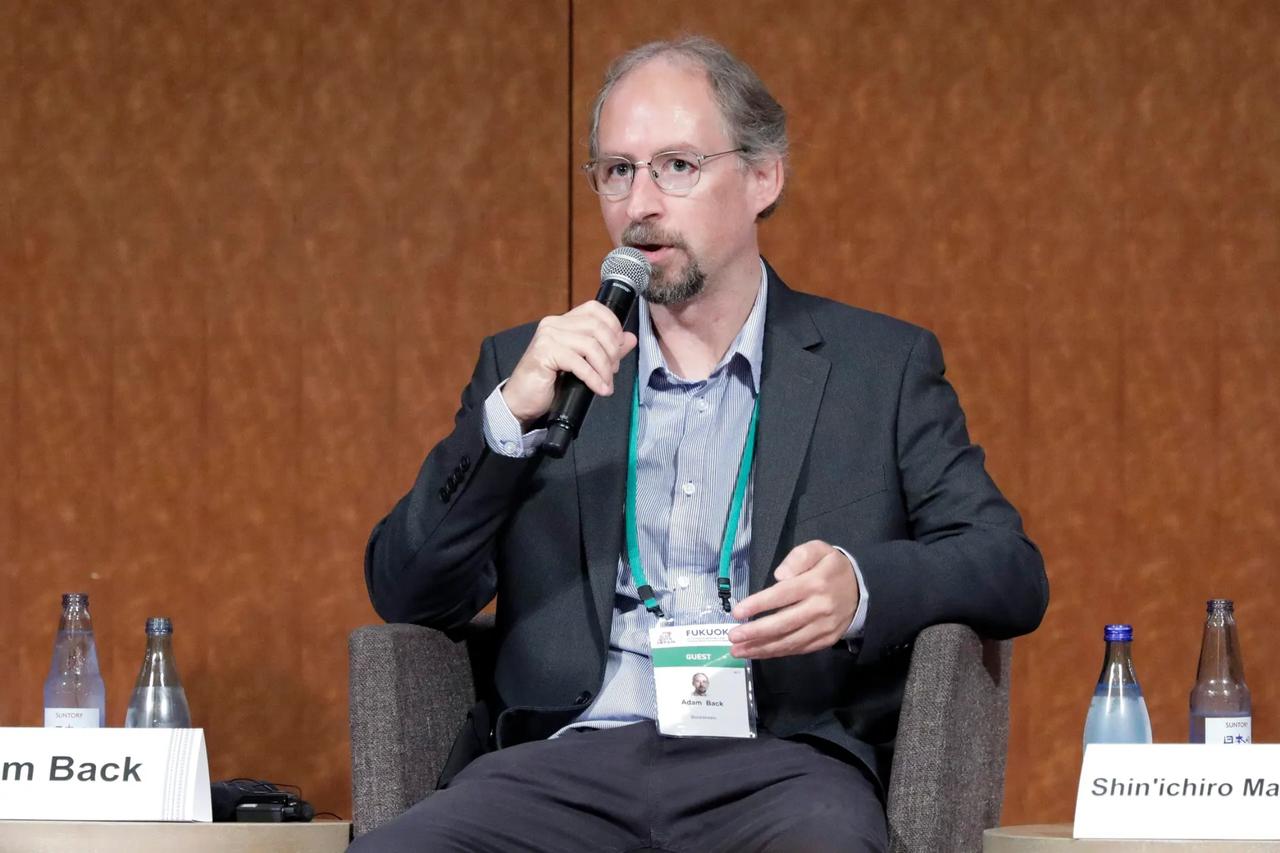
New York Times investigative reporter John Carreyrou recently published a 10,000-word investigation naming British computer scientist Adam Back as the elusive creator.
Back quickly denied the claim. He took to the social media platform X and wrote, "I also don't know who Satoshi is, and I think it is good for Bitcoin that this is the case, as it helps Bitcoin be viewed as a new asset class, the mathematically scarce digital commodity."
The ongoing mystery protects an unprecedented concentration of wealth. Capitalist structures thrive on this exact type of opaque deregulation. The original cypherpunk dream envisioned a tool to subvert state surveillance. That technology now facilitates the corporate monopolies it supposedly opposed.
Carreyrou spent months investigating the origins of the cryptocurrency.
He and artificial intelligence expert Dylan Freedman analyzed decades of posts from online cryptography forums.
The reporters looked at texts from Nakamoto and compared them to writing from 620 early digital privacy advocates. Back emerged as the closest match.
Adam Back and Satoshi Nakamoto shared several distinct writing habits.
Both men put two spaces between sentences and confused the words "it's" and "its". They also misused hyphens in the exact same way and used British spellings like "cheque". They both typed the exact phrase, "I'm better with code than with words".
The timeline also raises suspicions. Back invented an email spam filter called Hashcash in 1997. Nakamoto later used the underlying proof-of-work algorithm of Hashcash to build the foundation of Bitcoin. Carreyrou noted that Back went silent on cryptography forums during the exact years Nakamoto was active.


The reporter confronted Adam Back at a Bitcoin conference in El Salvador.
Back reddened and shifted uncomfortably before delivering a defensive denial. Back told John Carreyrou, "Clearly I'm not Satoshi, that's my position." The confrontation yielded a strange conversational slip. Carreyrou mentioned the Nakamoto quote about preferring code over words.
Back interrupted the reporter to say, "I did a lot of talking though for somebody, I mean … I mean, I’m not saying I’m good with words, but I sure did a lot of yakking on these lists actually." Carreyrou interpreted this interruption as Back temporarily breaking character and speaking directly as Nakamoto.
Back took to X to dismiss the investigation completely. He called the findings a case of confirmation bias. He claimed the writing similarities stem from coincidence and shared jargon among people with similar interests.
Back also said that he actually "did a lot of yakking" on cryptography forums at the time. He used this defense to excuse his lack of Bitcoin-related posts in 2008 and contradict the New York Times claim that he went dormant.
Other computer scientists doubt the New York Times report.
University College London professor Steven Murdoch told The Guardian that the investigation lacks a smoking gun. Murdoch pointed to the late software developer Hal Finney as a more likely candidate because Nakamoto sent the first Bitcoin transaction to Finney.
Murdoch noted that developers usually test a new system by sending a transaction to themselves. Finney died of ALS in 2014. The obsession with finding one male genius ignores the reality of software development. Reykjavík University assistant professor Jacky Mallett directly questioned the premise of a lone creator.
Mallett argued that a small group of people likely built the code together based on their deep understanding of financial structures. She pointed to specific updates to the Bitcoin code that strongly suggest multiple contributors. The narrative of the solitary tech visionary serves corporate mythologies better than historical accuracy.

Identifying Satoshi Nakamoto carries massive legal and financial implications.
Nakamoto holds roughly 44 percent more Bitcoin than the world's largest corporate holder, Strategy (formerly MicroStrategy, MSTR). Adam Back currently runs a Bitcoin treasury company. His firm plans to merge with a publicly traded shell company.
Cantor Fitzgerald, formerly led by US Commerce Secretary and Wall Street executive Howard Lutnick, created this shell company. This corporate merger transforms the situation from internet lore to an urgent regulatory issue.
United States securities law requires chief executives to disclose any information that could affect investors. A secret stash of 1.1 million coins could crash the market if the owner sold them suddenly.
Back recently moved to the European tax haven of Malta. His new treasury company borrows money specifically to amass even more Bitcoin. The anonymity of Satoshi Nakamoto protects this massive concentration of unregulated capital. This dynamic poses a direct threat to transparent economies.


 Set as preferred source
 Set as preferred source



 2 min read