Newsletters




Türkiye’s agricultural production is expected to recover strongly in 2026 after a difficult previous year marked by severe weather conditions, with major increases forecast in grains, fruits and industrial crops, according to the country’s first production estimates for the year.
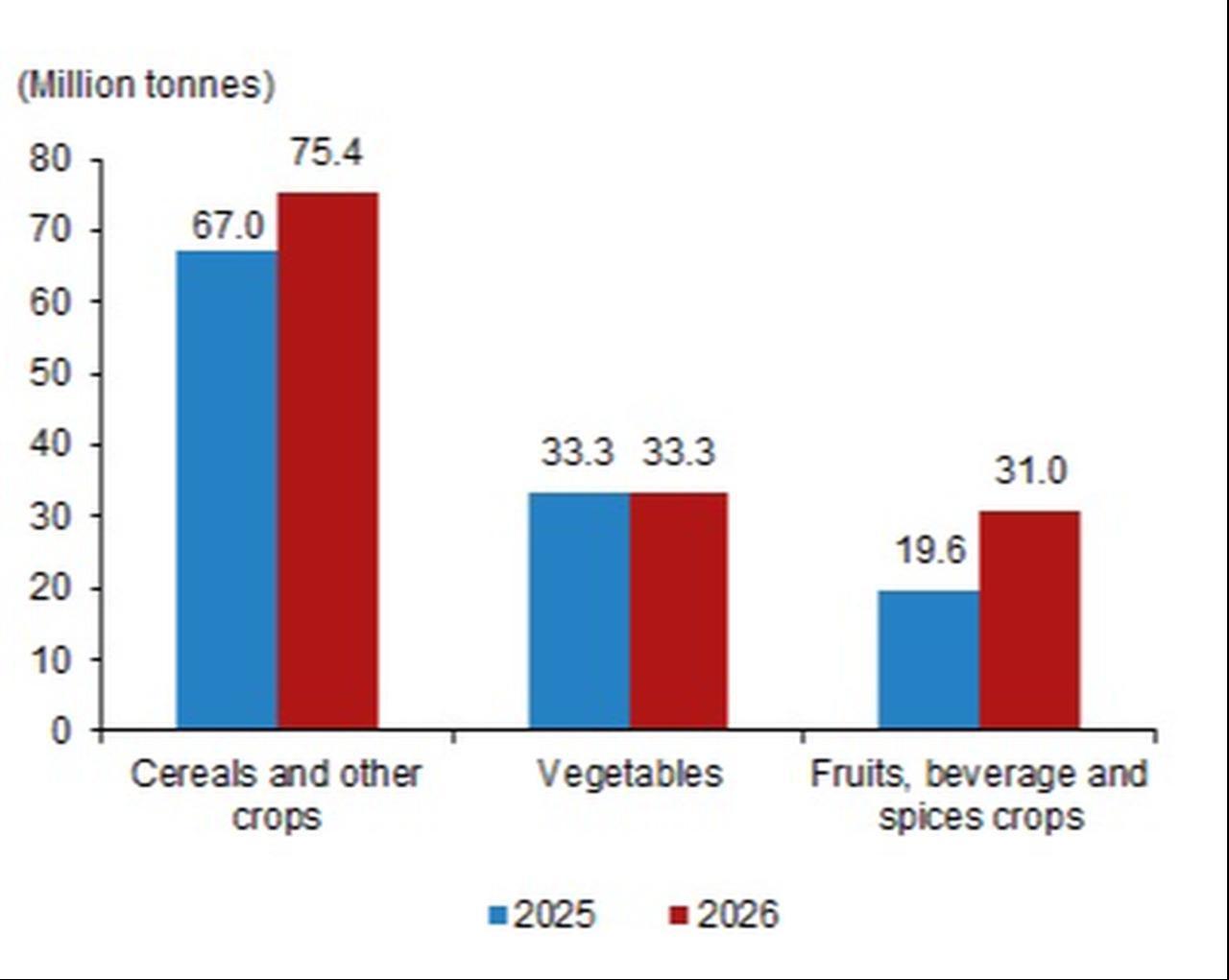
Crop output for cereals and other field crops, excluding forage plants, is projected to climb 12.6% from 2025 levels to around 75.4 million tons.
Fruit, beverage and spice plant production is expected to jump 57.8% to nearly 31 million tons. Vegetable production, meanwhile, is forecast to remain steady at 33.3 million tons.
Cereal production alone is expected to rise 21.7% year-on-year to 41.6 million tons, driven by a sharp recovery in wheat and barley harvests.
Wheat output is forecast to increase 26.7% to 22.8 million tons, while barley production is expected to surge 50% to 9 million tons. Rye and oat production are also projected to rise, although corn output is seen falling 5.9% to 8 million tons.
Among other major crops, sunflower production is forecast to increase 16.2% and sugar beet output 5.8%, while soybean and potato production are expected to edge lower. Vegetable production is projected to stay largely flat, with gains in cucumbers, dry garlic and capia peppers offset by declines in tomatoes, watermelons and dry onions.
The strongest rebound is expected in fruits and nuts, where production was heavily hit last year by frost and drought conditions.
Apple, peach, nectarine, cherry and grape harvests are all forecast to post sharp increases, alongside strong gains in citrus fruits, hazelnuts, walnuts and pistachios.
Olive production is also expected to rise significantly, while banana output is projected to decline slightly.

In the previous year, production volumes were sharply reduced by adverse weather conditions, as a severe summer drought followed the worst winter frost in a decade, weighing heavily on grain fields, orchards and several key agricultural products across the country.
Output fell 9% in cereals and other field crops excluding forage plants, 0.9% in vegetables, and 30.9% in fruits, beverage and spice crops. Total production stood at 68.1 million tons for field crops, 33.3 million tons for vegetables, and 19.6 million tons for fruits, beverage and spice plants.
The situation also added pressure to food inflation, which remains one of the main drivers of the country’s overall inflation. Food inflation came in at 4.8% in January and 6.8% in February, pushing the annual rate to 31.5% as tight supply and rising production costs drove up market prices.
Heading into 2026, weather conditions returned to more normal levels as stronger rainfall and favorable temperatures supported agricultural recovery across much of the country, a shift seen easing pressure on food inflation.


 Set as preferred source
 Set as preferred source


 1 min read
 1 min read