Newsletters


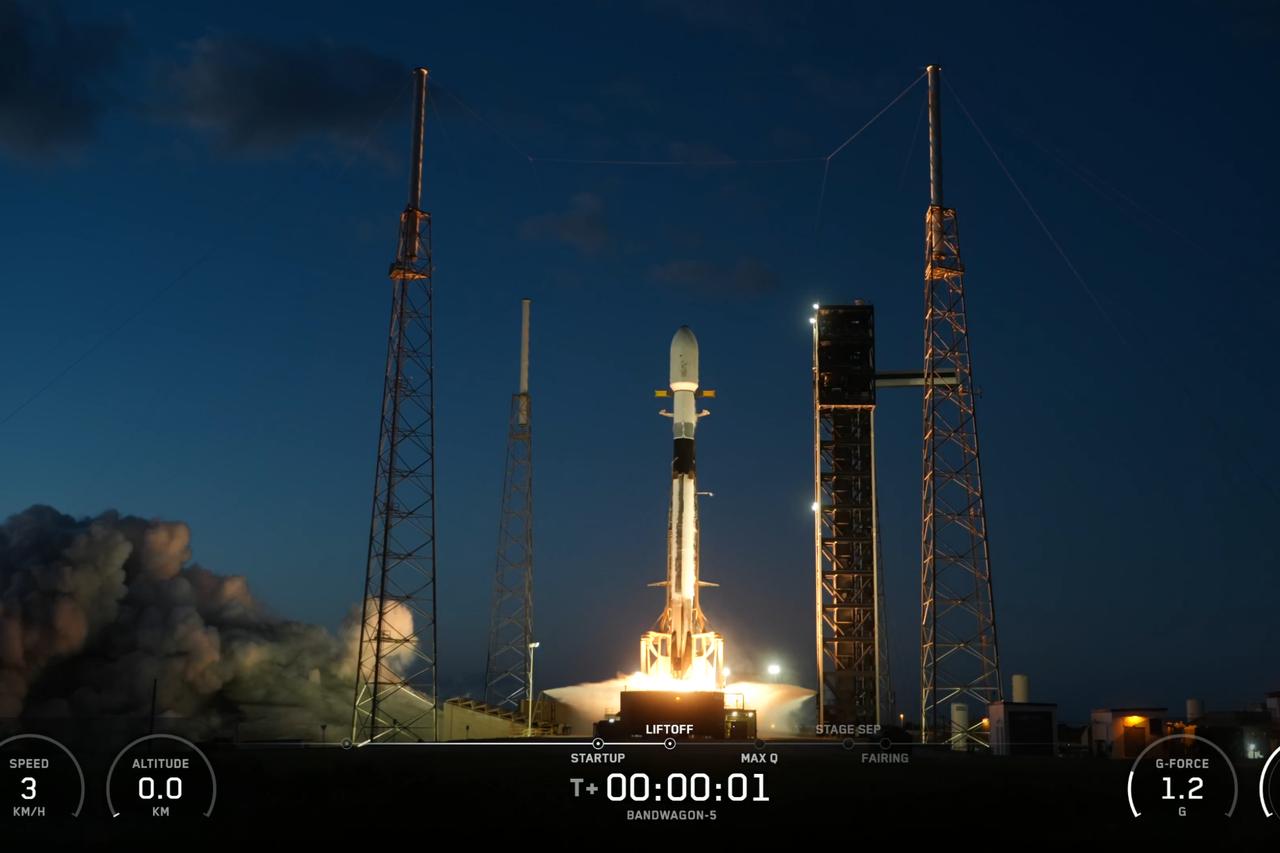


Fergani Space Technologies, the company founded by Baykar’s Selcuk Bayraktar, launched its sixth test satellite, FRG-100D4, from Florida on a SpaceX mission on Tuesday. The company said the 160 kg spacecraft reached its target orbit and has begun its mission.
The satellite lifted off from Cape Canaveral Space Force Station in Florida at 2:04 p.m. Türkiye time as part of SpaceX’s Bandwagon-5 mission.
It separated from the launch vehicle about 63 minutes later, at 3:07 p.m., and settled into an orbit at an altitude of 590 kilometers.
Bayraktar is chairman of the board and chief technology officer of Baykar.
Bandwagon is SpaceX’s rideshare program, which lets operators of smaller spacecraft share a rocket rather than pay for a dedicated launch.
Fergani describes FRG-100D4 as equipped for communications and navigation, with upgraded navigation and broadband communications payloads.
The company said it is the highest-power-generating satellite it has built and a significant step beyond its earlier launches.
According to Fergani, the spacecraft relies on critical components developed entirely in-house, among them a reaction wheel, a magnetorquer, a magnetometer, an inertial measurement unit, a GNSS receiver, steerable solar panels, a battery pack, a regenerative modem and a phased-array antenna.
The satellite also carries an AI-assisted computer intended for advanced missions.
The company said proving this avionics equipment in orbit, and giving the technologies flight heritage, matters for what it called Türkiye’s full independence in space technologies.
Fergani presents the launch as the most important step so far toward its Ulug Bey Satellite Constellation System, which is meant to consist of more than 200 satellites.
The company said it aims to finish the system within five years, using entirely its own resources.
Once the constellation is in place, Fergani said, Türkiye would have an independent navigation and communications network.
It said Türkiye could share that capability with “friendly and kindred nations.”
Development of an indigenous launch vehicle is continuing alongside the satellite work, the company added.
Fergani said it has been building its presence in space since the start of 2025.
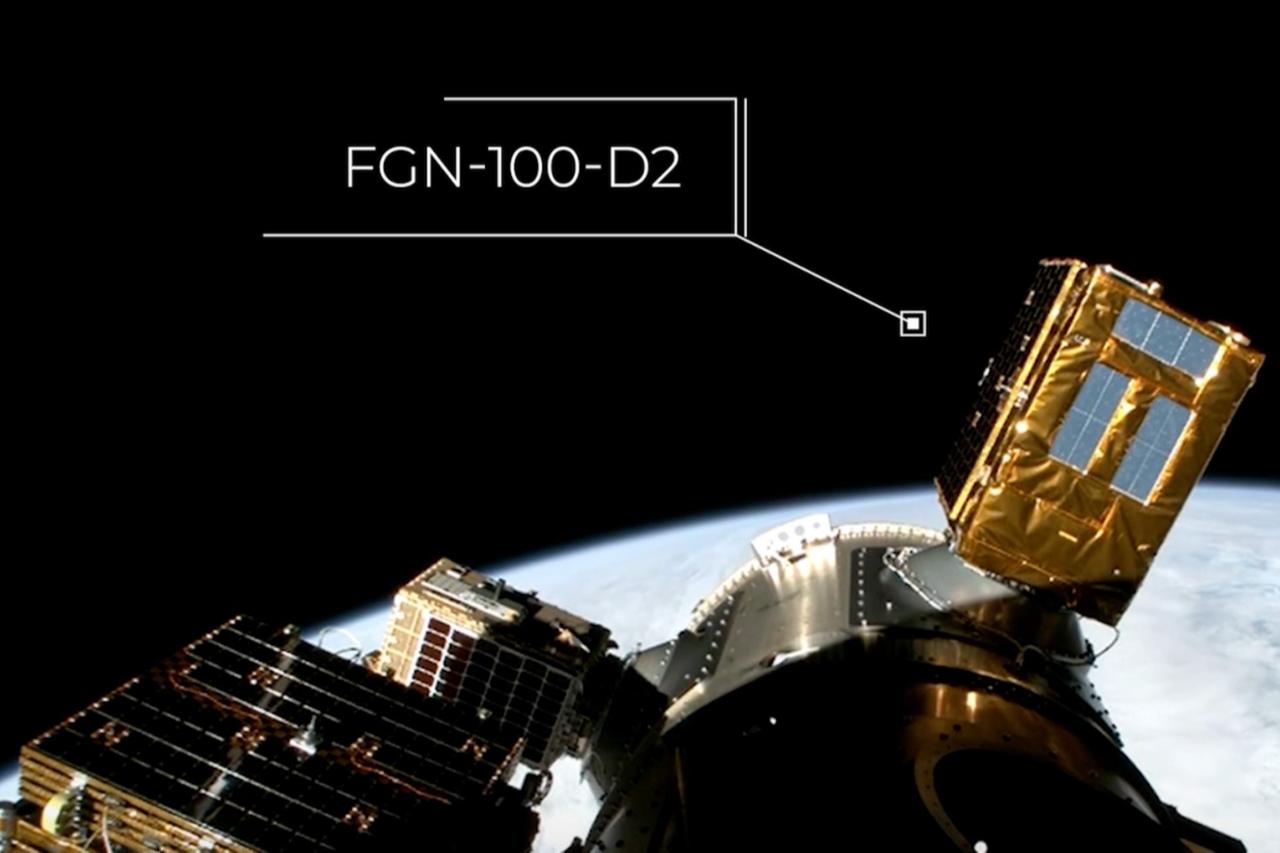
Its first satellite in the series, FGN-100-D1, launched in January 2025. FGN-100-D2 followed on Nov. 2, 2025.
On Nov. 28, 2025, the company launched an Orbital Transfer Vehicle, FGN-TUG-S01, which uses a hybrid propulsion system.
Fergani said the vehicle performed its first orbit-raising maneuver with its hybrid engine and released the FRG-10D1 CubeSat it carried. The company called the mission an important step for Türkiye’s in-space logistics capability.
FGN-100-D3, which Fergani counts as its fifth spacecraft, launched on March 29, 2026. FRG-100D4 is the sixth.


 Set as preferred source
 Set as preferred source


 1 min read

 1 min read